Jason Bailey
I keep thinking about the three alarm clocks. Early in James Gray’s new crime drama Paper Tiger, he begins a scene with three alarm clocks — a buzzer, a radio, and a clanging bell — going off next to the bed of his central character, Irwin Pearl (Miles Teller), which gets a chuckle and provides a bit of exposition in the conversation that follows between Irwin and his wife Hester (Scarlett Johansson). But as the story continued, as an honest mistake gets Irwin in way, way over his head, endangering the life of him and his family, I kept flashing back to those alarm clocks. They’re not just a character detail, the kind that Gray has woven into his screenplays so deftly for so long now. They’re an urgent reminder of exactly how scary all of this is for Irwin, a man who is accustomed to controlling his circumstances, and making provisions for errors. This is a situation that he cannot plan for, and cannot think through, and right then, in the moment, that might be the scariest thing of all.
Paper Tiger is a crime drama folded into a story about two brothers, which makes it sound like the filmmaker might be spinning his wheels; after all, you could apply the same rough logline to Little Odessa, The Yards, and We Own the Night. But this is not a matter of a writer/director repeating himself; it’s more like what Scorsese did with The Irishman, returning to a familiar milieu after a number of years with a keener and more mature understanding of what he wants to say, and how he wants to say it.
It’s fall of 1986 in Queens, and Irwin is, by most metrics, a success; his wife, aside from her occasional kvetching, is happy, and his two boys Scott (Gavin Goudey) and Ben (Roman Engel) are loyal and hard-working, per their upbringing. But whenever Gary (Adam Driver), his cop-turned-consultant big brother, turns up in his impeccable suits, throwing around money and dropping names, Irwin feels the pull of something more, which is why he’s receptive to Gary’s proposal that they go into business together. There’s cleanup and development happening on the Gowanus Canal, Gary tells him, with Russian businessmen muscling out the Mafia that’s controlled the area for so long. Gary assures Irwin it’s on the up and up (“We’ve never played in the dirt,” he reminds him). That does not prove to be the case.
The moment when the worm turns, when this gentle family drama becomes a crime picture, is terrifying and upsetting, mostly because it happens so fast; in the blink of an eye, there’s real danger, and Gray (and cinematographer Joaquín Baca-Asay) use shadow and sound to create a sense of genuine, palpable menace. From that moment on, we realize that what’s come before wasn’t mere table-setting — Gray has built a pit of quicksand, and watches as his characters helplessly sink into it. That sense of danger never lifts, and a later scene, in which Irwin is abruptly awaken in the middle of the night, made this viewer as tense as I’ve been at a movie in a long time.
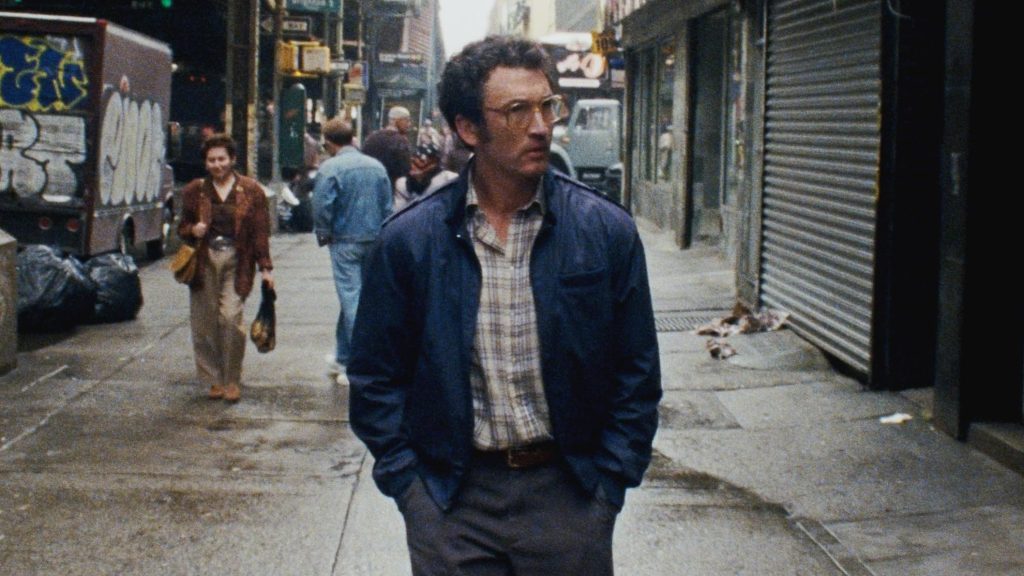
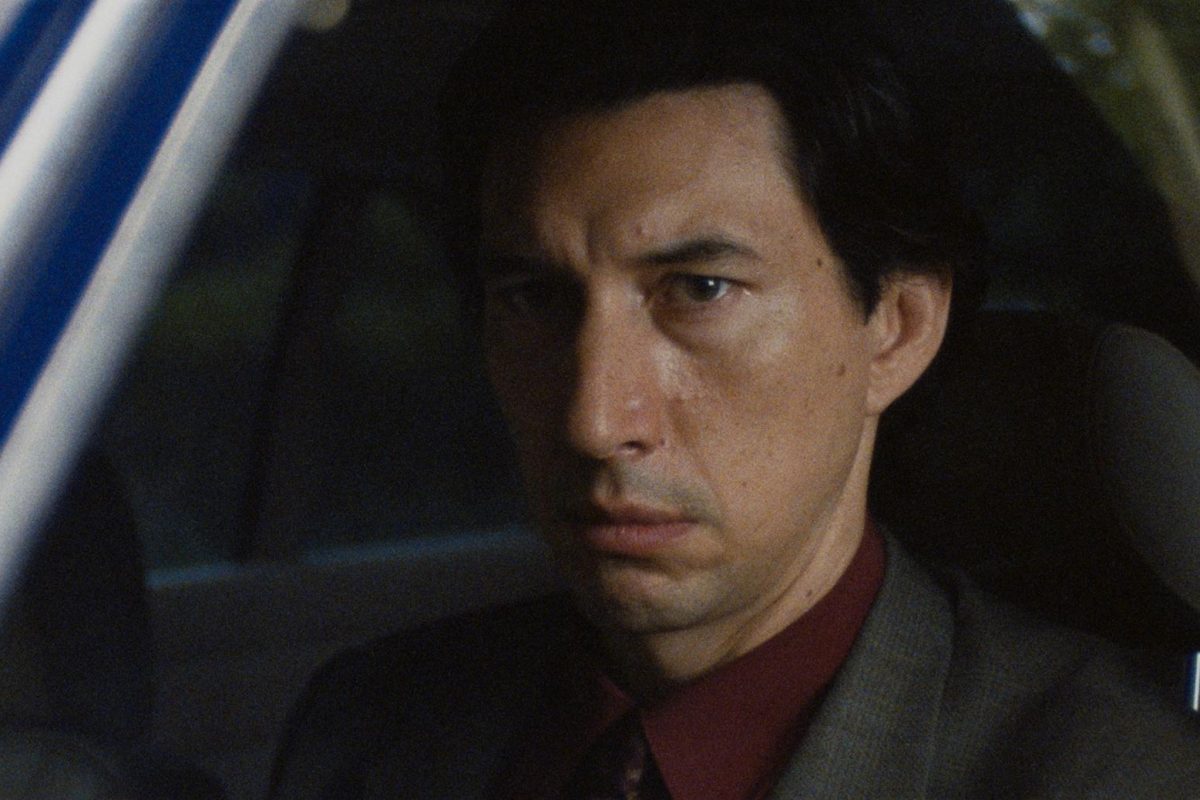
But Gray is never just going for cheap thrills. Once that danger has passed, Irwin must finally tell Hester the danger they’re in, and the power of Johansson’s presence, as the full force of this thing hits her, is astonishing; this is the best film work she’s done since Lost in Translation. Teller has a similarly flooring moment, by himself in the shadows once things go south, a beat of private, intense vulnerability that becomes the pivot point for the performance; until then, the character is gregarious and affable, full of dad jokes and wisdom, but he conveys volumes without dialogue throughout the second half. There is fear, guilt, and shame, all in where his eyes go when he’s not saying anything.
Driver’s mere presence, at this point in his career, is mighty; he carries himself with an effortless sense of weight and gravity, and the trick of the performance is how genuine that all feels early on, and how immediately that bluster and confidence deflate when he’s face to face with someone who holds actual power. (You understand why; Victor Ptak, who plays that someone, is as quietly chilling an actor as you’re likely to encounter.) Driver can play the character’s cool, and how that cool can pivot to self-destruction, with equal nimbleness. In fact, there does not seem to be much that this fine actor cannot do.
Gray is a real New York filmmaker; he remembers the look, the feel, and (especially) the smell of these neighborhoods, and fills his frames with keenly observed details. His filmmaking is dynamic without calling attention to itself; I’m still haunted by a slow push in on Irwin, visualizing the feeling of the walls closing in on him. He’s similarly un-showy with the aural elements, frequently using the end of conversations as transitions into the scenes that follow; it’s a simple but effective method of creating connective tissue, binding together the domestic and criminal worlds.
That’s the piece of the puzzle that Gray finally, really nails here, and which kept those earlier explorations of this milieu from all-out greatness. It’s not a new idea, of course, and if the setting of a key sequence in a cornfield on the outskirts of the city is any indication, Gray is quite aware of his debt to The Godfather. But it almost feels like he had to make a full-on family drama before he could make these elements cohere; in fact, he initially envisioned this as an explicit follow-up to Armageddon Time, bringing back Jeremy Strong and Anne Hathaway (who played “Irving” and “Esther” in that film) before thinking better of it. But that film clearly helped him anchor this one, and Paper Tiger’s best scenes are those that dwell in the disconnect between the way we see crime and violence in the movies, and what it feels like to experience it — and fear it.
A+
“Paper Tiger” is in theaters Friday.