Jason Bailey
Every Tuesday, discriminating viewers are confronted with a flurry of choices: new releases on disc and on demand, vintage and original movies on any number of streaming platforms, catalogue titles making a splash on Blu-ray or 4K. This twice-monthly column sifts through all of those choices to pluck out the movies most worth your time, no matter how you’re watching.
PICK OF THE WEEK:
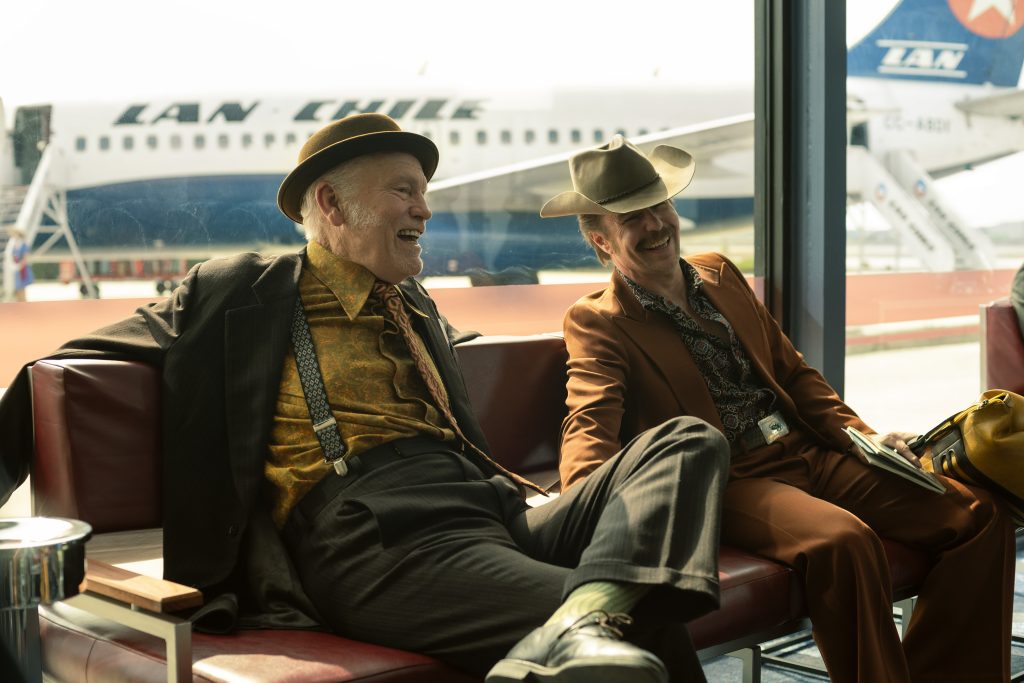
The Films of Henry Jaglom: Volume #1: For much of his career, New York-based writer/director Henry Jaglom was operating on the fringes, making small, self-financed pictures that he made his own way, and kept control of. That fierce self-sufficient streak is also why his work is so often difficult to see these days, which is part of why Cinématographe’s new box set (the first of hopefully many) is so valuable; the other reason is because the films themselves are so very good, idiosyncratic and intelligent and often very funny. The earliest included here, Tracks, is something of an outlier in his filmography, a mostly-serious examination of the complicated state of America in the immediate aftermath of Vietnam, with a veteran (Dennis Hopper, excellent) on a cross-country train, escorting the body of a fallen comrade. I first heard of Jaglom in comparison to Woody Allen, a connection that is much more clear with the second film in the set, Sitting Ducks, a broad and wacky crime comedy with shades of Take the Money and Run (down to the zippy, Dixieland-style score), in which two would-be criminals are wrecked not by their considerable incompetence, but their utter inability to read the women around them. And Can She Bake a Cherry Pie? feels like his Annie Hall, with Karen Black in fine form as a torch song-singing free spirit in a nervous romance with a nebbish (Michael Emil); it showcases a very young Larry David, several wonderful New York locations, and a remarkable ability to replicate the rhythms of two people nervously circling each other. (Includes new and archival audio commentaries, introductions, Q&A, interviews, “Who Is Henry Jaglom?” documentary, and essays by Tyler Maxin, Matt Zoller Seitz, and yours truly.)
ON NETFLIX:
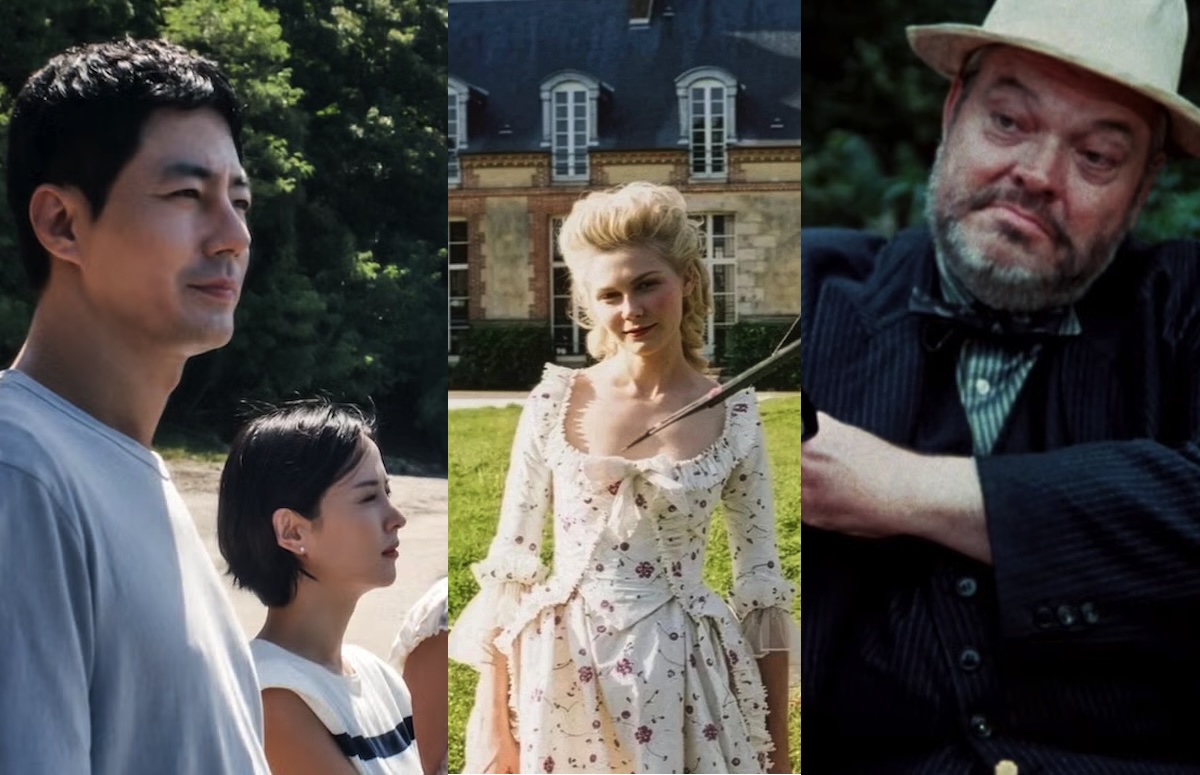
Possible Love: Lee Chang-dong (Burning) co-writes and directs this story of an unemployed factory worker, his long-suffering spouse, the documentary filmmaker who wants to profile them, and her long-suffering spouse. It almost feels adjacent to Barbara Kopple’s documentaries about the struggles of organized labor, but with a heavy dose of the cultural norms of its South Korean origin; like last year’s No Other Choice, its subtextual subject is the genuine havoc that unemployment wreaks to the traditional, conservative male psyche. The director, as ever, is both patient and incisive, bouncing these four characters and their seemingly incompatible motivations against each other, and while every performance is quite fine, the standout is Jeon Do-yeon as the character who has to be everything to everyone — an exhausting proposition.
ON MUBI:
Making Marie Antoinette: In 2005, Eleanor Coppola shot almost 80 hours of video footage on the set of her daughter Sofia’s film Marie Antoinette, put it aside, and finally started putting it together as a lockdown project with Sofia, who finished it off after Eleanor’s passing in 2024. The resultant documentary, Making Marie Antoinette, will inevitably be compared to Hearts of Darkness, her chronicle of the making of husband Francis’s Apocalypse Now, perhaps the greatest of all making-of movies. But what this film captures instead is the everyday stress and overwhelming exhaustion of a typical film production (as opposed to the extraordinary challenges of something like Apocalypse). This was a high-stakes production, but for the Coppolas, making movies is a family business. Sofia directs, Francis produces (and hangs out), their son Roman directs 2nd unit and shoots second camera, and Eleanor documents, her well-honed documentarian’s eye catching casually artful compositions and quiet, private moments. And since its ostensible central figure is such an unassuming one, Making Marie Antoinette ends up being as much a love letter to her late mother as a production diary. And it’s quite delightful on those terms.
ON BLU-RAY / DVD / VOD:
The Taste of Things: One of the great food movies of recent years, this tender drama from director Anh Hung Tran (The Scent of Green Papaya) concerns chef Dodin Bouffant (Benoît Magimel) and his partner Eugenie (Juliette Binoche), who live and work on a country estate. The plotting, in any traditional sense, is minimal; it’s less a film about narrative than about the feeling of being in their kitchen, and watching them collaborate. Binoche and Magimel are both marvelous, bringing their rich offscreen history into their onscreen dynamic, and cinematographer Jonathan Ricquebourg brings the picture a fluidity and immediacy that’s rich and overwhelming. (Includes audio commentary, introductions, and essay by Kenji Fujishima.)
ON 4K UHD:
White Star: In 1981, German filmmaker Roland Klick (Deadlock) was relieved of directing duties for Christiane F. on the eve of production, and wound up spending the next two years working on this similarly visceral portrait of Berlin in the early ‘80s (debuting on 4K from Subkultur). Dennis Hopper stars as a former Vietnam war photographer (wink, wink) and big-time rock and roll tour manager who’s now promoting a rising German syth-pop star, and doing so by the seat of his pants. Hopper was in the worst depths of his drug addition in this period, and you can see it in the performance; he’s sweaty, strung out, and unpleasant, blurring the lines between hard living and hard acting, a desperate performance of a desperate character (in ways that don’t always seem intentional). He was surely a trial to work with, but there’s no denying the power of the performance — only this actor could do what he’s doing in its closing scene, where his mutterings (“Where am I going?”) feel as informed by his own life as the role he’s playing. (Includes audio commentary, short film, interview, and trailers.)
Shrek: If you felt a slight shift in the ground a couple of days back, that was my bones turning to dust when taking in the cover of the new “25th anniversary edition” 4K of the movie that put Dreamworks Animation on the map. (I wasn’t even a child when it came out!) You can blame it for a fair number of cinematic crimes: the picture’s numerous subpar sequels and spinoffs, the infestation of timely pop-culture references into children’s entertainment, and so on. But Shrek remains both a funny and heartwarming film, full of inside jokes, big laughs, and Eddie Murphy’s best voice performance to date, and Universal’s restoration is crisp and eye-catching. (Includes audio commentary, featurettes, deleted scenes, music video, and television episodes.)
Four Rooms: Miramax’s 1995 omnibus film — four stories, set in four rooms of the same hotel on New Years Eve, written and directed by four hot indie filmmakers (Allison Anders, Alexandre Rockwell, Robert Rodriguez, and Quentin Tarantino) — was hyped big yet flopped big, and it’s easy to see why. Only the Rodriguez and Tarantino segments come off at all, though the first two were reportedly sliced to the marrow to make ample room for those two bigger names (and they look like it). But there are still fine performances to recommend throughout, including Tim Roth as the beleaguered bellhop who gets sucked into each story, Marisa Tomei’s atypical turn as a stoner, a wonderfully laid-back Bruce Willis (his second, and sadly final, Tarantino collaboration) and Jennifer Beals (who appears in two segments) as a woman who seems to have seen it all. And if some segments are markedly better than others, well, isn’t that always the way with movies like this? (Includes audio commentary, interviews, archival featurettes, and trailers.)
The Corruptor: This 1999 action movie (new on 4K from Arrow’s new Toy Robot Video sublabel) is an odd mixture of personnel — it stars Chow Yun Fat, in his second American role, and Mark Wahlberg, coming off Boogie Nights, while the director is Glengarry Glen Ross’s James Foley, not the first name that comes to mind when you think of ‘90s action. (And if you know anything about Wahlberg’s background, there’s something a little queasy about his character going to work in Chinatown because he cares so much about the community.) But Foley immerses himself in the milieu, giving the picture a grimy, lived-in authenticity, and while Fat is still struggling with his English dialogue here, his movie-star charisma requires no translation. (Includes audio commentary, interviews, featurette, music video, trailer and TV spots.)
Above the Law: Steven Seagal turned out to be such a piece of shit — as an actor and a human being — that it’s easy to forget why he became a star in the first place. Toy Robot’s new edition of his debut film reminds us that it was mostly because of Andrew Davis, who would direct Seagal again in his best film Under Siege, as well as Chuck Norris’s best movie Code of Silence; he knew how to use these guys, how to play to their strengths and work around their weaknesses, grounding them in authentic locations and surrounding them with skilled character actors. The plot is completely far-fetched (even by ‘80s cop movie standards), but to his credit, Seagal comes off well: he’s lean and handsome, he’s genuinely charismatic (he would rarely replicate the warmth of his scenes with Pam Grier), and he’s a graceful bruiser.
ON BLU-RAY:
The Merry Widow: Look, if you can get through a Maurice Chevalier movie without thinking of that line from Annie Hall about the bravery of French Resistance soldiers, you’re made of stronger stuff than I. But this Ernst Lubitsch production — making its Blu-ray debut from Warner Archive — is a lot of fun, a bit of musical mirth set in the Fredonia-esque fictional country of Marshovia (in the opening moments, we see that it can only be identified on a map with a magnifying glass), in which Chevalier’s smooth talker attempts to land a rich widow played by Jeanette MacDonald. Their chemistry is palpable and sensual, and Lubitsch orchestrates their romance with his typical winking flair. (Includes alternate French-language version and trailer.)
Hell House: The Trinity Assembly of God Church in the suburbs of Dallas made its name in the late ‘90s for its ferociously evangelical Halloween haunted house, in which visitors were treated to sub-“After School Special” vignettes depicting the horrors of drug abuse, abortion, and other hobby horses. (“A part of salvation is being afraid of going to hell,” we’re told.) George Ratliff’s 2001 documentary, new on Blu from AGFA, has the materials for simple, point-and-look mockery; the creators of the haunted house know comically little about the subjects they’re tackling, and the mere mechanics of the production have a “Waiting for Guffman” quality. But Ratliff goes deeper, attempting to understand what drives these folks to live lives of such profound fear and sadness, and comes up with some fascinating theories. (Includes audio commentary, “This American Life” audio episode, outtakes, trailer, short, and Christian scare film.)
Henry Fonda for President: Alexander Howarth’s sprawling (three-plus hours) essay film intertwines film history and American history, considering the public and private life of the iconic actor and the idea of him as a stand-in for the best of us. Beyond the obvious examples of his “presidential” persona (Fail-Safe, The Best Man, etc.), Howarth draws extensively on Fonda’s last major interview, conducted mere months after the inauguration of Ronald Reagan, to position him as a counterpoint to Reagan’s vision of America; Fonda’s predictions and criticisms of the new president prove particularly prescient. But it’s also a fine work of film scholarship, close-reading Fonda’s most beloved roles and films to consider the “many places and times and characters” that it takes “to imagine that invisible republic, the United States of Fonda.” (Includes interviews, trailer, and essays by J. Hoberman, Farran Smith Nehme, and Horwath.)
Finally Got the News: Documentary and/or social justice aficionados will eat up Icarus Films’ new Blu-ray release of this 1970 artifact, made about (and with the participation of) the League of Revolutionary Black Workers, and the struggle against the entrenched UAW brass to determine the future of union workers in Detroit. It’s brief (just under an hour) but informative, walking through the history of unions and revolutionary movements in Detroit’s factories, and though it’s undeniably of its time, its perspective — that working-class unity can exist across racial lines, but those in power work tirelessly to divert and distract — is still timely. Also included is the companion hour-long doc Taking Back Detroit, made a decade later, much more formally straightforward but equally fascinating as both a time capsule and political document.
The Blade Spares None / The Hurricane: Arrow Video pairs up two thrilling wuxia adventures starring Nora Miao, best known for her two pairings (three, if you count a tiny role in The Big Boss) with Bruce Lee. She made Blade before those collaborations, starring (and killing it) as a ruthless warrior who spouts boasts like “If you want to fight me, go back and study for a couple of years!” Director Teddy Wip Wing Cho shows real proficiency at staging group fight scenes — an evergreen skill of Lo Wei, who directed The Hurricane after those Lee pictures. It’s a fun story of legendary villains, shifting allegiances, surprise betrayals, and lots of sword fights, and the director’s sense of visual humor is particularly present here; I loved how the big bad’s first fights are essentially off-screen, played out in reaction shots, sound effects, and messy aftermath. (Includes audio commentaries, featurette, interview, and trailers.)