Kayleigh Donaldson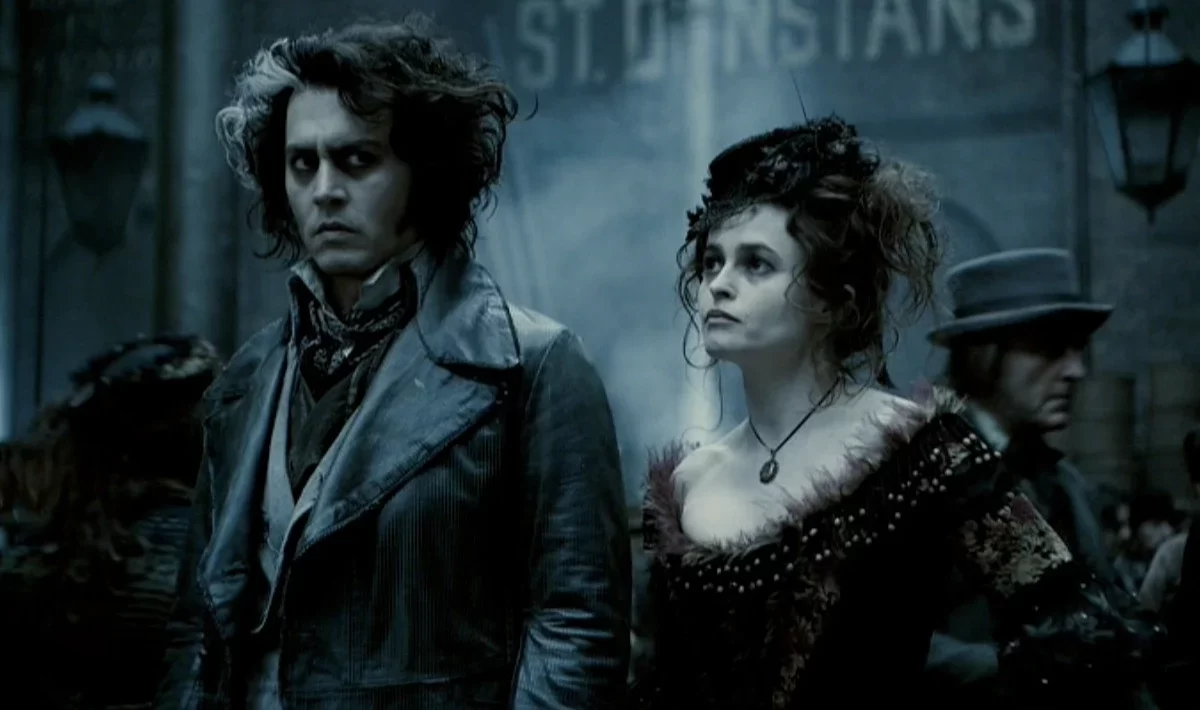
The release of Merrily We Roll Along into cinemas is the stuff of dreams for musical theater nerds. Once written off as one of Stephen Sondheim’s biggest flops, some careful retooling over the years, coupled with a staggering Broadway revival, helped to revive its image as one of the classics of its time. Now, fans won’t have to pay hundreds of dollars to see Lindsay Mendez, Jonathan Groff, and Daniel Radcliffe in the production that redefined the musical’s reputation. Proshots of Broadway productions are dishearteningly uncommon and even rarer as cinematic experiences, despite the demand. Many musical geeks prefer a sturdy proshot to a traditional film adaptation, where changes are inevitable and the transfer to the big screen cannot help but dilute the intrinsic uniqueness of the form. Alas, there’s less money and prestige in this format, so we’re forever doomed to see our favorite shows turned into uber-bloated grimdark spectacles full of people who can’t sing. Sondheim is no stranger to this process.
The undisputed king of late-20th-century American musical theater dabbled in film, providing songs and music for Reds and Dick Tracy. His lyrically balletic works take the musical format seriously and have no desire to sand away their rough edges or complexities for a mainstream audience. That makes adapting them for film difficult. Both versions of West Side Story soar, but A Little Night Music was a staid slog, Into the Woods swerved away from the source material’s darker moments, and A Funny Thing Happened on the Way to the Forum just removed 80% of the songs. The closest Hollywood has come to greatness with Sondheim is through the lens of Tim Burton, a director with his own well-worn bag of tricks who embraced the composer’s prickliness but still chickened out with his theatrical impulses.
Sweeney Todd: The Demon Barber of Fleet Street is arguably Sondheim’s most well-known show. It’s a gothic horror morality tale with a Shakespearean-level tragic ending, countless murders, cannibalism, and a pseudo-incest subplot. It’s also hilarious, upsetting, and truly contemptuous towards the crooked power structures of societies past and present. This is a toe-tapping musical that ends like Funny Games but also has the lyric “popping pussies into pies.” Sondheim and book writer Hugh Wheeler pulled off the tonal tightrope walk of the era with this musical. Many productions have failed miserably to maintain that balance.
With Burton’s adaptation, he was on surer ground as a filmmaker who revels in stylized aesthetics and a ghoulish outlook on “normal” life. The tragic Benjamin Barker, a barber who swears unremitting revenge on the world that wronged him, is a clear inspiration for characters like Edward Scissorhands. It was a good excuse for him to get his hang of regulars back together: Johnny Depp, Helena Bonham Carter, editor Chris Lebenzon, and costume designer Colleen Atwood (Danny Elfman was benched for obvious reasons.)
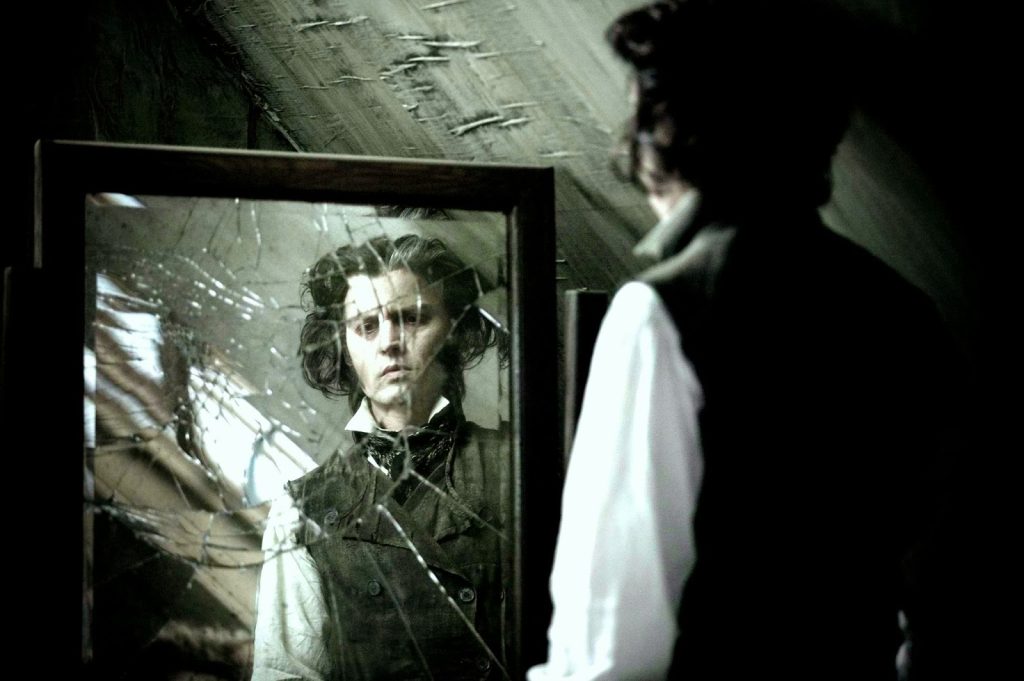
There’s a lot of earnest fanboyish appreciation for both Sondheim’s work and the penny dreadfuls it took inspiration from in Burton’s adaptation. Burton is a filmmaker often dinged for putting style over substance, but the Edward Gorey-esque gothic styling truly makes the searing red of many a slit throat sing. This London is as grimy and desolate, so airless and bereft of sunlight, as a black box theater, although the greenscreen is painfully obvious in some scenes.
Oddly, though, for a director who has often injected moments of perversity into mainstream cinema, Burton balks at some of Sondheim’s flintier edges. The psychological weirdness of the musical is mostly absent in favor of the spooky safeness that is Burton’s bread and butter. Even though the plot is near-identical to the show, the subtexts and allegory are muted. This is a narrative about the corrupting force of power, and of how even the most justifiable hunts for revenge will inevitably curdle into pain for those who don’t deserve it. It’s not that Burton’s film removes that detail, but the heft of Sondheim’s layered take on a pulp read was clearly not the director’s priority.
Nor was retailing Sondheim’s nuances. While there are moments where Burton nails the humor (the entire “By the Sea” number is deadpan brilliance), many of the best jokes in the lyrics are skimmed over entirely. None of the actors has the pipes to pull off the dexterity of Sondheim’s music, and they certainly can’t land a punchline while trying to strain for the high notes. Bonham Carter looks the part, but the moment she’s called upon to sing, her tinny whisper robs the character of her wit and malice. Both leads look and sound bored, and the lack of respect for the songs exhibited through the bad singing only weakens Burton’s execution.
Sweeney Todd is often listed as one of the best movie musicals of the 2000s, and the best Sondheim adaptation (if only through lack of competition). Its merits are evident, and it’s certainly better than, say, Into the Woods, but the film is best understood as yet another reminder of the difficulties in translating theater for cinema. Stephen Sondheim did not view the stage as secondary to film. It was a medium whose boundaries he always sought to push, and often Hollywood couldn’t keep up with his ambitions. Restricting his lyrical wit and thematic layers to a movie might be missing the point. Still, how can we not crave more attempts like Sweeney Todd, if only for the chance to see those songs performed on the biggest screen possible? We’re still waiting for a studio that can rise to the occasion on Sondheim’s behalf.
“Sweeney Todd: The Demon Barber of Fleet Street” is streaming on Paramount+, Hoopla, and PlutoTV.