Sara Batkie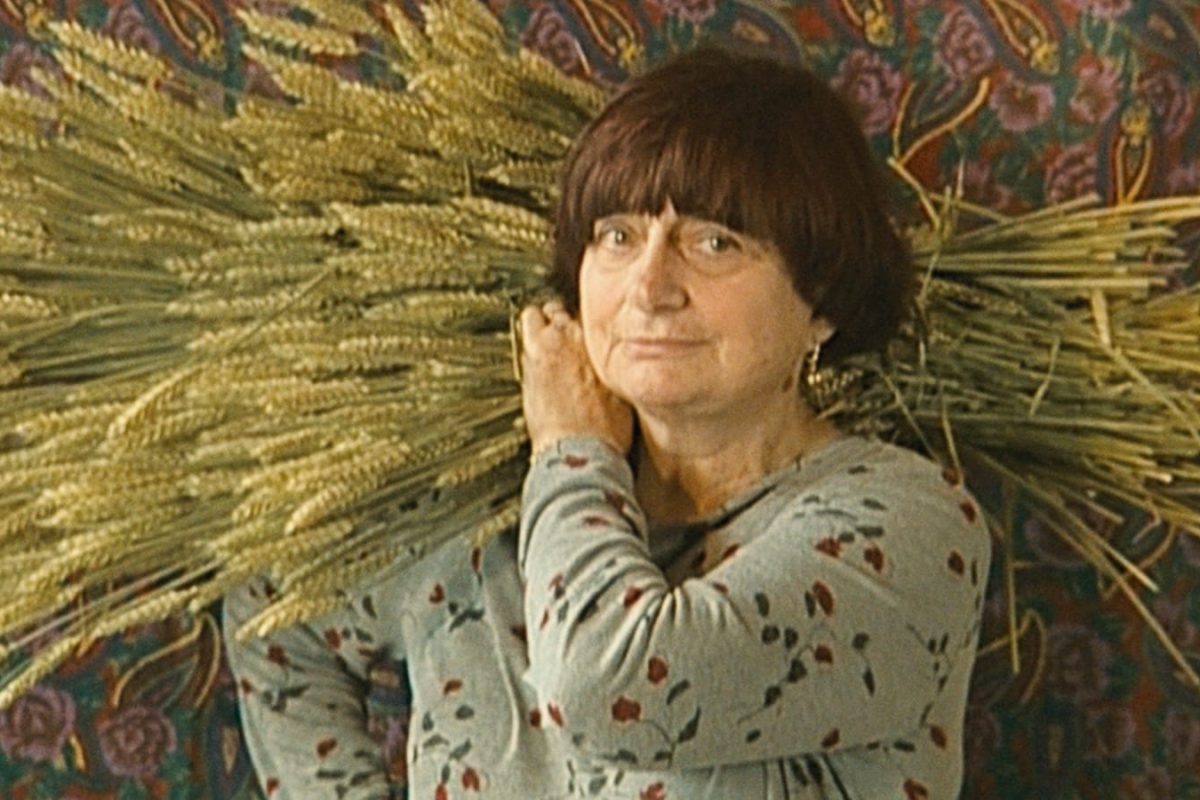
Recently the New York Times invited critics, actors, and other media types to submit their lists of the best films of the 21st century so far. The ballots were compiled into a Top 100; it’s a respectable mix of popular appeal and genuine classics, though as with anything built by a committee there’s less room for surprises or left curves. Only three documentaries made the final cut: Werner Herzog’s Grizzly Man, Joshua Oppenheimer’s The Act of Killing, and Agnès Varda’s The Gleaners and I, which turns twenty-five this week. Its inclusion is a testament to the director’s enduring appeal, and the cult that’s grown up around her in the years since its initial release.
As with just about everything Varda makes, to attempt to describe what the film is about is to extract much of its joy. Perhaps it’s best to start where she does with a definition of what a “gleaner” is: someone who gathers from a field after the harvest. Like a flaneur, it’s presented as a distinctly Francophone pursuit; other countries might practice it but it was perfected in Varda’s. It was historically considered women’s work. By the time Varda decided to make her documentary, modern machinery had made it essentially obsolete. And yet it persists, which is partly why Varda is interested in it as a subject. In an age when our culture has weaponized the concept of worth, gleaning is the art of salvaging what others have deemed disposable.
The traditional concept of gleaning, though, is just a jumping off point for various flights of fancy that Varda takes. This sort of gathering isn’t only a rural custom but an urban one too, and her spontaneous approach makes room not just for people who sort through potato fields and vineyards, but city “pickers,” who reclaim food waste from market stalls and garbage bins, as well. Some do this out of need; others do it, as one man puts it, because of “ethical concerns.” Regardless of where it happens, there are bureaucratic guidelines to abide by – oyster gleaners must keep a specific distance from the farmers’ beds; field gleaners can only collect between sunrise and sunset, and only after the official harvest is complete. Those who disobey risk punishment, like the homeless kids who “steal” from a grocery dumpster.
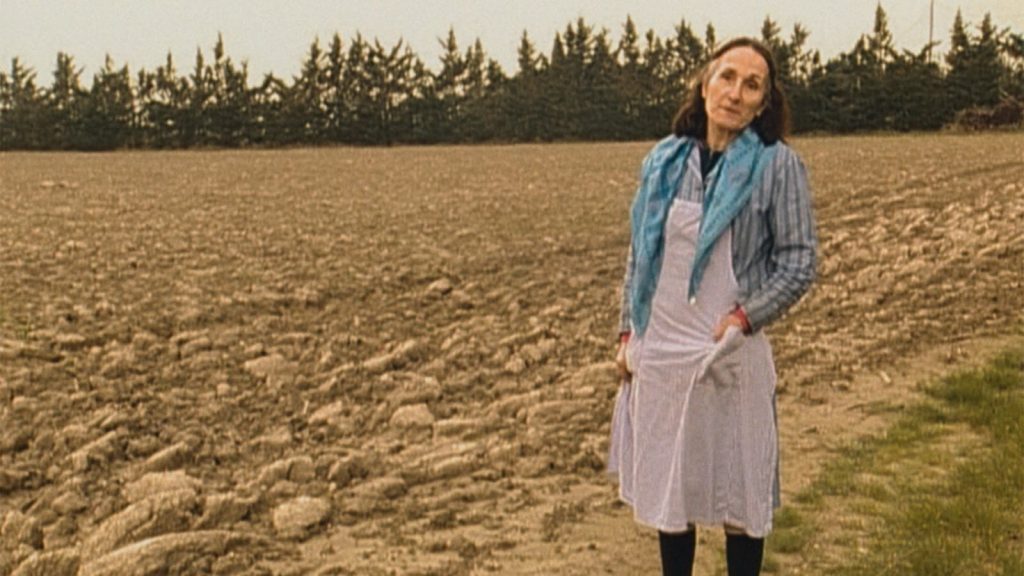
Varda employs talking head interviews throughout the film, all of which have an improvisatory quality. They often start in one place and end up somewhere completely different, like the solitary gleaner she follows to a trailer park who eventually reveals he was a trucker who lost his license after failing a breathalyzer test. Her generosity in letting these stories unfurl in unexpected directions allows us to draw connections between anecdotes that at first might seem disparate. Together they become a collective. “The more I met them, the more I could see I had nothing to make as a statement,” she said of her subjects. “They make the statement; they explain the subject better than anybody.”
It’s a humble declaration of intent, but it’s also a somewhat disingenuous one. Like many artists, Varda is a gleaner as well, but she gathers facts, information, and memories. This affords her a certain amount of privilege over the people she interviews. Rather than leave that tension unaddressed, Varda makes it an explicit part of the film’s texture. She too becomes a subject, using a hand-held digital camera to document her own complicity in constructing a narrative. Much of the footage – like the heart-shaped potato she finds in a field – is “strokes of luck” but it still has to be put together into something coherent. And yet some of the film’s most memorable moments have nothing to do with the ostensible storyline, like the “Dance of the Lens Cap” or the montage of Varda’s hand “capturing” trucks on the highway. Other directors might leave these on the cutting room floor but, like the gleaner she is, Varda refuses to discard them. Sustained attention becomes a form of consecration.
Though Varda went on to make several more well-received documentaries after Gleaners (including a sequel two years later), it remains a high point in her filmography in part because its themes of anti-consumerism and resistance to authority still feel so relevant. Shooting on digital would fall in and out of fashion, but Varda’s commitment to it goes beyond just its practicalities. As she put it in a Sight and Sound piece from 2001, these technologies are “not ends in themselves,” but a way “to collapse the time lapse between wanting to film something and actually being able to do it.” She was seventy-two at the time of production and her willingness to stretch herself at an age when many other artists would be content to rest on their laurels is uniquely inspiring. “Where does play end and art begin?” she muses at one point. For her, there was little distinction between the two.
“The Gleaners and I” is streaming on the Criterion Channel.