Zach Vasquez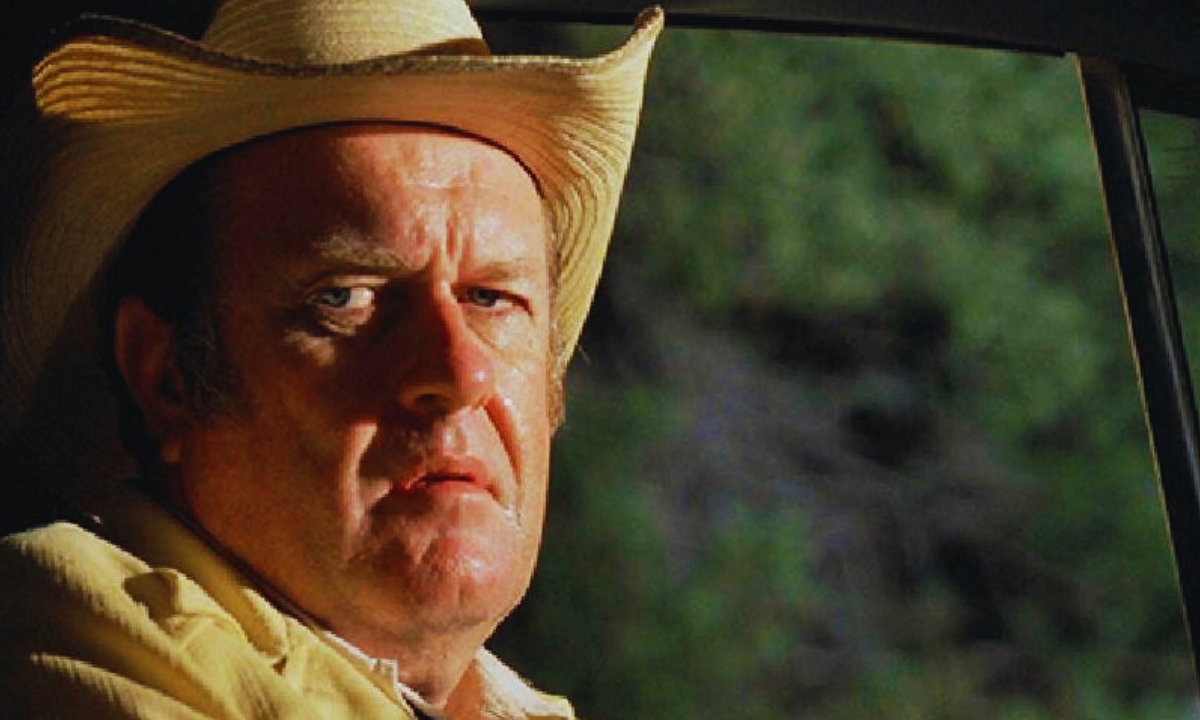
When character actor great M. Emmet Walsh passed away last month at the age of 88, almost every obituary written about him referenced The Stanton-Walsh Rule, as coined by late critic Roger Eberrt, which states, “no movie featuring either Harry Dean Stanton or M. Emmet Walsh in a supporting role can be altogether bad.”
While Ebert would go on to amend this rule in the face of some truly terrible films featuring either men (Dream a Little Dream for Stanton, Wild Wild West for Walsh), it has now outlived all three of them, and for good reason. Every generation of cinema has their character actor Mount Rushmore, and Stanton and Walsh certainly earned spots on theirs through their incredible works, unbelievable filmographies, and longevity (Stanton made it to 91). And while Walsh was not necessarily the last of their particular breed—James Hong is still going strong at 95—his passing does mark a major, if under-the-radar moment for modern cinema.
Though born in New York state, Walsh was raised in rural Vermont, in a town so small that his high school class was made up of less than a dozen students. The son of a customs agent, he attended Clarkson University, where received a B.A. in Business Administration. However, a brief stint in stage production while in college gave him the acting bug, and soon enough he was back in New York, performing in regional theater before making his Broadway debut alongside Al Pacino in the 1969 run of Don Peterson’s Does a Tiger Wear a Necktie?
Pacino would win a Tony for that performance, and within a few years he’d be one of the biggest stars Hollywood ever produced. Walsh’s career was not so enchanted. He had the desire to perform Shakespeare, Chekhov, and Moliere but because of his heavyset frame and idiosyncratic Vermont drawl, with it’s glottalization—or ““t-dropping”, so that a native Vermonter would pronounce “Vermont” as “Vermon’”—he had a hard time getting those parts.
But the qualities that made him a hard sell for classic theater made him perfect for the movies. The same year he performed in Tiger, he got his first movie role in Alice’s Restaurant. Granted, he’d go uncredited, as he would in the next two pictures he landed that same year, one of which was Best Picture winner Midnight Cowboy.
Soon enough though, he was making credited, memorable appearances in such movies as The Traveling Executioner, Little Big Man, Escape from the Planet of the Apes, What’s Up Doc?, Kid Blue, Serpico (reuniting with Pacino), The Gambler, Bound for Glory, and Mikey and Nicky, among others. While most of his credits for those roles were small, unnamed parts—Shotgun Guard, Arresting Officer, Los Vegas Gambler, Bus Driver—he still got to work with some of the greatest directors of the period, including Arthur Penn, Peter Bogdonavich, Hal Ashby, and Elaine May. And thanks to his immediately noticeable physicality, he would prove memorable, no matter how small the role.
In the final years of the ‘70s, Walsh would move from memorable background player to character actor extraordinaire, starting with his performance as a blue collar sports reporter in the hockey comedy classic Slap Shot, where he got to trade witty dialogue with Paul Newman. In 1978, he nabbed his largest role to date as the sleazy parole officer to Dustin Hoffman’s (with whom he’d appeared in Midnight Cowboy and Little Big Man previously) sensitive ex-con in the highly underrated crime thriller Straight Time—which just so happens to be the only feature film in which he appeared with Harry Dean Stanton.

Walsh spoke about being in demand because other actors knew he would give them what they needed in a scene without “killing them” by stealing the spotlight, but there is no denying that when it comes to Straight Time, he walks away with the movie, despite only being in it for the first half. He is so detestable that even though he gets his just deserts in the end, you still leave that movie wishing he got it worse. What’s ironic about this, even as it speaks to Walsh’s immense talent at his craft, is that he did not play the character as a villain. He saw his father in the character—an overworked, underpaid civil servant just trying to do his job. Only when he watched the finished film with an audience did he realize he was the “biggest bastard in the world.”
Walsh was as adept at comedy as he was drama, and he’d follow up Straight Time with one of his most recognizable roles. As Madman in The Jerk, Walsh plays a bumbling sharp shooter and would-be mass shooter who flails around like Elmer Fudd trying to nab Steve Martin’s Bugs Bunny.
Walsh’s career continued apace in the ‘80s in both film and television. He appeared in his second Best Picture winner at the start of the decade in Robert Redford’s family drama Ordinary People. Then, in 1984, he made a huge impression as Captain Bryant in Ridley Scott’s cyberpunk noir classic Blade Runner. Walsh’s appearance by this point—corpulent, balding, rumpled—gave him an air of both menace and shabbines that made him perfect for police roles. And of all the cops he played throughout his career, Bryant is by far the most interesting, not least of all because he delivers, with that inimitable drawl of his, the immortal line “I need the old blade runner. I need your magic.”
If The Jerk and Blade Runner are arguably the roles for which Walsh is most recognizable to mainstream audiences (or at least those over a certain age), the one for which he is most celebrated amongst cinephiles is 1984’s Blood SImple, the debut feature from Joe and Ethan Coen. It is also the closest thing Walsh ever had to a lead role, as well as his best performance.
The Coens wrote the character of Loren Visser, an uber-sleazy, Satanically conniving Texas private investigator hired by a jealous nightclub owner to kill his two-timing wife and her lover, specifically for Walsh. He liked the script and thought he could bring a Sydney Greenstreet-like aura to the role, but he was still highly skeptical of the project, not only because he doubted his ability to play a convincing Texan given his Vermont accent, but also because he was wary of working for two total novices, especially since the pay was so low. Eventually, he did accept the part, taking a hundred-day per diem (in cash, as he did not trust the Coens enough to accept a check) instead of the 1% gross of the film’s total profits offered to him. He would later go on to admit this was a mistake, although it’s easy to understand. No one could anticipate that this no-budget neo-noir from first-time directors would go on to be considered a modern classic.
If Blood Simple didn’t have the same immediate cultural impact of other independent breakout hits like She’s Gotta Have It, Reservoir Dogs, or Clerks, it was still a notable success, garnering Walsh the best reviews of his career as well as much-deserved Best Actor win at the inaugural Independent Spirit Awards. It speaks to the generational talent of the Coen Brothers that they would go on to make better films than Blood SImple, given that it’s about as perfect a piece of noir as has ever graced the screen. That said, for as many incredible performances as they got from their actors over the decades, there are few, if any, superior to Walsh’s.
Blood Simple marks the high point of Walsh’s career, and it’s both a wonder and a travesty that no one ever gave him as sizable a role as Visser again, including and indeed especially the Coens (although he did show up for a small but hilarious bit part in their follow-up Raising Arizona). He would spend the next 40 years working, ultimately racking up 234 credits in film and television. Said credits include any number of popular titles, including The Pope of Greenwich Village, Fletch, Critters, Back to School, Clean and Sober, A Time to Kill, Romeo + Juliet (finally getting to deliver some Shakespeare), My Best Friend’s Wedding, and The Iron Giant. (His television CV is just as stacked, and includes memorable late-period turns in Adventure Time and The Righteous Gemstones.)
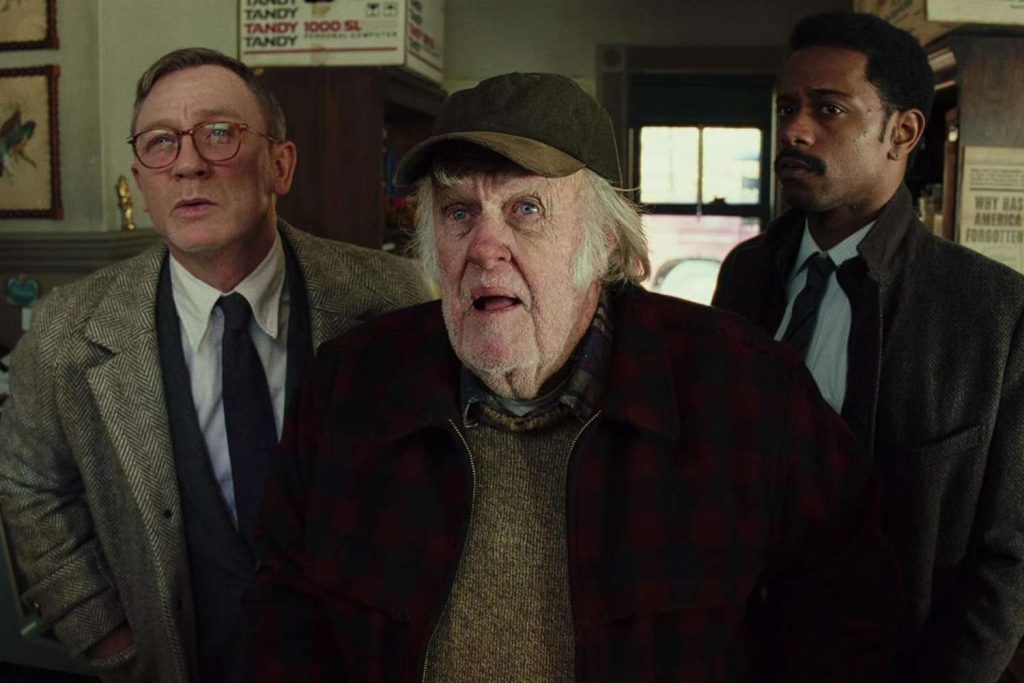
In 2019, Walsh popped up in Rian Johnson’s smash whodunnit Knives Out as a kindly groundskeeper. In the wake of his passing, Johnson tweeted: “Emmet came to set with 2 things: a copy of his credits, which was a small-type single spaced double column list of modern classics that filled a whole page, & two-dollar bills which he passed out to the entire crew. “‘Don’t spend it and you’ll never be broke.’ Absolute legend.”
Walsh continued working until the very end. His final role was in Mario Van Peeble’s action western Outlaw Posse. It was released in select theaters on March 1st of 2024, a mere 18 days before Walsh died in his home state of Vermont, just three days before his 89th birthday.
With his passing, the American cinema says goodbye to their last Everyman.