Steve Erickson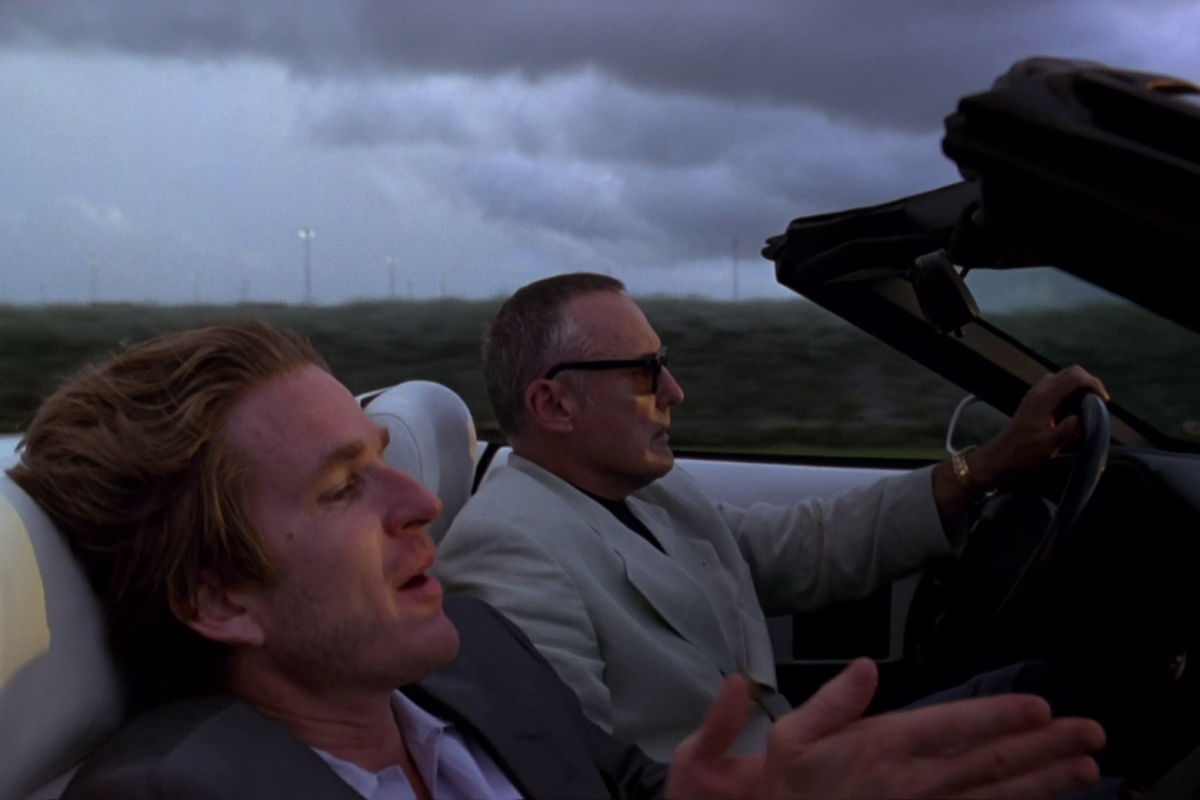
Like much of Abel Ferrara’s work from the ‘90s, The Blackout is steeped in substance abuse. During a Dionysian film shoot lorded over by Mickey (Dennis Hopper), Maddy (Matthew Modine) pounds back alcohol and sniffs coke constantly, entering a deep fugue under the influence of crack. It’s remarkable that a director who was an active addict during this period could say something this cogent about his disease while still in the grip of it. Outside cinema, The Blackout’s closest parallel might be Danny Brown’s 2016 album Atrocity Exhibition, where the rapper laid out his self-destructive impulses with clarity, detailing how he was endangering himself with nihilistic glee. The montage and superimpositions of The Blackout find a similar demonic rapture in intoxication.
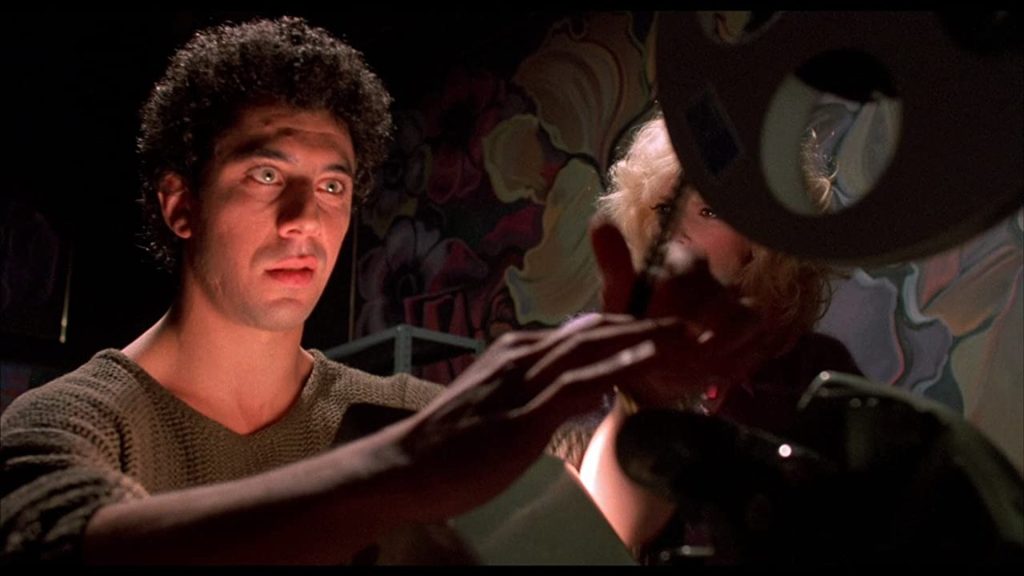
Mickey has turned his Miami set into a sleazy nightclub, with nude dancers and video screens everywhere. He plans to remake Jean Renoir’s Nana. Upon following his girlfriend Annie (Beatrice Dalle) to Miami, Matty spends most of his time at the film shoot. When he proposes to her, it leads into an ugly, physical argument, as he becomes furious that she’s had an abortion. At his lowest point, Matty meets Annie (Sarah Lassez), a young waitress whom he brings back to the set. After the title card “18 months later,” he reappears at an AA meeting, celebrating a year of sobriety. He’s now in therapy and dating a much more innocent woman, Susan (Claudia Schiffer). Despite this, his conviction that he may have murdered a woman persists, dominating his life.
Digital editing was still fairly recent in 1997, while cheap DV cameras were also a novelty. The texture of film and video was very different. Two images recur through The Blackout: the beach of Miami and the blue-tinted static of video monitors. In Ferrara’s final shot, they look identical. The fact that one is natural and the other the product of technology scarcely matters.
The Blackout is also a product of a period when sampling seemed revolutionary: its hallucinatory sound design and visual superimpositions, taking the audience inside Matty’s perception of his life, draws from the electronic dance music and hip-hop of the ‘90s. He hears the same argument about abortion over and over in his head, and even at AA, the video and audio run out of sync. Yet alcohol and cocaine destroyed his ability to have any clear knowledge of the violence he thinks he’s committed. Video holds out the prospect of working as a portable memory bank, while Annie is able to play back a tape recording proving that Matty asked her to abort their fetus.
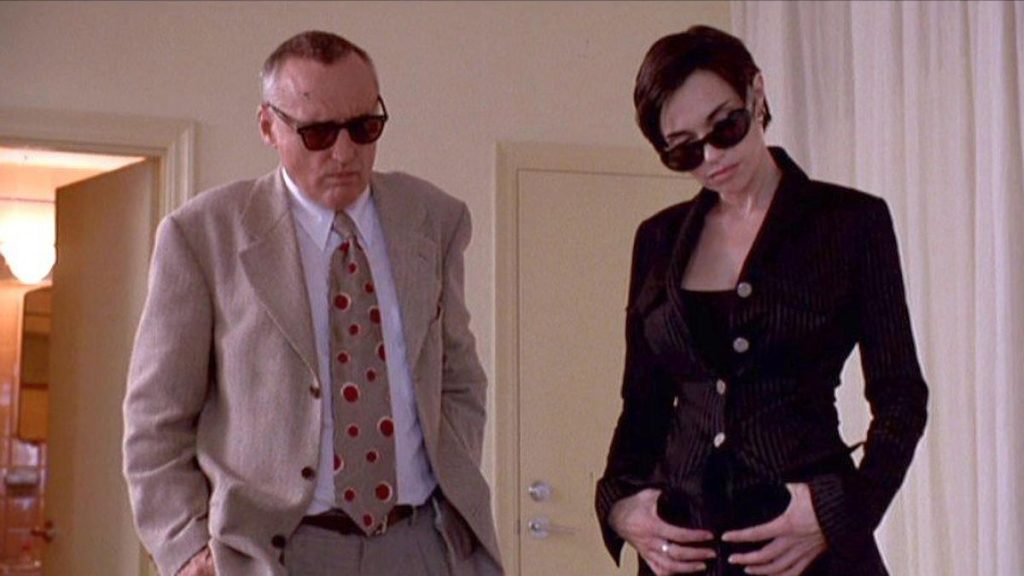
The Blackout runs through doublings and contrasting characters and themes: Annie I/Annie II; addiction/sobriety; film/video; brunettes/blondes. The opening and closing scenes are a loop, although first-time viewers won’t recognize it. While Mickey is based on Nicholas Ray during his ‘70s experiments that led to We Can’t Go Home Again, Hopper plays him with a feverish intensity. Matty shares his actor’s name, while his therapist is portrayed by a real psychiatrist, Chris Zois. (Zois also co-wrote the script and worked on four more Ferrara films.) Like Ferrara’s 1993 Dangerous Game, in which Harvey Keitel played a director much like Ferrara, the film makes one wonder about the circumstances of its making.
Back in 1997, the theme of addiction looked simpler than it does today. Matty’s torment does not have any easy answers: getting sober solves little. When he falls off the wagon, he was pushed by his inability to come to peace with his feelings of guilt. But 27 years later, The Blackout also describes a form of addiction that we may not have foreseen becoming so common: dependency on images. This is played out through Mickey, whose Warholian voyeurism treats a heartfelt monologue from Matty and two women having sex as the same kind of charged fodder for his content. Matty hugs and kisses the image of a woman on a TV screen more tenderly than he treats real people.
In genre terms, The Blackout may be neo-noir or even an erotic thriller, with a tinge of the avant-garde. (Adrian Martin notes that Australian video stores often placed it in their porn sections.) But it goes far to convey the utter hell that Matty’s life has become. It’s not without a degree of cheese: for a film with such careful sound design, Joe Delia’s score, which lays blues licks over a cheap drum machine, is surprisingly slapdash. The T&A seems like a half-hearted commercial requirement. Yet the moral seriousness behind Ferrara’s work, even with their exploitation movie elements, is always present: The Blackout fleshes out the cost of living in a world where everyone’s complicit in some form of hidden violence. There’s more than enough guilt to go around and few paths to redemption.
“The Blackout” is streaming on several ad-supported services.