Chelsea Spear
Throughout the 1970s and ‘80s, Jessica Harper made her way into the Hey It’s That Guy pantheon with a series of memorable appearances across a variety of films. Her naturalistic screen presence, understated line readings, and crack comic timing were a high point of the movies in which she appeared, and her wide-eyed girl-next-door appearance made her a pinup for cult film fanatics. While she never had the cultural cachet of her peers Teri Garr or Madeline Kahn, her effortless performances and willingness to try different genres and skills have given her a unique legacy.
Horror film fans hold Harper in especially high esteem. In the 1970s she made her name in a pair of horror movies, singing, dancing, and shrieking through The Phantom of the Paradise and Suspiria. Her role in Suspiria was so influential that she appeared in Luca Guadagnino’s 2018 reimagining. Harper’s regular-girl charm made her an ideal point-of-view character, guiding viewers through heightened and grotesque worlds and reacting the way we might imagine ourselves reacting to Faustian battles of wits and demonic ballet academies.
By the time Harper auditioned for a film called Phantom of the Fillmore, she had appeared as a member of the tribe in the Broadway production of Hair and booked a few roles in student films. Her screen test paralleled her introductory scene in Phantom. “I’m walking by Jessica, and she’s singing to herself, ‘Long ago and oh so far away,” Paul Williams recalled in a 2019 interview with Billboard. “And then she came in to audition for Brian and I, and she sang, ‘Long ago and oh so far’ in a Broadway voice. “I think I said to her, ‘Sing it to yourself.’ And when she did, it was indicative of how brilliant the performance would be when she actually did it on film.” Harper would eventually make her big screen debut in Phantom of the Paradise, beating out no less than Linda Ronstadt for the role of muse/love interest Phoenix.
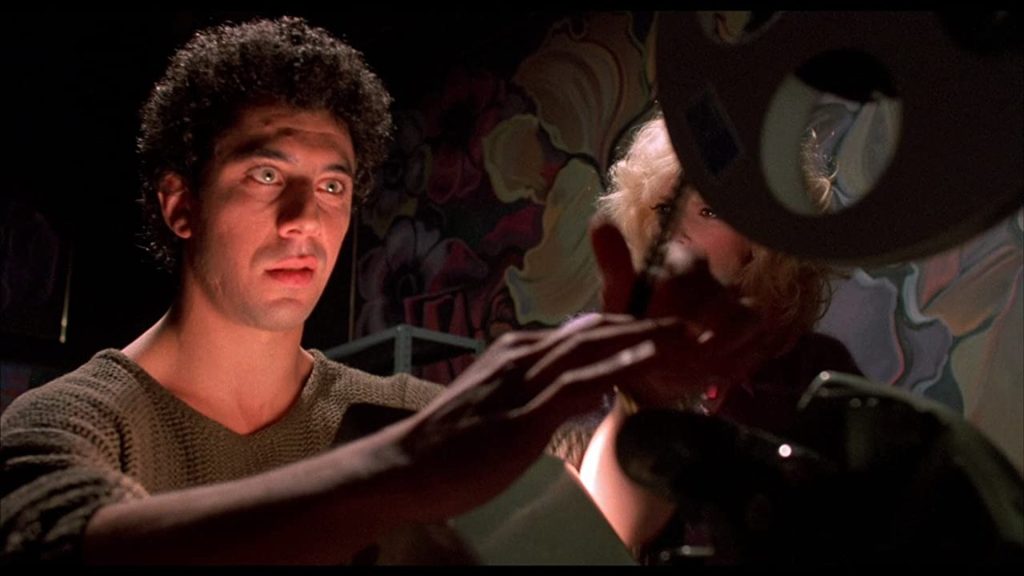
Phantom of the Paradise could be described as a farcical cautionary tale of the music industry or as a hodgepodge of myths, fairy tales, and gothic fiction, all tarted up for the glam rock era. The malevolent impresario Swan (Paul Williams, looking like a discarded prototype for Milo Bloom), steals the score for a cantata inspired by Faust from the ungainly composer Winslow Leach (William Finley) and plans to present it as the opening night attraction for his new nightclub, the Paradise. He then has Winslow framed for drug possession. Winslow escapes prison, but is disfigured when he falls face-first into a record press and breaks into the Paradise to confront Swan. Oh yes, and all of this happens in the first 15 minutes. At times, De Palma’s references to The Picture of Dorian Gray and Phantom of the Opera, his homages to Hitchcock and Welles, and his use of whip pans and split-screen editing make Phantom of the Paradise look like a coked-up cineaste’s karaoke night.
Both of the male protagonists become infatuated with Phoenix when she shows up at casting calls for the cantata; after hearing Phoenix sing “Faust” at a cattle call early in the film, Winslow decides that only she can sing his finished work. Harper’s performance makes their feelings for her easy to understand. In her introductory scene, her voice rises from a cacophony of vocalists warbling their own off-key variations on Winslow’s melody. Her affectless performance, combined with her friendliness and willingness to take direction from Winslow, shows the audience that she’s perhaps the only likable character to that point.
The fast pace and an operatic tone are established from the earliest frames, and Finley and Williams are able to match De Palma’s manic energy; Finley expresses Winslow’s fears through avian gestures and tantrum-like outbursts of rapid-fire dialogue, while Williams’ clenched mid-Atlantic accent, downcast gaze, and swaggering physicality blunt the shock of his nastier dialogue. Harper’s subtle performance contrasts with her costars. Her skeptical facial expressions and understated line readings effectively communicate the confusion and frustration Phoenix experienced as she rehearsed for the cantata.
Even Phoenix’s big moment towards the beginning of the film has a charming subtlety. When she shows up at a second open call to perform a different song from the cantata, DP Larry Pizer shoots her at eye level in a flattering soft-focus backlit closeup. As Harper sings “Special to Me”—a song whose smooth melody and organ-driven, proto-yacht rock arrangement belie the desperation in the lyrics—she bobs and weaves towards the camera, regarding the lens with a wary expression. Her hunched shoulders and tentative steps give way to a more open posture at the chorus; she rolls back on her heels, straightens her back, and relaxes her face as she holds the root note in the chord at the end of the chorus. When she slips out of the frame at the end of the chorus, she gathers herself up and falls back into the cautious facial expression and stiff dancing of the verses. While the rest of the film is frenetically edited, De Palma and editor Paul Hirsch allow Phoenix’s audition to play out over a series of 13 edits, giving viewers the chance to relax into Harper’s performance.
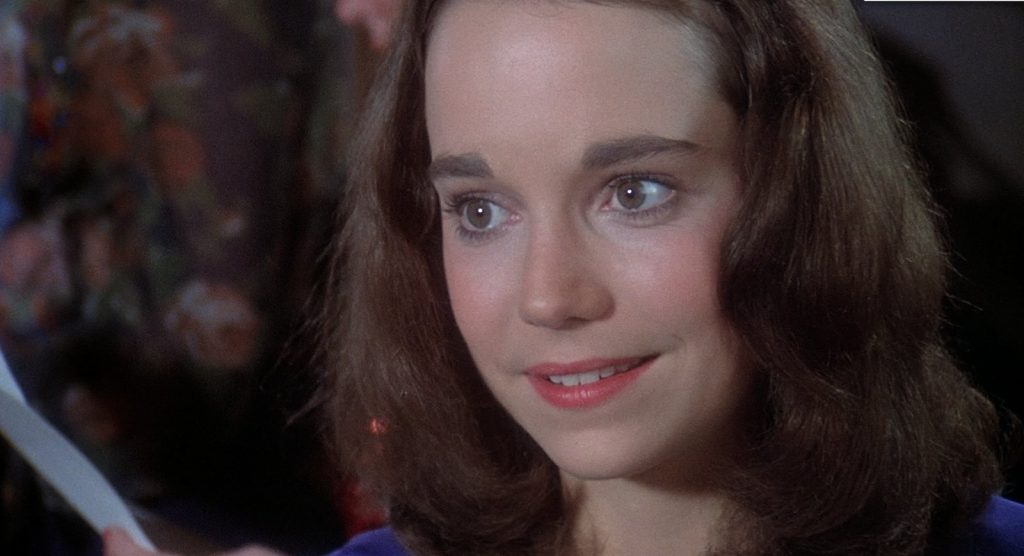
After a troubled production, Phantom of the Paradise opened to indifference on Halloween 1974. Harper’s career would flourish in the years after Phantom; she received positive reviews for the box-office bomb Inserts and took on a supporting role in Love and Death. Her debut film eventually found an audience in Rome, giallo director Dario Argento’s home, and she booked the lead in part on the basis of Argento’s admiration for Phantom of the Paradise.
Suspiria takes place at the prestigious Tanz Academy, a dance school in East Berlin where American ballerina Suzy Bannion has enrolled. A series of gruesome deaths have broken out among students and faculty members attempting to escape the Academy, and when Suzy falls ill, she learns that the school is run by a coven of murderous witches.
Though Phantom of the Paradise bombed in its home country, its influence can be felt throughout Suspiria in the performance milieu, high dramatic stakes, expressionistic performances, exaggerated production design, primary color-saturated cinematography, and fast editing. Argento directs his cast to turn in big performances that lean heavily on mannerisms, clearing a lane for Harper’s wry, sober depiction of Suzy.
The wide-eyed tentativity that Harper brought to Phantom of the Paradise and the way it contrasted with the big performances around her reads as skeptical in Suspiria. She regards the instructors at Tanz and her childish classmates with a weary expression, as if she has a lot of questions about what’s happening but doesn’t know if she should ask. Towards the end of the film, her unasked questions are answered.
While the rest of her classmates are attending opening night of the Bolshoi Ballet, Suzy searches the school building for proof that something malevolent is happening within its walls. She passes through a hidden hallway and overhears a faculty meeting in which the headmistress (Constance Bennett) is plotting her demise. Argento and DP Luciano Tovoli emphasize Suzy’s vulnerability by shooting her from a low angle as a diminutive, white-clad figure against a black hallway, but Harper’s subtle facial expressions and stealthy body language emphasize to viewers how terrified Suzy is. In the final shot, after Suzy’s murder of the headmistress causes the school to implode, she escapes the school, and we can feel her relief through her looser gait and less defensive body language. When the camera closes in on her as she slowly smiles, we can let out a sigh of relief after 90 minutes of suspense.
Harper would return to the world of Suspiria in a small but pivotal role toward the end of Luca Guadagnino’s 2018 remake. As Anke, the ghost of psychiatrist Lutz Ebersdorf’s wife, Harper appears to him in a vision, speaking in hushed tones about her escape from a German death camp and eventual relocation to England. Her portrayal of Anke contrasts with the circumspect ingenues with whom she’d made her name; her gestures seem more confident and she’s able to take up space in a way her previous characters didn’t, and even in German her dialogue could inspire a sympathetic, sensible chuckle. Though Anke is a symbol of Ebersdorf’s inability to believe women at a previous point in his life, the warmth in Harper’s performance makes her a real character.
Though Harper is at an age where her peers have slowed down, she’s continued working at a steady clip across different media. She took on another small but pivotal role in Guadagnino’s upcoming film Bones and All; she’s a regular on the TV series The Old Man and See; and her podcast memoir “Winnetka” was named one of the best podcasts of 2019. Harper’s 1970s tenure as the singing scream queen will always hold a special place in horror fans’ hearts.