Jason Bailey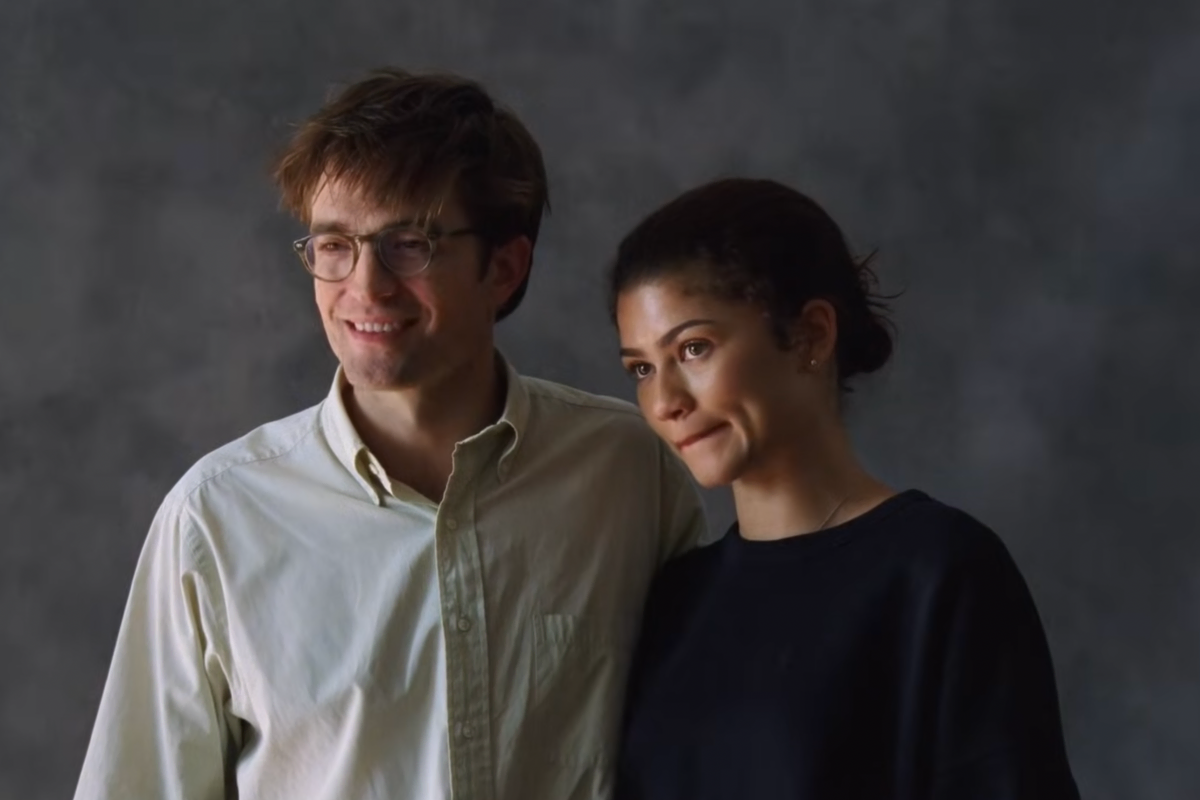
I promise I’ll get to The Drama (and the drama surrounding it). But first, quick question: have you ever seen the original theatrical trailer for Carrie? If you haven’t, you should. I’m gonna put it right here. Give it a watch. I promise this will all come together.
So that’s really somethin’, huh? Occasionally, when a reader or a fellow critic or a film publicist gets all tied up in knots about “spoilers,” I think about the Carrie trailer — specifically, how it shows a substantial portion of the climax of the movie, in vivid detail, without apology. You wanna know what’s in this movie? it seems to ask. HERE is what’s in this movie.
I typically gravitate to the Carrie trailer because it’s one of the most obvious examples, but to be clear: this was not unusual in 20th century cinema. Reviews and trailers typically gave away the entire start-to-finish narrative, and why not; theatrical exhibition was a totally different ballgame then, with movies running in all-day loops, between second halves of double features, cartoons, shorts, newsreels, and so on. It wasn’t that people never paid attention to when movies started, or make an effort to watch from the beginning, but it was no big deal to wander in during the picture, watch it to the end, watch the other things, and start it over; hence the expression, “this is where we came in.”
But the tide began to turn with Psycho. Alfred Hitchcock was so protective of the shocking, unexpected murder of Janet Leigh a third of the way through the film that he demanded theaters enforce a strict policy allowing no one to enter once the movie had begun; in order to keep its secrets, he didn’t screen it for pressing, forcing them to attend regular public screenings. Exhibitors initially resisted the late entrance policy, fearing it would keep viewers away. The opposite happened; the secrecy became part of the marketing campaign, and increased viewer interest in the picture. Audiences wanted to know: what exactly were they hiding?
Which brings us to The Drama, the new Zendaya/Robert Pattinson vehicle from writer/director Kristoffer Borgli (Dream Scenario). If you’ve been paying attention, you have probably heard that the film has a big twist, which film critics, influencers, and other early viewers are being politely asked not to reveal in their reviews and social media posts. This is not unusual in our spoiler-obsessed age, in which, more often than not, it feels that anything beyond the barest minimum of plot description will prompt loud and gnarly gnashing of teeth.
Here’s the problem, though: it’s not a “twist” in any traditional sense, in the manner of The Usual Suspects or The Sixth Sense or any of the go-to movies wherein a vital piece of information is withheld until the closing moments, changing the entire text and subtext of what’s come before. This exposition is revealed roughly fifteen minutes into the movie, as about-to-be-wed Emma (Zendaya) and Charlie (Pattinson) are polishing off one too many bottles of wine at their menu tasting dinner with her maid of honor (Alana Haim) and his best man (Mamoudou Athie). The conversation turns toward the topic of the worst thing each of them has ever done, which they go around the table and admit, and when they get to Emma’s, well, hers is a whopper.
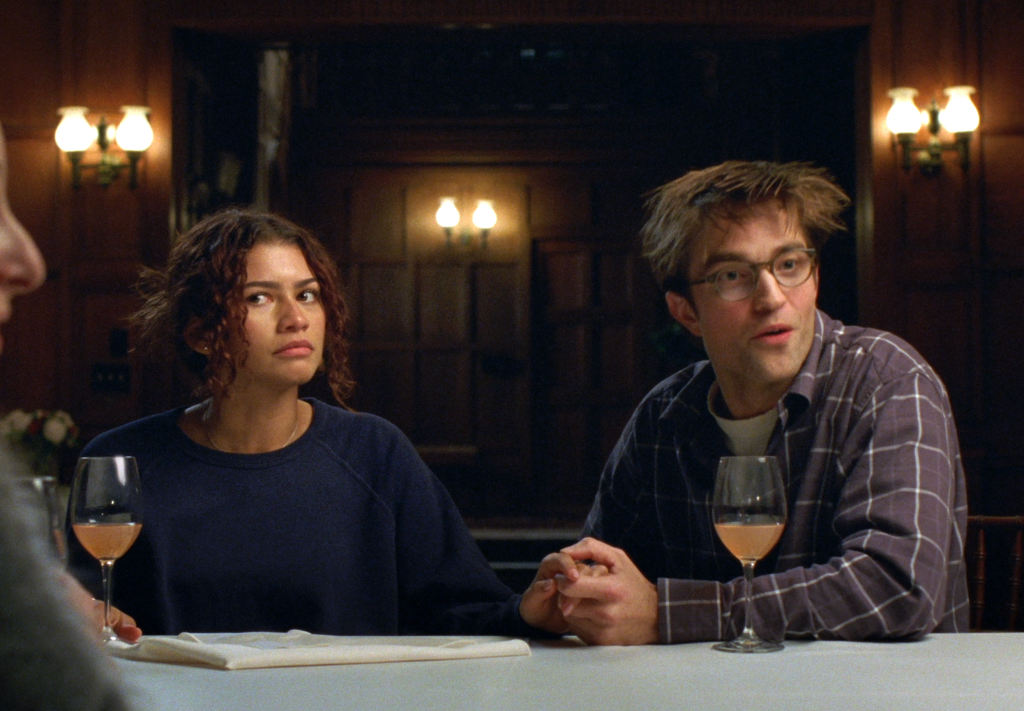
And this is the point at which we are asked to close down the summaries and reveal no more, lest we spoil the twist. But, again, it’s not a twist; it’s the plot, the inciting event upon which the entire remainder of the narrative hinges. It’s like being asked to review Fatal Attraction with the caveat of not revealing that Michael Douglas has an affair.
And so, the critic is forced to make a choice: we can either bend ourselves into rhetorical and linguistic pretzels to avoid describing what the movie is about while still somehow describing how it is about it, allowing us to freely share our “spoiler-free” reviews and collect our clicks and stay in the good graces of A24, or we can slap a spoiler warning at the top and actually talk about the movie they made (rather than the one they’re promoting), but risk the understandable aversion of readers who don’t want to know more than what they’ve seen in the trailers, to say nothing of the ire of publicists whom we will rely upon in the future.
I am, of course, not privy to the conversations and strategy sessions that have taken place at A24 w/r/t The Drama, but I can hazard, I think, a pretty safe guess: they likely determined that the substance of Emma’s confession and therefore the subject of the movie they were tasked with selling would be so spectacularly off-putting, such an absolute no-way-no-how to potential viewers, that they had to keep it a secret — and that the most profitable strategy would be to make that secret part of the selling. (Hitch would be proud.)
So in other words, how I do my job has been determined by A24’s marketing department — as depressing a notion as I can imagine at any point in this profession, but particularly at this moment, when it’s all but impossible to make a living at it, when social media and its various participants are perpetually interloping upon it, when we’re being told that AI is going to do our job for us, when some critics are letting AI do their job for them, and when the access to upcoming releases that’s necessary to do the job properly is seemingly given and taken away on a series of inscrutable whims.
I would like to share my thoughts about The Drama, which is a thorny, thoughtful, provocative movie of impeccable craft and fine performances. But apparently, in this pocket between our Monday press screening and its Thursday night release, there is no sensible, uncompromised way to do that. Maybe another time!