Craig J. Clark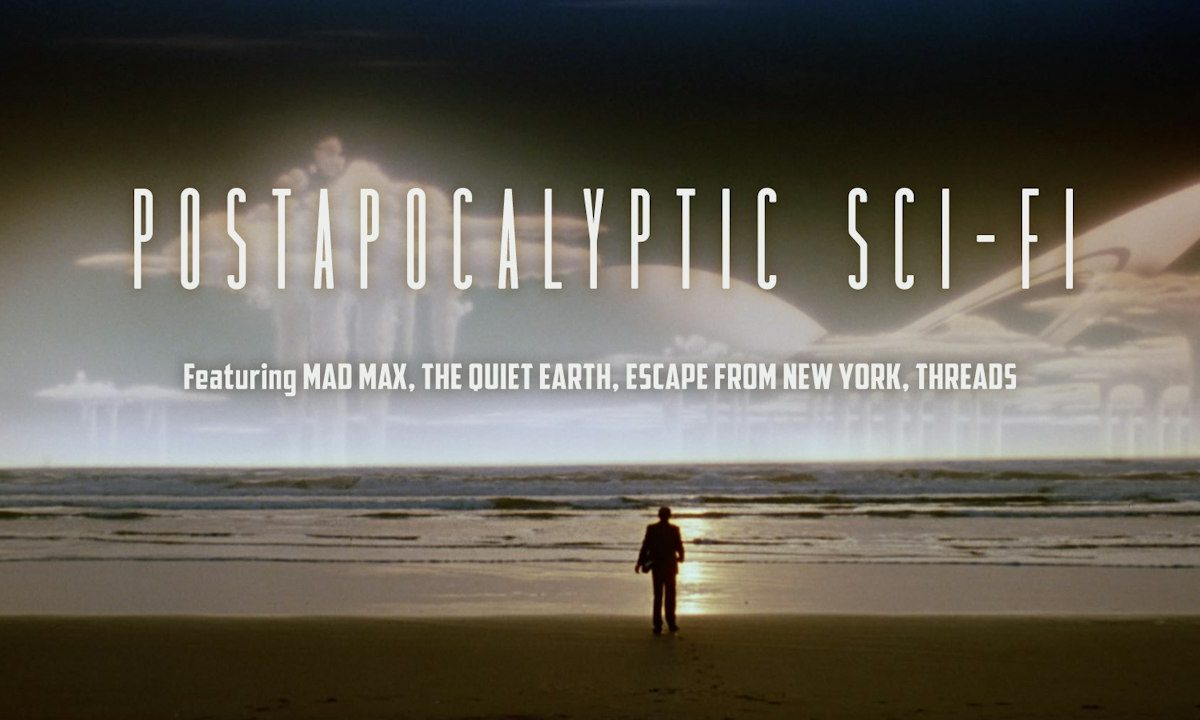
The Italian film industry has a long history of taking successful international genre films and cranking out low-budget variants at a rapid clip until the audience for them is exhausted. (They did this with their homegrown genres, too. Witness the explosion of gialli that littered the ’70s in the wake of Dario Argento’s The Bird with the Crystal Plumage and the proliferation of pepla that rode the coattails of 1958’s Hercules.) So Star Wars begat a slew of spaghetti space operas and Dawn of the Dead sparked a zombie craze (and its gore-laden tributary, the cannibal film). That the Italians would hop aboard the post-apocalypse caravan in the early ’80s was all but a given.
Taking inspiration (i.e. stealing) from George Miller’s Mad Max films and John Carpenter’s Escape from New York (among others), writer-director Enzo G. Castellari turned out three post-apocalyptic action films in two years. Released in 1982, the marginally futuristic 1990: The Bronx Warriors immediately got the sequel treatment with 1983’s Escape from the Bronx. Completing the hat trick was the Road Warrior riff The New Barbarians, retitled Warriors of the Wasteland when it reached US screens in early 1984. All three are part of the Criterion Channel’s “Postapocalyptic Sci-Fi” program, where they’re rubbing spiked shoulder pads with (among others) Mad Max and Escape from New York – a perfect opportunity to play compare and contrast.
Best known nowadays for directing 1978’s The Inglorious Bastards, the title of which Quentin Tarantino bastardized for his own World War II “men on a mission” film, Castellari got his start as an assistant director before making his directorial debut with a spaghetti western at the height of that genre’s popularity in the mid-’60s. Other westerns followed, alongside detours into comedies, poliziotteschi (gritty crime films in the mold of Dirty Harry and The French Connection), and horror. One of the latter is 1981’s infamous The Last Shark, which was such a brazen rip-off of Jaws and Jaws 2 that Universal successfully brought an injunction against it.
No such legal wrangling greeted 1990: The Bronx Warriors, possibly because Castellari cast his net wider, catching not only Escape from New York, but also Walter Hill’s The Warriors, from which sprang the distinctively costumed gangs that rule the Bronx, which has officially been declared “no man’s land” by the authorities. One faction is the Riders, who look like your standard biker gang and whose motorcycles are adorned with light-up skulls. Their bitter rivals are the Tigers, who wear fancy clothes, drive vintage cars, and are led by Fred Williamson as The Ogre, the self-proclaimed “King of the Bronx” (making him the equivalent of Isaac Hayes’s Duke of New York).

The other gangs in play are the roller-skating Zombies (whose hockey gear makes them akin to the Baseball Furies), the Jackals (a troupe of Fosse-like dance fighters in metal bowlers), and the Scavengers (a tribe of primitive cannibal throwbacks), whose territories must be crossed when Trash, the leader of the Riders, sets out to forge an alliance with the Tigers. Their common enemy: the Manhattan Corporation and its lead enforcer Hammer (top-billed Vic Morrow, fresh off playing the Quint character in The Last Shark), whose solution to the Bronx’s gang problem – carried out by his personal, black-clad flamethrower-armed equestrian SWAT team – is literally called Operation Burnt Earth.
When it was reviewed in Variety, 1990: The Bronx Warriors was deemed “likely to be laughed off the screen at all but the most marginal grindhouses,” but it did well enough for Trash (and actor Mark Gregory, now promoted to leading-man status) to return in Escape from the Bronx, which opens with scenes of the borough’s residents being forcibly evacuated under the pretense of being relocated to New Mexico. In reality, they’re being rounded up by the General Construction Corporation’s Disinfestation Annihilation Squad, under the command of notorious mercenary Wrangler (second-billed Henry Silva). This time, Trash gets stuck with a journalist out to expose the genocide taking place in the Bronx, which has sent the gangs (including some holdovers from the first film) underground. As he did at the climax of The Bronx Warriors, Castellari stages fire stunts galore, along with wanton machine gunning and plenty of slow motion as gang members and Wrangler’s silver-suited shock troops alike are mowed down, blown up, and/or fried to a crisp.
While Escape from the Bronx escaped being panned by Variety, it was roundly mocked one decade later on Mystery Science Theater 3000 under the title Escape 2000. In The New Barbarians, Castellari looked even further into the future, to the year 2019, nine years after a nuclear holocaust has destroyed civilization. Its few remnants are systematically hunted down by queer-coded fanatics in matching white uniforms and black bondage gear called the Templars, who roam the wasteland on tricked-out motorcycles and ATVs making “others pay for the crime of being alive,” as their leader One (George Eastman, a genre vet returning from The Bronx Warriors) puts it. Reluctantly drawn into the conflict is Mad Max-styled loner Scorpion, whose bacon is consistently saved by would-be traveling companion Nadir (Fred Williamson again) and his bottomless quiver of explosive arrows. If nothing else, The New Barbarians demonstrates that along with the dregs of humanity, slow-motion stunts and fiery deaths also survived the apocalypse.
Although it’s just as derivative as its predecessors, The New Barbarians benefits from a relatively novel setting and a more charismatic lead in Giancarlo Prete (credited as Timothy Brent), who previously acted rings around Mark Gregory as a reclusive explosives expert in Escape from the Bronx. Castellari also exposes Scorpion’s vulnerability in a way that likely wouldn’t have passed muster had he tried to cast an American actor in the part. (It’s difficult to imagine Williamson enduring the same humiliation.)
Whether he took Variety’s criticism about “going to well once too often” to heart, The New Barbarians was Castellari’s last word on postapoxploitation. (Before it burned itself out, the torch would be picked up in turn by his fellow countrymen Joe D’Amato, Lucio Fulci, and Bruno Mattei.) That all three of Castellari’s forays are on the Criterion Channel is an anomaly to be savored while it lasts. After all, even the most refined cinematic diet needs some junk food from time to time.
The “Postapocalyptic Sci-Fi” series is now streaming on the Criterion Channel.