Max Borg
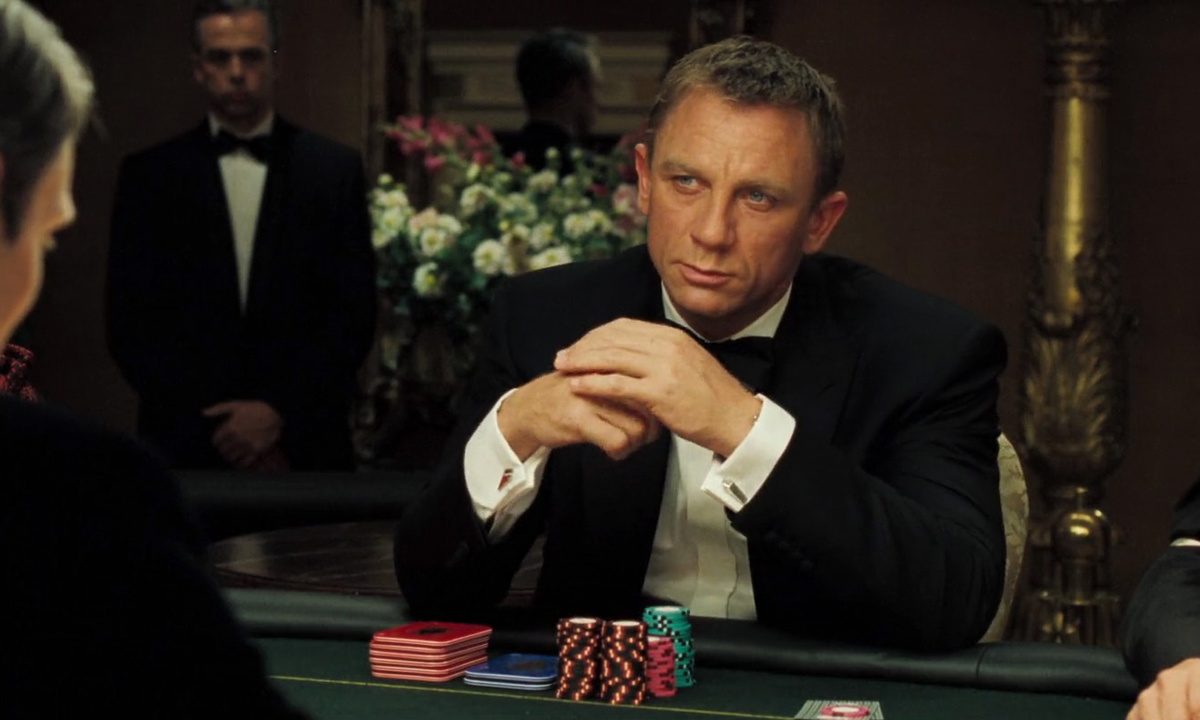
On November 14, 2006, Casino Royale had its world premiere in London, two days ahead of its wide release in UK cinemas (with the US debut the day after). Fans of the character were curious to see the official adaptation of Ian Fleming’s first novel (a previous 1967 movie, made outside of the film series proper, was more of a parody), and the marketing had been well received, as it hinted at a more down-to-earth, back-to-basics take on the character after 2002’s Die Another Day had dragged the franchise’s sci-fi trappings past their breaking point (hello, invisible car).
The tone was closer to that of the Jason Bourne movies (The Bourne Identity had debuted in theaters a few months before Die Another Day), and producers Barbara Broccoli and Michael G. Wilson acknowledged in a post-release print interview with Empire magazine that there were three elements of Fleming’s novel that had to be in the film: the famous torture scene, a major character’s death in the third act, and Bond’s uncharacteristically profane reaction to said death.
There was just one problem, at least according to some: the man chosen to play 007. Speculation ran rampant for months after it became clear Pierce Brosnan would not be returning, with candidates including Hugh Jackman, Ewan McGregor, a then-unknown Michael Fassbender and an even more unknown Henry Cavill (who was ruled out because, at the age of 22, he was deemed too young for the part). Clive Owen was so persistently rumored as the next Bond (even though he maintains he was never approached), he gamely poked fun at the situation by appearing in a different 2006 film, The Pink Panther, as a British spy with the code name 006.
Broccoli and Wilson eventually went with Daniel Craig, best known for his performance in Matthew Vaughn’s Layer Cake. While a talented actor, he did not necessarily match most people’s image of James Bond, having a rougher look compared to his predecessors. The Daily Mirror commented on the casting with the nickname “James Bland”, and others made fun of Craig’s hair color with the moniker “James Blond”, seemingly forgetting about Sean Connery and his ubiquitous hairpiece.
Luckily, social media was not a thing, so there was none of the excessive scrutiny that now accompanies even vague casting rumors. And yet, at least one person managed to take things too far, at least in the context of what was digitally doable at the time: an entire website designed for the sole purpose of letting the world know Craig was apparently a terrible choice to play the world’s most quintessentially English secret agent. It was called craignotbond.com, and thus left little to the imagination.
Unaffected, Craig threw himself into the project with enthusiasm, drawn, much like everyone else, to the idea of a grittier version that would actually deliver on the description contained in the opening credits of all the films: Ian Fleming’s James Bond (prior to Casino Royale, the last movie to actually adapt one of Fleming’s stories had been 1987’s The Living Daylights). It was not without its downsides, as the more realistic nature of the stunts entailed injuries on the set of all five movies Craig starred in. But, contrary to the conspiracy theories of disgruntled franchise fans who didn’t like No Time to Die, the actor enjoyed his time as 007, not least because his contract reportedly gave him a fair amount of say when it came to casting and director approval.
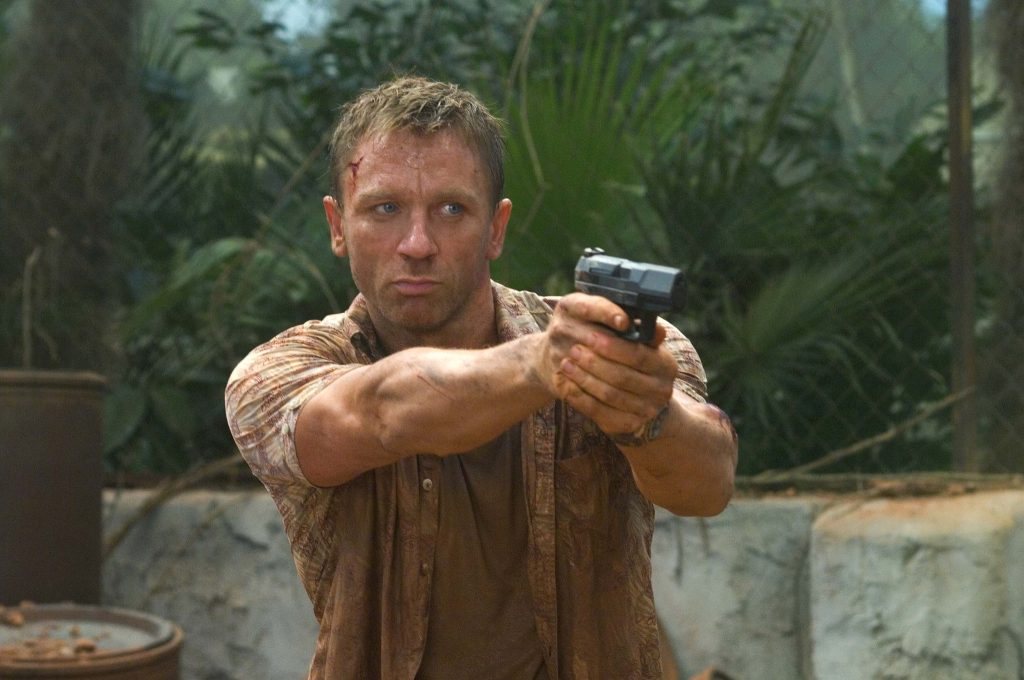
And so, about a year after he was first announced as the sixth actor to play James Bond, Craig made his first appearance as the character on the silver screen, literally earning the part in the opening sequence, where an inexperienced Bond achieves 00 status after killing two people. Such was the overall positivity of the responses to his performance, some reviewers included references to the pre-release backlash, and specifically the anti-Craig website, in their write-ups. The aforementioned Empire magazine went the extra mile with its list of things that defined the year in cinema: one of the items read “CraigisBond.com”.
And then, of course, there’s how the film itself handled it all, making the casting a logical one from the get-go: much like Craig himself, this new Bond was an outsider slowly getting acclimated to the world of suave espionage, gradually morphing into something more akin to the traditional 007, including the terrible puns (one of the funnier moments is when Vesper Lynd, played by a sublime Eva Green, calls him out for suggesting she use the alias Stephanie Broadchest). After two hours, and a massive heartbreak, he was bruised and bloodied, but also ready to take on the next mission. And when he ended the film with “The name’s Bond, James Bond”, we all believed him — then, and for the fifteen years that followed.
“Casino Royale” is streaming on Amazon Prime Video.