Marshall Shaffer
We’ve lived so many lifetimes in 2025 that it may be difficult to recall that the tragic wildfires in Los Angeles occurred within this calendar year. The combination of seeing the Pacific Palisades burnt to the ground and the continued uncertainty of how the threat would spread across a densely populated metropolis felt like the type of apocalyptic disaster reserved for the silver screen. Instead, it was reality for millions of people in the immediate path of the flames – and the first spectacle of the year for everyone else.
It’s only fitting that the year should end on a final blockbuster subtitled Fire and Ash. (Perhaps it’s presumptuous to call the shot on its financial receipts, but the Golden Globes didn’t wait before nominating James Cameron’s third Avatar for their Cinematic and Box Office Achievement prize.) 2025 has been a year not just bookended by fire but defined by it on screens big and small.
This is a trend that extends from the grandest studio action movies like Avatar, all the way to the scrappiest indie dramas like Max Walker-Silverman’s Rebuilding. It’s present in movies for children, such as the French animated film Arco, and those strictly for grown-ups, including Lynne Ramsay’s vivid portrait of post-partum depression in Die My Love. These flames are a part of America’s fading 20th-century past in Train Dreams as well as its ripped-from-the-headlines contemporary present in The Lost Bus.
The element of fire has been at the forefront of storytelling in a way that suggests a new ecological threat has displaced flooding as the moment’s primary natural fear. This shift hints at a larger philosophical realignment, too. In films like The Day After Tomorrow or 2012, these rising waters slowly build until they wreak havoc on the land. But, unlike the acute danger of fire, their threat can ultimately recede. The burning flames of a wildfire leave lasting, irreversible damage once they make contact with any physical being or structure.
The newly-introduced ash tribe of Avatar: Fire and Ash represents fire’s nihilistic streak to a tee. Led by the assertive Amazon, Varang (Oona Chaplin), the Mangkwan clan marks a notable departure from the Na’vi people of the previous two installments. Rather than seeking to live in harmony with the land and water, they bring a sense of gleeful kamikaze energy in their attempts to dominate nature. Especially once they partner with the human military, the tribe’s scorched Pandora tactics make manifest the role creatures play in the desecration of their own habitat.
James Cameron has always been a bit more galaxy-brained on all things environmental than the average filmmaker (much less citizen). Avatar, naturally, stands out among these films as a rare instance where fire is something associated directly with the characters’ actions. What’s more common is a blazing wildfire as the menacing backdrop of a stressful climax in Arco or the expressionistic visual device of a forest fire in Die My Love.
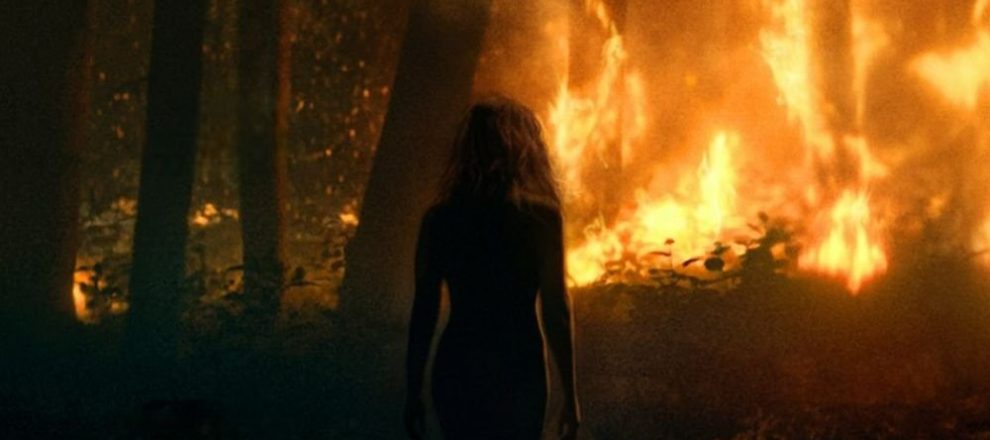
The latter situates the flames in a squarely figurative realm as a representation of the turmoil inside Jennifer Lawrence’s Grace as she struggles to regain internal balance after childbirth. Yet among the many mechanisms Ramsay uses to communicate the protagonist’s disorientation, fire is the most potent – as well as the closing image of Die My Love. Grace willingly surrenders to the flames that plague her consciousness, walking headfirst into the embodiment of her doom and dysphoria. Ramsay’s metaphor vividly aligns the lack of control felt inside humans with the unchecked spread of burning ruin that’s become an all-too-common feature on an overheating planet.
More in line with Avatar’s thematic focus, however, is Clint Bentley’s Train Dreams. In this adaptation of Denis Johnson’s terse novella, the ravages of a literal forest fire transform into a recurring motif. Seeing the flames that claim the lives of his wife and young daughter as they engulf the house built by Joel Edgerton’s logger, Robert Grainier, becomes a recurring feature in his nightmares.
This haunting reminder highlights his shortcomings as an ordinary man to stand up to the power of the natural world. It’s but the most vivid example of how deftly Bentley can thematically rack focus, shifting between the micro-scale loss experienced by Grainier and the macro-level project of deforestation that will extinguish the land’s natural beauty. Though situated a century ago in America’s past, Train Dreams’ ability to hold the literal and metaphorical dimensions of fire is squarely in line with the present reality.
But when the flames rage in 2025, it’s often conceptualized as a force that is separate from them and acts upon them. Humans are the helpless victims of environmental destruction rather than active co-conspirators in their own fate. Especially given that the path of the January wildfires cut through many neighborhoods populated by filmmakers, it’s likely future films centered around this elemental catastrophe will look more like Paul Greengrass’ The Lost Bus.
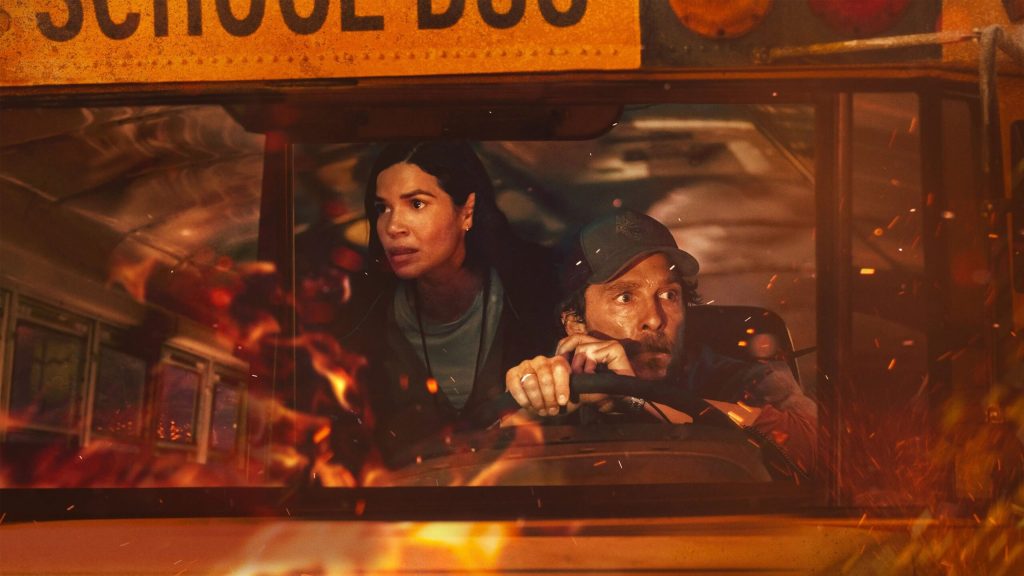
This dramatization of 2018’s Camp Fire in Northern California operates in the familiar mode of a rescue film. Matthew McConaughey’s renegade school bus driver perseveres through hazardous roads to evacuate a group of small children from their school, and each unexpected derailment of their best-laid plans allows an opportunity for Greengrass and Brad Inglesby’s script to illustrate a new danger posed by the fire and smoke.
But while the film’s resolution allows for the reunion, it’s hard to say The Lost Bus has anything resembling a happy ending. One crisis has been averted, but hope has not been restored that this will not happen again in the future. “Every year, the fires get bigger, and there’s more of them,” says a firefighter at a press conference. “We’re being damn fools,” he continues, refusing any easy bromides, “That’s the truth.”
Yet the truth about fires need not be solely a message of doom and despair. Among the fire-related films of 2025, Rebuilding is the one most primed to weather the years precisely because it looks beyond the immediate consequences of fire’s devastation. Max Walker-Silverman’s forward-looking gaze is there in its very title as he tracks the agonizing journey of Josh O’Connor’s Coloradan cowboy, Dusty, in his sorting of the next steps for his charred family’s ranch. While every economic indication points to the prudent choice being westward migration to safer terrain, Dusty finds it more difficult than anticipated unlinking himself with even the most singed parcel of the property.
Another blaze is not a probability, the stoic hero learns. It’s an inevitability. The work Dusty does to recreate what he lost to the fire will one day perish again. But Walker-Silverman posits this reality not as an excuse to pack up and give up. This is a reason for people to cherish what really matters and hold onto it while they can. The fires get bigger and more resilient, yes, but so do the people who persevere through them.