Craig J. Clark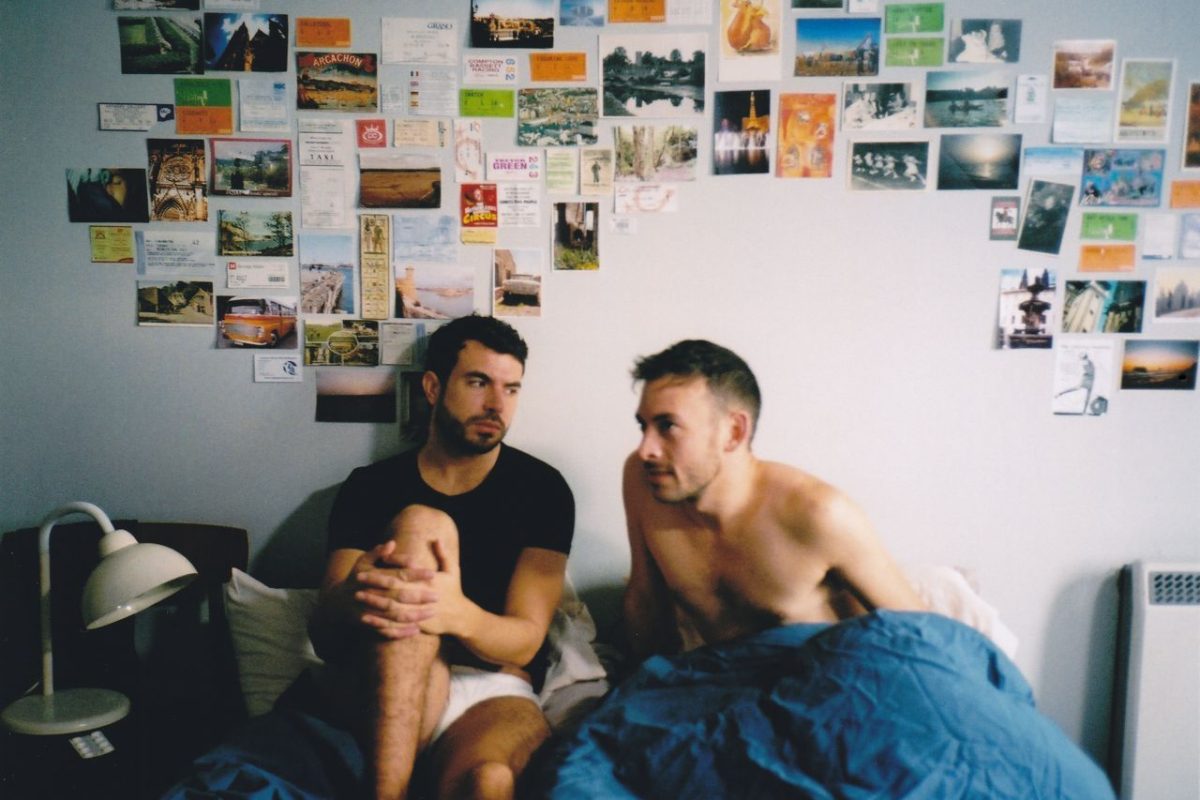
Temperamentally, they couldn’t be more different. Russell is a closeted introvert, out only to his closest friends and mortified by the prospect of being identified as gay in public. Glen, meanwhile, is defiantly out and proud, unafraid of confronting any and all homophobes he encounters. If they played by the rules governing straight society, they likely wouldn’t make it past the first date, but because they hooked up at a gay club, where the unspoken motto is “screw first, ask questions later,” they get to find out the morning after if their one-night stand has the potential to become something more substantial.
With its unvarnished take on the sex lives of gay men in the 21st century, Andrew Haigh’s Weekend stood out when it was released in 2011, and it fits right into this month’s “LGBTQ+ Favorites” program on the Criterion Channel. (It’s in good company, slotted alongside foundational films by Chantal Akerman, Gregg Araki, Lizzie Borden, Rainer Werner Fassbinder, Todd Haynes, Derek Jarman, Gus Van Sant, and Wong Kar Wai.) Depicting what gay Britons get up to behind closed doors came naturally to Haigh, whose debut feature, 2009’s Greek Pete, followed a rent boy around London as he plied his trade. While that film blurred the line between documentary and narrative, Weekend goes all in on the latter, but still comes off like it’s eavesdropping on Russell and Glen’s candid conversations.
In some respects, it’s the inverse of Richard Linklater’s Before Sunrise, where the central couple shares their views on a variety of topics without the expectation that they’ll hook up. Linklater is coy about whether Jesse and Celine have sex (an ambiguity cleared up in the sequel), but Haigh has no use for coyness. True, he elides Russell and Glen’s first night together, but Glen catches Russell up on what transpired, and the more they talk, the clearer it becomes there will be more to come.
One thing Jesse and Celine didn’t have to contend with during their stroll around Vienna is the background noise of casual homophobia, to which Russell and Glen react very differently. While Glen is unafraid of calling out a stranger shouting slurs or a bar patron who complains that he and his mates are being too loud, Russell silently endures a group of young people on a bus who feel entitled to loudly share their opinions about gay people with the world at large. The same goes for his co-workers at the pool where he’s a lifeguard, who take for granted that they can say whatever degrading things they want about their female clientele. The job may allow Russell to furtively ogle young men in bathing suits, but he wouldn’t dream of sharing his thoughts with anyone he works with.
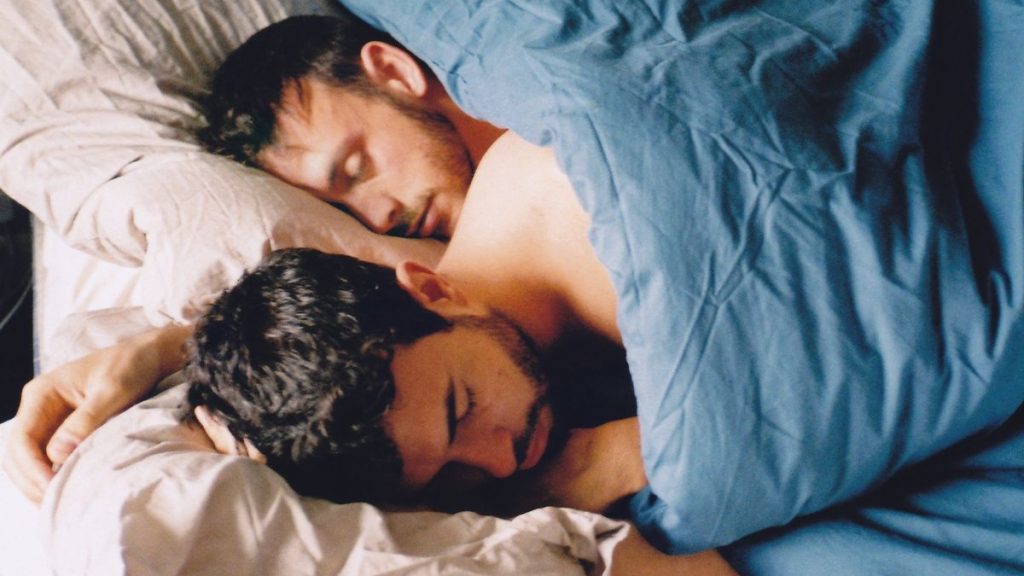
Understandably, Russell is much more forthcoming in the privacy of his flat, and actor Tom Cullen plays him with a sweet vulnerability. In contrast, Chris New is more in your face as Glen, who nevertheless waits until their second meet-up to reveal he’s leaving the next day to go to America. That means a relationship is out of question, but he’s happy to have a bit of fun in the meantime, as long as things don’t get too serious.
In spite of Glen’s best efforts, serious subjects like gay marriage and relationships come up anyway, and things get heated between them. And contrary to his declaration that he doesn’t do goodbyes (to the point of ducking out of his own farewell party), Russell is determined to see him off anyway. The most touching moment, though, comes earlier when, having found out Russell grew up in foster care and never knew his real parents, Glen roleplays as his father so he can go through the rite of passage of coming out to one of them. (This is echoed in Haigh’s most recent film, 2023’s All of Us Strangers, in which his protagonist is given the opportunity to come out to his late mother.)
This tender “coming out” scene is emblematic of the naturalistic performances Haigh elicits from his actors, and a testament to how comfortable they are together, both in and out of their clothes. While Weekend avoids being too graphic, it doesn’t shrink from the sight of two gay men enjoying each other’s bodies. In this sense, it paved the way for 2016’s Paris 05:59: Théo & Hugo, which opens with an orgy in a gay sex club and follows two of its participants as they walk the city together. As for Haigh, he has shown no inclination to do sequels of any kind, but should he reunite with Cullen and New to pick the story of Russell and Glen back up (the way Linklater, Ethan Hawke, and Julie Delpy did in Before Sunset), the results could be most illuminating.
“Weekend” is streaming on the Criterion Channel with all its extras and other places without them.