Craig J. Clark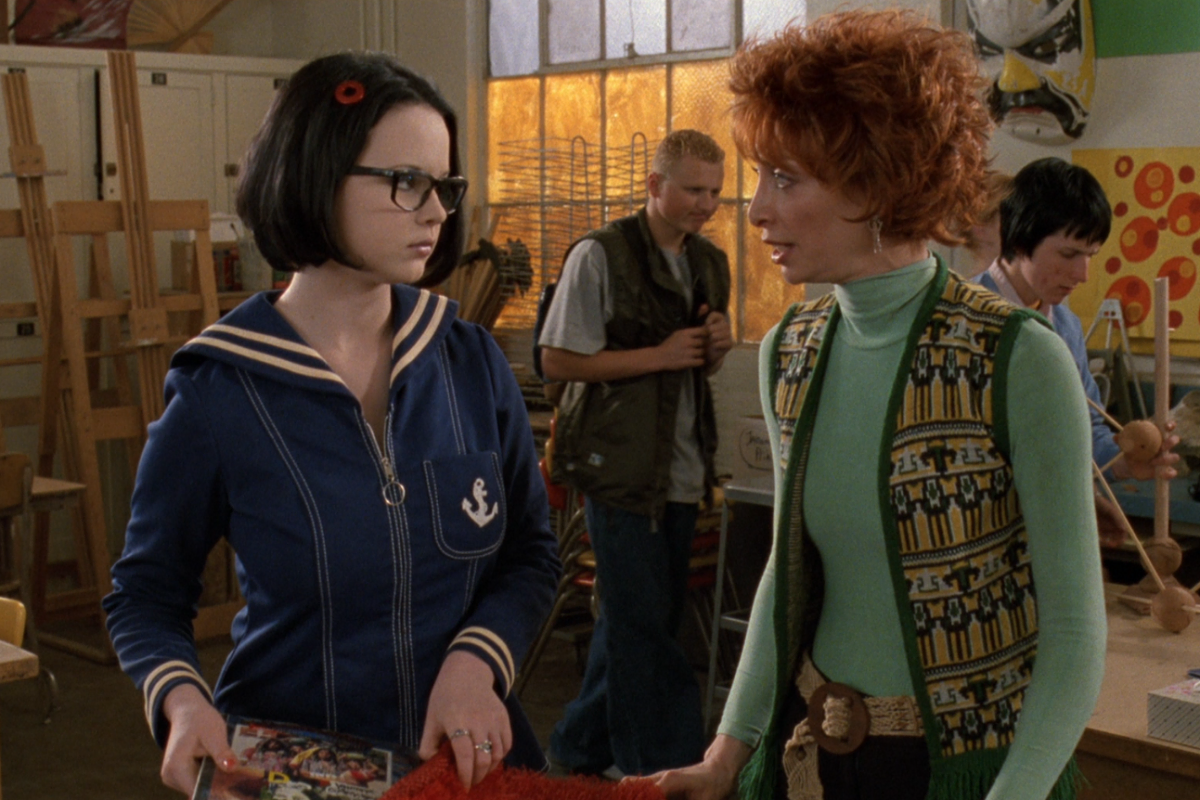
Long before any of his stories were brought to the screen, cartoonist Daniel Clowes imagined the worst. Within the pages of Eightball #11, Clowes included “Velvet Glove,” an account of a less-than-faithful adaptation of “Like a Velvet Glove Cast in Iron,” serialized in issues 1-10 and collected as a graphic novel in 1993. The four-page story, hailing from “Sometime in the near future,” alternates between excerpts from a cliché-ridden sci-fi film bearing little resemblance to Clowes’s comic and panels depicting his dispiriting meetings with the schmoozing Hollywood producer shepherding its bastardization.
“We’re trying our damnedest to get your vision up on the screen,” the producer boasts, adding that the screenwriter “has come up with some great ideas as to how we can clarify the characters and make them a bit more user-friendly.” Hardly surprising that Clowes ends up addicted to cocaine, in debt to the mob, and a born-again Christian, while his magnum opus is consigned to video oblivion. Luckily, things turned out differently for the real Clowes and his next serialized story, “Ghost World,” which coincidentally debuted in the same issue.
While wrapping up the comic in 1997, Clowes was already working on a screen adaptation with director Terry Zwigoff, who wanted to make Ghost World his follow-up to acclaimed documentary Crumb. Theirs was a harmonious collaboration, and the drawn-out development process allowed them to make sure their sensibilities meshed. It also gave them plenty of time to fine-tune the script and figure out how to turn the comic’s disconnected episodes into a narrative with a beginning, middle, and end.
Where Ghost World begins is the high school graduation of best friends Enid and Rebecca, who view everyone and everything around them with derision and/or ironic detachment. While they’re intent on moving in together, only Rebecca seems willing to take the necessary steps (e.g. getting a job, apartment hunting) to make it happen. Besides, Enid is stuck taking a remedial art class to make up for one she flunked. Then there’s the matter of Seymour, an introverted record collector who doesn’t exist in the comic, but was introduced by Zwigoff. He doesn’t enter the picture right away, though, since Clowes and Zwigoff take time to establish the irony-drenched world Enid and Rebecca exist in, cherry-picking side characters, settings, and scenes from the comic to dramatize.
“It’s a world where nobody cares and everything is repellent.” – Daniel Clowes, from the Ghost World commentary
In addition to the “Ghost World” stories, Clowes borrowed a sight gag from his faux expose “Art School Confidential” for an art project done by one of Enid’s overeager classmates. He had more than enough material left over from his years at the Pratt Institute, though, for Art School Confidential, his next film with Zwigoff. Set at the fictional Strathmore Institute (which Enid failed to get into in the final chapter of “Ghost World”), Art School takes its predecessor’s irony and upgrades it to full-blown cynicism. There’s a world of difference between Enid and Rebecca’s harmless pranks (even as they admit the one they play on Seymour is pretty mean) and the extracurricular activities of the Strathmore Strangler, the talk of campus when Jerome arrives, eager to make his mark.
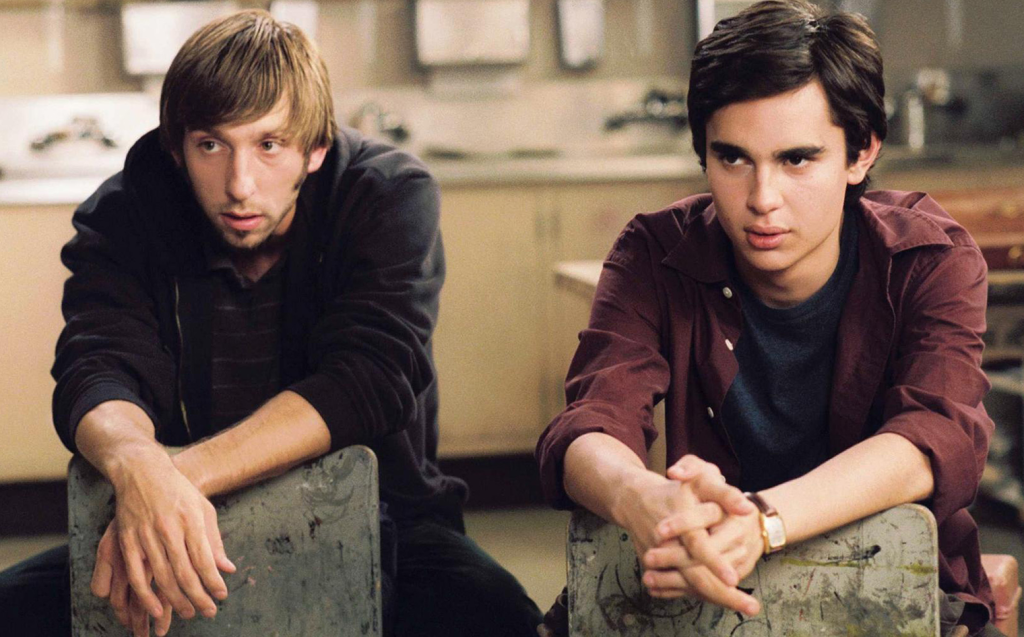
While possessed of talent, Jerome has difficulty relating to his peers, starting with his roommates Vince, a film major who worships at the altar of Tarantino, and Matthew, a fashion major who couldn’t be more obviously gay if he tried. Then there’s the cross-section of art-school types in his classes, all of whom are quickly pegged by know-it-all Bardo, who plays Virgil to Jerome’s Dante as he acclimates to life at Strathmore. Crucially, Bardo also introduces him to former golden boy gone to seed Jimmy, a drunk misanthrope who’s a living, wheezing object lesson for the impressionable young artist.
Most painful to Jerome are the classroom feedback sessions he endures, which echo the ones in Ghost World. Where Enid learned how to game the system, though, Jerome is frustrated by the attention showered on the artistically challenged Jonah, who also turns the head of Audrey, the beautiful model Jerome is obsessed with. As for his professors, the one he spends the most time seeking the approval of (played by producer John Malkovich, the biggest name in the cast) is perpetually distracted by the gallery shows he’s hustling for himself – that is, when he isn’t brazenly coming on to Jerome, an act the young man is too naïve to recognize.
To tie in Jerome’s journey to the serial killer subplot, Clowes and Zwigoff steer the story in a darker direction than their first outing. Ghost World also has its tonal shifts, but it’s easier to relate to two friends growing apart because they don’t have as much in common as they thought than it is to a mope whose sole ambition is to be “the greatest artist of the 21st century.” With that goal in mind, it’s no wonder Jerome ultimately decides there’s no difference between fame and infamy as long as the right art dealers and gallery owners want to show your work.
What Ghost World and Art School get right is the profound feeling of alienation that can overtake those of an artistic bent. Despite coming from a picture-perfect suburban family, Jerome can’t relate to them, though he does want to impress them by bringing his sort-of girlfriend home for Thanksgiving. Meanwhile, Enid’s well-meaning father is ill-equipped to raise a teenage daughter by himself, but tries to be as supportive and unobtrusive as possible. As comedic as both films are on the surface, there’s an undertow of sadness as well, and it is this mix of tart satire and melancholy that exemplifies Clowes’s and Zwigoff’s collaborations.
While Art School is Zwigoff’s last feature to date, Clowes followed it a decade later with an adaptation of his 2010 graphic novel Wilson, this time directed by Craig Johnson. As abrasive as its title character often is, the film he’s in feels like Clowes with the rough edges sanded off. It’s tantalizing to imagine what Zwigoff might have done with the material. Unfiltered misanthropy is right in his wheelhouse.
“Ghost World” and “Art School Confidential” are streaming together on the Criterion Channel and separately elsewhere.