Craig J. Clark
“We participate in a tragedy; at a comedy we only look.” –Aldous Huxley
A French nobleman travels to the city of Loudun to witness firsthand the spectacle of its possessed nuns and their public exorcisms. To test their veracity, he produces a box supposedly containing a holy relic which the lead exorcist makes a great show of using to drive the demons out of the nuns. Delighted with the result, the nobleman reveals the box is empty, proving to himself and any witnesses that it’s all a sham. “What sort of trick have you played on us?” asks the stunned exorcist. The nobleman answers, “What sort of trick are you playing on us?”
This episode is present in most accounts of the mass possession of the Ursuline nuns in the early 17th century. In Aldous Huxley’s nonfiction work The Devils of Loudun, published in 1952, the telling is brief and the nobleman unnamed. In John Whiting’s 1961 play The Devils, based on Huxley’s book, he is Henri de Condé, an “exquisite and handsome sodomite” who identifies himself as a member of the royal family. In Ken Russell’s 1971 film The Devils, “Duke Henri” is none other than King Louis XIII in disguise. Whatever personal satisfaction he derives from his performance, which echoes the “Birth of Venus” staged at court at the top of the film, it does nothing to change the course of events, which end with troublesome priest Urbain Grandier burned at the stake and the walls protecting Loudun destroyed.
Given how hard Russell’s film has been to see in the form he intended, Warner Bros. giving his cut a nationwide release (the maiden outing of its “Clockwork” shingle) after actively suppressing it for 55 years makes for a highly combustible viewing experience. Some once-shocking films lose their potency over time, but The Devils is as controversial as it ever was, and it’s even more relevant these days thanks to its unsparing depiction of powerful people twisting the truth to suit their purposes and manipulating the mentally unwell into being their weapons.
Chief among them is Sister Jeanne, the repressed Mother Superior of her order who becomes the primary tool of those aligned against Grandier. As Russell makes plain, he doesn’t lack for enemies in high and low places. Early on, while the city is beset by the plague, he alienates the local surgeon and apothecary by violently criticizing their barbaric treatment methods. He also incites the ire of the public prosecutor when he impregnates the man’s daughter and declines to acknowledge the child. Grandier has no compunction about marrying another woman in secret, however, and it is the news of this that sends Sister Jeanne – already stinging from his refusal to be their spiritual director – around the bend.
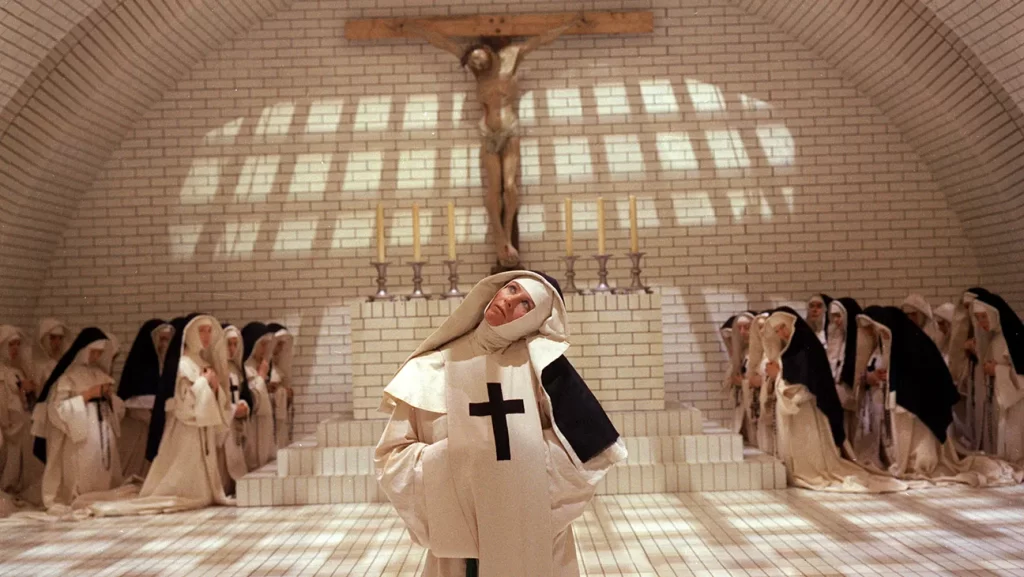
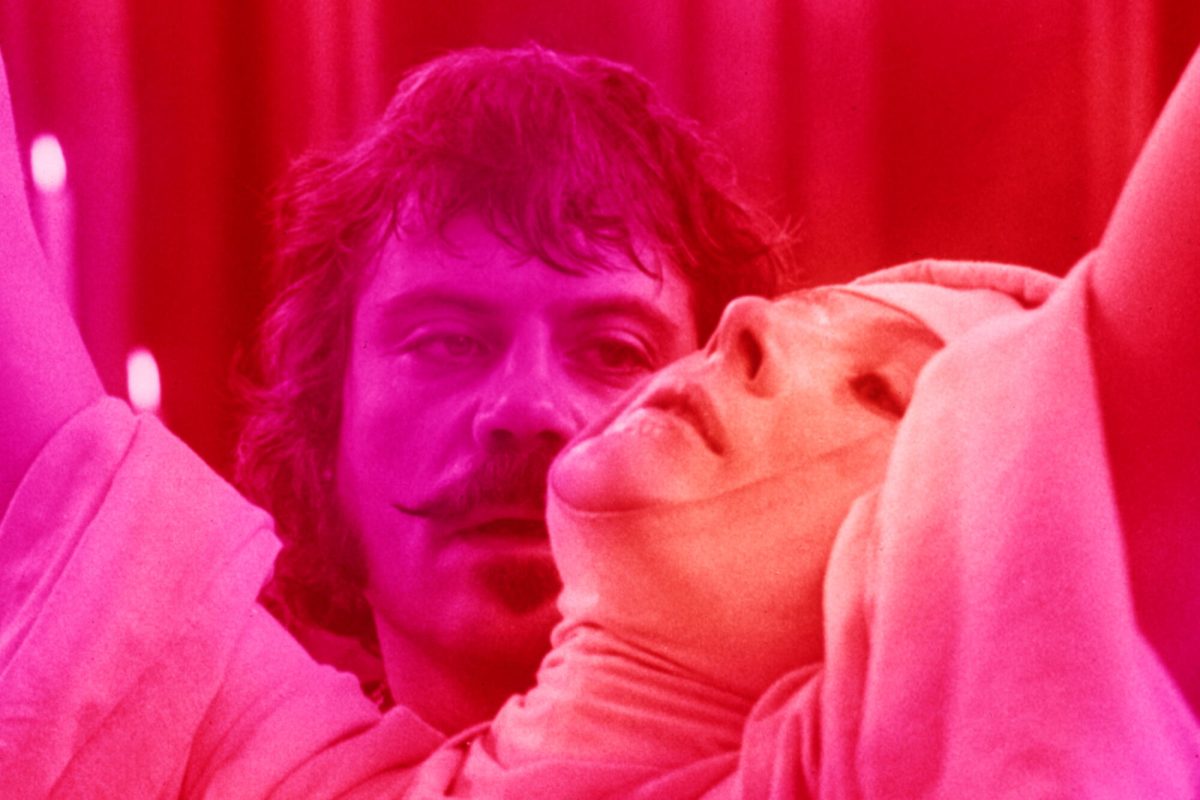
The entire acting ensemble is extraordinary, but a great deal of the film’s staying power is attributable to the intensity of its central performances. Vanessa Redgrave digs into the role of Sister Jeanne, who’s sexually frustrated on top of having a chip on her shoulder about her physical deformity (which notably disappears in her erotic fantasies). To quote Huxley, “Persons of Jeanne’s character are apt to make a good deal of trouble, both for themselves and for other people.” As the individual she makes the most trouble for, Oliver Reed excels at playing every facet of Grandier’s complex character. Not only can one believe that all the available women in town would eagerly hop into his bed, but also the sincerity of his newfound religious conviction, which Russell crosscuts with the film’s most notorious and heavily censored scene. It’s one thing to show nuns shedding their habits and cavorting with each other. (Countless films that followed The Devils took this as their entire raison d’être.) Russell pushes their blasphemous actions to the extreme, however, having them cross a line that most true Christians would have difficulty walking back.
In addition to mainlining Russell’s maximalist vision, experiencing The Devils on the big screen highlights the scale of the production, with an emphasis on Derek Jarman’s striking sets. Even a single-use location like the library where Cardinal Richelieu gets a report from the Baron de Laubardemont (who is charged with bringing down Loudun’s fortifications and spearheads the persecution of Grandier) pops off the screen thanks to its unique design. The performances simply have to be as big as they are to fill up the spaces. Shirley Russell’s costumes are likewise distinctive, especially when it comes time to put Grandier on trial and he’s faced with the nine hooded inquisitors who have preemptively decided his fate.
For a time, it seemed as if Warner Bros. had decided the fate of Russell’s The Devils by burying it – the occasional license to stream on Shudder or the Criterion Channel notwithstanding. Even in its truncated, R-rated cut, it was strong enough to make the curious wonder what they were missing and hope they’d eventually get to see it and decide for themselves if Russell had gone too far. At long last, the wait is over.
Ken Russell’s “The Devils” is now in theaters, but only for a limited time.