Max Borg
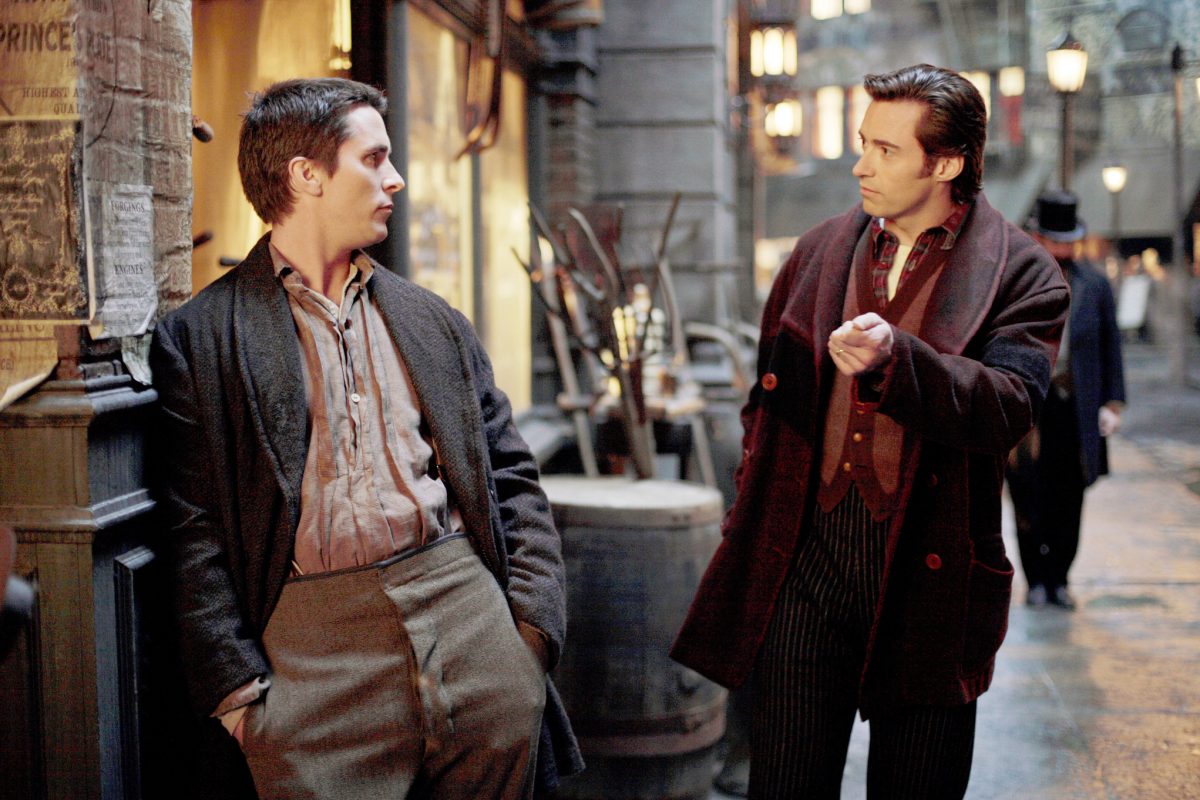
Viewed two decades after its original release, The Prestige is certainly of a piece with everything Christopher Nolan has directed since 2005 – a journey through themes and obsessions the British-born filmmaker gets to tackle, artistically unhindered, with financial backing from major Hollywood studios. It is also an anomaly in the sequence of films that began with Batman Begins, at least in terms of scale: budgeted at $40 million (less than his 2002 thriller Insomnia), it is the last Nolan film to date to have official production costs below $100 million.
Will that ever change? Not anytime soon, if the man himself is to be believed: over the years, Nolan has stated in multiple interviews that, as long as he gets to work on a canvas as large as the one he’s been getting from Warner Bros. (until Tenet) and Universal (starting with Oppenheimer), he intends to keep doing so. It’s a shrewd acknowledgement of how volatile the film industry can be, and a logical mission statement from a man who wants to give present-day audiences the same experience he felt watching immaculately crafted, clever spectacles on the largest screen possible when he was growing up.
Viewed through that lens, The Prestige is almost quaint by post-2005 Nolan standards: sandwiched in between Batman Begins and The Dark Knight, it feels like something he could easily have pulled off before his blockbuster era, and it almost happened that way. While the final version of the script was completed shortly before the start of filming in early 2006, Nolan and his brother Jonathan had been working on it since 2000, and at one point it looked like it might go before cameras in 2003.
Compared to the globe-trotting productions the director is now known for, his adaptation of Christopher Priest’s novel about two rival magicians in Victorian England kept things simpler by largely staying in the Los Angeles area, using real locations and soundstages to recreate 19th century London, with one detour to Colorado where Redstone Castle was used for scenes featuring David Bowie as the inventor Nikola Tesla. It is also devoid of bravura action set pieces, keeping its genre cards fairly close to the chest until the final revelation, which remains relatively lowkey despite the sci-fi trappings (the Nolans stripped it down further by removing the book’s original framing device, which revolves around the magicians’ great-grandchildren). The score, by David Julyan, is also a marked contrast to the more bombastic stylings of Hans Zimmer.
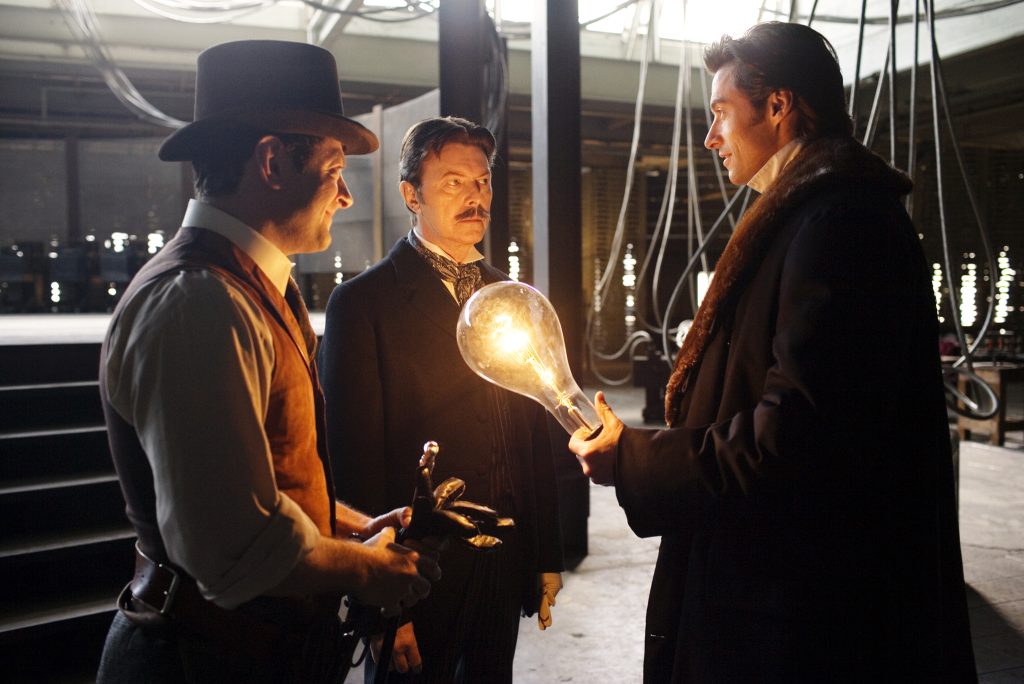
And yet, it is also undeniable The Prestige would not exist, at least in its current form, had Nolan not done Batman Begins first (similar to how Inception, first written in 2002, benefited from being made after The Dark Knight). It is improbable that a major studio – or two, as Disney handled domestic distribution while Warner Bros. managed the international rollout – would have taken a punt on a non-linear, magic-based thriller on the basis of Memento and Insomnia alone (although the former is what prompted Priest to believe Nolan was a better choice than Sam Mendes or Julian Jarrold, who had also expressed interest in the material).
It’s a first in other areas as well: Nolan’s first collaboration with a big studio other than Warners; his first project to feature a shot captured on IMAX 70mm, which he specifically devised as a dry run for full-blown sequences in that format, starting with The Dark Knight; his first overt use of foreshadowing to subtly give away the ending; and, rewatching it in the cinema on a vintage, immaculate-looking 35mm print three years ago, it occurred to me this could be the patient zero of the director’s famously spotty track record with sound mixing (Christian Bale’s occasionally mumbled delivery made some viewers yearn for subtitles).
In a way, The Prestige is also a practice run for Inception, two films in a dialogue about the nature of filmmaking itself. And while the dream-centric extravaganza does it in a more explicit way (with the line “You mustn’t be afraid to dream a little bigger, darling” effectively summing up Nolan’s whole cinematic ethos), the earlier movie is, from the very beginning, a meditation on narrative structure (the three acts of a magic trick becoming the three acts of a traditional screenplay) and the filmmaker/magician’s relationship with the audience: we are invited to watch closely, to look for the clues, but at the same time, we want to be fooled. And we still want that, 20 years later, even after knowing exactly what happened. Or do we?
“The Prestige” is streaming on Netflix.