Julia Sirmons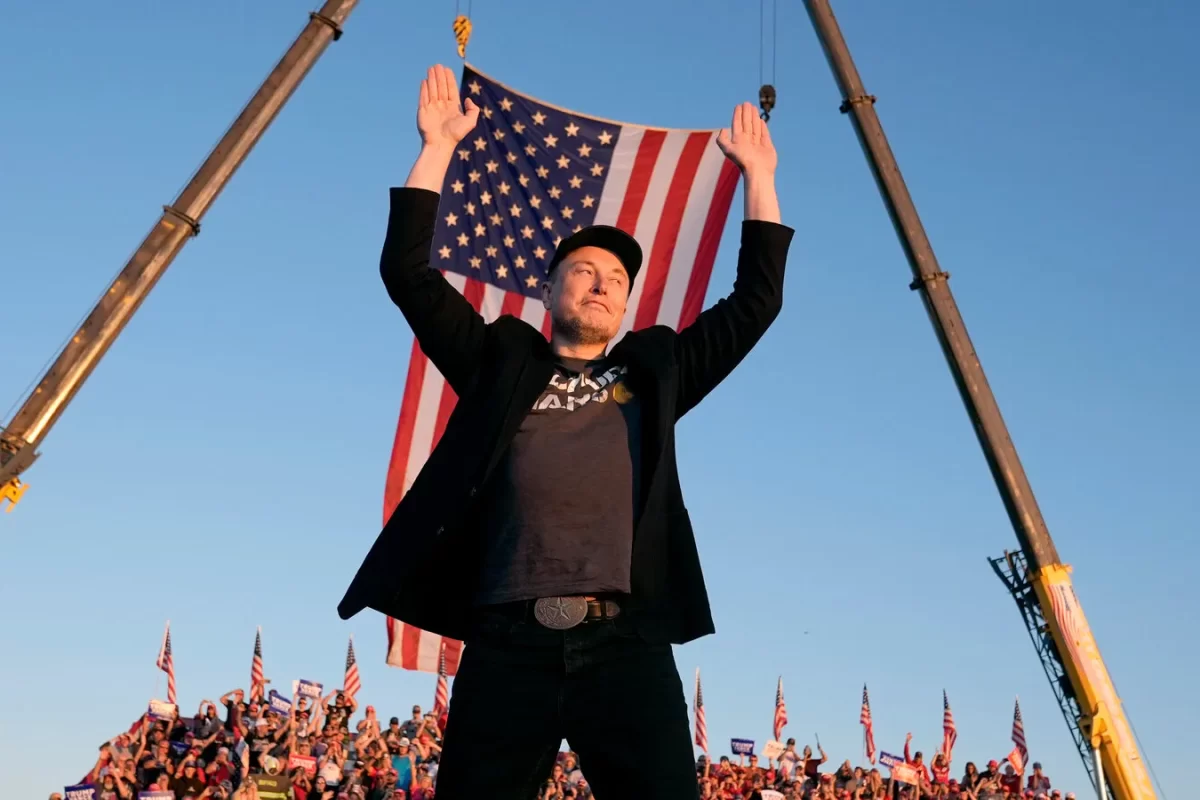
You may have seen a couple of Alex Gibney’s documentaries and not even known it. They move so breezily and seamlessly that you might not feel the director’s hand at work. (He does voice-over narration for many of his films, but even these feel natural and unobtrusive.) But just because his movies are lighter on the razzle-dazzle doesn’t mean they’re not skillfully constructed; Gibney is a master at setting up building blocks that make complex stories clear, flesh out characters, and make real life as compelling as any thriller. He can make tales of the biggest fuckups and most craven corruption uncomfortably pleasurable to learn about, and he’s second to none at eliciting outrage, contempt, and disgust in his audiences.
While Gibney has also done concert films and portraits of subjects like Hunter S. Thompson and Frank Sinatra, he’s at the height of his powers when chronicling renegade capitalism, secrets, corruption, and the people who get caught up in them. Many of these characters have, shall we say, a malleable relationship with the truth, and Gibney is particularly skilled at connecting the dots between these bad actors and the systems and institutions that enable them.
We Steal Secrets: The Story of WikiLeaks (2013), tracing the rise and fall of the investigative website that exposed war crimes and embarrassed the US diplomatic corps, is a cautionary tale about making heroes out of those who champion just causes. WikiLeaks’s founder, the hacker Julian Assange, is intense and bold but with an unmistakably squirmy vibe when he is elevated to the status of liberal darling once the site’s revelations confirm what everyone senses to be true–that mendacity and corruption lie at the heart of many major institutions. As Assange’s star rises, he grows more confident in his combative moral absolutism. He quirks and smirks through press conferences, interviews, and keynote speeches where he talks of “crushing bastards” and “bringing the unjust to account and helping the just.” He’s greeted with more and more exposure, with and rapturous applause from audiences who, particularly in the wake of the 2008 financial crash, are fed up with corporations who steal from them and governments who lie to them.
The pitfalls of glorifying Assange become clear when he is accused of sexually assaulting two women in Sweden, then skips the country, claiming that this is a case of politically-motivated prosecution. By disingenuously connecting their charges to hide quite genuine political travails, he unleashes an army of fanboys and twerps and doxxers that taint WikiLeaks and its mission by association.
Assange’s outsized, starry, but creepy presence is countered by the near-absence of Chelsea Manning, the private stationed in Iraq who accessed the tranche of documents and passed them on to WikiLeaks. Manning, who at the time of filming was incarcerated in barbaric conditions while awaiting trial, was obviously not available for interviews. Some talking heads—a friend and an exasperated superior officer—paint a haunting portrait of a disillusioned person, socially isolated, and stuck in one of the very worst places to deal with her accelerating gender dysphoria. Her point of view comes through via the messages she sent to hacker Adrian Lamo, who eventually turned her in. As the white text flickers across our screen, the intensity of her moral dilemma and the strength of her convictions are palpable, as is the loneliness she must have felt while making her agonizing choice. When she describes how she is haunted by pictures of Iraqi torture victims, she writes: “i’m just weird I guess. i…care?” After Manning types that she accessed classified documents while listening to Lady Gaga, Gibney transitions to a clip of Assange dancing geekily but wildly and freely to Gaga’s “Telephone,” bopping and hopping and flapping, grooving to his own private beat. It’s a slightly cute but visually efficient way of contrasting the real hero with the showboating egomaniac.
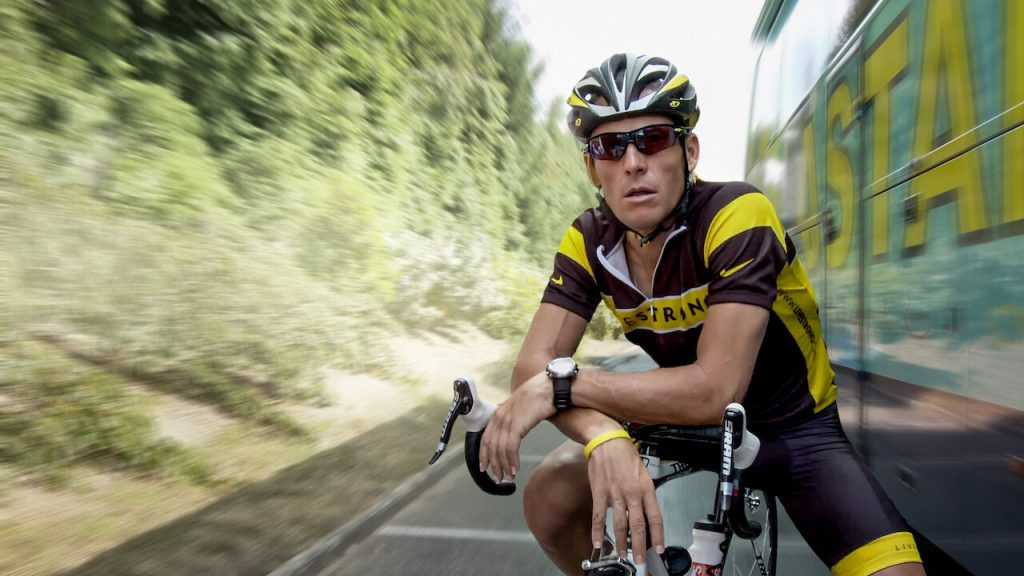
Made the same year, The Armstrong Lie is a particularly penetrating portrait of a shameless, seemingly untouchable liar, because Gibney must reckon with his own gullibility. He did not set out to take down cyclist Lance Armstrong, who is perhaps still the sporting world’s most notorious cheater. He started out documenting Armstrong’s 2009 comeback at the Tour de France, but had to scrap that plan once years-long allegations of doping finally caught up with Armstrong. It’s to his credit that Gibney didn’t just wipe the egg off his face and move on; he picks the film up again to examine why he also believed the beautiful lie instead of an ugly, obvious truth. At least part of the reason is that Armstrong took perverse pleasure in the incessant dishonesty, and was arrogant and ruthless in hounding the many people who could prove the truth.
Beginning at the end, Gibney interviews Armstrong just after his infamous sit-down with Oprah Winfrey, where he finally fessed up. He seems all contrition. Gibney cuts between that interview, with its point-blank admissions, and the many years of interviews and press conferences where he adamantly, combatively denies doping. Hunched over with lean, taut aggression, he stares down the camera again and again, the denials growing more brazen and defiant. Through repeated interviews with the people he hounded for telling the truth, Armstrong emerges as someone who gets off on power and control. It gets to a point where you’re less outraged about the doping than about the pathological ruthlessness with which he covered it up.
Gibney’s structural innovation is to lay bare the extent of Armstrong’s chicanery, only to then return to the film he thought he was making of the ‘09 Tour, where the aging Armstrong quickly flags, only to crawl his way back to a third-place finish with a dramatic slog up a mountain stage. It’s got all the drama of great sports stories (both actual and fictional), where the old, battered pro pulls on some deep reserves of grit and strength to prove all the naysayers wrong. Even knowing everything that we do, it’s a gripping yarn, and the fact that Gibney can make you feel it after everything you’ve already seen shows just how easy it is to fall for the hype. Gibney briefly entertains the notion that Armstrong raced the ’09 Tour clean, just to prove to himself and his detractors that he could. But when, after all this, we’re presented with pretty incontrovertible evidence that he was blood doping before that pivotal mountain stage, we’re whip-sawed again, slapped in the face with the unrepentant mendacity of the guy.

In terms of brazen bullshittery, Armstrong can’t hold a candle to Silicon Valley’s Elizabeth Holmes, CEO of the fraudulent blood testing start-up Theranos. Holmes bluffed her way into billions by promising a technology that never came close to working. Gibney’s The Inventor: Out for Blood in Silicon Valley (2019) has little information that hasn’t been covered in the multiple accounts of Holmes’s con, but it’s more visually inventive and stylish than We Steal Secrets or The Armstrong Lie, and this gives it a surreal, feverish quality. Uncanny duplications and superimpositions of images of Holmes—with her unblinking eyes and oddly buzzy affect—capture something of the deluded hype that allowed Holmes’s star to blaze so brightly.
Meanwhile, testimony from Theranos scientists about the technology’s constant failings is accompanied by reenactments of robotic arms smashing and flailing about and vials of blood dropping and cracking, giving you a visceral sense of the dysfunction that lay behind Holmes’s unnervingly chipper demeanor. Just as he had to look at himself in The Armstrong Lie, Gibney good-naturedly probes journalists Roger Parloff and Ken Auletta, who both wrote glowing profiles of Holmes and are refreshingly detailed and honest about how their conversations with her went down. Listening to her tap-dance her way through their questions in recorded interviews, it seems like the social contract just cannot account for someone willing to unabashedly lie this much for this long—an ability, Gibney argues, that made her a hit in the fake-it-till-you-make-it world of Silicon Valley.
Gibney’s latest subject is one of the most comical and consequential baddies of our time: his four-hour dissection of Elon Musk opens on October 9. It’s already controversial, and it’s already gotten under Musk’s skin. Based on Gibney’s filmography, we can expect to laugh, and expect our blood to boil, but I expect we’ll also have to think more deeply about the systems and the blind spots that created and elevated late-stage capitalism’s ultimate buffoonish ghoul. It’s in teasing out those connections that Gibney truly excels at holding a mirror to our world.
“Musk” is in theaters Friday — and you should probably see it there, because who knows where it will stream.