Kimber Myers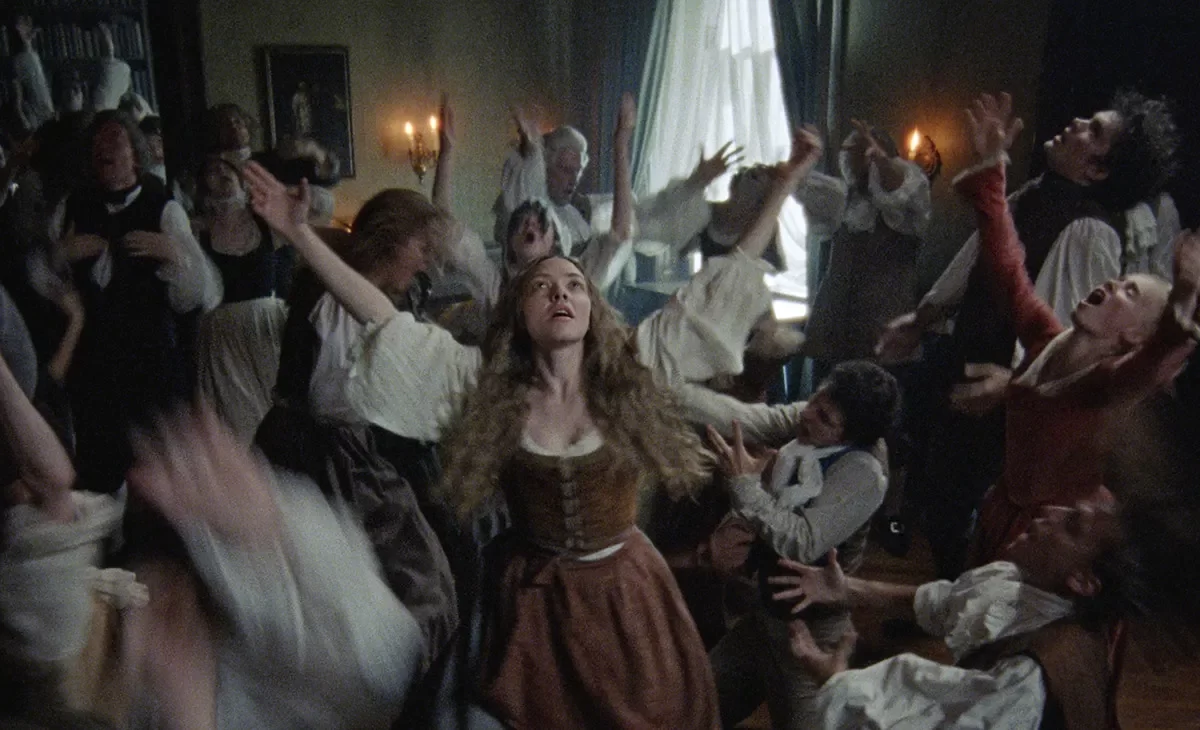
There is nothing more boring than a biopic. Often more concerned with fidelity than creativity, they generally follow the same formula of presenting a historical figure’s life in straightforward fashion, hitting identical beats of birth, early years, adulthood, and death in exactly the same way. There are defining scenes of childhood and whatever moment made their subjects into the famous people we recognize. They try to cram a whole epic life into 120 minutes and finish up with side-by-side comparisons of the real people and their on-screen counterparts. Thankfully, The Testament of Ann Lee bears no resemblance to its bland biopic brethren, despite its focus on the founder of the Shaker movement.
As writer and director, The Brutalist’s Mona Fastvold traces Ann’s life from her youth through her death. However, she does so with such verve and wild rhythms that the result bears no resemblance to any biographical film I’ve watched. That differentiation is clear from its eerie first dance sequence, choreographed by Celia Rowlson-Hall, who also did After Yang’s opening credits. For the entirety of its 135 minutes, The Testament of Ann Lee blurs the border between musical, folk horror, and drama, birthing something entirely new that seems simultaneously too fragile and too strong for this world. It’s a fever dream and a waking nightmare. It hovers between solemn and silly and uncanny and vividly realistic. It’s so many things at once and unlike anything I’ve seen before.
The Testament of Ann Lee proclaims that it’s “based on a true legend,” and it thrives on the fact that most people know little about the Shakers or their founder, so there’s no wondering when she’s going to go electric or get drafted to the Korean War or whatever. Narrated by her follower and friend Mary Partington (Thomasin McKenzie), The Testament of Ann Lee shares how Ann (an utterly enchanting Amanda Seyfried) started the Shaker sect and took a small group of fellow believers from England to America in the 18th century, including her loyal brother (Lewis Pullman) and her bewildered husband (Christopher Abbott). The New World promises a haven for their nascent religion, but they still encounter opposition.
The Testament of Ann Lee speeds through its final act a bit too quickly, as though Ann herself is ready to be done with this earth and in heaven. With its largely spare plot, The Testament of Ann Lee isn’t overly concerned with the facts of her story; instead it devotes itself to the way that Ann connects to the divine through dancing and singing. She’s the rare female church leader (both in her time and ours), and she advocates for equality, regardless of gender or race.
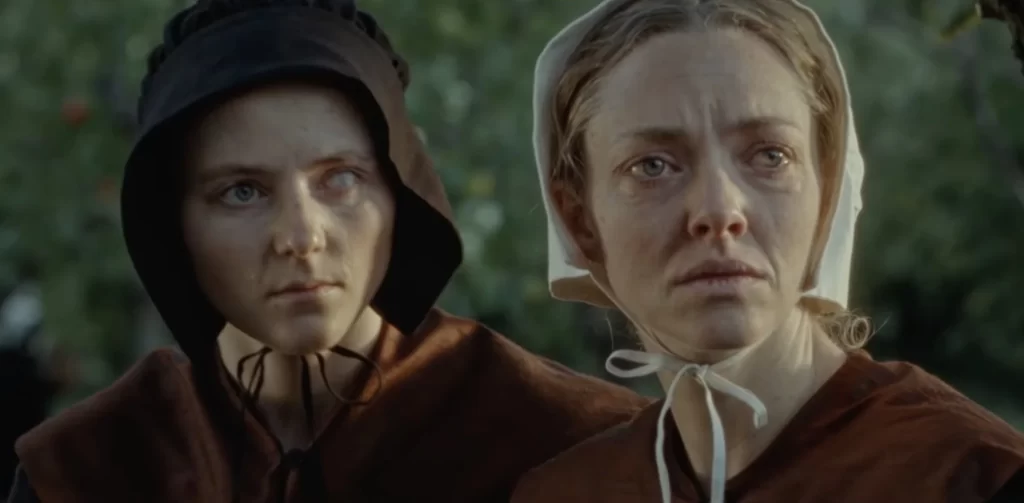
As much as The Testament of Ann Lee feels like an excellent pairing with Fastvold’s work on The Brutalist in its themes about iconoclasts and the American dream, it’s even more in step with The Witch. They’re both very much a vibe, while being on very different wavelengths. Robert Eggers’ 2015 horror film is set a century before this one, and Anya Taylor-Joy’s Thomasin takes an entirely spiritual different path, but both women explore female power in a male-dominated world, as well as the connection between the body and soul. Ann experiences religious rapture through song and dance, all while denying sexual pleasure and embracing celibacy as a key way to connect with God.
The Brutalist composer Daniel Blumberg adapted traditional Shaker songs for the score, and they’re sung by characters in an apparent state of ecstasy. Seyfried’s sweet soprano weaves beautifully with the notes of her fellow faithful, and it’s rousing to hear these voices singing together. I don’t think I knew any of these songs, but there’s something immediately familiar about them; their simple structure makes them easy to embed in your brain and feel like you could sing along the first time you hear them. Rowlson-Hall designed dance sequences that feel oddly organic, even while characters move in unison. It’s moving and unsettling all at once, making for a strangely spiritual experience, even for a skeptic.
With The Testament of Ann Lee, Fastvold has made something ineffable. Most films are so easy to pin down and explain, but her movie writhes out of your grasp, like a dream you’re trying to remember in the moments after waking. It swings big, a rarity for both the biopic genre and for movies in general. It mostly connects, doing so on a cinematic level as well as a spiritual one.
A-
“The Testament of Ann Lee” is out Christmas Day in select theaters.