Josh Bell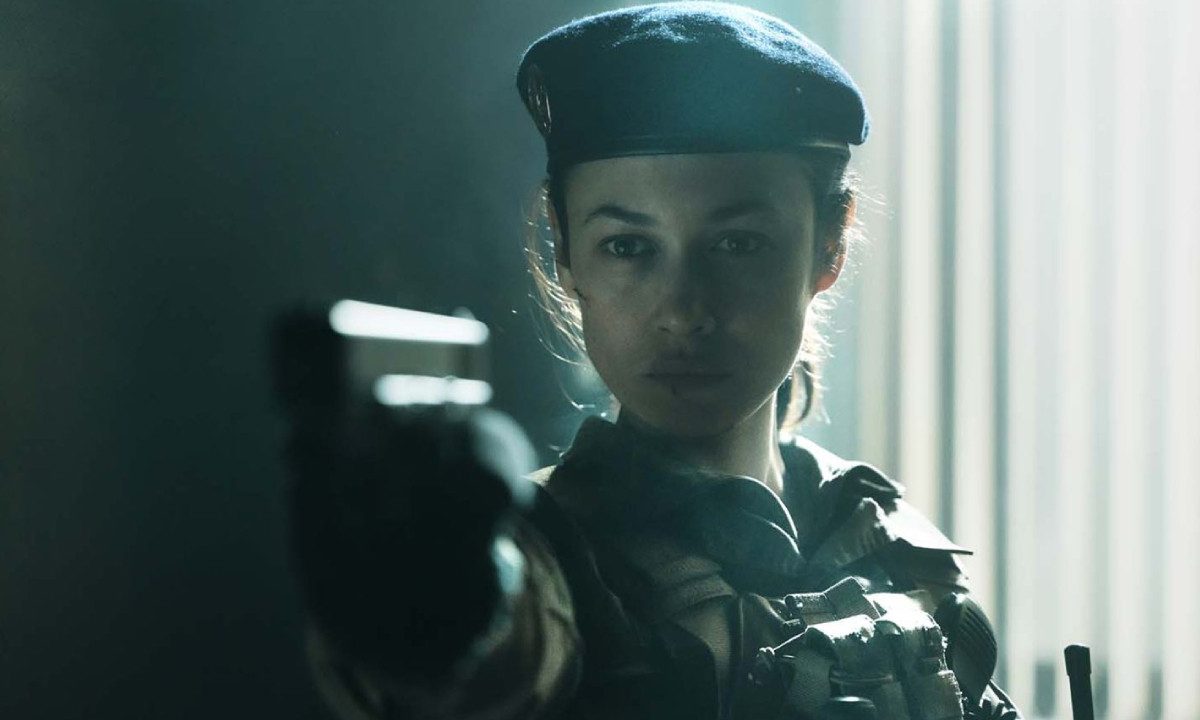
Julien Leclercq doesn’t waste time. The four most recent films from the French action-thriller specialist all clock in around 80 minutes, exhibiting as much ruthless efficiency in their character development and narrative exposition as they do in their showdowns between adversaries. That may make Leclercq sound like he only cares about flashy fight scenes, but his films are gritty and methodical, carefully building toward bursts of brutal violence, taking the consequences of every kick and punch into account. When a character in a Leclercq movie speaks or points a gun, it’s done with equal focus and purpose.
Leclercq made his international breakthrough with 2015’s The Crew, which was picked up as a Netflix original in most territories in 2018, and provided the source material for the Netflix series Ganglands (both have the same French title, Braqueurs). The Crew stars Leclercq’s frequent collaborator Sami Bouajila as Yanis Zeri, leader of a well-trained gang of thieves who abide by a basic code of ethics, robbing armored cars, only taking money from faceless financial institutions, and doing their best not to harm the innocent guards they threaten and tie up.
That precarious system comes crumbling down thanks to one mistake by Yanis’ careless, greedy younger brother Amine (Rédouane Behache), who sells one of the guns used in a robbery rather than getting rid of it, and incurs the wrath of a much more dangerous drug syndicate. A typical cold-hearted criminal might have taken care of the problem by just shooting Amine, but Leclercq’s action heroes are always fiercely protective of their families, making sacrifices to keep loved ones safe, even at the expense of their own lives.
So Yanis makes a doomed agreement with the drug dealers to hijack a rival syndicate’s shipment of heroin. Leclercq establishes the Zeri family dynamic in a series of short, clear scenes, as Yanis visits his sister Nora (Kahina Carina) in the beauty salon his laundered money helped her set up, and mentions his estrangement from his mother. Leclercq’s protagonists are always working-class, often the children of immigrants, and violence has been an everyday part of their lives. Yanis is familiar enough with the repercussions of his criminal activity to know what he has to do to shield his family from them.
Michael Mann is an obvious Leclercq influence, and The Crew is his most Mann-like film, especially in the thrilling mid-film heist and shootout, as Yanis and his associates use their well-honed techniques against a more heavily armed opponent. Their typical tactic is to crash a car directly into the vehicle they’re trying to rob, a utilization of brute force that provides an apt metaphor for the sheer effort required for these characters to prosper in a society that marginalizes them.
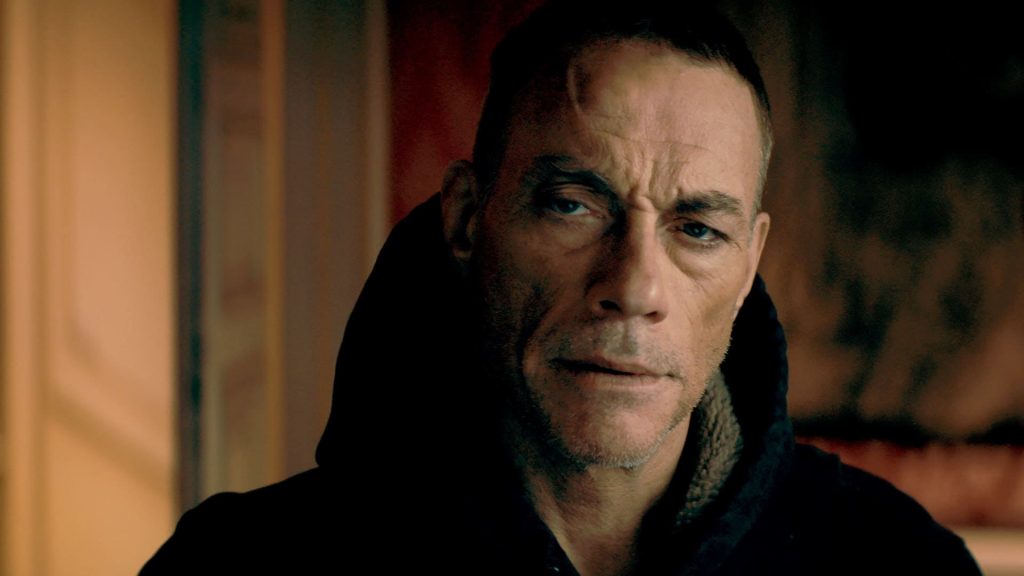
Leclercq’s next film, 2018’s The Bouncer, opens with a long tracking shot following behind main character Lukas (Jean-Claude Van Damme), echoing Leclercq’s fellow Francophone chroniclers of the downtrodden, the Dardenne brothers. It may sound absurd to compare a Van Damme movie to the works of the multiple Palme d’Or-winning filmmakers, but Leclercq takes the same care in depicting the lives of the vulnerable, with a similarly naturalistic style. If Dardenne characters could deliver roundhouse kicks, they’d probably resemble Lukas, who starts the movie by getting fired from his bouncer gig at an upscale nightclub.
Struggling to provide for his young daughter Sarah (Alice Verset), Lukas is forced to take a job at a seedy strip club, where the “interview” involves beating up multiple other applicants for the honor of being hired. Lukas has to risk debilitating injury just to land a low-paying job, but he’s lucky that anyone pays attention to him in the first place. “I was a bodyguard … abroad,” he explains about his background, and that’s all the information necessary to understand the violence and trauma he’s left behind.
Leclercq directs Van Damme to the best performance of his career, capturing Lukas’ grim resignation, as he accepts humiliation from both the strip club’s sadistic criminal owner (Sam Louwyck) and a cop (Bouajila) who blackmails Lukas into becoming an informant. Even Van Damme’s renowned martial-arts moves feel heavy with bitterness and regret.
Anyone coming to The Bouncer looking for a fast-paced Van Damme action vehicle will be disappointed, but as always in Leclercq movies, when the action arrives, it’s quietly virtuosic. Leclercq stages an entire exciting, effective car chase solely within a parking garage, and he composes a dazzling single-shot sequence of Lukas raiding a drug lab on his boss’ orders, with almost all the sound dropped out. The action is all the more impressive for how suddenly it arrives and just as suddenly ends, often with the characters no better off than they were before.
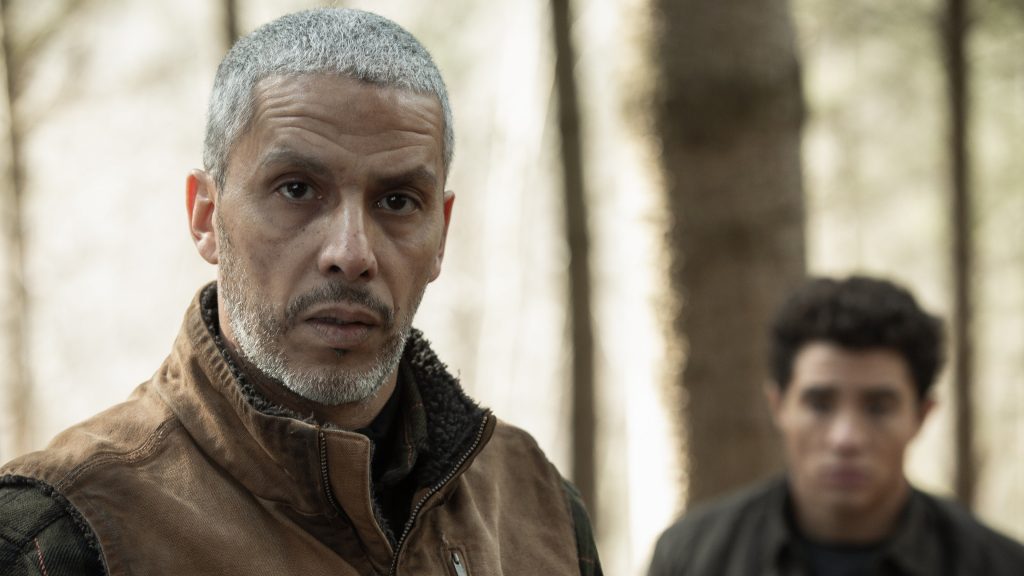
That’s especially true in 2020’s Earth and Blood, which puts Bouajila back in the lead role and unfolds as a small-scale tragedy for Bouajila’s sawmill owner Saïd. Unlike Yanis or Lukas, Saïd has no involvement in the underworld, but it finds him anyway, thanks to his generosity in hiring ex-convicts at his struggling rural facility. Leclercq makes the contrast clear via Earth and Blood’s two opening scenes: First, a masked group of robbers storm a police station, stealing eight kilograms of cocaine from an evidence locker but losing two of their number in the process. Then, Saïd emerges from a CT scanner to have a simple, direct conversation with a doctor about how much time he has left before he dies of the cancer ravaging his body.
Saïd sets about getting his affairs in order, planning to sell the sawmill that was founded by his late wife’s father, leaving the proceeds to his sister-in-law and to his teenage daughter Sarah (Sofia Lesaffre), who has ambitions of going to art school. All of those plans are no match for the danger he doesn’t realize is on the way, thanks to one of the surviving robbers from the police station heist convincing his half-brother Yanis (Samy Seghir) to hide the drugs at the sawmill.
Saïd takes the news of his cancer and the realization that gangsters are descending on his property with the same sense of steely determination, immediately going for his gun cabinet when Yanis reports that he can’t reach his half-brother on the phone. The second half of the movie plays out as a nearly real-time siege of the sawmill, which becomes a perfect source of booby traps and improvised weaponry. Saïd knows every inch of this place that he’s come to terms with giving up, whether by selling it to a competitor or by destroying it in the name of keeping his daughter and his employees safe.
It’s the kind of role that Liam Neeson might play in one of his late-career action movies, with smirking one-liners and triumphant last-minute victories, but there are no quips in Leclercq movies. Even when working with recognizable stars like Van Damme or Olga Kurylenko in 2021’s Sentinelle, he keeps things contained and subdued. Sentinelle is his most fully realized action film to date, led by a fearsome performance from Kurylenko as Klara, a French military veteran with PTSD who’s been demoted to working on a domestic anti-terrorist squad patrolling the beaches of Nice.
She’s moody and short-tempered, constantly flashing back to a moment during her tour of duty in Syria, when she failed to recognize that a young child was strapped with a bomb. Her sister Tania (Marilyn Lima) attempts to help her let loose by bringing her to the kind of nightclub where Van Damme’s Lukas could be working the door, but there’s only further suffering to be found. Tania is discovered the next day, raped and beaten nearly to death, and that gives Klara a renewed sense of purpose, as she vows to track down the men responsible.
Sentinelle is a rape-revenge movie, and like all of Leclercq’s action movies, it works with familiar plot elements and character types, stripping them down to their essence and giving them a fresh urgency. There’s no moralizing here, only stark inevitability, as Klara repeatedly and brazenly invades the compound of the wealthy Russian tech scion who took Tania home from the club. She acts on impulse, without advance planning, with only that same pure concern for family as other Leclercq protagonists.
That places her in some gnarly fights, including a close-quarters brawl in a nightclub bathroom that’s like the grubby, scrappier cousin of the acclaimed bathroom fight scene in Christopher McQuarrie’s Mission: Impossible – Fallout. There’s a certain nastiness to the way that Klara fights, lashing out instinctually as much as strategically. When she confronts an assailant disguised as a nurse in a hospital basement, the chaos of the fight threatens to consume them both.
Sentinelle ends with an epilogue that is alternately horrific and peaceful, providing the most satisfying resolution to a Leclercq action movie yet. In a fairly short amount of time, he’s matured as a storyteller and a stylist, while holding onto a unique vision that places him between arthouse and exploitation. In that way, he’s the perfect choice to direct Netflix’s new take on Henri-Georges Clouzot’s The Wages of Fear, which premieres this week. The story of desperate people transporting volatile explosives across harsh terrain is eerily calm until it erupts into devastating destruction — just like a Julien Leclercq movie.