Craig J. Clark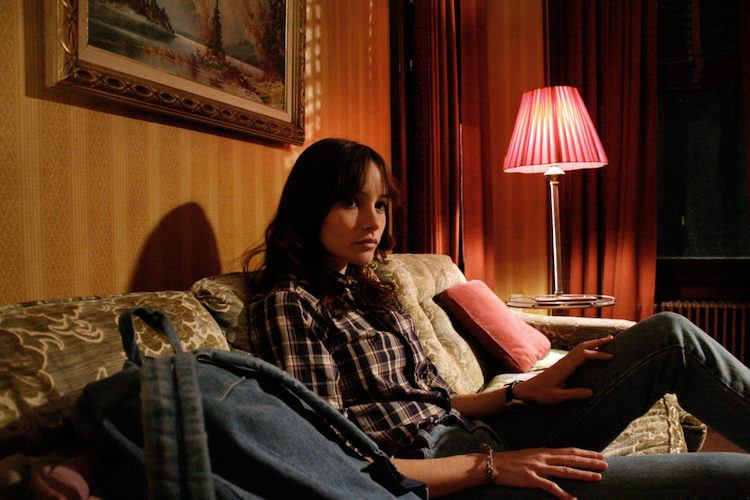
Ever since the proliferation of the mobile phone, horror filmmakers have to go out of their way to explain why their characters can’t use them to get out of whatever horror-movie scenario they’ve landed in. Either someone complains they can’t get a signal – prompting everyone else in the group to whip theirs out to confirm it – or their battery dies, or their phone is lost, stolen, broken, eaten, what have you. It’s all fairly boilerplate by now. One way around this vexing problem, however, is to set your film in the pre-cell era, as Ti West did with 2009’s The House of the Devil, allowing him to thoroughly isolate his protagonist when she’s enticed into accepting a questionable babysitting gig far outside of town.
Then again, West’s primary reason for setting his film in the ’80s was so he could invoke the “Satanic panic” that was all over the media back then. (See the recent documentary Hail Satan? for a useful primer on this hysteria-fueled period in our not-too-distant past.) He even opens the film with the standard exploitation disclaimer that it’s “based on true unexplained events,” a device that allows him to develop the story at its own pace and not have to hit the audience over the head with blood and guts right out of the gate. Coupled with some made-up-sounding statistics about how widespread the belief in the occult was at the time, this carries the potentially impatient viewer through the early stages of the film, which West treats like an ordinary day in the life of college sophomore Samantha (Jocelin Donahue), who has the desire but not the means to get her own place off-campus.
 Every decision Samantha makes is based on her pressing need to scrape together the $300 necessary to secure a one-bedroom apartment she saw listed in the newspaper. One retro credits sequence later – complete with freeze-frames and driving synth theme – she finds her answer in a “BABY $ITTER NEEDED” flyer posted on campus and, using a pay phone to call the number, arranges to meet the person who put it up. When he fails to show, though, she drowns her sorrows in pizza with her best friend Megan (Greta Gerwig, on her way up and out of the mumblecore scene) while describing the apartment that represents her escape from her inconsiderate roommate, whose half of their dorm room is a pit. “I wish you had pictures,” Megan says, reminding the viewer that this takes place before everyone carried a digital camera around with them at all times.
A big part of what makes the opening passages of The House of the Devil work so well in their own right (as opposed to just marking time until the first kill) is the easy rapport between Donahue and Gerwig as Samantha and Megan. Gerwig is especially endearing in the role of the sarcastic best friend who clearly doesn’t have the same money problems as Samantha. Not only does she offer to hit up her father for the $300 Samantha needs, but Megan also has her own car, which comes in handy when Samantha gets a callback from the mystery man and needs a ride out to his house. (Emphasizing how far out of the way it is, Megan gripes that she had to look at a map to find it.) Accompanying her inside, Megan senses something is amiss and tries to get Samantha to bail, but she’s thinking more about the money being dangled in front of her than common sense. “This is huge,” Samantha says to her visibly upset friend. “This one night changes everything for me.” Well, she’s certainly right about that.

As Mr. and Mrs. Ulman, Tom Noonan and Mary Woronov cut eccentrically sinister yet distinctly different figures. Initially a halting voice on the phone, as if choosing every word carefully because he’s not used to interacting with ordinary people, Mr. Ulman is a physically imposing presence, towering over the girls when they arrive. In the course of his awkward interactions with them – both the initial sit-down in the living room and his confession to Samantha in the kitchen – Mr. Ulman seems nervous and uncomfortable. “I can’t tell you how much of a relief it will be to get this night behind us,” he says, an echo of his earlier promise on the phone to “make this as painless for you as possible.” Desperate for her to stay after he reveals the true nature of the job – she’s not looking after a child, but rather Mrs. Ulman’s elderly mother – Mr. Ulman doubles the fee, placing two $100 bills on the table between them, then sweetens the pot by adding a third. Right there, Samantha is staring at the exact amount she needs to give her landlady. How could she possibly turn it down? And why not ask him to kick in another hundred while she’s got him on the ropes?
Mrs. Ulman, meanwhile, is an oddball of another sort, appearing like a vision in black furs, complaining to Samantha about the cold weather. “I love the heat,” she confides. “We’re from the desert, you know.” (How could she?) What’s especially strange about her, though, is that she doesn’t behave at all like the anxious woman her husband repeatedly describes. As with a lot of the clues Samantha gets that something is off about the couple, this is one she either misses or deliberately chooses to ignore.
Before they depart, Mr. Ulman mentions the phone number for the local pizza place on the refrigerator three times, another nervous tic born of his need for everything to follow the script he has in his head. Finally, Samantha is left alone in their big, creaky house with an old rotary phone as her sole connection to the outside world. At first, she uses it to try to reach Megan, but each time she calls all she gets is her friend’s fake-out answering machine message. (By this time, unbeknownst to her, Megan has been taken out of the picture in a scene few people who have seen The House of the Devil will forget.) Then she makes the fateful call to the pizza place and, while waiting for them to deliver, sets about exploring the house in classic “snooping babysitter” fashion.
As she checks each room – save for the one Mrs. Ulman’s mother is supposedly in because she’s not to be disturbed – Samantha comes across one that is clearly the bedroom of a young boy, which doesn’t gibe with what Mr. Ulman said about their son being grown up. She also finds a hall closet full of furs, which Mrs. Ulman said she kept in the basement, and photos of another family – namely the one that lived in the house before the Ulmans commandeered it. An impending lunar eclipse is seeded throughout the film and is the focus of the TV news report Samantha sees briefly before pulling out her Walkman and bopping around the house to The Fixx’s “One Things Leads to Another,” arguably the last time she gets to behave like a normal college student. This sequence, which West shoots and edits like a music video, is in direct contrast with the rest of the film, with its deliberate pace, long takes, slow camera moves, and plentiful zooms.
Inevitably, all the tension that has been steadily building reaches its crescendo when the eclipse arrives and Samantha finds out precisely what the Ulmans expect to get for their $400. And while West’s Grand Guignol climax may strike some as a betrayal of the measured tone his film has had up to this point, it’s still refreshingly free of the tired jump scares his contemporaries in mainstream horror typically relied on in lieu of genuine dread.
In the decade since The House of the Devil’s release, other films have followed its example of looking to the past to heighten their nightmare scenarios and employing outdated technology to give the impression of time standing still. Think Panos Cosmatos’s Beyond the Black Rainbow and Mandy, both set in 1983. Or 2016’s Beyond the Gates with its cursed VCR board game. Or 2017’s Jackals, about a cult deprogramming (something else that was a hot topic in the ’80s) that goes awry. Or 2018’s Summer of 84, about a group of teens trying to dig up dirt on the proverbial “serial killer next door.” This year’s I Trapped the Devil takes things a step further, though, by not only getting Satan back in on the act but casting two actors (AJ Bowen and Jocelin Donahue) who were in The House of the Devil.
Meanwhile, West took inspiration from the allegedly haunted colonial-era inn where his cast and crew stayed during House’s filming for his follow-up feature, 2011’s The Innkeepers, in which he put his character-centered, slow-burn horror aesthetic to work in service of a ghost story set squarely in the present — proof that just because you have computers and fancy electronic equipment at your disposal, that doesn’t necessary mean you’re any safer.