Audrey Fox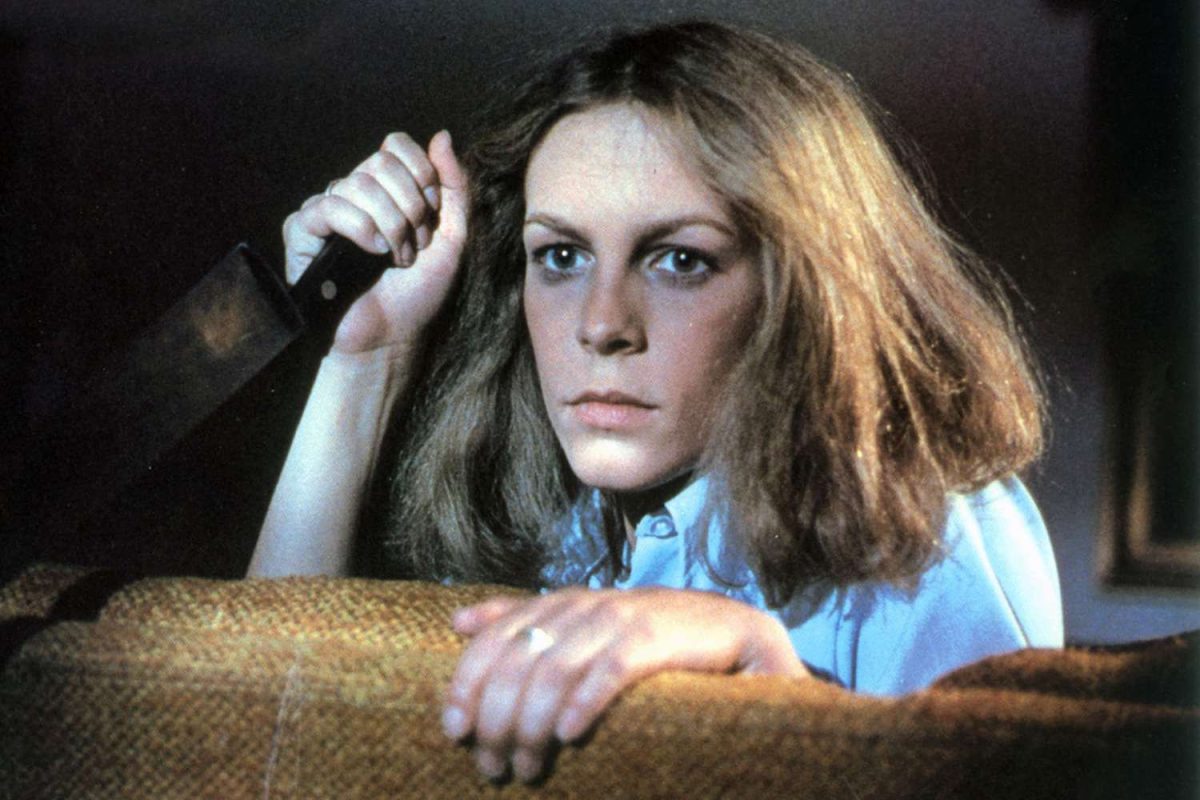
As a great Kennedy once said (Jamie, that is), “There are certain rules that one must abide by in order to successfully survive a horror movie.” The genre is filled with tropes, and it constantly finds ways to both play into these clichés and subvert them. But while there are certain rules, as Randy in Scream explains, that dominate horror movies, they have evolved over the years to reflect the changes in the society they exist within. The trope of the “final girl” is one of the most enduring examples of this. Traditionally, this is the main female protagonist who makes it to the end of the film, squares off against the primary antagonist, and ultimately survives. But she means different things to different generations — Laurie from Halloween is nothing like Regina from Night of the Comet or Sidney from Scream, for example — and the changes within this character archetype are an indication of both evolving perspectives on women and larger societal shifts.
Laurie (Jamie Lee Curtis) in Halloween is the prototypical final girl, the character that most people have in their head when they hear the phrase. A teenage babysitter, she goes head-to-head against Michael Myers — a deranged murderer recently escaped from a nearby psychiatric institution, where he spent most of his life after murdering his older sister as a child. Unlike her friends, who are babysitting for the family across the street from Laurie, she doesn’t invite a boyfriend over to her client’s house, an indication that she has a sexual purity that presumably allows her to survive her encounter with Michael. This is something we famously see over and over again in slasher films from the 1970s — the girls who have sex with their boyfriends end up dying horribly, while the virgins make it out alive.
Movies of the 1970s — and especially horror films — tested the limits of good taste. During this period, we begin to see the more mainstream distribution of pornography in movie theaters with films like Deep Throat, and even traditional dramas become more sexually explicit. In horror films from this decade, the violence becomes more graphic, and one might even say perverse. The concept of a chaste final girl is a way for 1970s horror films to have their cake and eat it too — they can show teens gone wild, having sex with one another and then being murdered in endlessly inventive ways, while a character who is considered morally upright can win the day. All of this reflects the inherent conflict in a society that was changing quickly in its attitudes towards sexual liberation, especially for teens and young adults.
Fast forward just a few years, and things start to change. The virginal final girl has become old hat, an expected convention that audiences are trained at this point to look for whenever they see a horror movie with a female protagonist. Reggie (Mary Catherine Stewart) in Night of the Comet is an interesting subversion of the trope: Her survival actually hinges on the fact that she has sex at the beginning of the film. When a comet passes close to Earth, turning its inhabitants into either piles of dust or rapidly decaying zombies, only those encased in some sort of metal bunker are able to avoid its debilitating effects. That Reggie spends the night with her boyfriend, a protectionist at a local movie theater whose booth is lined in steel as a fire prevention measure, saves her life.
Although Comet is a horror comedy, it has hints of the same kind of 1980s Reaganist jingoism we see in movies like Red Dawn, which depicts American teens fighting against a foreign threat, or Top Gun, which is framed like a recruitment ad. These films attempt to rehabilitate America’s military reputation after the disastrous Vietnam War.
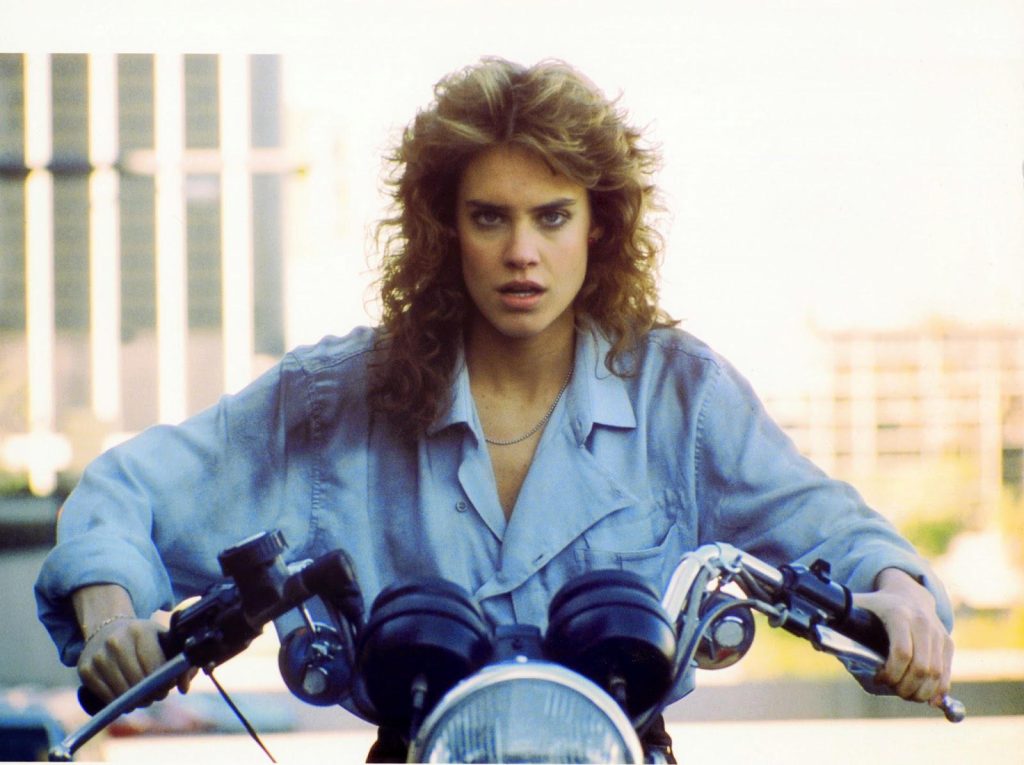
Night of the Comet isn’t quite in this territory — after all, the villains are American scientists who see nothing wrong with draining children of their blood in an effort to save their skins when they make a dramatic miscalculation regarding their private underground bunker. But there’s still an element of American exceptionalism at play; Reggie’s long-term survival is largely assured because of lessons from her father, a decorated war veteran, who taught both Reggie and her younger sister Sam how to use a gun and how to execute battle strategy. The fact that both of their names are non-gendered is hardly a coincidence — as final girls, they take a step away from the interpretation that would see their sexuality as a key determinant in their ability to stay alive. Reggie carves out a new path for female horror protagonists, and was by all accounts one of the inspirations for another key feminist figure in the genre: Buffy the Vampire Slayer.
Which brings us to the 1990s. A decade full of cynicism and irony in popular culture, the ’90s — and Wes Craven’s Scream in particular — saw its horror protagonists doing something incredibly novel for the genre: acting as though they’d actually seen a scary movie before. (The iconic opening sequence of Scream signals that these characters know all the tropes of the genre, with the ill-fated Drew Barrymore taking Ghostface’s horror movie quiz over the phone.) Featuring female protagonists who are a little more savvy than their counterparts from previous generations, they’re a little bit trickier to lure into a trap.
Sidney Prescott (Neve Campbell) is in some ways a throwback to the traditionally virginal final girl. Her boyfriend Billy (Skeet Ulrich) makes a big show of his sexual frustration, and the fact that she refers to their foreplay as “PG-13” is another indication of how film-conscious she and the other characters are. It’s almost as though they know on some level that they’re in a slasher movie, or at least, the way that they process the reality around them is through the lens of the films they’ve seen. Sidney doesn’t fall into the traps of earlier horror heroines — the number of scary movies she’s seen means that she knows what to expect. We don’t have to scream at the screen, telling her not to go into the spooky basement unarmed; she already knows that. The tone of Scream reflects the tastes and sense of humor of ’90s audiences, but it also speaks to how pop culture had changed as a result of the ubiquity of video rental stores. Audiences were exposed to a wider array of movies than ever before, and their on-screen counterparts adapted accordingly. Sidney is emblematic of a new generation of self-aware female heroes who are assertive in protecting themselves — a natural successor to Reggie in Night of the Comet, but dripping with ’90s irony.
It’s unlikely that we’ll ever see the final girl completely disappear from the horror genre. Whether she shows up in loving throwbacks to classic slashers, or is molded into a wry twist on the cliché, she’s too good of a character archetype to discard entirely. But as we’ve seen over the decades, the final girl is a contradiction, both a set trope and a chameleon capable of changing to meet the needs of her audiences. In the 21st century, she’s become more self-sufficient than ever, sometimes appearing as an earnest incarnation of the character type, sometimes as a meta commentary on her, but always with the same plucky resolve that ensures her survival against an array of nefarious (usually male-coded) threats.