Kayleigh Donaldson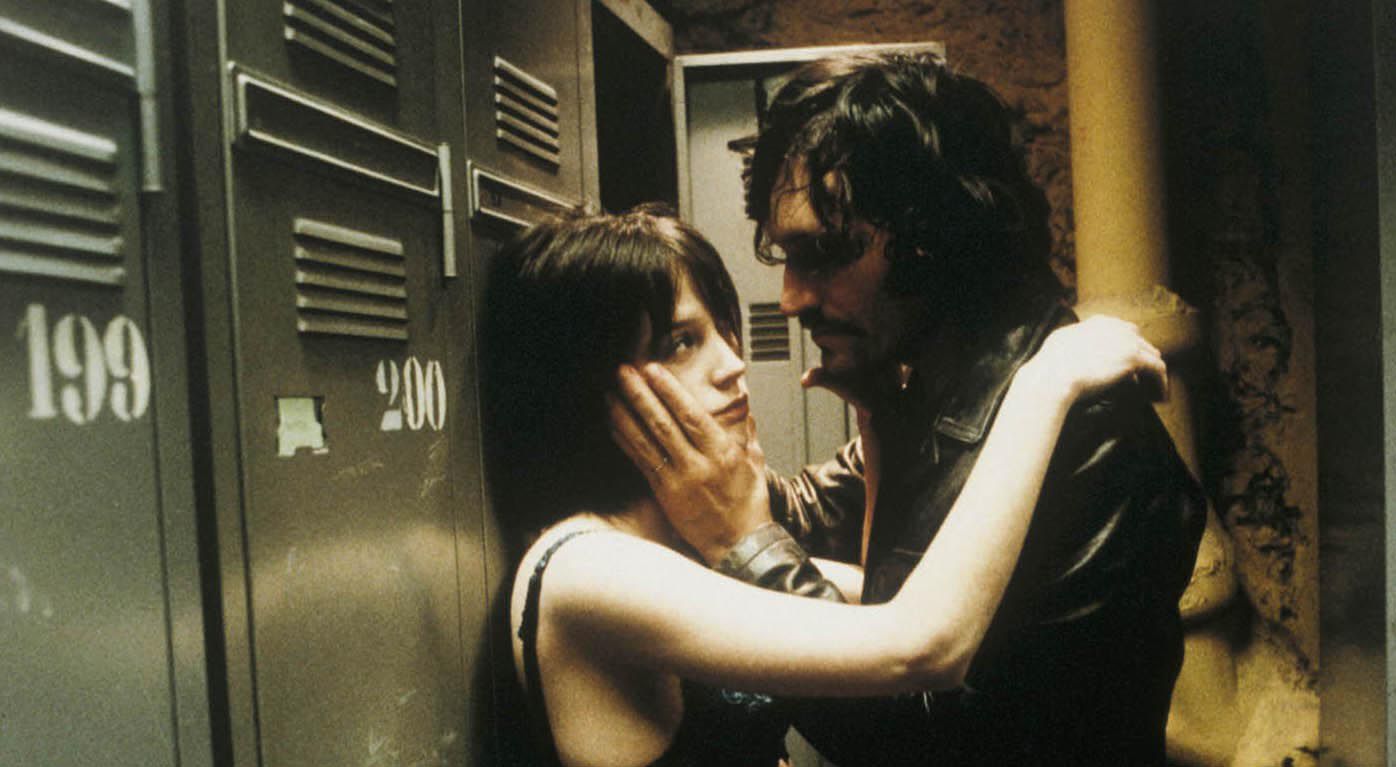
Horror has always glamorised the taboo, so it’s no surprise that cannibalism, perhaps the most sickening of transgressions, has been the stuff of many a curious dark romance. Thomas Harris’ Hannibal Lecter series turned the ravenous nature of consuming one’s own into an act of subversive sophistication, and the TV adaptation by Bryan Fuller transformed it further into a display of baroque sensuality. Luca Guadagnino’s newest film, Bones and All, follows a similar path, bringing two lost souls together through their troubling craving for flesh. But few filmmakers are as disinterested in the rose-tinted sheen of the romantic as Claire Denis, so of course her own dalliance with flesh-eating would be as raw, disturbing, and all-consuming as possible.
In Trouble Every Day, released in 2001, lovestruck American couple Shane and June (Vincent Gallo and Tricia Vessey) go to Paris for their honeymoon, although it soon becomes clear that Shane has ulterior motives. He’s hoping to find Dr. Léo Sémeneau, a brilliant neuroscientist who he once knew. Léo (Alex Descas) is now something of a recluse, spending most of his time keeping an eye on his wife Coré (Béatrice Dalle), who is locked in their home. If she ever escapes, she’ll seduce unwitting men before viciously murdering them. Soon, the newlyweds are caught in a trap of truly all-consuming lust.
Trouble Every Day is often cited as one of Denis’ most divisive efforts, which is impressive given that her entire career has been defined by this quality. Claire Denis has never been an easy director to pin down. Her films vastly differ from one another, seldom tackling the same themes or styles in the same manners. Even her most seemingly simple works, like the romantic drama Let the Sunshine In, defy categorization, refusing the well-trodden route in their exploration of humanity’s exhausting complexities. Famously, Denis rejects the notion that film should be a medium for social change or mere emotional comfort (“I don’t want to be a social worker,” she said in a 2013 interview.) Rather, her stories are about character, first and foremost, and the sheer brute force of life. “Anger is part of my relation to the world,” she has said. What better way to dissect that than with bloodshed?
At first, Trouble Every Day seems like a typical horror, another example of the blood-soaked excesses of filmmakers like Alexandre Aja and Pascal Laugier, and the film Inside. The latter even shares a star with Denis’ film, the ever-striking Béatrice Dalle, a woman who looks more comfortable drenched in viscera than an emergency room surgeon. But the truth of Denis’ intentions come to light quickly – and she was already pushing the boundaries long before the phrase New French Extreme entered the lexicon.

Her curiosity with the body doesn’t end with it as a vessel for blood. The delicate intimacies of love are given just as much focus. Shane and June are as casually passionate as any honeymooner, often unable to keep their hands off one another. June’s body is shown in full when she bathes, Denis’ camera lingering not disrespectfully on her pubic hair, a reminder of unfettered natural beauty at its barest. When Léo tracks down his wife after another rampage, he is achingly soft in his comfort towards her, even as her skin is an entirely different color thanks to bloodshed. In their non-murder downtime, they seem to be a well-suited pair, shown in moments of marital joy before he locks her away. Even the maid is shown carefully cleaning her sore feet in a sink.
The first half of the film is sparsely connected, each subplot floating close to the central conflict yet not always overlapping. While the image of Coré as a killer is never far from the audiences’ minds, one would be forgiven for thinking it a minor blip in a simpler tale of love and sex. Yet there are moments that wake us from this optimism, such as a scene in a laboratory where a brain, looking like a piece of luncheon meat, is dissected and viewed through a microscope. The delicacy of flesh is a mere cover for the mundane grotesqueries of what’s underneath. And it’s what’s underneath that seems to fascinate Coré more than any good fuck.
Coré tears into her victims with her teeth, prolonging their deaths to an agonizing length of time. She rubs her face against wailing men’s faces, like a cat trying to revive a dead mouse they brought to their owner as a gift. We see one victim’s body through her gaze, each crevasse of flesh shown with the same kind of adoration as a woman in love. As tough as it is to watch, you could almost see her situation as one of affection. It’s a sharp contrast from Shane, who gives into his own hunger with a kind of callousness that makes for perhaps the most upsetting moment in any of Denis’ films. If Coré views men as things to be worshipped, it seems that Shane sees women as meat.
While tiny hints of Coré and Shane’s predicament are given, it doesn’t really matter to Denis why they do what they do. They could be vampires or mere humans with a murderous sickness. Whatever the case, it’s clear that theirs is a hunger that can’t ever be sated. The best they can hope for is a moment of respite through passion before their teeth find their way to their lover’s neck. 
“Trouble Every Day” is now streaming on Shudder.