Josh Spiegel
One of the key ingredients in a Disney animated film is romance. Not all of the studio’s classics are romantic in nature, to be fair, but many of the most memorable ones are. While the original Golden Age of Disney Animation, a quintet of films including Fantasia and Pinocchio, was as marked by ambition as it was by passionate love stories, later eras of the studio’s output are driven by the latter. Cinderella is all about a young maiden who doesn’t just want to escape the cruelty of her stepmother; she wants to fall in love with a charming young man. Lady and the Tramp features one of the most iconic images in all of Disney history, that of two dogs sharing a plate of spaghetti and touching noses shyly while sharing the same strand of pasta.
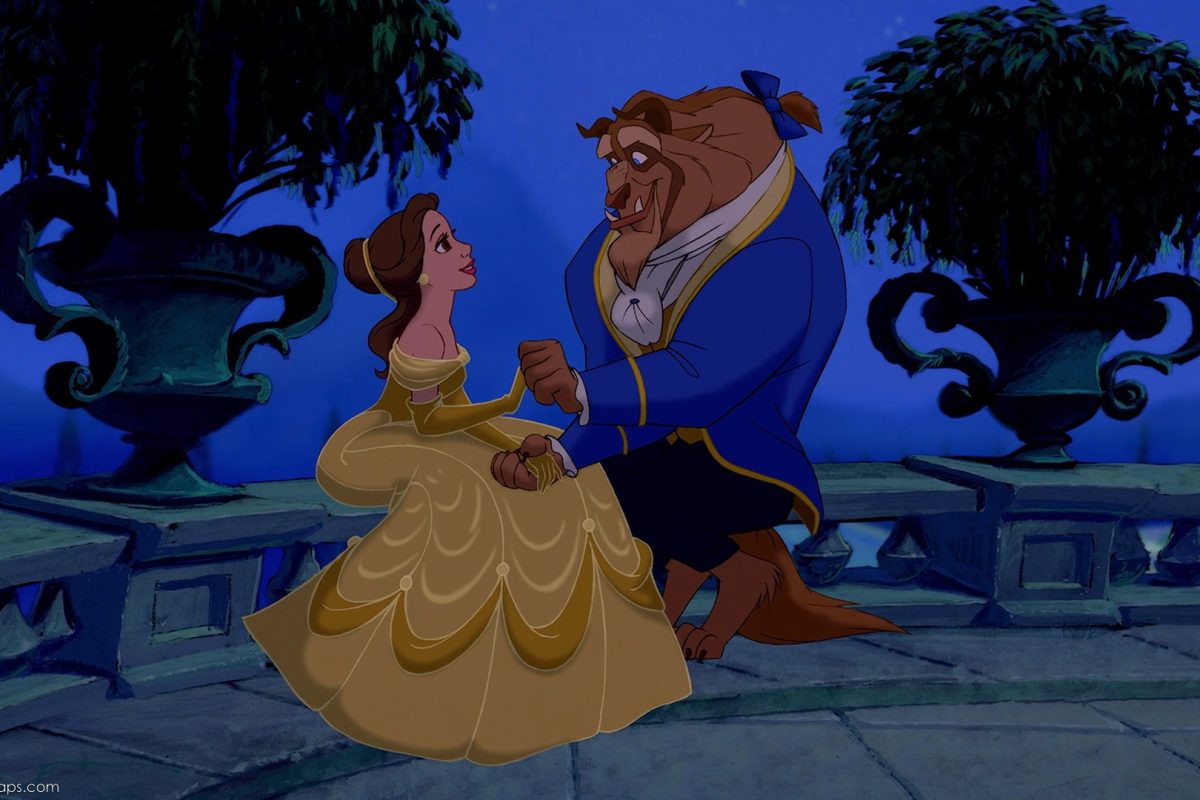
But the greatest of all Disney romances, turning 35 this week, is Beauty and the Beast. The film quickly leapt into the echelons of film history, becoming not just a critical darling but an audience favorite as well as the first animated film to be nominated for Best Picture at the Academy Awards. (Beauty and the Beast, to note, remains the only such film to get nominated in a field of just five titles, unlike Up and Toy Story 3.) Its music and animation are treated as the stuff of legend, but what makes the film soar decades later is that its romance is so memorable. Unlike almost every other Disney film to that point, both halves of the eponymous romance are given multiple dimensions and full life.
The story of Beauty and the Beast, like so many of Disney’s cinematic fairy tales, was broadly familiar before it became fodder for an animated musical. A fair young maiden named Belle (voiced by Paige O’Hara) saves her elderly father from becoming the prisoner of a callow young man transformed into a hideous Beast (Robby Benson) by convincing the monster to keep her locked up instead. And yet, somehow, these two opposing forces soften to each other and fall in love. This movie is a miracle in so many ways, not least of which is that, in less than 90 minutes, love blooms between a captor and his prisoner. (Sincerely, Beauty and the Beast is a classic, but when you write out its premise, it sure seems like a cancellation waiting to happen.)
This only works because both Belle and the Beast feel like actual, multi-dimensional characters. Belle is quickly established as the smartest person in a “poor, provincial town,” and desperate to leave lest she be trapped with obnoxious braggarts like Gaston for the rest of her life. The Beast is depicted in a stained-glass prologue as a nearly heartless youth, a snobbish prince too pompous to help an old beggar woman on a rainy evening. That woman reveals herself to be a powerful sorceress who dooms the Beast and his many servants to a life of body-horror transformation, unless he can prove himself as worthy of love as he is of loving someone else. Both Belle and the Beast grow as people; she is kinder to start, but they both need to understand their polar opposite and become better people in the process.
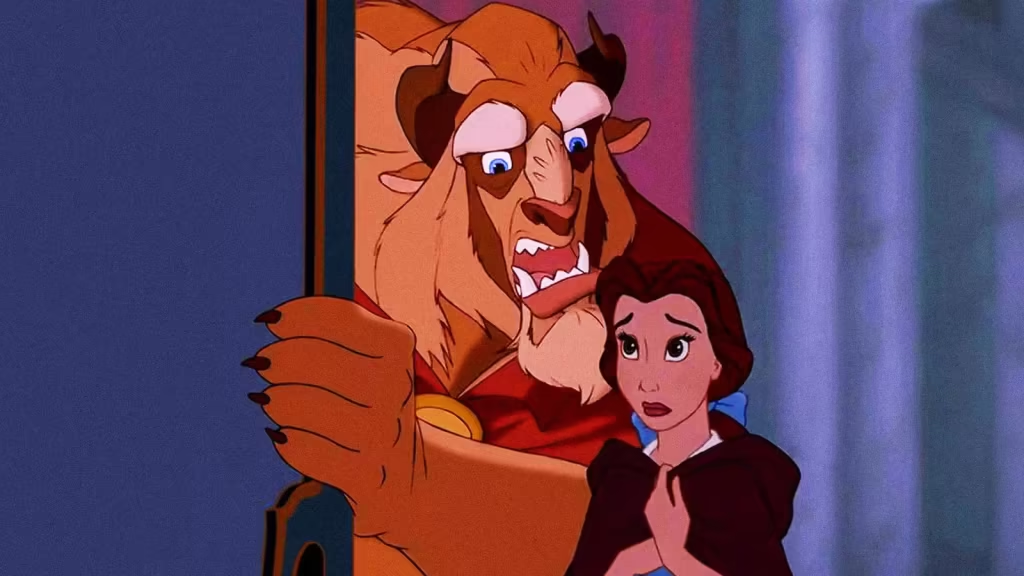
The sad truth is that, even among many of Disney’s vaunted titles, this is a rarity. In Snow White and the Seven Dwarfs, Snow White’s prince doesn’t have a name and he barely, literally, has facial features. Cinderella’s (literal) Prince Charming isn’t a whole lot more detailed, with his gregarious father the King getting more depth. In Sleeping Beauty, the dashing Prince Philip is a slight improvement largely thanks to a charming vocal performance and the fact that, by the very nature of the story, it’s he who faces off against and slays Maleficent in her dragon form instead of the title character.
No doubt, other Disney Renaissance films try to do better than the Golden and Silver Ages did by their romantic leads. But Ariel’s Prince Eric in The Little Mermaid is himself not much of a character, primarily functioning as a figure of fantasy who she fantasizes about constantly. Princess Jasmine in Aladdin, the year after Beauty and the Beast, declares that she’s not a prize to be won but gets little dimension beyond that bland statement of purpose. As much as Beauty and the Beast helped pave the way for the rest of Disney’s resounding 90s-era success, it feels as singular now as it did then.
Beauty and the Beast may seem special, but what its filmmakers chose to do in making it so seems pretty unremarkable: they made sure that both the boy and girl in their romance are equal characters. The apotheosis of this romance comes, fittingly, with the sequence set to the lovely title song. The accompanying groundbreaking blend of hand-drawn and computer animation is soaring, and yet it’s each choice the characters make, tentatively taking each other’s hand, getting close, and swooning, that shows how powerful Disney animation can be when its lovers are equal.
“Beauty and the Beast” is streaming on Disney+.