Guy Davis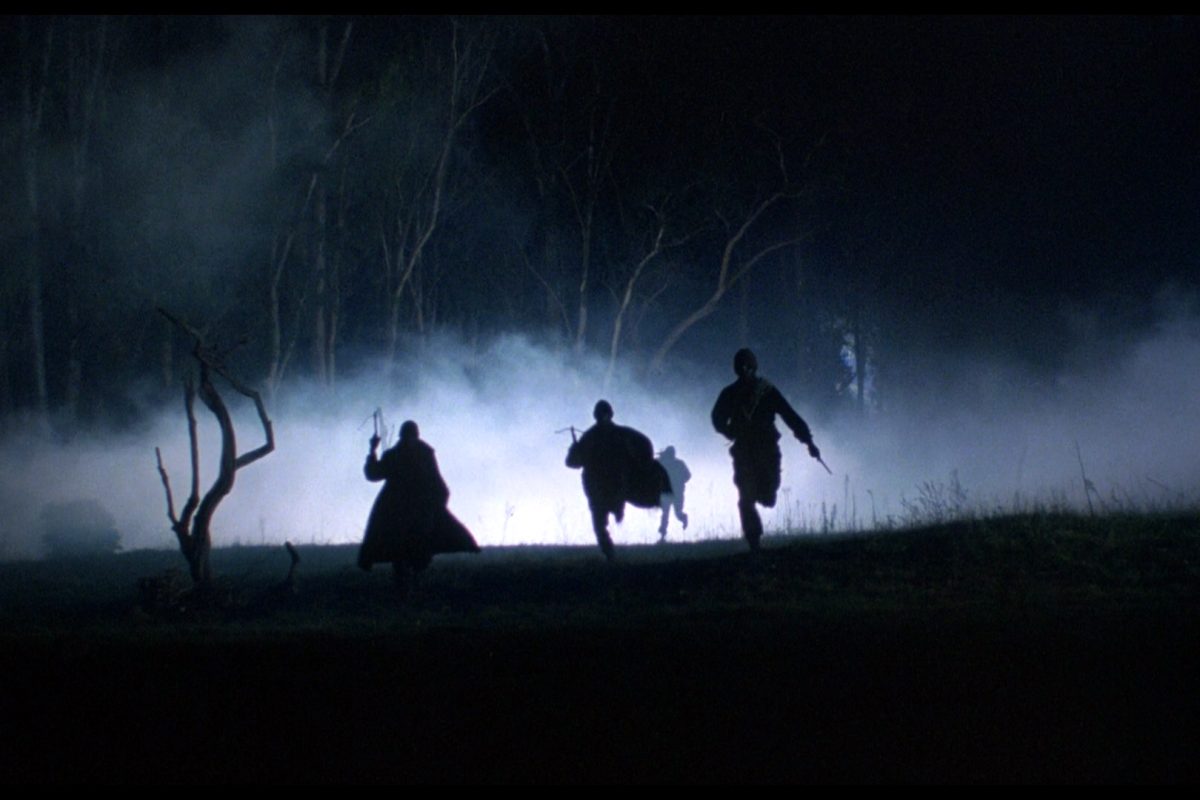
1986 was an inflection point for Cannon Films, a year of possibility and potential for the B-movie production company recognized – if not respected – for churning out gratuitously violent actioners like the Death Wish sequels, pruriently sexual melodramas like Bolero, and zeitgeist cash-ins like Breakin’ and its follow-up, Breakin’ 2: Electric Boogaloo. Israeli cousins Menachem Golan (the creative driver) and Yoram Globus (the business brain) made ‘em quick, made ‘em cheap and usually got a decent return on their investment.
But with the company’s coffers swollen with millions of dollars (reports range between $50-300 million) courtesy of its partnership with notorious ‘junk bond king’ Michael Milken, Cannon began to dream bigger. It reached out to reputable filmmakers who couldn’t get their passion projects bankrolled and offered them carte blanche. It lured in one of the biggest superstars of the era, Sylvester Stallone, with an eight-figure payday that dwarfed his already sizable salary per picture. It saw the opportunity to stand credibly, even proudly, alongside Hollywood’s storied legacy studios and went for it for gusto.
The result? Well, Cannon is today regarded as a curio of a different era if one is feeling generous, a cautionary tale or smirking punchline if one isn’t. (For a fairly comprehensive and very entertaining history of the company, track down Mark Hartley’s terrific documentary Electric Boogaloo.) However, while Golan and Globus were making their play for critical credibility and commercial success, a low-budget-verging-on-no-budget Cannon release glided onto a handful of screens, made a handful of cash (just over $2 million against a budget of approximately $1.5 million) and promptly found its true home on the shelves of video stores.
Dangerously Close, directed by the late Albert Pyun, isn’t regarded as classic Cannon, either in legit (Runaway Train, John Frankenheimer’s vividly sleazy 52 Pick-Up) or tongue-in-cheek (Ninja III: The Domination) terms. But it does hint at a different course Cannon could have taken, one where its cheapjack output could also contain a modicum of intelligence and a surplus of style.
That style is evident from the movie’s opening sequence, in which a young man is chased through a dark forest nightscape by a posse of camo-clad stalkers who, upon catching their quarry, string him up by his ankles and hold a gun to his head – a gun, it turns out, that’s loaded with paint pellets.
So far, so Eighties MTV aesthetic. But Pyun stages and shoots it with the kind of misty, shadowy atmosphere that would credibly place him as a cost-effective alternative to the likes of Joel Schumacher (whose Lost Boys a year later looks to have borrowed liberally from the Dangerously Close shot list) or Russell Mulcahy. The intelligence kicks in, kind of, once the story gets underway, with the wealthy in-crowd of posh Vista Verde High School making life miserable for the working-class kids attending as part of the school’s “magnet program”.
Vista Verde’s most elite students have formed a watchgroup called the Sentinels, designed to counteract what team leader Randy (John Stockwell, who also co-wrote the script) calls “the rise in theft and vandalism that came with the magnet program” but whose extra-curricular activities run the gamut from veiled threats to cold-blooded murder. (As Letterboxd reviewer Tiffany astutely and wittily notes: “More like ‘dangerously close to an exact metaphor for the 2020 rise of global neo-fascism’, amirite?”)
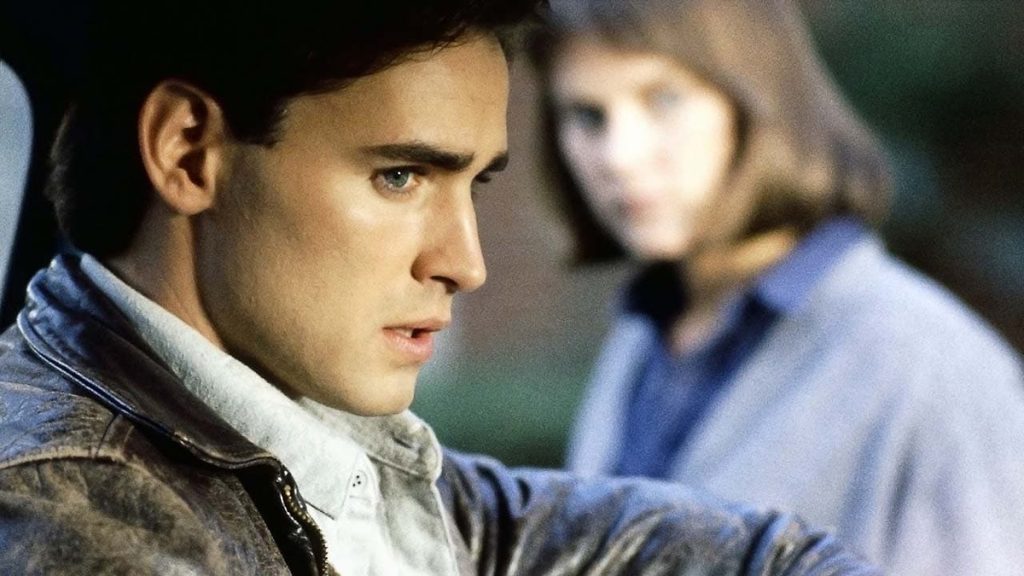
Standing in their way – but not that enthusiastically or effectively, to be honest – is scholarship student and school-paper editor Donny (J. Eddie Peck), who is upwardly mobile (he’s applying to Princeton), well-read (check out that well-thumbed copy of Zen and the Art of Motorcycle Maintenance) and maybe in need of a good copy editor (his headline questioning the Sentinels’ methods misspells ‘vigilantes’).
One might expect blue-collar hunk Donny to fight the powers that be, but he’s all too easily distracted by the luxe lifestyle and moneyed confidence enjoyed by Randy and his cohort, including Randy’s dissatisfied girlfriend Julie (Carey Lowell). “We need him,” Randy smirks. “And he wants us.” Instead, the true class warrior is Donny’s bud Krooger (Bradford Bancroft, suggesting The Breakfast Club’s John Bender if portrayed by Jack Black), a wiseguy punk rocker with zero tolerance for the Sentinels’ schoolyard fascism. But when Krooger mysteriously vanishes after a run-in with the Sentinels, it’s time for Donny to take a stand, only to discover the corruption at Vista Verde High runs deeper and darker than a few silver-spoon bullies.
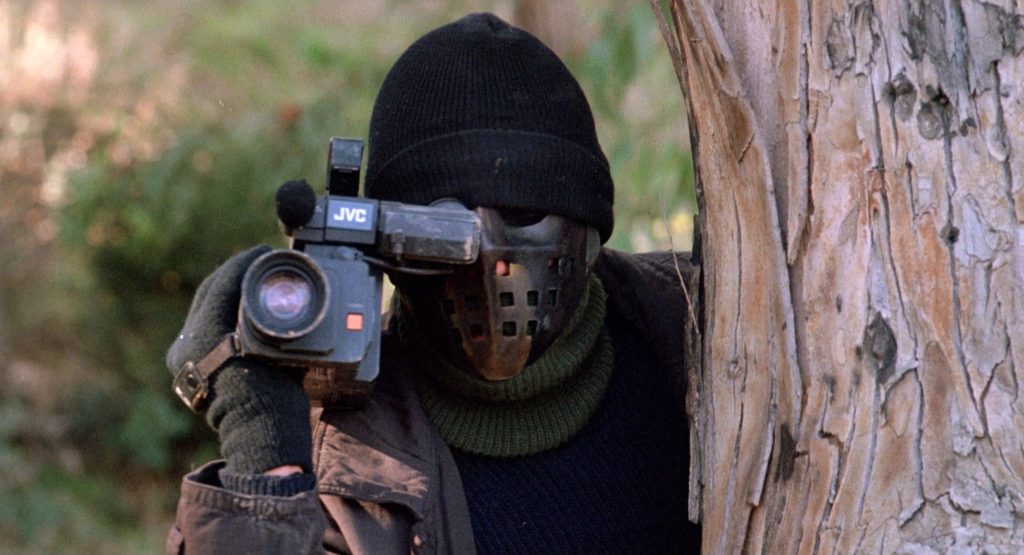
Dangerously Close was initially conceived as a more traditional teen slasher titled Choice Kill before Pyun was attached, and the Sword and the Sorcerer filmmaker drew inspiration from a 1985 Rolling Stone article (which documented the reign of terror nine Nazi-obsessed Texas students inflicted on their underprivileged peers, with the tacit approval of at least one teacher) in revamping the story to pit the haves against the have-nots.
Does it succeed? Sort of! At least for the first half, which has a moody, menacing tone that convincingly conveys the fear and indignity of life under the kind of designer jackboot worn by petty, pathetic brats who feel entitled to lead by virtue of wealth and status. And Pyun wraps it in quite the pretty package, with his cinematographer Walt Lloyd (who’d go on to shoot sex, lies, and videotape, Pump Up the Volume, and Short Cuts) giving the movie a sleek, chilly ambience, and his soundtrack cuts offering a neat primer of 1985 New Wave (not one but two tracks by The Smithereens! Not one but two tracks by Depeche Mode! And, uh, ‘Addicted to Love’ by Robert Palmer).
Stacked up against the usual empty-calorie Cannon product of the period, Dangerously Close is something of an outlier. Sure, it has some indicators of the company’s disregard for quality – that second half is seemingly sluggish and rushed? – but it’s also aiming to make a statement, and do so in style. In Electric Boogaloo, screenwriter Stephen Tolkin, who penned Pyun’s ill-fated Captain America for Cannon, talks about the obvious affection and enthusiasm Golan and Globus had for movies, but how it was marred by an inability or unwillingness to put in the time and effort to ensure the end product was the best it could be.
Dangerously Close is far from a classic, even a flawed-gem cult classic. But one can’t help but imagine that a few more ambitious misfires like this one – and fewer T&A embarrassments like, say,Hot Chili – may have moved the needle, even slightly, in making its genre material more than a guilty pleasure.
“Dangerously Close” is streaming on Amazon Prime Video.