Josh Bell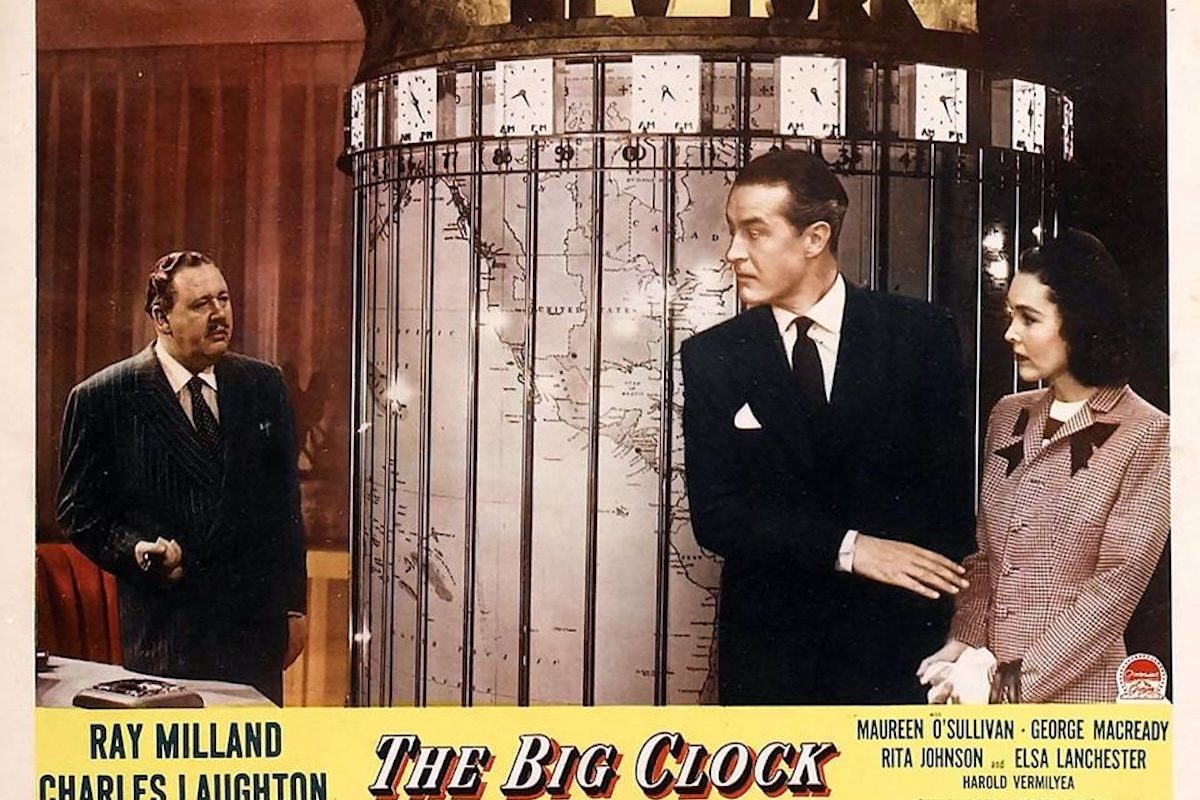
The first thing to know about The Big Clock is that the title is not symbolic. There is indeed a big-ass clock right at the heart of the Janoth Publications building in New York City, and that’s where magazine editor George Stroud (Ray Milland) is hiding out at the beginning of director John Farrow’s fantastically entertaining 1948 noir. The big clock is just one of the creative visual touches that Farrow brings to this expertly crafted thriller, starting with an elaborate single take that pushes in from outside the building and follows George as he sneaks into the interior of the clock.
George’s narration sounds paranoid and desperate as he looks out over the empty office lobby and recalls that only 36 hours earlier, he was upbeat and energetic, about to take his first vacation in seven years of working for tyrannical publishing tycoon Earl Janoth (Charles Laughton). As so often happens to noir protagonists, his entire life has unraveled in those 36 hours, beginning with a seemingly innocuous encounter with a woman.
It’s not quite right to call Pauline York (Rita Johnson) a femme fatale, though, despite the temptation she represents. She’s a victim of Janoth’s monstrous entitlement, one of his many mistresses whom he callously attempts to buy off when she becomes too much of a nuisance. George shares her resentment, after Janoth cancels his vacation yet again, depriving him of time with his long-suffering wife Georgette (Maureen O’Sullivan) and threatening to blacklist him across the entire publishing industry. It’s not the allure of an attractive woman that gets to George, but the equally seductive prospect of blackmailing his rich, condescending boss with the information she offers.
George never gets that chance, because before they can put their plan into motion, Janoth murders Pauline in a fit of rage, unable to take her insults to his manhood. Laughton plays Janoth as blithely evil, the sort of obliviously privileged mogul who casually assumes that framing someone else for the murder he committed is the most reasonable course of action. He doesn’t realize that George is the person he’s decided to frame, but even if he did, there’s no indication that he would care about sending one of his star employees to the gallows.
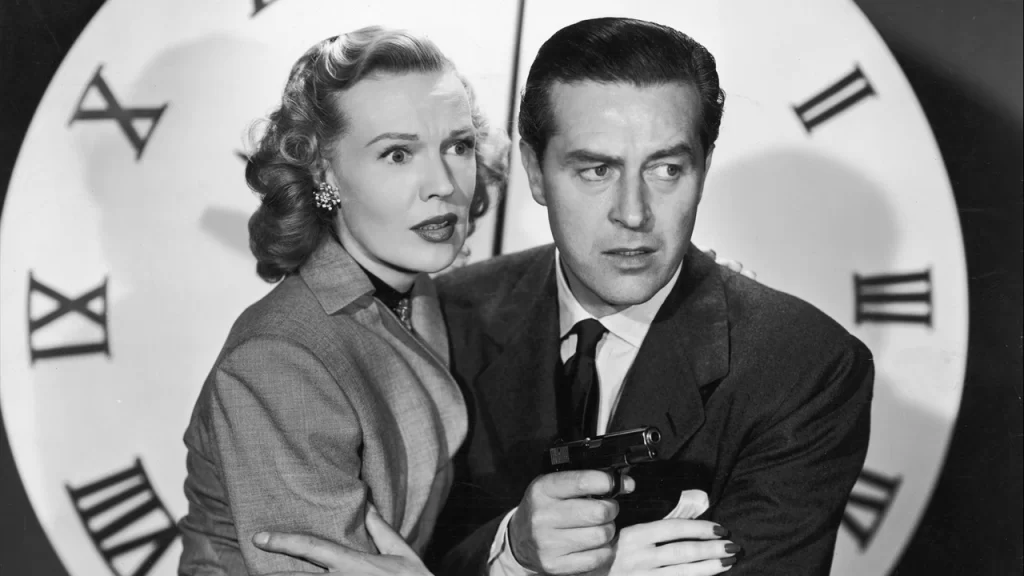
George is a star employee thanks to his keen investigative skills as the editor of Crimeways, one of numerous similarly named magazines that Janoth publishes. An early scene of George riding the elevator up to his office ingeniously introduces the different titles and their corresponding floors, establishing both the company’s business interests and the physical layout of the building where George will later be running for his life. He passes the headquarters of Sportways, Airways, Artways, Styleways, Futureways, and Newsways on his journey to Crimeways, each impeccably designed in the film’s gorgeous art deco style.
The Crimeways staffers are early pioneers of criminal profiling, and George shows off the blackboard where they list the defining characteristics of each subject they’re pursuing. He boasts about his ability to catch culprits before the police even know what to look for, which is why Janoth demands that he return from vacation and devote all his resources to catching the man who was sneaking out of Pauline’s apartment on the night she was murdered. That man is George himself, who went on a drunken bender leaving every clue and witness that will later be used to implicate him in this horrific crime.
The plotting in The Big Clock is as meticulous as the inner workings of the big clock itself, and screenwriter Jonathan Latimer (working from Kenneth Fearing’s novel) deftly places all of those pieces of evidence without ever deviating from the freewheeling, comedic tone of George’s ill-fated night out with Pauline. It’s only later, as George leads the investigation into himself, that the audience realizes just perfectly constructed the case has been, leaving George trapped right at the center.
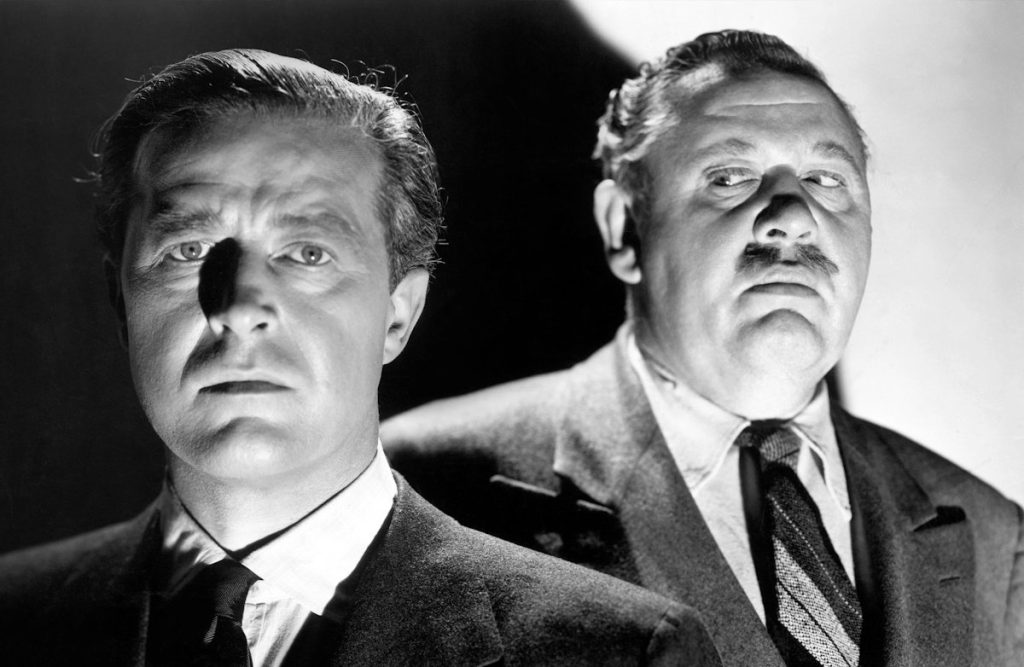
If The Big Clock were just a cleverly plotted mystery, it would still be engaging and witty, but Farrow elevates it with his elegant compositions, swooping through the crowded, labyrinthine offices and corridors of the Janoth Publications building. He also gets the most out of his talented cast, with Milland giving George a winning everyman charm and Laughton literally twirling his mustache as the sinister Janoth, who presciently resembles far too many modern magnates. Both of them are nearly upstaged by Elsa Lanchester as eccentric painter Louise Patterson, who becomes a key witness in the case, and is willing to go to hilarious lengths to get paid for her sketch of the suspect.
Louise arrives at the building along with every other major player in the case, and the final act of The Big Clock is like the noir version of a door-slamming farce. George scrambles to avoid being identified by witnesses while also convincing Janoth that he’s still trying to find the wanted man — who is himself. The multiple contrived near-misses are worthy of an episode of Three’s Company, but Farrow never undermines the suspense, even when the action is at its most absurd.
Fearing’s novel has been adapted into two subsequent films (1976’s Police Python 357 and 1987’s No Way Out), which drop the magazine-publishing angle in favor of more serious police and military settings. But The Big Clock works because it takes place in such a low-stakes environment, even if the individual stakes for George are incredibly high. Janoth is wealthy enough to have anything he wants, including an ostentatiously large clock, and petty enough to kill at the slightest challenge to his inflated self-image. He’s a media titan who exploits his vast editorial resources to get away with murder, but he doesn’t count on the tenacity of a burned-out journalist who just wants to take a vacation.
“The Big Clock” is streaming on the Criterion Channel.