Steve Erickson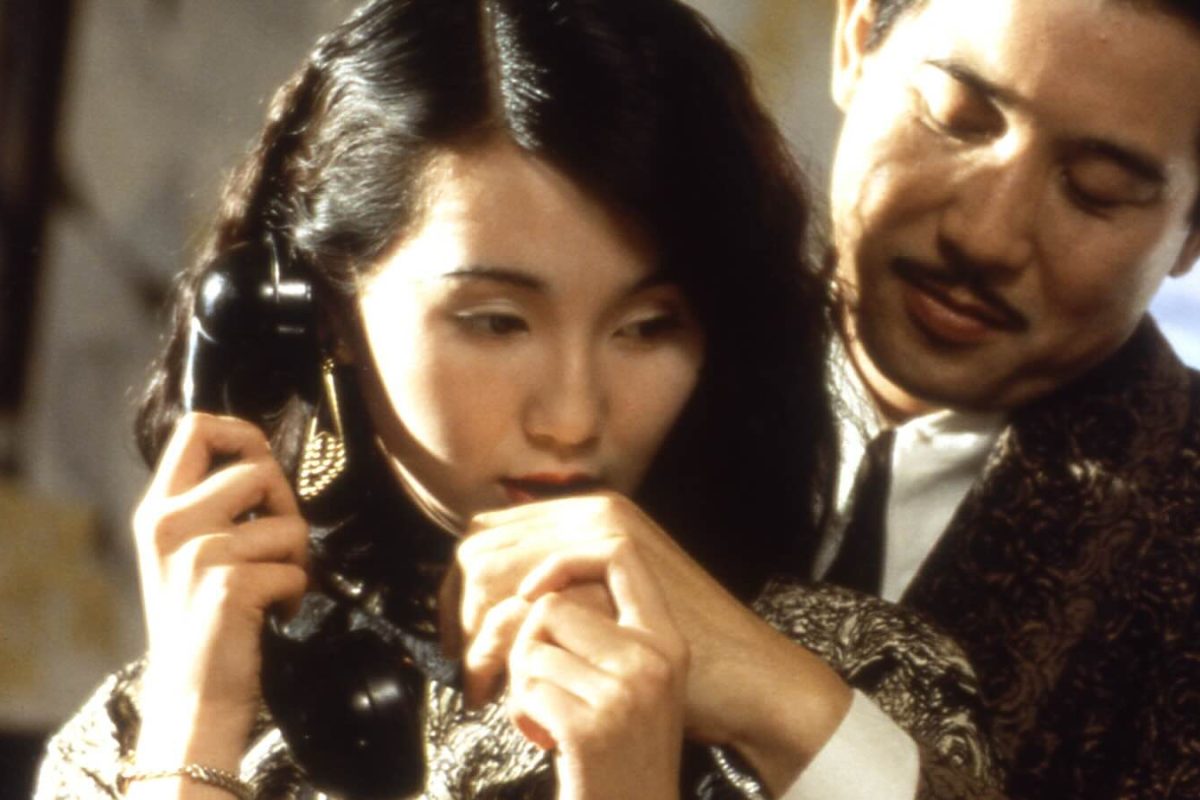
Center Stage is a biopic. It’s also a deconstruction of one. Juggling several levels of reality and fiction, Stanley Kwan’s 1991 film is partially a documentary about how it came to exist. Casting Maggie Cheung as the Chinese movie star Ruan Lingyu, who killed herself in 1935, Kwan explores the meaning and interpretation of Ruan’s life along with her. Center Stage also incorporates footage of its real subject, but by necessity, this is extremely partial—most of her films have been lost, and even for the ones which are still available, full context is only provided by the fictional parts of Center Stage. Kwan had to re-imagine the parts of her work which are now impossible to see and which he was too young to experience firsthand. It reconstructs a lost history.
To Americans, Kwan is a far more marginal figure than he was in early ‘90s Hong Kong. Center Stage was difficult to see in the U.S. for years. One reason may be that it was made for a Chinese audience. Few Americans are aware of Ruan; even if we’ve heard of her, her name doesn’t carry the weight of legend. (A few of her surviving films, like The Goddess, are available on YouTube.) It’s like watching a film about James Dean while barely knowing who he was. Wong Kar-wai won out as the one arthouse director from Hong Kong to become an international star because his work tends to be less culturally specific.
Coming from a poor background, Ruan began acting when she was 16. She rose to the heights of stardom against a turbulent historical backdrop, where a Japanese invasion of Shanghai was feared. Kwan speaks to Cheung, as well as Tony Leung (who plays her director and lover, Tsai Chu-sheng) and Carina Lau (who plays her friend and fellow actor, Lily Li), about their interpretations of her life. He interviews the real Lily Li, who was 91 in 1991. Roaming through Ruan’s brief body of work, Center Stage stages the film shoots she took part in. The heart of its drama is a love triangle; Tsai already had both a wife and mistress when he began sleeping with Ruan. As her career rose, she was torn between Tsai and Zhang Damin (Lawrence Ng), who used her income to fund his gambling addiction. The media gossiped about her endlessly, reporting on her every move. These pressures led her to end her life when she was only 24.
Cheung brings her own experience of celebrity to the role. In front of Kwan’s camera, she’s friendly and open. She doesn’t object when he asks if she would ever kill herself due to gossip; following a sudden cut, she responds politely, saying she wouldn’t do so. She offers her opinions of Ruan’s persona, stating that the actor acted flirtatious even when her body was covered up.
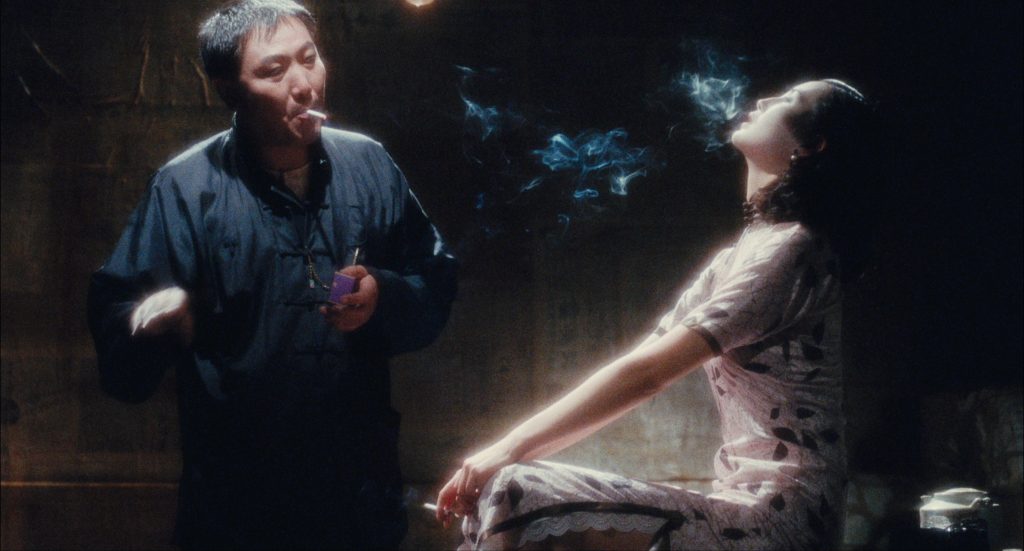
Center Stage juxtaposes Ruan’s private life with the fictional women she embodied. She called her early roles “wallflower women,” moving towards the image of a “new woman,” independent and strong. She moved away from earlier roles towards this archetype. Kwan asks a biographer about her taking on the “image of modern girls.” Yet offscreen, she had trouble disentangling herself from men.
The documentary footage is shot in a rough black-and-white. The past looms much more seductively due to its lush cinematography, which plays up Ruan’s glamour, even offscreen. She had a distinctive look: heavily plucked eyebrows, pale skin, extremely bright red lipstick. Until her life became far more difficult at its very end, she looked as though she was always incarnating this image.
Film industries all over the world love to expose their own sins. Tales of abuse and exploitation become gossipy titillation, rather than sincere warnings. A mob of photographers waiting for a glimpse of a troubled woman so they can sell images of her pain is a perennial symbol of celebrity. Center Stage is genuinely intrigued by these experiences, enough so that it doesn’t resolve them. It points out that Ruan was immediately mythologized: plays and films about the love triangle in which she was involved were quite popular, with the first produced in 1937.
Center Stage doesn’t exactly use its blend of documentary and fiction as an alienation effect. Constant reminders that we’re watching a movie do nothing to blunt its dramatic power. A thoroughly engaging melodrama, it’s also compelling as a document of an actor working out her performance and Kwan and his cast thinking about Chinese film history. While not cold and detached, its methods undercut the prurient fascination with a doomed woman’s tragedy. The staging of its suicide scenes remains part of the film, with the camera sometimes visible within the frame. With match cuts, shots of Cheung performing in a film-within-the-film segue into real clips from Ruan’s movies. Center Stage doesn’t pretend that we can easily understand her experience directly, but it sees the effort of thinking about the past as a central part of history.
“Center Stage” returns to theaters this weekend in a new 4K restoration.