Kayleigh Donaldson
Wild Horse Nine, the latest film from Martin McDonagh, sees the writer-director on solid ground with another story of murderous pals on vacation. A companion piece to In Bruges with a scabrous focus on the rot of American imperialism, it’s equal parts buddy comedy, political satire, and dark-sided drama of the collateral damage of institutional violence. John Malkovich plays a CIA assassin who was seemingly responsible for every murder of a democratically elected world leader of the past 50 years, now in retirement mode and considering his heinous past. He considers penning his memoirs, but memory issues caused by a terminal illness have left him with limited options and zero mental filter. It’s another addition to a surprisingly robust sub-genre: the hitman-with-memory-issues movie.
There are a solid number of films and TV shows about remorseful killers who find themselves plagued by some kind of degenerative illness, typically dementia. For some reason, writers have chosen this oddly specific trope as the perfect foundation for narratives of regret and traumatized men with guns. Knox Goes Away features Michael Keaton as a contract killer who seeks a sliver of redemption with one last job in his final weeks of lucidity. The Belgian thriller De Zaak Alzheimer (adapted into a Liam Neeson schlockfest movie and a Patrick Dempsey TV show respectively) followed a similar path. Really, while the set-up is a high-concept one, in execution these stories all follow the same well-worn path: bloodshed, regret, and redemption.
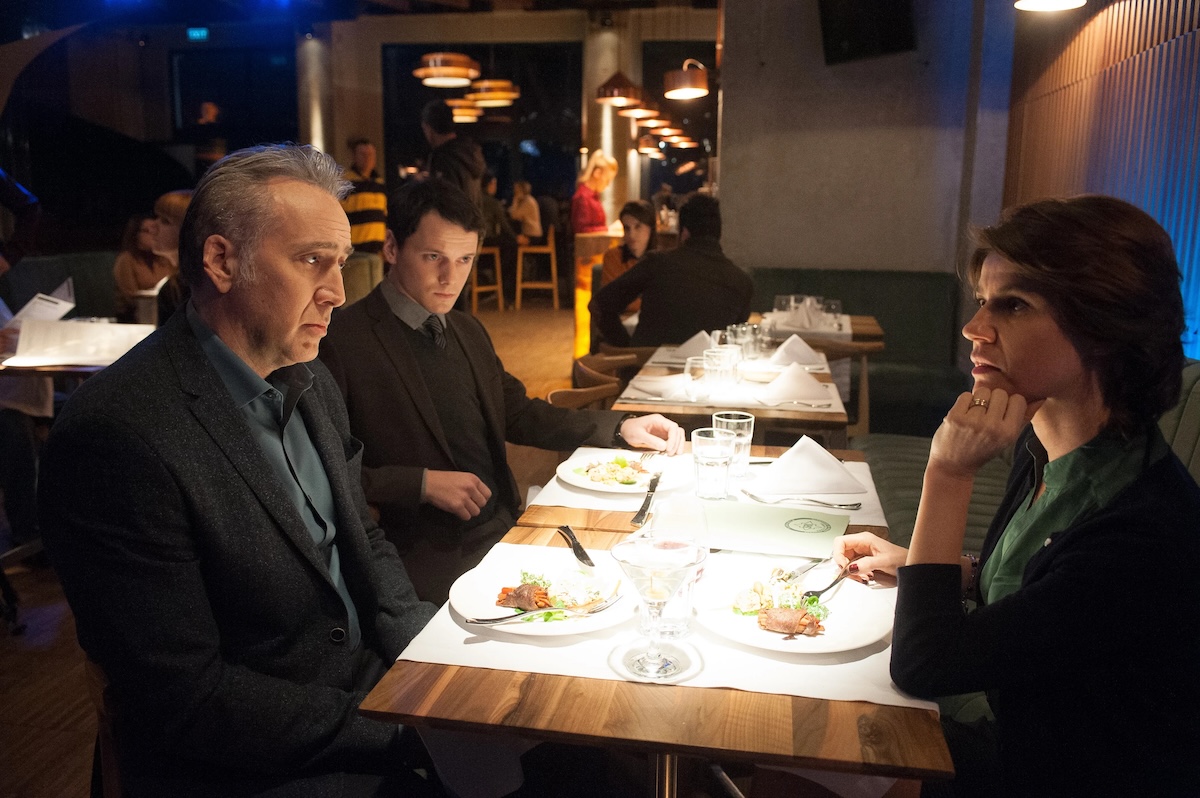
At first glance, Paul Schrader’s Dying of the Light is another example of the trend: a not-very-good thriller where cognitive decline is a cheap shortcut to pathos amid garden-variety gunfire. Nicolas Cage stars as Evan Lake, a veteran CIA agent who has been forced to desk duty as his health crumbles. Two decades prior, during a job in Africa, Lake was tortured by a terrorist group, and the resulting trauma has led to early-onset frontotemporal dementia. Before his brain fully betrays him, Lake throws himself into seeking revenge on his former captor.
The cut of Dying of the Light that audiences saw was one that Schrader and the cast rejected after the director was removed from the project. You can’t blame the celebrated filmmaker for wanting to distance himself from something so poorly constructed. Dying of the Light, the one you can stream now, feels like a rip-off of a rip-off, the kind of throwaway, derivative action fare that Cage made several versions of a year during his most financially bereft years. It is conventional to the point of futility. Weirdly, given the entire set-up of the hitman-with-memory-issues movie, these stories tend to be curiously straightforward from a narrative perspective. The inherently erratic nature of dementia, a cruel disease that tricks and bullies the sufferer, is forced into a linear form by the requirements of cinema. Schrader’s backers wanted a simpler tale, one the story could not sustain, and the result is both lazy and insulting.
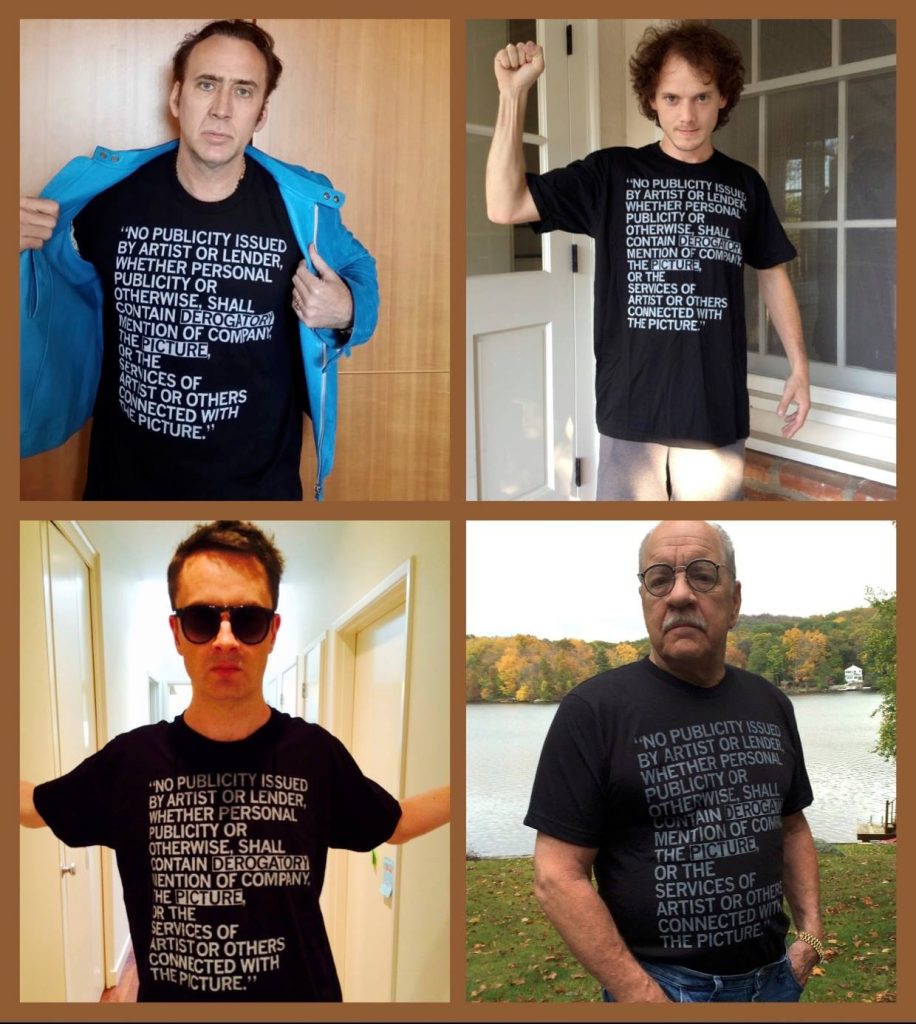
Fortunately for Schrader, he got a second chance to fix things. From DVD copies of the workprint, he created a new cut of the film titled Dark. A filmmaker creating a bootleg version of their own work is a rare occurrence, and the results are understandably choppy, but far more effective as a portrait of mental and spiritual degradation.
The editing is aggressive, all sharp cuts and U-turns, to evoke Lake’s crumbling. Some scenes from the original are omitted entirely, removing superfluous moments but also a few plot beats that would make the film more cohesive. But cohesion is the antithesis of Lake’s struggle. The do-it-yourself quality of the production, rough edges and all, creates a more evocative sense of the confusion created by dementia. It’s not convenient, for character or story alike, and Cage’s performance feels more at home in this new context. What plays as meme-ready Cage Rage in Dying of the Light reads as a mental nightmare in Dark, not unlike his insomniac ambulance driver in the Schrader-written Bringing Out the Dead. Even the inconsistent color correction and low-res quality of the workprint work in its favor. The clinical neatness of an action thriller has no place in a story like this.
The producers of Dying of the Light wanted something sellable to viewers who love anonymous men-with-guns movies, but their butchering of Schrader’s work only created an unsatisfying final product that tried to neaten out a deliberately messy affair. Dementia doesn’t follow rules, and any attempt to make it cinematic must contend with that, either by portraying it starkly with no intrusion or narrativizing it for convenience. Dark rejects both options in favor of embracing the increasingly nonsensical reality of its protagonist’s plea. Perhaps it’s most fitting that the only way to watch Dark is through piracy, which Schrader has endorsed. The rules must be broken from beginning to end.