Craig J. Clark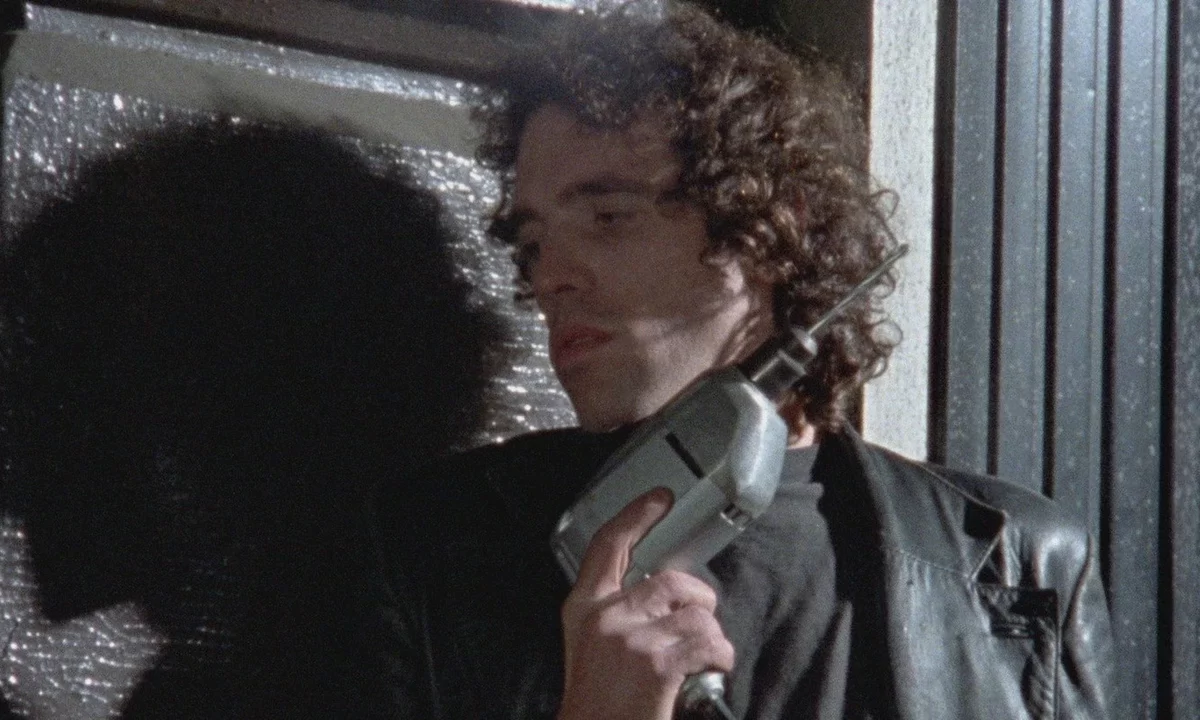
Abel Ferrara didn’t set out to be an actor. He preferred calling the shots on the other side of the camera, but fate intervened on the set of his first feature, adult film Nine Lives of a Wet Pussy. When one of his performers couldn’t rise to the occasion and bailed on him, Ferrara was pressed into service to play an old man whose sheltered daughters have their way with him after he reads them a Bible story. Since Ferrara used a pseudonym for his directing credit, it was only natural that he took one for his onscreen role as well. While “Jimmy Boy L” was a one-and-done, “Jimmy Laine” went on to play the leading role in his next feature, 1979’s The Driller Killer, which wasn’t pornographic, but was violent enough to earn a place on the UK’s infamous “Video Nasties” list.
Inspired by The Texas Chain Saw Massacre, Ferrara and his frequent screenwriter Nicholas St. John cooked up a seedy scenario about a struggling artist named Reno Miller who steadily loses his mind while trying to finish a painting for his uptown art dealer. That’s far from the only front he’s waging battle on, however, as evidenced by the opening sequence set in a Catholic church where Reno apprehensively approaches an older man with white hair and a beard (who, it must be said, is much more convincing than the old man Ferrara previously played). Theirs is not to be a joyous reunion, though, as Reno recoils when the man attempts to make contact. The suggestion is the man is his father, but Reno doesn’t stick around to find out, hopping straight into a cab and calling him “some degenerate, some bum, some wino.” Before long, it becomes abundantly clear exactly what Reno thinks about such people – if he even considers them people.
Since it takes a little while for Reno to hit the streets and start killing derelicts with a power drill, Ferrara and St. John use the time to thoroughly document the environment in which he exists. The Driller Killer is less about plot than it is about vibes – and the vibes are positively rancid. This is true even before his super gives him a skinned rabbit to cook, which raises the specter of Polanski’s Repulsion and gives Reno something to take out his mounting aggression on. This also leads to one of the film’s most blatantly surreal moments, when Reno spies a man with a rabbit head lurking in the shadows. Since this vision occurs not long after he starts hearing voices, the obvious connection is to “Son of Sam” killer David Berkowitz, who was arrested in August 1977, just a few short months before Ferrara began filming.
Another source of aggravation arrives in the form of the Roosters, a band that moves into the building to rehearse and drives Reno up a wall with the two or three songs they play on repeat. (The bass line in the most frequent offender is a direct lift from Henry Mancini’s Peter Gunn theme.) Their limited repertoire, incidentally, is credited to Laine and Metro, the latter another key collaborator who plays the role of guitarist/bandleader Tony Coca-Cola (as Rhodney Montreal) and acted as associate producer (as Douglas Anthony Metro). Not only that, he provided Reno’s paintings and was the inspiration for his character. (His other claim to fame: co-writing Solarbabies.)
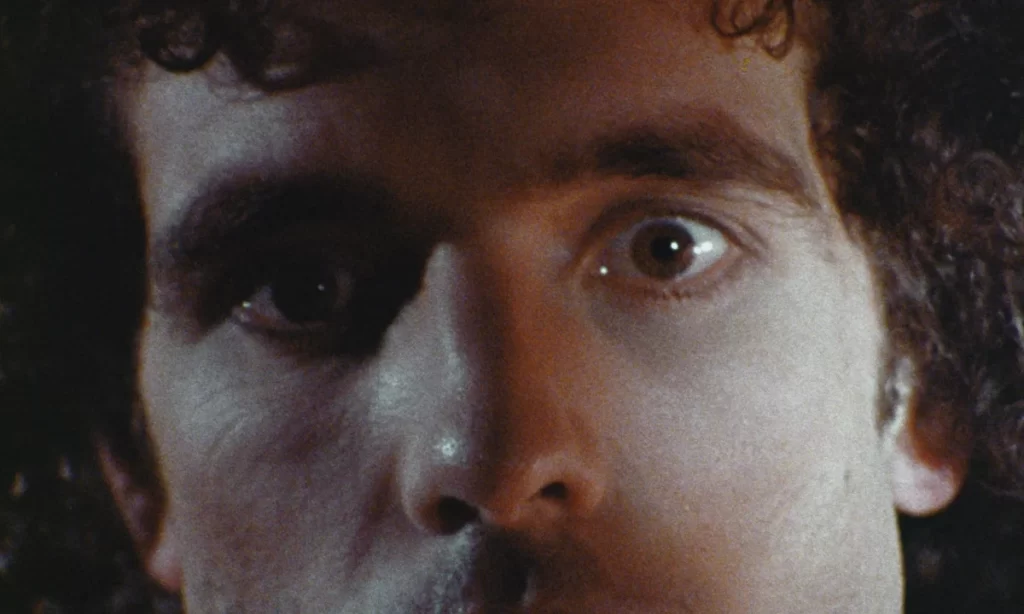
Coupled with his financial woes and his two live-in girlfriends – one a divorcee whose alimony checks don’t cover their expenses, the other a space cadet – Reno is painfully aware of his precarious situation. His portentous, blood-soaked dreams start early, informed by grim headlines, random acts of urban violence, and late-night TV. When he sees a commercial for the Porto-Pak, the camera pushes in to catch the lightbulb moment in Reno’s eyes. The list price may be $19.95, but that’s a small price to pay for the release of his pent-up anger at everyone and everything around him. The make-up effects in The Driller Killer may be primitive, especially compared to what Tom Savini was accomplishing for George Romero and Bill Lustig around the same time, but they are undeniably disturbing and effective.
“Disturbing” and “effective” can also describe Ferrara’s performance, which goes places few trained actors would dare. If nothing else, The Driller Killer showed how committed he was to plumbing the depths of human depravity. After this, Jimmy Laine had one last hurrah, appearing as the masked rapist in 1981’s Ms .45 before retiring from the screen. Since then, Ferrara has kept his acting work to a minimum, though he can still turn on the menace in his 70s, as demonstrated by his turn in Josh Safdie’s Marty Supreme as a guy no one should even think of crossing. No power tools required to make his point.
“The Driller Killer” is streaming on the Criterion Channel as part of its “Directed by Abel Ferrara” program. It can also be found on a number of other services.