Jason Bailey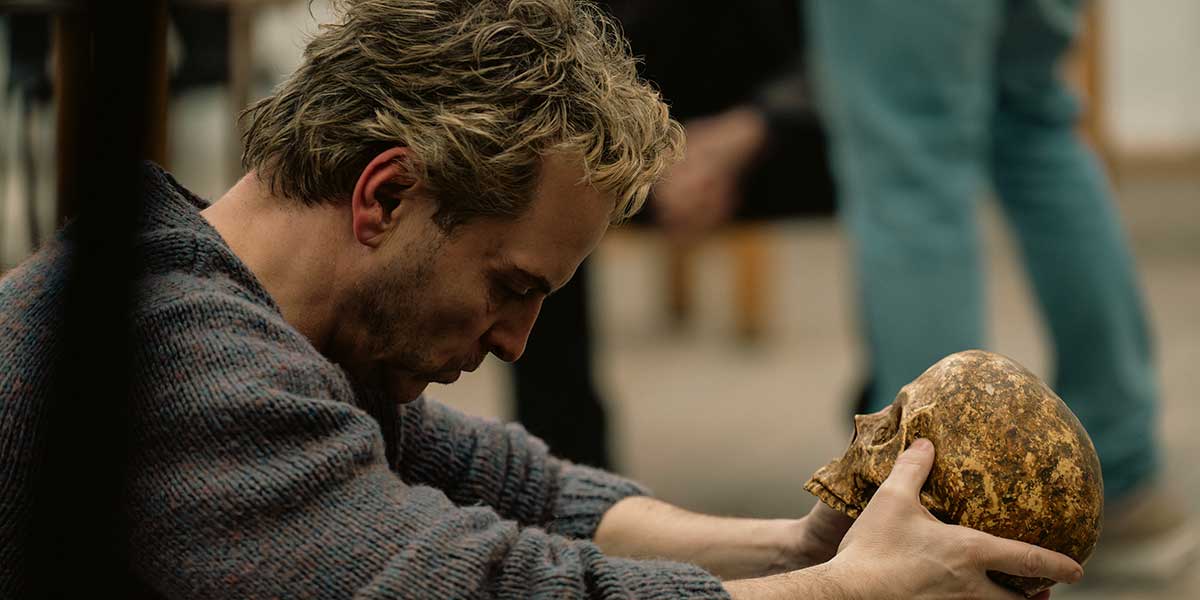
TORONTO: There’s something about the heightened emotions and professional intensity of a film festival that, I’ve come to realize, makes me more prone to cry at a movie (and I’m not exactly a tough sell to begin with). But the closing passages of Simon Stone’s Elsinore hit me like a Mack truck, with such overwhelming force that I found myself trying, and failing, to quiet and calm myself. (My apologies to pal Noel Murray, who had the misfortune of sitting in front of me during this little breakdown). Andrew Scott stars as Ian Charleson, a Welsh actor best known for co-starring in Chariots of Fire, who took on the title role of the National Theatre’s 1989 production of Hamlet — generally agreed to be one of, if not the most, challenging roles in all of the theater — while dying of AIDS.
Scott, who has rapidly ascended to one of our most sublime screen presences, is among the credited producers, and it’s not hard to see why. At its base, this is a dream role for an actor: he gets to play a) a real person, b) a dying person, and c) Hamlet. And he is, unsurprisingly, a great Hamlet (so much so that now I want to just see him do the play), delivering Shakespeare’s tart dialogue and lyrical soliloquies with vigor and intensity. But then there’s another level at work with the external circumstances at play, so these familiar speeches take on extra poignancy when shined through that specific prism. The “alas, poor Yorick” speech is even more contemplative and ruminative, for example, when delivered by an actor who knows he’ll be joining Yorick soon. This all sounds crushingly depressing, but rest assured, Elsinore is also about as funny and affirming as a film about an actor playing Hamlet while dying of AIDS could possibly be.
Cody Fern’s feature debut Closing Night offers up the similar pleasure of getting to see Sarah Paulson play Mother Courage. But not for long; Paulson’s actress character suddenly slurs her words and collapses mid-performance, and discovers the cause is a case of early onset Alzheimer’s disease. This is unfortunate timing, as her long-estranged sister (Naomi Watts), her son (Toby Wallace), and his girlfriend (Odessa A’zion) are in the audience. The family reunion does not go as planned.
Paulson, Watts, and co-star Dianne Weist have dozens of awards and nominations between them, so I can only imagine how intimidating it would be, as a young director, to tell them what to do. But someone should have, because every actor in this thing is cranked up to 11, like a hothouse Tennessee Williams play that has to be pitched to the back row of a very large theater. It’s not a total loss — there are some nice moments, and watching this cast overact is still watching them act. But it mostly feels like a missed opportunity.
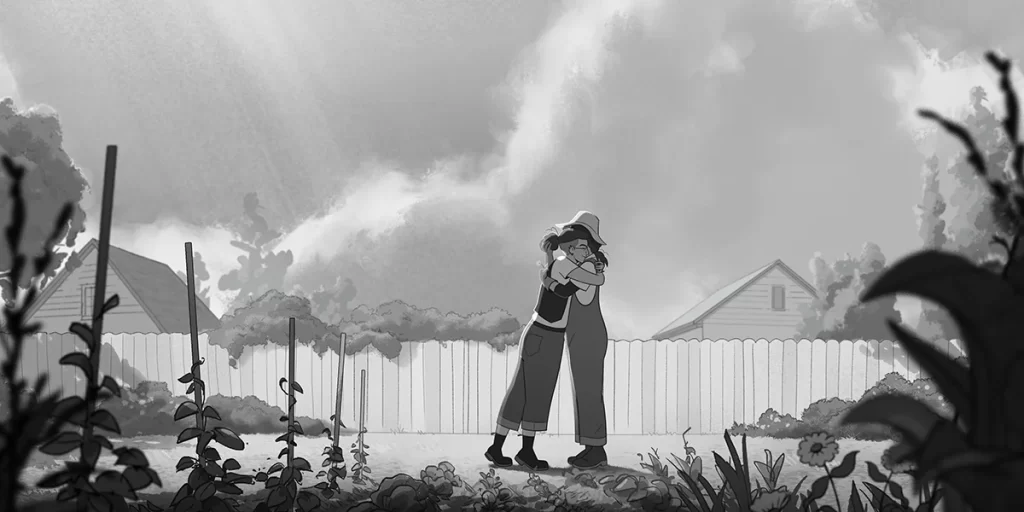
I’m always fascinated by filmmakers who choose to tell their stories in animated form. Leah Nelson’s Tangles, for example, could have been a fairly straightforward indie drama, aside from a few brief flights of fancy, without losing much. But the form gives it an edge, keeping it from tipping into maudlin, movie of the week territory. More importantly, it’s about a cartoonist, based on her graphic memoir, so it feel more personal this way. It’s how she sees the world.
Abbi Jacobson (who is carving out a nice sideline in misunderstood-young-woman voice-over work) plays Sarah, a San Francisco activist and artist whose close relationship with her mother (Julia Louis-Dreyfus, perfect) has begun to sour; mom has been “scatterbrained” and irritable, which most of those around her write off as symptoms of The Change, but which turns out to be a rapidly accelerating case of Alzheimer’s. There are a lot of sappy ways to play this stuff, and Nelson doesn’t sidestep all of them, but she ultimately finds the right, bittersweet tone and sees it through. It’s a lovely, heartbreaking movie.
Seth Rogen is among the producers and voice talents in Tangles; he also appears in his wife Lauren Miller Rogen’s Babies — essentially playing himself, the longtime spouse of a young woman (Anna Kendrick, as charismatic and likable as ever) who hasn’t had kids, and is reaching the age where people won’t stop asking about it. And what’s great about the picture is that it’s about making the choice to be a parent, instead of just leaping in and becoming one (a la, say, Knocked Up). It’s not a decision to make lightly, though many do, and Miller’s script makes plenty of funny, thorny points about the pros and cons of baby-making.
Her direction crisply orchestrates a large cast (including Issa Rae, Kate Berlant, Dan Stevens, Ed Helms, Zach Cherry, and David Strathairn); there’s a lot going on here, but the side characters all mesh, they’re all distinct, and they all make sense. And there’s not much in life or art that’s perfect, but the ending of Babies is perfect, elegantly bringing all of its threads together into something funny and moving and thought-provoking. (That said, would you believe there’s also a parent in this movie with Alzheimer’s? Did a memo go around?)

Maya (Margaret Qualley) and Charlie (Gabriel Basso), the central characters of Rachel Morrison’s Love of Your Life, have such a charming Meet Cute and such a rapid escalation to delirious happiness that it sent up a red flag for this viewer: This is escalating too quickly to have a non-tragic outcome!, I wrote in my notes. And then the movie revealed itself as a 2020 period piece, and Maya is a nurse at a Boston hospital, so they get sick and watch Tiger King (two tragedies), and then Charlie is gone.
“They say you can’t run away from your life, but you can,” she explains later. “It just makes you a monster.” The broad strokes of Julia Cox’s script are fairly familiar — it’s an earnest, personal journey movie — but Qualley’s customary intensity give the early material some much-needed edge, and when the tragedy begins, she conveys both the raw emotion and YOLO denialism with skillful mussiness. She and Basso are lovely together (it’s a believable courtship), while Aaron Pierre may never put his warm, compassionate eyes to better use. And then they bring in Catherine Keener to land the plane; she has a reaction shot in her final scene that’s kinda what great screen acting is about. Love of Your Life is a bit too paint-by-numbers for genuine greatness, but it does what it does very, very well.
There’s a scene around the midpoint of Chris Rock’s new film Misty Green in which the writer/director/actor, playing a filmmaker, chastises his title character. A night out has gone sideways, in scary and dangerous ways, and he lets her have it, a double-barreled indictment of her poor choices and self-destructive impulses. And maybe it wouldn’t feel like this had he not cast himself in the role, but in retrospect, the entire film feels like a two-hour expansion of that scene. Rock has never exactly been a female-forward figure; his early stand-up specials, brilliant as they could be, were often tinged by a strain of misogyny, a sense of perhaps baked-in cynicism about women and what motivates them, and his films have frequently suffered from similar inclinations.
Going in, I wondered if he was making a character study about a woman as an attempt to rectify or at least address those shortcomings. The fact that I’m still not sure — that you can read the picture as that or as him doubling down — speaks to the blurriness at its center. You never really get a sense of how he wants us to feel about his title character, or (and this is key) if that ambiguity is on purpose. One gets a sense that he was at least subconsciously aware of that hole in the center of the movie, because he tries to fill it with all sort of side plots and shakily connected secondary characters. And maybe that’s the trouble; at some point, Rock needed to decide what the hell movie he was making, and make it.
It’s always noteworthy when an actor’s directorial work (like Rock’s) seems directly informed by their style as a performer. Diego Luna helmed Ashes, and he directs like he acts, with a clear, unshowy approach, and an emphasis on naturalism over fireworks. This adaptation of Brenda Navarro’s novel Cenizas en la boca concerns Lucia (Anna Díaz), who is first seen in a flashback to her youth, as her mother leaves her children with their grandparents in Mexico to seek out a better life for all of them in Spain. “I have to go now, sweetheart,” she whispers. “Take good care of your brother.”
It’s an efficient opening that underlines Lucia’s defining quality: she’s a caretaker. Years later, she and her brother have joined her mother in Madrid; she later follows a friend to Barcelona, where she is similarly promised greener grass. But wherever she is, she ends up busting her ass, working multiple jobs as a nanny, domestic worker, or food deliverer, and what Luna captures most vividly is the overwhelming feelings of despair and frustration when all you can do is grind, constantly, just to stay above water. The storytelling feels more episodic than it ultimately proves to be, because Luna is an observer, watching her work and struggle and try her best. And Ashes can get sad or scary in the blink of an eye, but such is life.
In my last report, I noted that The Julia Set is not a terribly good movie, but that it does serve as a proof of concept for Chase Infiniti, Movie Star. All That She Wants is a better film than that one, but it achieves the same purpose; Schitt’s Creek co-star Annie Murphy proves she can absolutely carry a movie. I realized it early, in a scene when she’s finally heard enough bullshit from her boyfriend of a decade, widens her eyes, says “NOPE,” and leaves the room to pack a bag. She executes it so ruthlessly yet so charmingly that I would have followed her anywhere, and so will you.
The movie around her is a fairly standard rom-com, in which she meets a guy ten years her junior (a twinkly Cooper Raiff), convinces herself that it won’t work, but later decides that she’s ready for motherhood, and maybe he’d like to be the donor? No prizes for guessing what follows, and though I do wish the script were a little punchier — some of the dialogue (especially early on) feels like placeholders for eventual jokes — it’s so warm and likable, and its leads generate such a nice vibe, that it may not even matter.
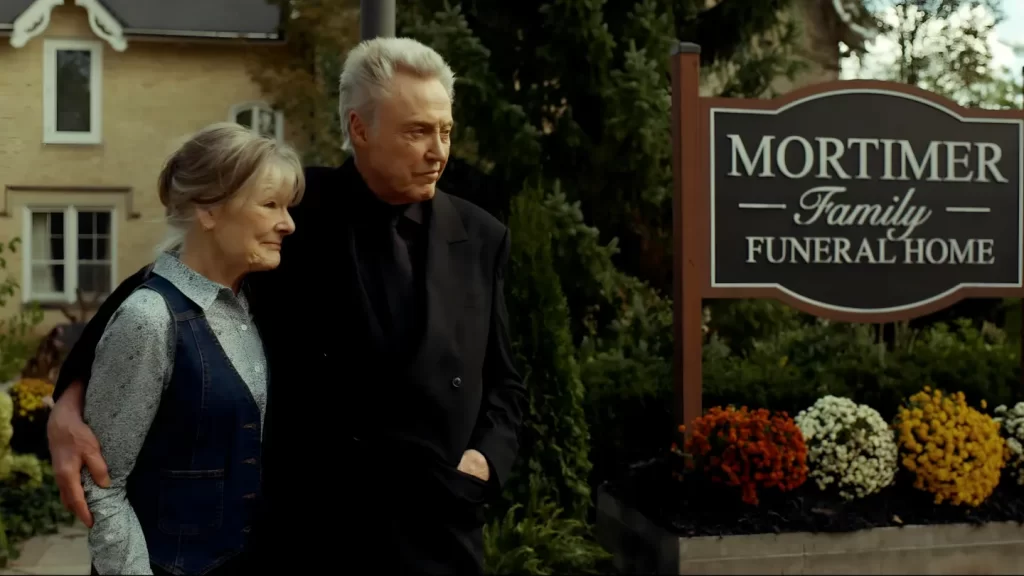
The Mortimer Family Funeral Home is in financial trouble, and patriarch Clyde (Christopher Walken) is out of sorts, because people just aren’t dying like they used to. (You get jaded when you bury people for a living.) With no relief in sight and no slack from the bank, Clyde’s granddaughter (Ella Ballentine) decides that maybe she’ll just have to go out and make some business for them.
That’s the setup of Ron Murphy’s pitch-black comedy Back in Black, and it’s a tricky one to navigate. It starts out feeling like Fargo Lite (or Fargo the TV show, which is basically the same thing), but Murphy eventually finds his own way, thanks in no small part to the calming presence of Mr. Walken. He brings what he brings: a bit of hoofing, some off-kilter line readings (“My magnetism… fucked us”), and a joy of performance; check out the glimmer in his eye when he tells his granddaughter, “Do what you wanna do, see if I care.” But Ballentine really is the story’s center, and she’s enchanting (even if her lack of dialogue is never satisfactorily explained). I wish Jane Curtin (as Walken’s blushing wife and chief mortician) had a bit more to do, but Back in Black offers some dark, hearty laughs, an inspired pivot into partners-in-crime territory, and an A+ final punchline.