Sean Burns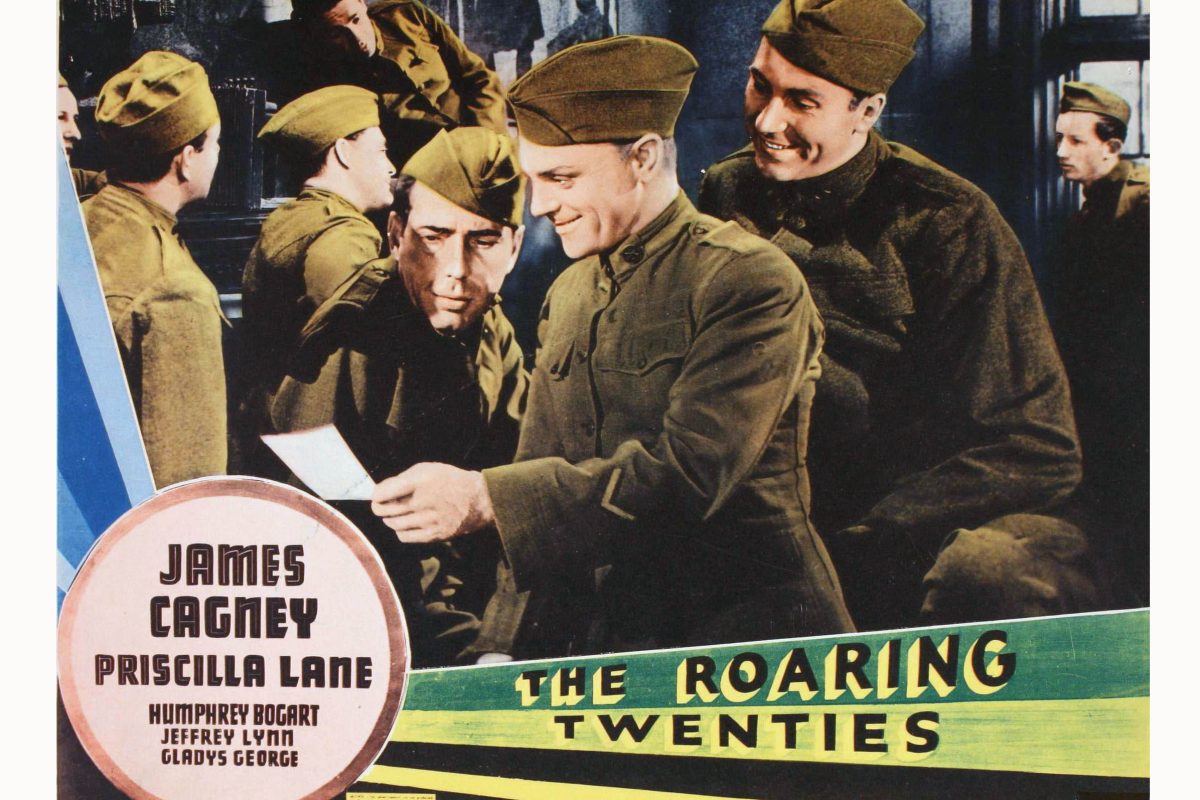
Modern studio films take so long to accomplish the most menial narrative tasks, it’s why the running times of current dawdling blockbusters tend to bloat out well past the 130-minute mark. (Sorry, but I’m not sitting through a two-hour-and-twenty-minute Masters of the Universe movie. The line needs to be drawn somewhere.) Watching classic Hollywood pictures, one can’t help but marvel at how efficiently they used to take care of business. Raoul Walsh’s The Roaring Twenties is a diamond-hard wonder of storytelling compression. The 1939 film follows three characters from the foxholes of World War I to the squalor of the Great Depression, chronicling the highs and lows of the tumultuous decade between. It’s got the richness of a great American epic, and Walsh gets it all done in 106 minutes.
Based on a short story by legendary New York Daily Mirror columnist Mark Hellinger (he of “There are eight million stories in the naked city – this has been one of them” fame), The Roaring Twenties purports to be based on amalgamations of true-life characters the writer met in the Big Apple during the 1920s. Jimmy Cagney stars as Eddie Bartlett, who returns from the war and can’t find a job anywhere, so the film becomes a post-WWI “Born in the U.S.A.” for a few minutes. While driving a cab at night, he stumbles ass-backwardly into a bootlegging career. After he’s tricked into running gin for Gladys George’s saucy nightclub owner (she goes by the magnificent name of Panama Smith), Eddie eventually cottons to the task and figures out that it’s cheaper and more profitable to make the stuff in the bathtub himself. Before long, a mini-empire is born.
Walsh punches through the years with expressionistic, newsreel style montages double-exposed over calendar pages turning as a narrator shouts pertinent sociopolitical factoids at us during the transitions. It’s terribly exciting. The movie makes it clear that Eddie never set out to be a gangster, there just weren’t a lot of other options for someone of his grand ambitions and tireless work ethic. Cagney plays him as a pretty nice guy, dialing back on the trademark sneer and allowing himself to be vulnerably head-over-heels for a considerably younger chanteuse played by Priscilla Lane and her bee-stung lips. She’s just not that into Eddie, but he figures if he keeps buying her expensive stuff and helping her career, she’ll eventually come around. (Martin Scorsese clearly took notes on their scenes together before making Casino.)
She’s smitten with Eddie’s old Army buddy Lloyd, an upstanding do-gooder played blandly by Jeffrey Lynn. We first met Lloyd in the trenches with Eddie back circa 1918, ducking fire alongside their sometime friend and future rival George – played with gleeful, movie-stealing menace by Humphrey Bogart. Bogie was two years away from his first leading man role in The Maltese Falcon, but he’s already dominating the screen. It’s not easy to draw focus away from Jimmy Cagney, but the third-billed Bogart is so electrifying you remember him as being in more of the movie than he actually is.
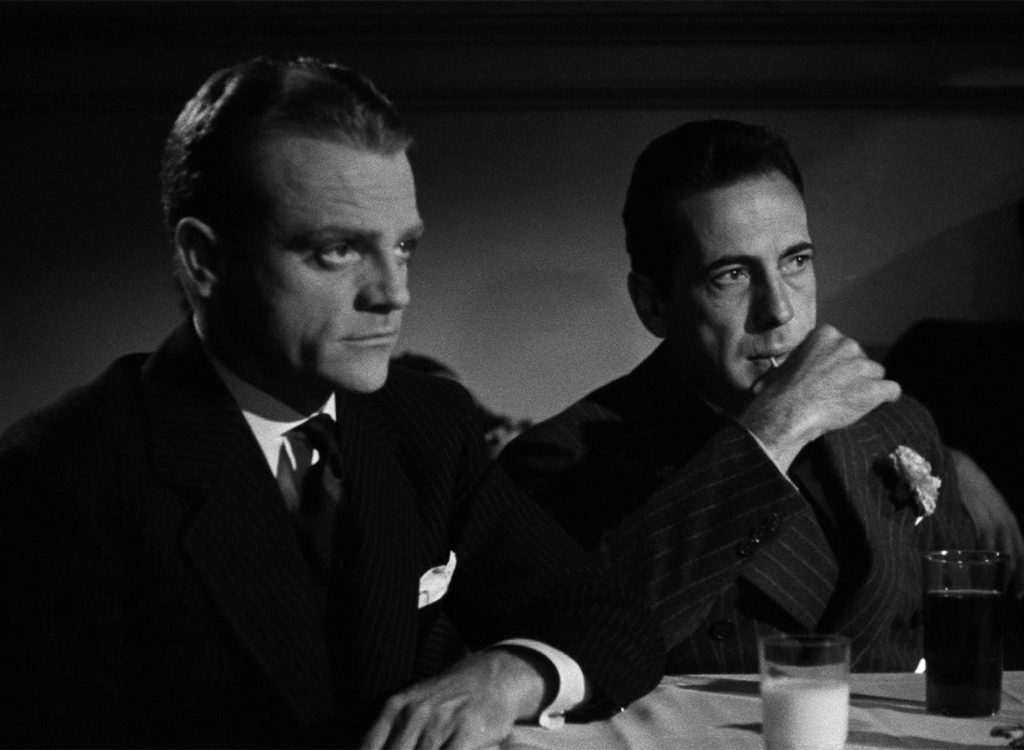
George’s first big moment comes back in France, when he’s on sniper duty and Eddie notes that a nearby German soldier couldn’t be more than fifteen years old. “He won’t be sixteen,” George smiles, pulling the trigger. He’s a grinning sociopath and enormous fun to watch. This was Bogart and Cagney’s third film together and you can see the star ceding scenes to Bogie, as if he were as delighted by him as we are. The two old army buddies first reconnect when Eddie’s attempting a high seas hijacking of a booze run George is supposed to be overseeing. The friends are so happy to reconnect that George decides spur-of-the-moment to double-cross his employer and throw in with his old pal. The character’s capacity for thoughtless betrayal is downright endearing – when he’s doing it to somebody else.
But the thing about George is that he has no loyalty to anyone. (“I stick my neck out for nobody,” the actor would memorably say a few movies later. But this time he really means it.) This is why George’s fortunes rise as Eddie’s fall. There’s no place for compassion or decency in the rackets, especially after the stock market crash. Walsh evokes Black Tuesday in a thrilling flurry of experimental optical effects with looming ticker machines and skyscrapers that appear to collapse in on themselves. Soon Eddie’s right back where he started. From the top of the world to driving a cab again, the final act finds our penniless romantic foolishly trying to save the husband of the woman he loves.
Walsh once joked that he preferred working with Cagney and Bogart, because audiences would revolt if you tried to kill off big stars like Clark Gable or Gregory Peck, but for some reason these guys were fair game. Things wrap up for our Eddie on a snowy New Year’s Eve, ending alongside the topsy-turvy decade he made his own. Panama offers the only suitable epitaph: “He used to be a big shot.”
‘The Roaring Twenties” is streaming on HBO Max, Hoopla, and Tubi.