Craig J. Clark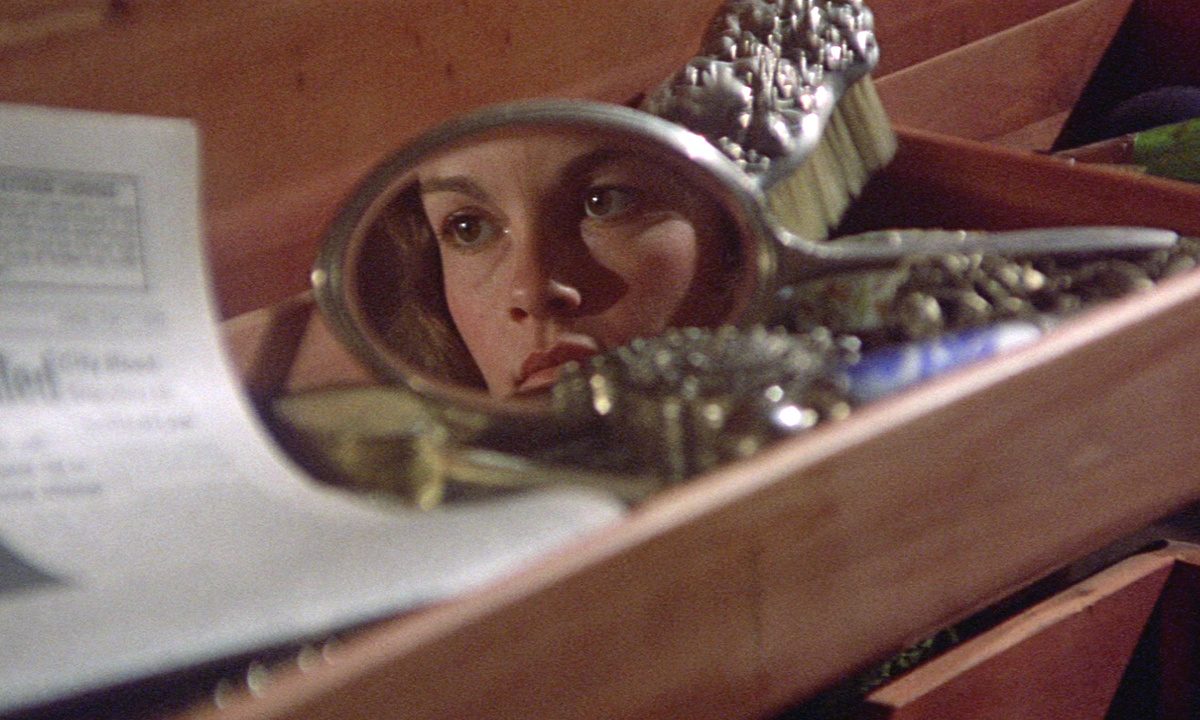
“Most of my movies are about megalomaniacs and guys that live in insulated universes, and the crazy things that happen within those insulated universes, which is something that continues to fascinate me.”
At the top of the 2015 documentary De Palma, for which co-directors Noah Baumbach and Jake Paltrow wisely cede the floor to their subject, Brian De Palma talks about a formative screening of Alfred Hitchcock’s Vertigo, which he saw on its initial release. This was before he harbored any ambitions to be a filmmaker, but it left an impression. When he caught Vertigo again in the early ’70s, it sparked an idea for a story he hashed out with Paul Schrader, who had written Taxi Driver (though it hadn’t been produced yet). Based on De Palma’s treatment, Schrader knocked out a screenplay they called Déjà Vu, which was the project’s title through filming. Fearing that might make people think it was a foreign film, it was eventually changed to Obsession, but that wasn’t the only alteration the film underwent before all was said and done.
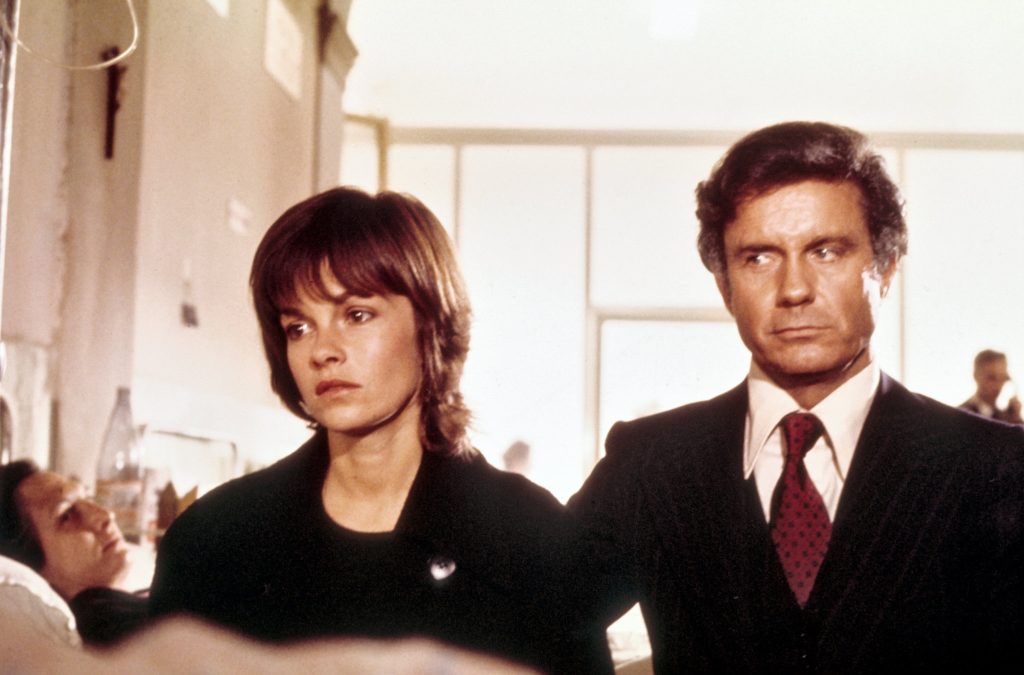
De Palma establishes the discordant tone right from the start with a slideshow depicting the courtship of Michael Courtland (Cliff Robertson), a soldier stationed in Florence after World War II, and Elizabeth (Geneviève Bujold), the local girl he whisked away to New Orleans. Bernard Herrmann’s title cue mirrors their tentative romance, but as each slide is replaced by looming shots of the church where they met, the soundtrack turns dark and brooding, foreshadowing the psychological hold it will eventually have over Michael, especially once tragedy strikes his seemingly charmed life.
The story is set in two time periods, 16 years apart. The first is 1959, when Michael and Elizabeth are celebrating their tenth anniversary with a lavish party, an occasion his business partner Robert (John Lithgow) uses to announce a major project they’re developing. Michael pumps the brakes on it, though, when Elizabeth and their daughter Amy are kidnapped and the police talk him out of paying the steep ransom, a decision that weighs heavily on him when they’re both killed along with the kidnappers.
When the action picks back up in 1975, Michael is still haunted by what transpired and, having built a memorial to his dead wife and child, refuses to develop the land any further. If this rankles Robert, he’s good at not showing it; he joins Michael for a business trip to Italy, including his first time back in Florence. Michael is understandably emotional when he visits the church where he met Elizabeth, but he’s thunderstruck when he sees her double working on restoring its interior. At first he’s unable to approach her, but soon he’s following her around and, after seeing Robert off, makes his fateful move.
“Should they restore the original, but never know for sure what lies beneath it?”
As Michael gets to know Sandra, who’s half his age (and is also played by Bujold, fully embodying a tricky role), he becomes increasingly convinced he’s being given an opportunity to make amends. For her part, Sandra pumps Michael for information about his dead wife, for reasons that don’t become apparent right away. When Michael returns to New Orleans with Sandra in tow, he installs her in his mansion while he goes about planning their lavish wedding. Meanwhile, her fixation on Elizabeth grows ever more pronounced, demonstrating that obsession can be a two-way street.
Obsession is at its best when the storytelling is carried by Herrmann’s lush score and cinematographer Vilmos Zsigmond’s sweeping camera moves, which frequently play out in long takes. De Palma and Zsigmond also use 360-degree pans, split-diopter shots, and diffusion to lend the imagery an ethereal feel. This effect is most pronounced in the sequence where Michael dreams of marrying Sandra in a rush and consummating their union, which actually happened in the original cut before its implications forced De Palma and frequent editor Paul Hirsch to retool it. (Francis Ford Coppola performed a similar trick in The Conversation a couple years earlier.) This was in addition to axing the script’s original third act, which was set years in the future. That loss bothered Schrader more than anyone else.
With the backing of producer George Litto, De Palma hoped Obsession would be the breakthrough success he needed at that point in his career, but it didn’t connect with audiences the way his other 1976 release did three months later. That would be Carrie, based on the Stephen King bestseller, and it altered his trajectory overnight. After lagging behind his fellow film school brats, who spent the first half of the decade scooping up accolades and having huge hits, De Palma could finally lay claim to one, though he couldn’t really call it his own. That came with his next film as writer and director, 1980’s Dressed to Kill. Taking further cues from Hitchcock – and with Litto again in his corner – De Palma was truly ready to lay his cinematic obsessions bare.
“Obsession” is available for rent or purchase.