Jason Bailey
Every Tuesday, discriminating viewers are confronted with a flurry of choices: new releases on disc and on demand, vintage and original movies on any number of streaming platforms, catalogue titles making a splash on Blu-ray or 4K. This twice-monthly column sifts through all of those choices to pluck out the movies most worth your time, no matter how you’re watching.
PICK OF THE WEEK:
Last Summer: “I mean, after all, we’re not kids here.” So says one of the young people at the center of Frank and Eleanor Perry’s stunning 1969 drama, a longtime holy grail for cinephiles thanks to its decades-long lack of availability, now thankfully corrected by Warner Archive’s striking new Blu-ray release. Bruce Davison and Richard Thomas are longtime buddies who meet beautiful Barbara Hershey on the beach, and the Perrys vividly capture the sexual politics of virginity and the timeless specifics of being very young and very horny (they are, after all, on Fire Island). When a fourth person comes into the picture (an Oscar-nominated Catherine Burns, in a tough, uncompromising performance) things get all scrambled. Some of the crises feel a bit manufactured, but that barely matters; this is a mood piece, sun-kissed and nostalgic, right up until an ending that’s both shocking and inevitable. (Includes audio commentary, Q&As, deleted scene, promo reel, and trailers.)
ON BLU-RAY / DVD / VOD:
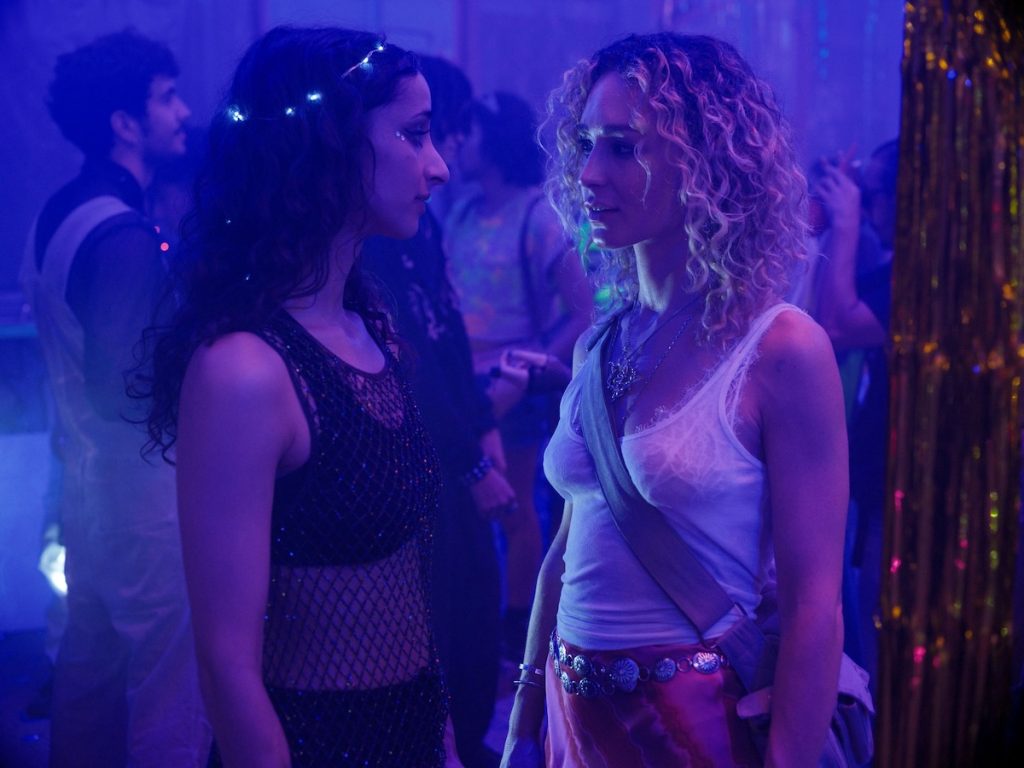
Is God Is: The twins are summoned to their mama’s bedside and given one simple instruction: “Make your daddy dead.” It’s not an unreasonable request — he tried to kill them all, when they were little girls — but the results are fast and funny, sometimes sexy, totally unpredictable, and unapologetically weird. Writer/director Aleshea Harris, adapting her own play and announcing the arrival of an exhilarating new voice, makes a film that is formally daring and wildly crowd-pleasing, while also grounded in a genuine sense of morality and consequence; she captures the spirit of a ‘70s revenge flick without the shortcuts and signifiers (or cynicism), putting a personal spin on the inevitable genre tropes. Memorable performances all around, but special note must be made of the careful and effective use of Sterling K. Brown, who is absolutely chilling as their father and target. (No bonus features.)
The Love That Remains: Hlynur Pálmason’s Godland was fairly heavy on plot, so it takes some time to realize that his new film isn’t about any specific conflict or crisis, but a feeling. It begins by faking us out, with a series of meandering, slice-of-life impressions of a seemingly warm and happy family, only to reveal that the mother and father have separated. And so much of the picture is concerned with how it feels to linger in limbo, in this liminal space where the center of one’s universe has ended, but no one wants to let it go. Pálmason captures that feeling with a perceptive eye and ear — the scene where a tiny spat about nothing snowballs into a full-on rager is one of the closest approximations of marital irritation I’ve ever seen — while simultaneously shedding the naturalistic approach of the early scenes as he goes. Stylistically, it grows increasingly strange and experimental as its central relationship grows less stable, jolting us with shock edits and surrealistic imagery. It doesn’t hold together with the force or emotion of Godland, but it has its moments. (Includes interview, companion film, trailer, and essay by David Schwartz.)
Miroirs No. 3: There is a plot (and a good one) in Christian Petzold’s latest, but that’s not really what the movie is about; it’s about Paula Beer’s face, and the mysteries it holds. She plays a young woman named Laura who is riding in the passenger seat when her boyfriend’s car goes off the road. He’s killed instantly, but she’s just a little banged up. Betty (Barbara Auer), who lives nearby, witnesses the accident, and an immediate, all but inexplicable bond develops between them. She offers the strangely disassociated young woman a place to stay and recuperate. Miroirs is modest and mellow as hell — you fall into the lackadaisical rhythms of Laura’s days alongside her – until it’s not. Bristling little bits of tension are provided by Betty’s husband and her adult son, though they paint an incomplete picture; we only see them through Laura’s eyes, so the secrets they’re keeping are kept from us as well. The reveals and revelations are satisfying, emotionally and intellectually, but again, they’re not really what the picture is about. When I think of it, I’ll think of the complex emotions Beer is conveying as she sits for her recital, or in the marvelously enigmatic closing shot. (Includes interview and essay by Ariel Esteban-Cayer.)
The Voice of Hind Rajab: In January 2024, the Red Crescent call center on the West Bank received a call from the Tel Al-hawa neighborhood of Gaza; a six-year-old girl named Hind Rajab was on the line, in a car under fire from Israeli troops, surrounded by the bodies of her family. The Red Crescent volunteers’ efforts over the next several hours to save her are the subject of this harrowing and powerful docudrama, which dramatizes the events in the call center while using the real phone audio from that day. It’s the best kind of political film, which lands both on the macro and micros levels — the greater points about the bloodshed in Gaza are made, but it’s also about impotent rage and the loss of self-control, borne of the helplessness felt by those who want to help most. (Includes interviews, panel discussion, and Q&As.)
Citizen Sleuth: Nonfiction filmmaking, as well as television, publishing, and podcasting, have become overwhelmed by true crime investigations, and Chris Kasick’s documentary Citizen Sleuth explores the “content creator” of a successful pod who, it could be said, represents a worst-case scenario. Emily Nestor hosts the “Mile Marker 181” podcast, centered on the suspicious 2011 death of 20-year-old West Virginian Jaleyah Davis – ruled an accident, but it looks like a homicide, according to local legend, where everyone has a theory and everyone has an opinion. Someone had to synthesize all of that, Nestor reasons; “Why not me?” she asks. And Kasic sets out to answer that question. “She doesn’t have any training whatsoever!” her friend notes, chirpily, but what she lacks in knowledge she makes up for in tenacity and savvy self-marketing. Through her, Kasick gets a peek into the big (and sometimes gross) business of true crime, where generating not only “content” but revenue from the tragedies of others can create ethical dilemmas that an untrained investigator might not be equipped for. And, to his credit, Kasick understands that the documentary camera similarly changes things, influences behavior, and shifts outcomes. Citizen Sleuth is an uncommonly thoughtful examination of true crime – yet one that also leaves the viewer to draw their own conclusions about its events and participants. (Includes audio commentary and trailer.)
Boutique: To Preserve and Collect: Sure, a Vinegar Syndrome partner label handling the Blu-ray release of a documentary celebrating the work of boutique physical media labels sounds a bit like spon-con, and a few moments within Ry Levey’s breezy chronicle play that way. But it offers informative context concerning the history of video collecting and home media, the evolution of the formats, and the specific and wonderful place these labels are at now (particularly with regards to inclusivity). More than anything, it’s about the joy of the work, for both the labels and the consumers — it’s a film both by and about cinephiles, capturing how that love for the form and enthusiasm for the products keep things balanced. (Includes audio commentary, interview outtakes, short films, and trailer.)
ON 4K UHD:
Cruel Story of Youth: Points for title accuracy — Nagisa Oshima’s second feature (also new to Criterion) is such a breathless indictment of wayward youth that it almost plays like a juvenile delinquent movie. But Oshima is too subtle and smart a filmmaker to score the easy points of those pictures. He opens with a harrowing sequence of casual cruelty and never looks back, rendering its heroine Makoto (Miyuki Kuwano) immediately sympathetic, and then complicating that sympathy with her frequently inexplicable actions. She catches trouble throughout this story, but also sometimes goes looking for it — particularly in her interactions with Kiyoshi (Yusuke Kawazu), who is the very definition of a toxic boyfriend. Oshima uses groovy music and thrilling filmmaking to keep the view off-balance, landing on one of the best “um, what now” endings in all of pre-The Graduate cinema. (Includes additional Oshima feature and short, interview, trailer, and essay by Chris Fujiwara.)
I’ll Remind You of Everything: The Films of Mike Mills: Mike Mills joins the Criterion Collection with this three-movie compilation of his beautifully observed and delicately executed comedy/dramas about parenting, personal growth, and adjustment of expectation. Beginners won Christopher Plummer a richly-deserved Academy Award, but it also features what may be Ewan McGregor’s best performance to date (and certainly his most charming) as a young man in love whose lifelong assumptions are challenged by his newly out-and-proud dad (Plummer). 20th Century Women gives another gifted actor a showcase role — in this case, Annette Bening, who leads a stellar cast (Greta Gerwig, Billy Crudup, Elle Fanning) as a freewheeling single mom who’s trying to raise her adolescent son (Lucas Jade Zumann) in rapidly changing times. And Joaquin Phoenix does the kind of modest work that he attempts too rarely these days in the leading role of C’mon C’mon, a kind of contemporary riff on ‘Kramer vs. Kramer’ in which, again, the modern man is unexpectedly pressed into child-rearing and finds something of himself in the process. Taken together, they make clear that Mills is blessed not only with a good ear and skill with actors — he projects empathy in his films, a quality in scant supply both in the movies and in modern life. (Includes audio commentaries, interviews, featurettes, short films, and essay by Joachim Trier.)
Full Contact: Shout Factory’s latest release in their Hong Kong Cinema Classics series is another of Chow Yun-Fat’s team-ups with director Ringo Lam, a collaboration that was, in many ways, as important as his work for John Woo. It’s a different kind of character for the versatile actor, playing neither a tough cop or a cool killer, but a crew-cutted bouncer who’s drawn into a web of crime and betrayal within a crew of Hong Kong thieves decamped in Thailand. Yun-Fat has a couple of moments here that are so show-stopping, so relentlessly yet off-handedly cool, that I’m surprised they haven’t become memes yet; Lam deploys a jaw-dropping amount of firepower for his closing sequence, and the big nightclub shoot-out that precedes it is one of his very best. (Includes audio commentary, interviews, and trailer.)
Them!: One of the great ‘50s creature features gets the 4K treatment from Scream Factory, and it looks terrific, the crisp black-and-white photography highlighting impressive special effects that more than hold up in HD. Ted Sherdeman’s screenplay is endlessly clever, its side-door approach to the central conflict paying off handsomely, and director Gordon Douglas (In Like Flint) gets first-rate performances out of James Whitmore, Edmund Gwenn, James Arness, Joan Weldon (as a girl scientist, if you can imagine such a thing), and, in a small but key role, the terrifying Sandy Descher. (Includes interviews, behind-the-scenes footage, and trailer.)
The ‘Burbs: Joe Dante was fully in the zone of knocking out smart, funny genre mash-ups when he teamed up with Tom Hanks, still a few years away from morphing from wisecracking comedy to start to Oscar-winning dramatic actor, for this 1989 horror-comedy. He’s a suburban everyman whose lazy stay-cation is disrupted by odd sounds and stories about the weirdos who just moved in next door, and the script by Dana Olsen is keenly tuned in to the way urban legends circulate in a community and become local lore. The supporting cast is stacked — Bruce Dern, Carrie Fisher, Corey Feldman, and Rick Duccommun all get memorable moments — and Jerry Goldsmith’s sly score is very much in on the joke. (Includes audio commentaries, featurette, interviews, original workprint, and trailer.)
Unlawful Entry: The last time I saw Jonathan Kaplan’s entry in the “[BLANK] From Hell” genre (the nanny from hell, the roommate from hell, or in this case, the cop from hell) it was in its original 1992 release, at a second-run theater on a Saturday night, and it seemed little more than a passing distraction. But that was a different time, when well-crafted thrillers for adults were, if anything, saturating the market; now we’re in a famine, and it plays like a prestige picture. It helps that you’ve got Kurt Russell trying out the flustered buttoned-up everyman persona he would perfect in Breakdown, opposite Ray Liotta doing the mixture of ingratiation and menace that was already his specialty. Scream Factory’s 4K presentation is clean as a whistle, showcasing the journeyman craftsmanship that Kaplan always had in spades. (Includes audio commentary, interviews, featurette, trailer and TV spots.)
Bowfinger: Similarly, the first big-screen team-up of Steve Martin and Eddie Murphy should’ve been a bigger deal when this Frank Oz gem hit screens in 1999, but personality-driven comedies were a much larger part of our moviegoing diet, so it’s taken viewers some time to catch up with, and appreciate, this loose-limbed story of a talent-free but enterprising indie filmmaker (Martin), the movie star he wants to work with (Murphy), and the star’s twin brother (Murphy again) who proves a conduit. The twin brother is one of Murphy’s loveliest comic creations, and Martin’s script is both loving and biting — particularly if you view the Heather Graham character through the prism of his brief relationship with Anne Heche. Laughs from top to bottom, with a nice little lift provided by Robert Downey Jr. as a seen-it-all suit. (Includes audio commentary, deleted and extended scenes, interview, featurette, and trailer.)
Pleasantville: Gary Ross proved himself a master of the high-concept comedy drama with his screenplays for Big and Dave; his directorial debut was even higher-concept, tracking a classic-TV-crazy ‘90s kid (Tobey Maguire) and his popular sister (Reese Witherspoon) into the black-and-white world of a ‘50s TV show. The resultant culture clashes are comedy gold, but Ross burrows deeper, finding the pathos and contradictions of characters (especially the adults brought to vivid life by Joan Allen, Jeff Daniels, and William H. Macy) that a lesser filmmaker would have constructed as card-board cut-outs. And yes, those splashes of colors dazzle in 4K. (Includes audio commentary, isolated score track with commentary, introduction, interview, featurette, and trailer.)
Day of the Dead: When the third installment of George A. Romero’s zombie series (another new 4K from Scream Factory) hit theaters in the summer of 1985, the general response was one of keen disappointment — and even with the benefit of hindsight, it’s easy to see why. The action is mostly confined to an underground military bunker (“a great big 14-mile tombstone,” as one character dubs it, accurately), and the carnage doesn’t really start until nearly an hour in, which wouldn’t matter much if the characters were nearly as compelling this time around. (The actors attempt to overcompensate by screaming all of their dialogue.) But it’s worth seeing on a technical level, if nothing else; Tom Savini’s makeup effects are gory and great, including a ripping limb-from-limb scene that I truly can’t figure out, and the climactic action and gore beats not only deliver, but satisfactorily dispatch the story’s biggest wankers. (Includes new and archival audio commentaries, feature-length documentary, new and archival featurettes, behind-the-scenes footage, trailers and TV spots.)
The 7th Voyage of Sinbad: I’m not suggesting Sony issued their new 4K edition of the 1958 sword-and-sandal epic solely on account of the buzz surrounding The Odyssey, but I’m not NOT suggesting it either. Whatever the motivation, it’s a reference-quality disc, filled with eye-popping color saturation and stop-motion creature effects by the legendary Ray Harryhausen that not only hold up in 4K, but easily outpace the CGI mush of today. (He keeps topping himself throughout, with not only a Cyclops but a dragon and a fully sentient skeleton.) There’s a story, sure, with a curse and genie and a mutiny and more — but it barely matters. We’re here for the spectacle, and director Nathan Juran more than delivers on that front. (Includes audio commentary, featurettes, interview, music video, and trailer.)
King Creole: Elvis Presley’s fourth feature film (making its 4K debut via KL Studio Classics) was reportedly his favorite, and it’s easy to see why. In sharp contrast to the brainless jukebox musicals that would become his cinematic legacy, this one has a real pedigree – based on a novel by Harold Robbins, helmed by Casablanca director Michael Curtiz, and with a supporting cast including Walter Matthau and Vic Morrow – and a real performance from the King, who puts off serious Brando/Dean vibes. As well he should; the sweaty New Orleans settings recall A Streetcar Named Desire, and the story is basically Rebel Without a Cause with songs. But it doesn’t feel like a knockoff; the melodrama is entertaining, the musical numbers swing, Russell Harlan’s black-and-white cinematography is gorgeous, and there’s not a false note in Presley’s stellar starring turn. (Includes audio commentary, Leonard Maltin discussion, and trailer.)
Deadly Blessing: This 1981 chiller (also new to 4K from KL) was Wes Craven’s first studio film, and you can feel the tension between the commercial demands of a studio slasher and his own, more esoteric interests. On a technical level, it’s superb; he’s learning how to tease out suspense in ways that would serve him more as the decade progressed. And he’s learning how to work with actors as well (Ernest Borgnine wasn’t really doing subtle at this point in his career, but Sharon Stone has the kind of presence that made her subsequent stardom feel inevitable). It’s not altogether successful on its own terms, but Deadly Blessing is a fascinating transitional work, allowing us to watch a filmmaker figuring out how to navigate from the crude jolts of his early work into something more palpable to mainstream audiences. (Includes audio commentaries, interviews, trailer, and TV and radio spots.)
Body Snatchers: Abel Ferrara found himself in a similar pickle when the acclaim and indie success of his Bad Lieutenant led to an unexpected offer from Warner Bros. to helm the third adaptation of Jack Finney’s novel. Its slim 87-minute running time sounds like a hatchet job, but it doesn’t feel like one; Ferrara simply made a good old-fashioned B-movie, keeping it to the essentials and refusing to overstay his welcome. It’s got a solid pedigree (Larry Cohen and Stuart Gordon did passes on the script before Ferrara’s regular scribe Nicholas St. John took it over) and fine performers; Gabrielle Anwar is a good, charismatic center, R. Lee Ermy is an atypically smooth-voiced military man (it’s somehow even scarier), and Jennifer Tilly is chilling as one of the first victims. Real heads have been reclaiming this one for years; Vinegar Syndrome’s tip-top restoration and presentation should help hurry that along. (Includes audio commentary, interviews, and trailer.)
I’m Gonna Git You Sucka: Keenan Ivory Wayans used his side-entrance into the film industry as co-writer of Hollywood Shuffle to write, direct, and star in this spot-on spoof of “blaxpoitation” tropes (debuting on 4K from Vinegar Syndrome Ultra). It would prove the funniest movie he would ever make, with several participants from said era—including Jim Brown, Bernie Casey, Isaac Hayes, John Vernon, and Antonio Fargas—gloriously sending up their own images while maintaining their effortless cool. Chock full of hilarious bits, most memorably an impossibly young Chris Rock’s brief but unforgettable turn as a thrifty rib customer. (Includes audio commentary, interviews, archival featurette, trailer, and essays by Jourdain Searles, Quatoyiah Murray, and Robert Daniels.)
Night School: It’s easy to lump all of the slasher movies from the subgenre’s 1980-1983 saturation period into an easily-dismissed pile, but there’s real artistry in this 1981 VHS standby (new to 4K from Vinegar Syndrome). The key, one suspects, is director Ken Hughes (Casino Royale, Chitty Chitty Bang Bang), who didn’t treat it like slumming; he builds his set pieces with real skill and craft (instead of just shocks and jump scares, though it has plenty of those too), even when the kills they crescendo to are real nasty pieces of work. But he also doesn’t take it all too seriously; the teases and lingering of the “beef stew” bit, for example, are the touches of a real filmmaker having a good laugh. (Includes audio commentary, interviews, and trailer.)
Wake in Fright: Originally released in 1971 to great acclaim, this Australian outback thriller somehow fell out of circulation, but has been reclaimed since its rediscovery and re-release in the early 2010s. It’s a gripping bit of vintage Oz-ploitation that’s something of an Aussie Straw Dogs (there’s even a shot of the intellectual hero’s cracked eyeglasses)—truly a parallel production, as both pictures appeared in the same year. Telling the story of an Outback schoolteacher stuck in a nowhere town of roughnecks nicknamed “the Yabba” (“a friendly place!” his cab driver assures him), director Ted Kotcheff—who would create a filmography diverse enough to include both First Blood and Weekend at Bernie’s—puts the viewer in a state of uneasy anticipation, slowly boiling his soup of warm beer and dripping sweat to a point of feverish tension. Alternately nightmarish and hung-over, it’s a movie about the time between blackouts, where what’s not shown is often more disturbing than what is; Arrow’s 4K presentation is unnervingly vivid. (Includes audio commentaries, new and archival interviews, featurettes, Q&A, alternate scenes, trailers and TV spots, and essays by Jay Slater, Paul Lê and David Michael Brown.)
Audition: Takashi Miike helmed this uncommonly disturbing 1999 story of a widower whose somewhat deceptive search for a new lady love turns out very, very, very badly for him. The picture is, in many ways, a tribute to Miike’s precision and control; it’s a bit of a rug pull, as the tone, style, and structure make the protagonist somewhat sympathetic, and the film’s reputation is so severe that even if you go in braced, the straightforward drama and enigmatic nature of the first half may well cause you to let down your guard. And then, well, it makes a shift about halfway in that could turn even the most confident social butterfly into a terrified shut-in. In many ways, it’s not even a horror movie — it’s a terror movie, building up a powerful sense of dread and doom. And these days, it plays like a good double feature with Obsession: two stories of sad little men who get exactly what they think they want. (Includes audio commentaries, new and archival interviews, featurette, trailers, audio essay by Alexandra Heller-Nicholas, and essays by Anton Bitel, Jennie Kermode, and Jamie Graham.)
Soylent Green: Planet of the Apes star Charlton Heston was a bit of a twist-ending magnet; five years after weeping in the sand, he headlined Richard Fleisher’s classic story of a post-greenhouse world and the food supply that nourishes it. But as with Apes, it’s not just the twist (or Heston’s distinctive reading of the line revealing it) that makes Soylent Green memorable; it’s how this mixture of sci-fi dystopia, police procedural, and paranoid ‘70s thriller works both as a potboiler and as an eerie early warning of the various crises (climate change, overpopulation, income inequality, the energy crisis) that have gripped us as predicted. (Includes new and archival audio commentaries, archival interviews and featurettes, trailer, and essays by Frank Collins and Alexandra Heller-Nicholas.)
Falling Down: On its original release in 1993, this Michael Douglas vehicle (another new-to-4K title from Arrow) mostly felt like one of director Joel Schumacher’s occasional attempts to assert himself as a Serious Filmmaker, even within the guise of a black comedy with one of cinema’s most bankable stars. But Falling Down has taken a strange hold in the years since, articulating a specific strain of white male rage that has come to dominate our culture, our politics, and our lives. Its messaging is muddy and Schmucher never quite figures out how he feels about his antihero — and, therefore, how we should feel about him — but there are moments of real, raw power here, given extra weight by the phenomenon it was so far ahead of. (Includes audio commentary, new and archival interviews, featurette, trailer, and essays by Alexandra Heller-Nicholas and Simon Ward.)
ON BLU-RAY:
Why We Fight: Eugene Jarecki’s scorching examination of the military industrial complex, out in a new 20th anniversary edition from Sony, was released in the midst of George W. Bush’s second term and the quagmire in Iraq,. That would seem to make it a remnant from an earlier political era — were it not for the fact that history is currently replaying itself so completely in Iran, turning an artifact into an again-necessary bit of history and commentary. Jarceki’s approach, as ever, is pointed and affecting, the archival footage is arresting, and the talking heads are enlightening; spin this one up if you start getting too infatuated with Bill Kristol’s too-recent political awakening. (Includes audio commentary, deleted scenes, featurettes, and Q&A.)
The Keyhole: This delightful 1933 comedy (also from Michael Curtiz) is yet another reason that we must all band together to make the Kay Francis-aissance a real thing. She stars as the wife of a wealthy businessman who’s being blackmailed by her previous husband; the new one, suspicious, hires a dapper private eye (George Brent) to see if she’s stepping out on him, and of course, the P.I. falls for her himself. Francis is stunning, breezily funny, and generates palpable chemistry with everyone she shares a scene with, and as if her story isn’t enough, there’s an entire B-romance with Glenda Farrell and Allen Jenkins that’s delectable in its own right. New on Blu from Warner Archive, and a must-have for screwball and Pre-Code fans. (Includes cartoons and trailer.)
Bonnie Scotland: Stan Laurel and Oliver Hardy were smack-dab in the middle of their golden period for producer Hal Roach when they made this charmer of a comedy (another new one from Warner Archive). The set-up is as simple as ever: they boys travel to Scotland to pick up wha they assume will be a substantial inheritance from Stan’s distant grandfather, only to overspend beforehand and find themselves enlisting in the British Army. It features one of their funniest comic bits of the period, a sequence of compounding disasters in their hotel room, and lots of good crying by Stan besides; they knew exactly what they were doing at this point in their careers, and it shows. (Includes audio commentary, Laurel and Hardy clips, and trailer.)
Crime Wave: One more from Warner Archive, with noir master Andre DeToth (House of Wax) helming a tightly-wound B-crime picture with a ruthless gang of escaped thugs (including Timothy Carey and a young Charles Bronson) tearing up Los Angeles and enlisting old pal Gene Nelson, who’s doing his damndest to keep to the straight and narrow. Throw in jaw-dropping cinematography by Bert Glennon, vintage Los Angeles location photography, and a Sterling Hayden performance as a cop that’s as good as any of his work as criminals, and you’ve got an unsung noir gem. (Includes audio commentary, featurette, cartoon, short film, and trailer.)
Teenage Riot Video Party: AGFA’s multi-film exploitation compendiums are among my favorite releases from the label, and as with such previous discs as Drug-O-Rama Video Party and Shock-O-Rama Video Party, their newest is all about the experience — you’re unlikely to ever watch any of these alone, but press play on the “All-Night Slumber Party Mode” (running just shy of five hours) and you’ll get a whole score of wild exploitation movies with deliciously goofy trailers and drive-in snipes between. Some of the flicks are better than others; Lost, Lonely & Vicious is more of a snooze than a movie with that title has any right to be and The Flaming Teenage makes Reefer Madness looks subtle, but Jacktown is an entertaining jailhouse melodrama, and The Narcotic Story is so wildly over-the-top, it becomes a real hoot. (Includes essay by Lisa Petrucci.)
The Outfit: The mere idea of Robert Duvall as an action hero — even as early as 1973 — is delicious, and the scrappy genre director John Flynn (Rolling Thunder) does right by that notion with this spiky, relentless adaptation of “Parker” novel by Richard Stark (aka Donald E. Westlake). It’s a perfect role for Duvall’s taciturn performance style, and for his keen ability to tune in to his co-stars’ energy and vibe; he gets a delightful buddy-movie byplay going with sidekick Joe Don Baker, while his scenes with a forcefully villainous Robert Ryan are electric. It’s hardboiled as hell without sacrificing the viewer’s pleasure, and Arrow Video’s ace transfer of this longtime stuck-on-DVD title was well worth the wait. (Includes audio commentary, featurettes, interview, and essays by Chris D, Glenn Kenny, and Priscilla Page.)