Jason Bailey
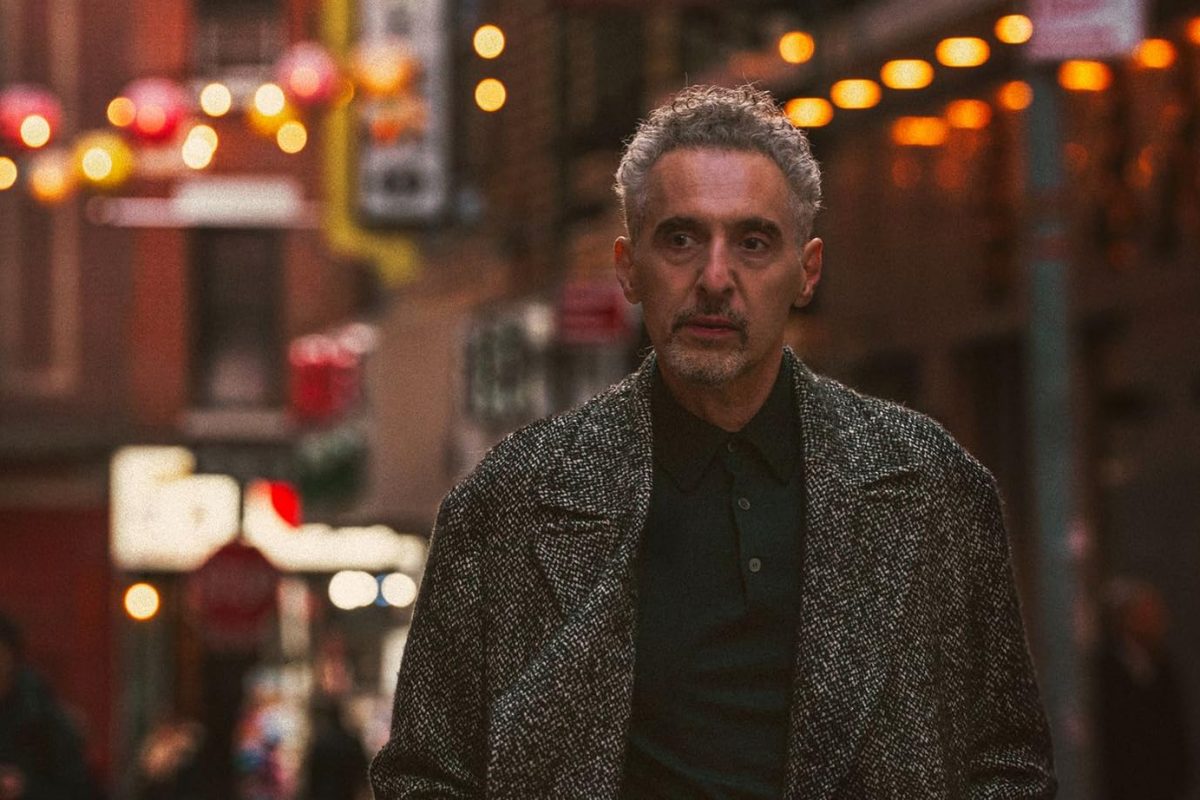
A few months back, several of us had a good chuckle over a tweet from a California finance bro who, returning from a visit to New York City, expressed his culture shock. He went places that only took cash! Nobody in NYC was talking about A.I.! What strange alien civilization was this? His jaw-agape reaction was good for a laugh, but also underscored the fundamental tension at the heart of the city: it is a place irrevocably attached to the past, yet simultaneously in constant flux. New York is what it is, even if what it “is” continues to change. Noah Segan opens his new film The Only Living Pickpocket in New York with “New York, I Love You but You’re Bringing Me Down” and ends it with “I Happen to Like New York,” and they’re appropriate tributes to the contradictions at the heart of not only living in New York, but loving it.
John Turturro, one of the patron saints of New York character actors, stars as Harry, an old-school analog pickpocket — doing lifts on the subway, as opposed to the online scams and other new methods of relieving people of their hard-earned money. Harry is a relic, cheerfully so; if it ain’t broke, he seems to believe, don’t fix it. We learn most of what matters about him in the virtuoso opening scenes, and Segan conveys most of it with no dialogue at all; he simply observes Harry going about his business, the routines and rituals that he’s learned and perfected over his decades-long life of petty crime. But there’s a bittersweet edge to it, because the time he doesn’t spend picking pockets and selling watches, he spends caring for his catatonic wife.
Harry lives by established rules, and one of the biggest is that you never “go heavy” — i.e., stealing from “connected” guys. But sometimes, you don’t know you’re going heavy until it’s too late. One night, he slips into a cocky Jersey kid’s muscle car, and takes a duffel bag with an expensive watch, a big wad of cash, a gun, and some other odds and ends. Turns out, the kid is connected, and needs the contents of that bag back. “You’re done, Harry,” the kid tells him. “There’s no coming back from this. But you can still save your old lady.” And we can tell by the look on Harry’s face that he knows the kid is right.
All of these events unfold over a couple of days, which is smart; running less than 90 minutes, Pickpocket is a short story, a character sketch. To aid in that brevity, Segan has wisely filled out his cast with other patron saints of New York character actors, and their familiarity (to us and the star) fill in a lot of blanks. There’s an immediate shorthand between Turturro and Steve Buscemi, as his go-to pawn shop guy and the closest thing he’s got to a friend, and when Giancarlo Esposito, as the cop who’s been on Harry’s tale since they were both young and spry, slides up to Turturro on the subway, it almost doesn’t matter that most of us will dip out of this story for a moment to think about Pino and Buggin’ Out. Turturro and Esposito are such old pros, in and out of character, that they draw us back in immediately. (A side word of praise for Will Price as his young antagonist, resisting the urge to give any humanity or likability to the character, who’s correctly written as an insufferable little shit.)
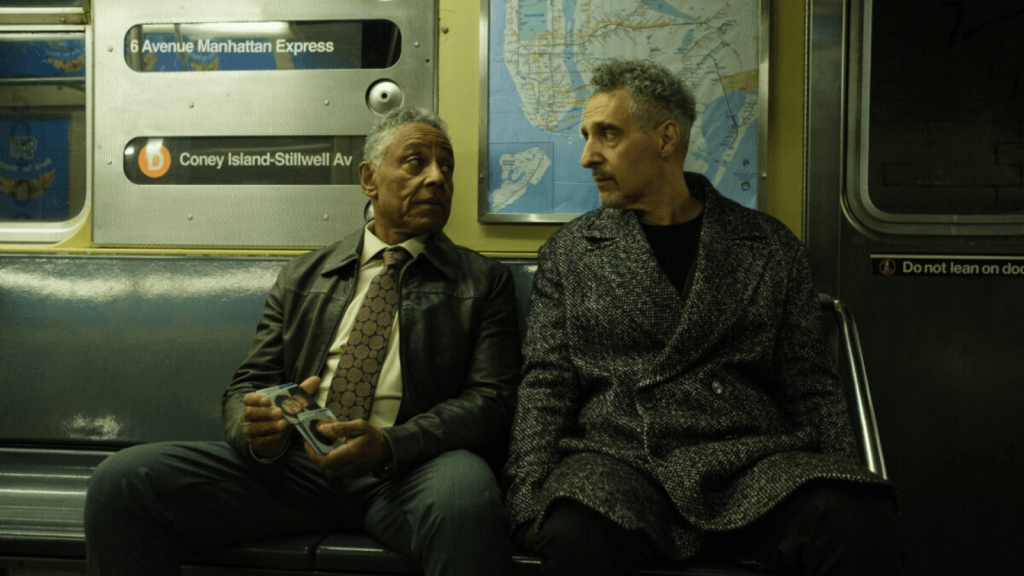
But when it’s all said and done, this is Turturro’s showcase, and an overdue one. The picture has more edge than something like I’ll See You in My Dreams or The Hero, but it serves the same purpose: to give a longtime supporting player the twilight starring role they’ve been due for a good, long while. Turturro has been one of the most valuable utility players in the movies for decades, stepping in as pinch-hitter for Spike Lee or the Coen Brothers, and while he occasionally took on leading roles, this one feels tailor-made for him. Segan understands that Turturro’s greatest acting tool is his eyes, and he lingers on them — you can watch him think, and that’s a pleasure. (So is watching him dance). He’s light on his feet as an actor, never reaching, never overplaying, and the whole movie falls apart if not for his likability. Sure, he’s a common criminal. But you’re still rooting for him.
“You’ve gotta learn some new tricks,” Harry is told early on, one of several reminders that he’s a relic; later, when he visits the local police precinct, Esposito shrugs, “I used to have a real office!” He too is a relic of a different time, and a different New York, but Pickpocket makes the increasingly persuasive case that digital doesn’t always win, and sometimes the way to solve a problem is to go analog. But more than that, the absence of analog interactions — even a pocket-picking — can take a toll. Occasionally, Harry asks his across-the-hall neighbor to keep an eye on his wife; when he tells her, as a thank you, “You’re a mensch,” her reply is disarming in its simplicity: “I’m just being a person.” She’s not wrong, of course, but even that feels like too big of an ask anymore.
Segan’s script only really steps wrong once, in a late, perfunctory scene between Harry and his estranged daughter (Tatiana Maslany) that we’ve seen too many times before, and her dialogue consequently feels rote and recycled. But even then, Turturro pulls us in; he’s always been a great listener and reactor, and as she unloads on him, you can see the pain and shame of an entire life crossing his face. Noah Segan is 42 years old, and by the end of The Only Living Pickpocket in New York, I was thinking of Jackie Brown — another example of a filmmaker telling a story about characters many years his senior, and doing so with a wisdom and empathy beyond his age. Segan’s previous directorial effort, the slight but enjoyable Shudder original Blood Relatives, felt like an actor dabbling. This is the work of a real filmmaker.
B+
“The Only Living Pickpocket in New York” is out Friday in New York and Los Angeles, and will expand nationwide on October 30.