Craig D. Lindsey
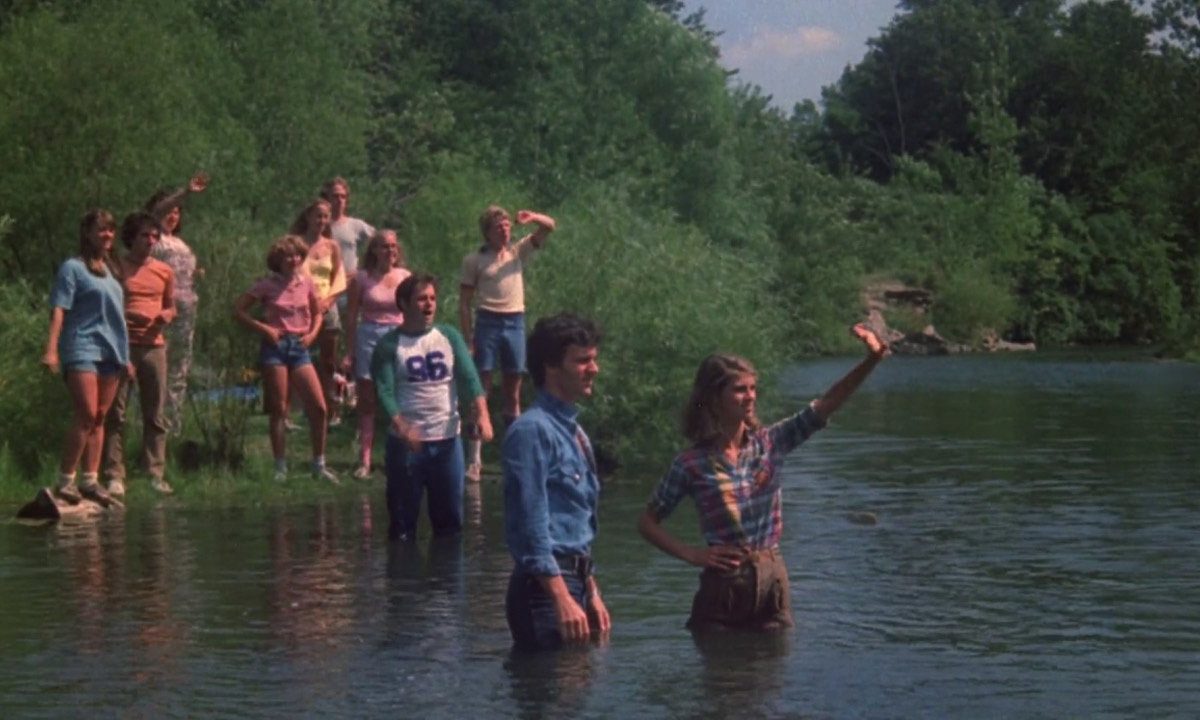
Welcome to Harvey’s Hellhole, a monthly column devoted to spotlighting the movies that were poorly marketed, mishandled, reshaped, neglected or just straight-up destroyed by Harvey Weinstein during his reign as one of the most powerful studio chiefs in Hollywood. Since Halloween is upon us, let’s travel to 45 years ago, when Harvey and them went into the woods and made a T&A-heavy slasher film.
“Honey, I auditioned for The Burning. You know who created that? You don’t scare me.”
— Billy Presley (Gillian Anderson), Teenage Sex and Death in Camp Miasma
If you wanna really go back to when Harvey Weinstein first became a moviemaking, sexually-assaulting menace, we have to start with The Burning.
This forgotten 1981 slasher flick holds a special place in the Weinstein brothers’ toxic, twisted timeline. It was their first film as legitimate filmmakers — main producer Harvey came up with the story (he actually gives himself a “created and produced by” credit) and little bro Bob co-wrote the script. After years of being East Coast music impresarios, bringing rock acts to their Buffalo homebase (as well as distributing bowdlerized British rock-concert films to American theaters via this Miramax Films side-hustle they had going), they slid into the indie-movie game by doing what many up-and-coming filmmakers did back then: they simply made a slasher film with a lot of blood and boobs.
After Halloween and Friday the 13th opened the bloodgates for more carnal, cinematic carnage – always featuring an on-the-loose killer going after hella-horny, barely-clothed teens – to flood multiplexes back in the day, the Weinsteins hopped on the rip-off train and came up with their own titillating terror ride. Harvey hired British director Tony Maylam (who directed the 1977 Genesis in Concert film Miramax distributed) to direct this summer-camp massacre, after telling him the urban legend of Cropsey, a disfigured mental patient who picked up some gardening shears and went on a child-murdering spree. (The campfire tale also inspired the slasher film Madman, also released in 1981.)
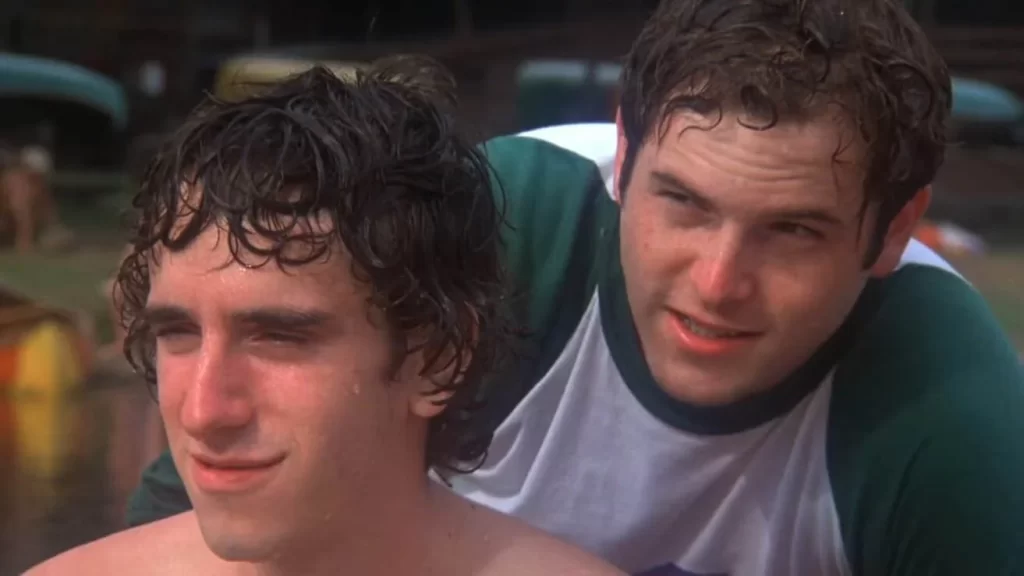
In this retelling, Cropsey (now spelled “Cropsy”) is an abusive camp caretaker who was left horribly burned and disfigured due to a failed prank by fed-up campers. He eventually goes on a vengeful, slice-and-dice tear whenever he sees teens getting intimate in the woods. Luckily for him, he hits a camp where both the boys and girls can’t stop talking about getting it on. In true teen-slasher fashion, most of the allegedly-underaged cast already look like they’re old enough to file taxes. There are a few, surprisingly familiar faces in this baby-faced crowd — Holly Hunter and Fisher Stevens both make their feature-film debuts as members of this rascally crew. Certainly the most recognizable youngster is Jason Alexander, rocking a slim build and a hair-covered dome, as the resident wisecracking comic relief. (Even in his younger days, dude still acted like George Costanza.)
The Weinsteins rounded up some future stars behind the camera as well. The late ubermogul Brad Grey, who worked with Harvey’s management company, served as a producing consultant, while future B-movie director Jack Sholder (A Nightmare on Elm Street 2: Freddy’s Revenge, The Hidden) handled editing duties. Weinstein snatched up horror-makeup legend Tom Savini, who did effects for Friday the 13th, to create the gruesome details. And British prog-rock vet/film composer Rick Wakeman pulled out the synthesizer for the myriad macabre music cues.
After scrounging up a $1.5 million budget from several international investors, the Weinsteins and the cast and crew spent the summer of 1980 shooting around Buffalo and upstate New York. Both brothers were hands-on in the production, with Bob and Harvey spending their days on-set and their nights reviewing the dailies and re-writing the film. In a pre-release interview with the Buffalo News, Weinstein admitted that producing a movie took a lot out of him. “It just kills you,” he said. “Of all the experiences I’ve had, a film was the hardest. It’s just physically exhausting. I’d be up until midnight with our two lunatic cameramen and then have to be up at 6 a.m. for the day’s shooting.”
Once the Weinstein scandal broke in 2017, it was eventually revealed that Harvey did more than producing on that set. Mere days after the shit the fan, Paula Wachowiak told the Buffalo News that Weinstein got all creepy with her when she was a 24-year-old production assistant on the film. She alleged that when she went to Weinstein’s hotel room for him to sign a manila folder full of checks, he exposed himself to her and asked her for a massage. “That’s not in my job description,” Wachowiak shot back. Despite putting up a defiant front, she admitted to bursting into tears after leaving the room. (In 2018, a spokesperson for Weinstein told the Hollywood Reporter that Weinstein “categorically denies ever engaging in any nonconsensual sexual conduct with Ms. Wachowiak.”)
It’s hard not to think of Weinstein’s history as a pervy predator while watching Burning, which is basically 91 minutes of testosterone-charged guys pressuring prudish girls to go all the way before ol’ Cropsy pops up and splatters their asses. You just know the flick’s nubile T&A came from Weinstein’s nasty noggin. There’s one excessive scene where a girl walks around in the dark, completely wet and butt-bald after skinny-dipping, looking for her clothes before Cropsy gets to shearing. And, yes, there is an obligatory shower scene that’s mostly there to appease Hitchcock fans and — to borrow a line from House Party — fuckin’ peep freaks. Incidentally, both actresses who went au naturel in those scenes retired from acting shortly after Burning. (Even before he reached power-player status, Weinstein could still make women leave the biz after working with him.)
Burning was barely noticed during its theatrical rollout in the summer of 1981, which was handled not by Miramax but by now-defunct Filmways Pictures. It originally played on 110 screens in Florida before moving on to bigger cities. Even the Buffalo News gave it a meh review when it finally came to town two months later. (You know the critic who wrote that got an expletive-filled phone call from Harvey).
When Filmways merged with Orion Pictures the following year, Burning got re-released – but the critics were still unimpressed. New York Times scribe Janet Maslin was more bored than disturbed, writing “it devotes endless time to horseplay among the campers, who are a tanned, frisky, co-ed bunch.” Over in the U.K., the film ended up appearing on the infamous “video nasty” list of extreme, uncensored horror and exploitation flicks that hit VHS shelves during that time. (Despite the theatrical version getting censored by the British Board of Film Classification, the first home-video release included the 16 seconds that were cut.)
As usual with slasher knockoffs from the era, Burning has gone on to be rediscovered and appreciated by contemporary horror enthusiasts, often appearing on best–slasher–film lists. But even hardcore horror fans recognize that this is one very rapey movie, created and produced by one very rapey man. “In many ways, The Burning asks its viewers to do some of the very things that uphold rape culture,” Mathew Rodriguez wrote in 2020. “It asks us to believe that men who do bad things may be pure of intention. It asks us to mistrust victims, even when we don’t get to hear their side of the story. And it shows us that women who don’t consent deserve ridicule — or worse.”
Cropsy may have been the resident Big Bad of The Burning, but I think we all know by now who was the real villain of that movie.
“The Burning” is available to stream on Kanopyand Tubi.