Kimber Myers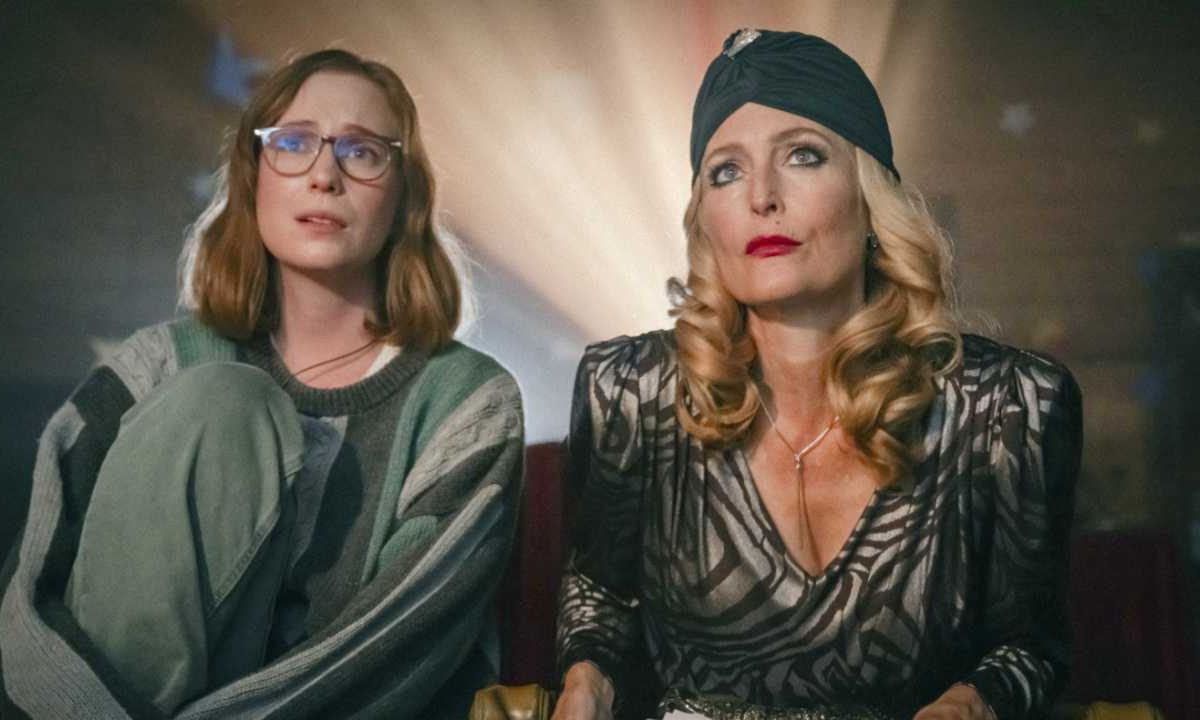
Only Jane Schoenbrun could make a movie with disparate references like Sliders, Judith Butler’s Gender Trouble, and Skittles Gummies. And only Schoenbrun could’ve made Teenage Sex and Death at Camp Miasma, a meta horror film about a summer camp slasher that addresses the mistreatment of trans people in the genre. After We’re All Going to the World’s Fair and I Saw the TV Glow, the nonbinary director’s third feature is at once their most straightforward and entertaining one while still weirder than almost anything else out there, and I mean this as the highest of compliments. Teenage Sex and Death at Camp Miasma is surreal, strange, and sexy—and so much fun.
Horror has had a serious issue with how it depicts trans people over the decades, not only making them almost exclusively killers (despite being far more likely to be victims of violence offscreen) but also making their transness inherent to their motivation for their crimes. The trope has been exemplified in films made by titans of the medium like Alfred Hitchcock (Psycho), Brian De Palma (Dressed to Kill), Jonathan Demme (The Silence of the Lambs), and whoever made Sleepaway Camp in 1983. For the record, that was Robert Hiltzik, whose sole other directorial credit is the series’ third sequel in 2008. I wouldn’t have known his name without the benefit of the internet, but Schoenbrun—a director whose love for the medium and the genre is evident in every frame—sure as shit does, and so does their lead character, Kris (Hannah Einbinder), a film nerd who’d make a great addition to your trivia team.
Kris is a queer filmmaker who had a hit at Sundance, and like so many festival darlings before her, she has turned that capital into the opportunity to make a movie for a studio. She has been given the reins to revive the “Camp Miasma” franchise. As a creepy cover of R.E.M.’s “Nightswimming” plays, the series’ history is relayed in Teenage Sex and Death’s opening credits sequence through newspaper ads, articles, and other ephemera across the decades from the initial hit in the early ‘80s through its multiple sequels, including its devolution into direct-to-video. The first film’s final girl, Billy (Gillian Anderson), left the spotlight after her starring role, becoming a recluse and buying the abandoned camp in the Pacific Northwest that served as the shooting location for “Camp Miasma.”
Kris makes the trek to the isolated spot, called Camp Tivoli in “real life.” There she wants to convince Kris to return to the screen to reboot the franchise with an “elevated aka woke” approach for our time (in the words of the studio brass) and revisit the story of trans killer Little Death (Jack Haven). Yet when she arrives at Camp Tivoli, the movie and the real world begin to coalesce in strange ways, and Billy is even more beguiling than Kris had anticipated.
“I feel like there’s about to be a jump scare,” Kris says at one point, acknowledging the rhythms and tropes of the genre that feel so familiar. Teenage Sex and Death delights in with what we know about horror movies, playing with our expectations and understanding. It acknowledges the problems these types of movies have with sex, gender, and violence, while also being clear that it’s okay to still obsess over them.
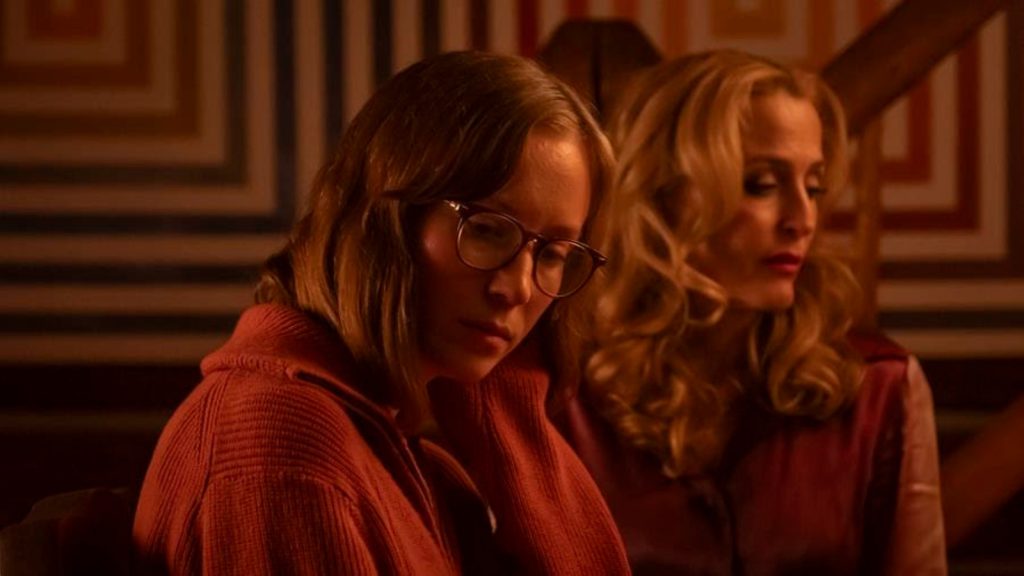
Sex and violence have been inextricably intertwined in the sorts of ‘80s slashers like Friday the 13th that Teenage Sex and Death references, but as a cis woman, this is the first time I’ve actually found any of it hot. I’m sure part of it is the electric chemistry of Emmy winner Einbinder and the eternally stunning queen of The X-Files Anderson versus watching a teen actress getting gored (literally or metaphorically), but it’s also that Schoenbrun is interested in engaging with the impact of seeing this stuff, both as an adult and as a kid. Kris is working through what these movies meant to her when she watched them too young and what they mean for her as an adult taking over the franchise. While rewatching “Camp Miasma” as prep, she writes “DESIRE” and underlines it three times in her notes. (As a film critic who was taking notes at this very moment, I felt both attacked and seen.)
There are other actors present outside of the leads: Sarah Sherman as Kris’s agent, Kevin McDonald as a local who played a small role in the films, Patrick Fischler as a grocery store owner, and Jasmin Savoy Brown as Kris’s polyamorous partner. They’re all hilariously funny and immediately distinct, cast both for their talents and for the audience’s cultural knowledge of them. Yet when the movie is over, it’s impossible to think about anyone on screen other than Anderson and Einbinder, who bounce off each other in such a pleasurable way from the moment they meet to the absolutely wild, incredibly bloody climax.
Schoenbrun is as much of a presence as their two stars, bringing a heady, surreal approach to their script and to the visuals. Teenage Sex and Death is intensely weird, mingling all the standard genre stuff we expect with surprisingly batshit turns. In outdoor scenes, intentionally identifiable matte paintings add a surreal approach and make us question what is real. We get an enjoyably predictable Sade song for a sex scene, but there’s a shocker of a needle drop that had me absolutely giddy. It’s a wonderful mix of high and low and pop culture and intellectualism. This will baffle so many people and enrapture others.
Junk food, including those aforementioned gummies, appears throughout Teenage Sex and Death, and while the film provides a similar dopamine hit, there’s plenty here to chew on. Schoenbrun has made a film that’s full of pleasures for cinephiles and X-philes alike, but it’s also unafraid of diving into deeper ideas. It’s a delight in the moment, but there’s so much more to digest.
A-
“Teenage Sex and Death at Camp Miasma” is in theaters Friday.