Sean Burns
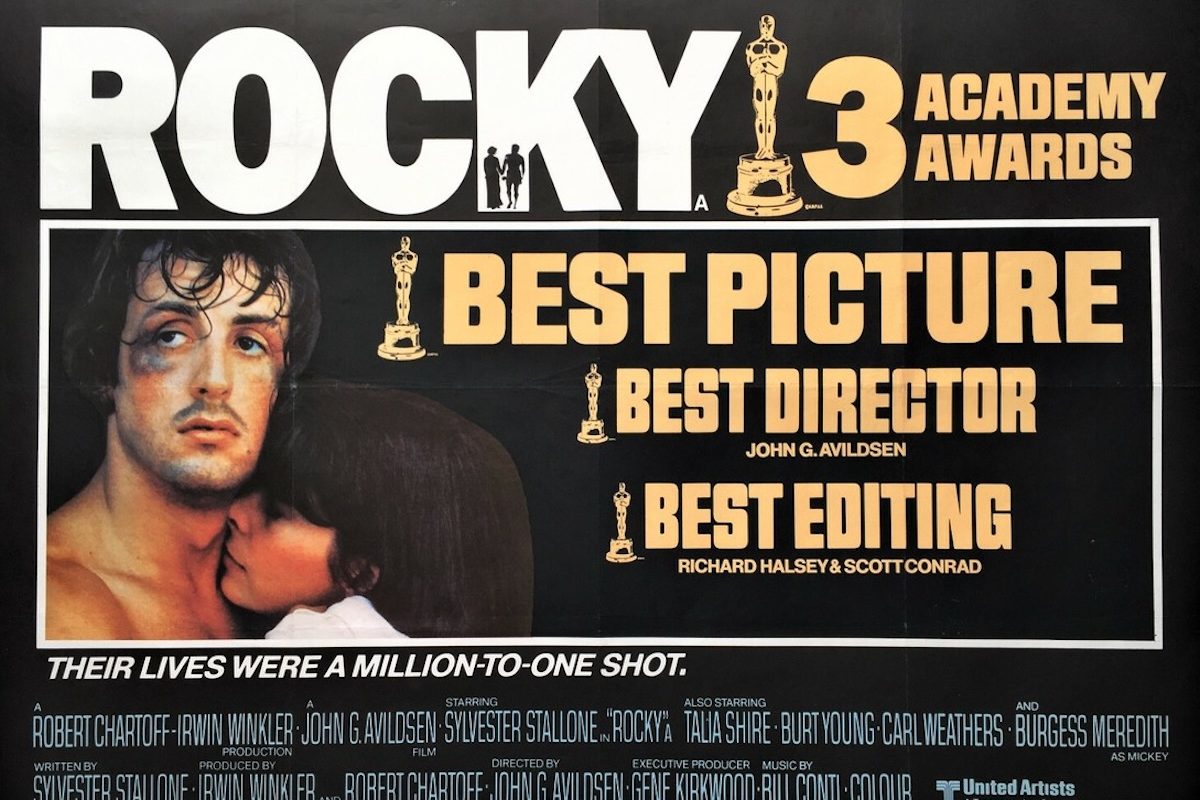
The most important line in Rocky isn’t about going the distance or never havin’ no prime. It’s not “Yo, Adrian” nor the crack about the zoo that we all used to repeat in the schoolyard even though we knew we shouldn’t. Rather, it’s a question so offhand you might’ve missed it the first few times you saw director John G. Avildsen’s endlessly rewatchable 1976 classic. It comes right after the final fight has ended and Talia Shire’s Adrian is fumbling her way through the madness of the crowd, at last getting into the ring to embrace the love of her life. Rocky’s barely standing, calling her name with his face busted to hell and one eye swollen shut. He sees her and asks, “Where’s your hat?”
That’s why Rocky is a great movie. This tomato-can nobody has just held his own for 15 rounds against the Heavyweight Champion of the World. He’s done what everyone said was impossible through sheer stamina and will. Yet at this moment – the zenith of his life and career – Rocky’s concerned because his girl lost her cute little hat. Adrian is his whole world, and it’s adorable.
The outsized legend of Rocky and its endless sequels, spinoffs, and knockoffs can tend to eclipse what a lovely, unassuming little picture the original is. It’s full of the sort of delicate grace notes that would soon become anathema to writer-star Sylvester Stallone’s steroidal sensibility. Later films featuring the Philadelphia Southpaw became more like gladiator movies — or music videos for gladiator movies — with only Ryan Coogler’s 2015 Creed retaining the original’s softness and warmth. (Interestingly, that was the one time Stallone allowed the character of Rocky Balboa to be written by someone else, and he snatched the reins right back for the asinine Creed II.)
Rocky has become such a totem of the American cultural landscape that I probably don’t even need to synopsize the story of a go-nowhere palooka who gets a one-in-a-million shot in an exhibition match against showboating champion Apollo Creed. The scenario was borrowed from Chuck “The Bayonne Bleeder” Wepner’s similar scuffle with Muhammad Ali in 1975. (Wepner wound up suing Stallone for $15 million. The case was settled out of court.) It may be based on a true story, but this is still the stuff of fairy tales. He’s Cinderella with a busted nose, and Avildsen walks a fine line keeping everything in Rocky grounded and down to earth, with just a dusting of magic in the margins.
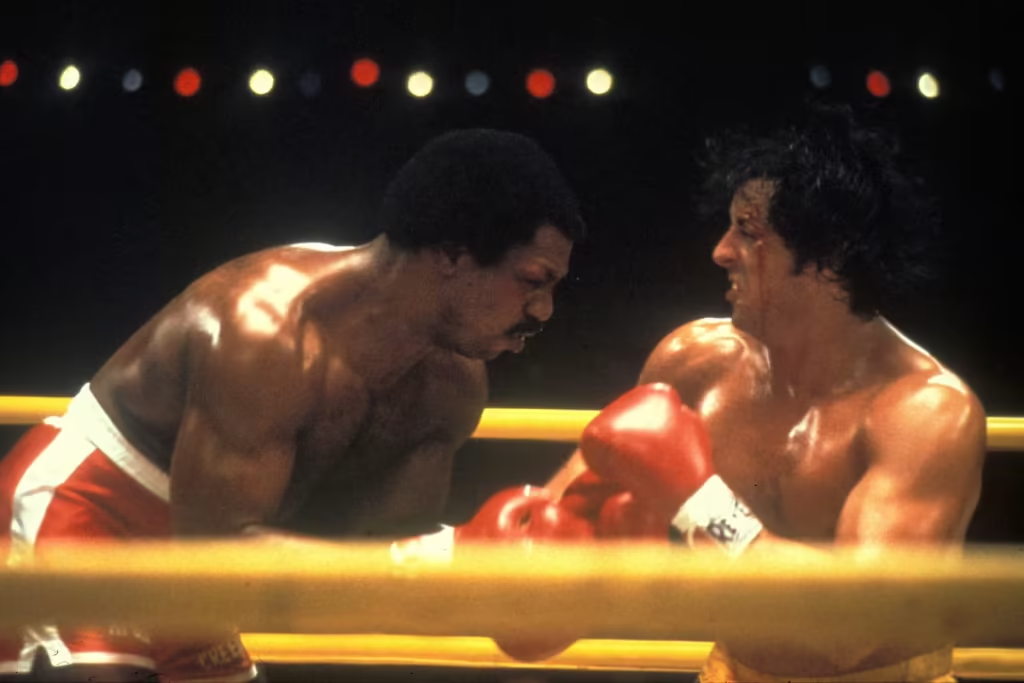
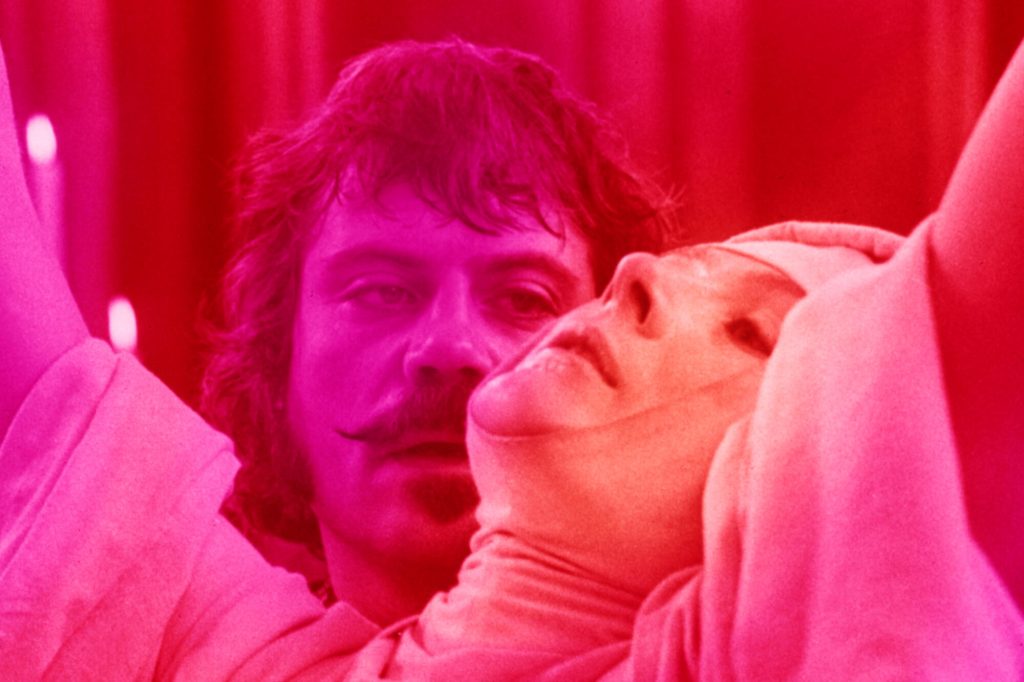
Shot for under a million dollars, this is the dingiest-looking fairy tale you’ve ever seen. Yet there’s an air of enchantment amid the tenements and garbage. Doo-wop singers serenade the city by the light of trash can fires. Rocky works as an enforcer for a local loan shark, but he’s the kind of leg-breaker who’ll let you go with a stern lecture about planning ahead. (I love how the shylock, played by NYC legend Joe Spinell, has asthma.) There’s not very much boxing in this boxing movie. A lot of it is about a guy telling bad jokes to the shy girl he has a crush on at the pet shop. When Rocky and Adrian go on their ice skating date, the production couldn’t afford extras to fill the rink. So the scene was re-written to have them go after hours, creating the accidentally beautiful image of the couple hesitantly circling the empty ice, like they’re the only two people in the world.
There are so many wonderful little bits of business in this picture. I love the reading glasses Rocky puts on when he studiously writes down his assignments from Spinell’s bookie, or the way he keeps his gym locker combination stashed in his hat. The movie was so low-budget that Avildsen gave the actors cash to go buy their character’s clothes, lending a wonderful specificity to the discount rack costumes. The director’s contribution has often been elbowed aside to make way for the Stallone mythology, which gets burnished yet again in this fall’s inane I Play Rocky. (Avildsen also gets short shrift because his post-Rocky output — including three Karate Kid movies and getting fired from Saturday Night Fever — is generally terrible.) But without taking anything away from how terrific Stallone’s screenplay is, the touching vulnerability of his performance as the tender bruiser or the tenaciousness it took for Sly to get the picture made with himself in the lead, it’s worth noting that Rocky is an exceptionally well-directed film.
Avildsen is constantly reminding you how small these people are, positioning them at the end of long, lonely streets lined with run-down row houses. There’s a hushed intimacy to the movie. Even Stallone’s most overtly dramatic monologue is delivered to an empty doorway, with Burgess Merideth’s Mickey listening from halfway down a dim stairwell. Rocky’s a big guy, but Avildsen never lets him loom too large in the frame.
That is, until the movie’s two big, over-the-top sequences: the “Gonna Fly Now” training montage and that glorious final scene. Up until then, Bill Conti’s score has been sparse, tinkly piano and echoey minor-key chords. The music suddenly blows up with big, brassy bombast and the gentle palooka assumes command of the frame. For a few, brief exalted minutes, Rocky Balboa feels larger than life. And so do we.
“Rocky” is streaming on Prime Video and Paramount+.