Jason Bailey
At risk of oversimplification, the New York Film Festival seems to have figured it out. After attending a Toronto (and, earlier this year, a SXSW) that were genuinely hit-and-miss, there’s a sense of comfort in attending NYFF, which has — under the steady hand of artistic director Dennis Lim — reliably presented a mixture of the best films, from around the world, from other festivals, while premiering a handful of carefully curated premieres. I rarely see anything bad at NYFF, this or any previous year; even the things I don’t love seem to be less a matter of poor filmmaking than something I just didn’t get, or that wasn’t meant for me.
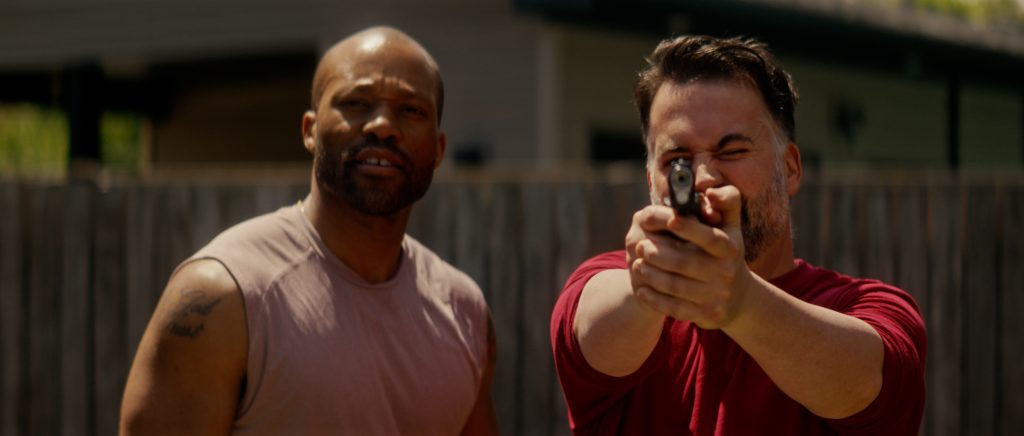
However, James Gray’s opening night film Paper Tiger couldn’t be more met for me if it was custom-crafted in a laboratory. It’s a New York-set period crime drama, folded into a story about two brothers, which makes it sound like the filmmaker might be spinning his wheels; after all, you could apply the same rough logline to Little Odessa, The Yards, and We Own the Night. But this is not a matter of a writer/director repeating himself; it’s more like what Scorsese did with The Irishman, returning to a familiar milieu after a number of years with a keener and more mature understanding of what he wants to say, and how he wants to say it.
The piece of the puzzle that Gray finally, really nails here, and which kept those earlier explorations of this milieu from all-out greatness, is his binding of the domestic and criminal worlds. It’s not a new idea, of course, and if the setting of a key sequence in a cornfield on the outskirts of the city is any indication, Gray is quite aware of his debt to The Godfather. But it almost feels like he had to make a full-on family drama before he could make these elements cohere; in fact, word is he initially envisioned Paper Tiger as an explicit follow-up to Armageddon Time, bringing back Jeremy Strong and Anne Hathaway (who played “Irving” and “Esther” in that film) before thinking better of it. But that film clearly helped him anchor this one, and its best scenes are those that dwell in the disconnect between the way we see crime and violence in the movies, and what it feels like to experience it — and fear it.
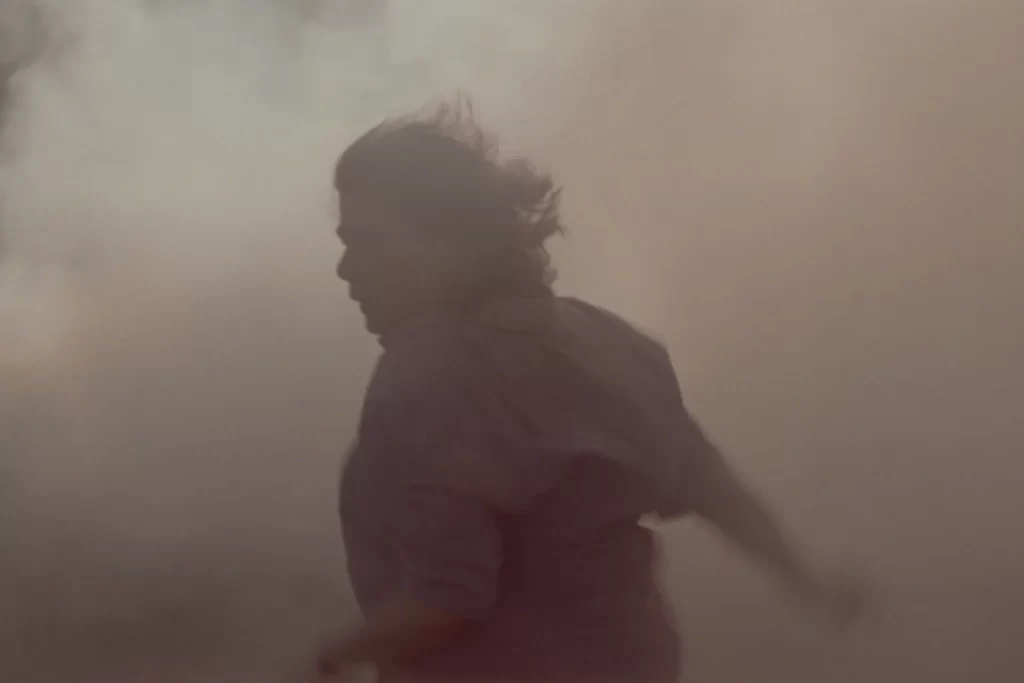
If you know the history of the Godzilla franchise, you know that the revelatory idea at the center of Toho’s current cycle — setting these stories within a real and recognizable world — isn’t that revolutionary at all. The original 1954 entry was a none-too-subtle examination of Japan in the aftermath of the atomic bomb; it was only after American distributors got ahold of the picture, chopped out the bulk of that context, and turned it into a straight-up monster movie that the series followed suit. But it nevertheless feels daring that Shin Godzilla, Godzilla Minus One, and the new Godzilla Minus Zero adopt the approach that they do: thoughtful, morally weighty, character-driven international dramas that also just happen to have kaiju in them.
And make no mistake: writer/director Takashi Yamazaki understands the power of the iconography here — how to frame Godzilla, what he sounds like, what to show and what to save, the power of the music — and he delivers the kind of nail-biting action, ruthless tension, and jaw-dropping effects that a certain segment (hell, likely the majority) of the audience is there to see. But he also understands the most basic principle of epic filmmaking, crystal clear to the original masters (like De Mille and Lean) but somehow lost on its current practitioners: action only matters where the human stakes are commensurate. More contemporary filmmakers would be wise to re-learn that lesson, and follow Yamazaki’s lead in implementing it.
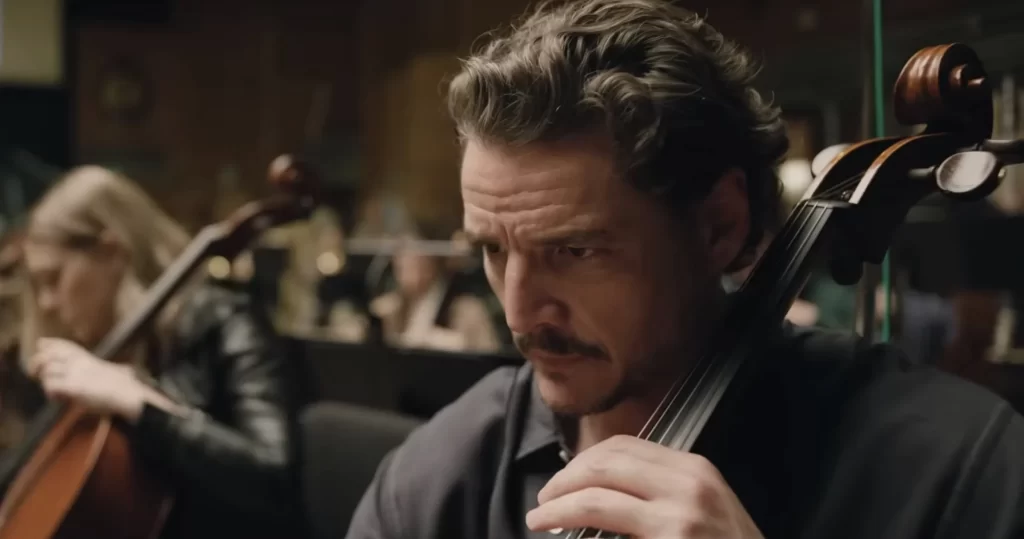
All film criticism is a “your mileage may vary” situation, but sometimes that maxim is more essential than others, and my affection for Tony Gilroy’s Centerpiece selection Behemoth! — and it is genuine — is based in no small doubt on my awareness of the writer/director’s fascinating family. Gilroy, who establishes himself as a reliable screenwriter (most notably for the Bourne movies) before moving into directing with Michael Clayton, is the son of sculptor and writer Ruth Dorothy and Frank D. Gilroy, the Pulitzer Prize-winning playwright, screenwriter, and filmmaker. Tony’s brother Dan is an accomplished filmmaker himself, best known for the sinister Nightcrawler; their other brother John is an editor with a long list of credits that include his brothers’ films. You don’t have to squint much to see the correlation between his family of filmmakers and the family of musicians that’s central to his latest effort, nor how that reality informs this story of pressures and schisms of the family business.
Gilroy may be cursed for life by making a literally perfect movie his first time out, and if Behemoth! is no Michael Clayton, well, few things are. It doesn’t have the sleek, moment-to-moment confidence of that picture; it’s messier, in mostly good ways, the shagginess of its structure creating occasional loose ends, but allowing for the looseness that pointed, emotional truth sometimes requires to sneak in. And it’s an undeniably effective showcase for Pascal, who hasn’t quite found a movie role yet that’s as good as he is. Gilroy understands that his best moments are typically reactive, so he provides an abundance of them — particularly in the closing scenes, lingering on Alex’s face as he watches a bright new talent do her thing, and studies her sheet music with something close to pride.
They whisper about Jerry, all the actors in the lobby, waiting for their turn at the audition. He’s the biggest name in New Jersey theater, legendarily tough; “Jerry pushes us so hard,” they say, and when he goes too far, they explain that “Jerry is gonna test you and push you,” like so many of the great directors they’ve all read about and heard about, a specific type of artistic ethos that’s so entrenched, it’s presumed to be gospel. (He is first seen in a beret, which might be a liiiiiitle on the nose.) That lived-in and understood truth lives at the center of Jesse Eisenberg’s The Debut, in which the actor-turned-writer/director asks what happens when those stakes present themselves to someone who actually has something to lose. Her name is Mona, a stay-at-home mom trying out for her first play, and she’s played by Julianne Moore with a mousiness that at first seems like it will prevent her from doing much onstage at all.
Paul Giamatti is perfectly cast as Jerry, a character with the kind of frazzled patience and stifled ambition that have always been his specialty, and he and Moore are a good pairing; the scene where he finally “unlocks” her is as good as you may have heard by now; my audience burst into applause at its conclusion, and I’m told that was not an isolated incident. But you can’t really help it — Eisenberg and his actors are deftly juggling character dynamics, ferocious comedy, and big ideas about the sheer, blunt power of acting, the adrenaline rush of discovering that you can be someone outside yourself, someone who can say and think and feel all the things you won’t allow yourself to say and think and feel.
John Turturro, one of the patron saints of New York character actors, stars in Noah Segan’s The Only Living Pickpocket in New York as Harry, an old-school analog pickpocket — doing lifts on the subway, as opposed to the online scams and other new methods of relieving people of their hard-earned money. Harry is a relic, cheerfully so; if it ain’t broke, he seems to believe, don’t fix it. His story unfolds over a couple of days, which is smart; running less than 90 minutes, Pickpocket is a short story, a character sketch.
Turturro has long been one of the most valuable utility players in the movies, stepping in as pinch-hitter for Spike Lee or the Coen Brothers, and while he occasionally took on leading roles, this one feels tailor-made for him. Segan understands that Turturro’s greatest acting tool is his eyes, and he lingers on them — you can watch him think, and that’s a pleasure. (So is watching him dance). He’s light on his feet as an actor, never reaching, never overplaying, and the whole movie falls apart if not for his likability. Sure, he’s a common criminal. But you’re still rooting for him.
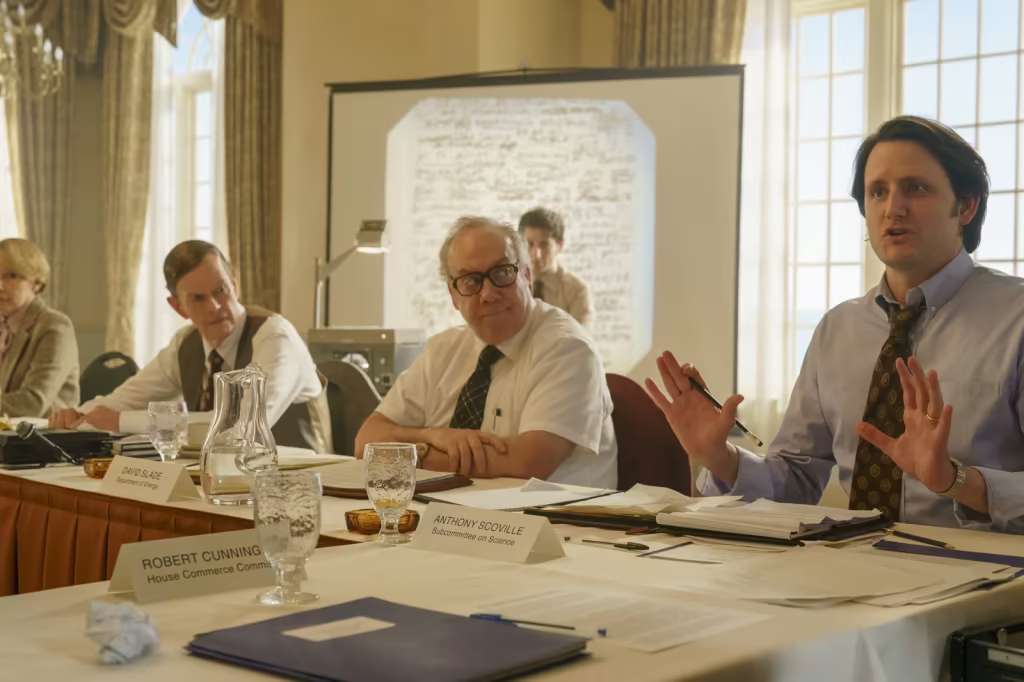
Turturro gets to work a different muscle in Tom McCarthy’s A Statement (which also features his Pickpocket co-star Tatiana Maslany and The Debut’s Paul Giamatti — what an incestuous festival), playing a dryly funny genius. He’s the Cassandra among the National Commission on Air Quality’s Carbon Dioxide Workshop, a group of twenty scientists, professors, policy makers, and government officials, put in a conference room for three sessions over two days, with a simple mandate: to issue a statement about the C02 crisis, and the steps that can be taken to avert it. It’s a good premise, 12 Angry Men for climate change, and the smart screenplay by McCarthy, Thomas Bidegain, and Noé Debré is about half taken from transcripts of the workshop, and about half dramatization, equally well-handled by his gifted ensemble cast.
As a director, McCarthy is clearly aware of the drabness of the aesthetics, and chooses to lean into them: the ugly walls, bland-looking food, and unfortunate fashion (the conference was held on the even of the 1980 presidential election, which would render any of their suggestions moot anyway.) He knows when to go wide and when to come close, when to keep a steady tempo and when to cut tightly, and if some of his illustrative choices are a touch heavy-handed he finds a way to dramatize a big, abstract, and ever-present topic: not merely the climate crisis, but the larger difficulties, and potential damages, of incrementalism. “Do you think humanity really can’t solve this problem?” Turturro’s MIT professor is asked, and his answer is chilling: “I don’t think we can’t. I think we won’t.”
Paweł Pawlikowski’s Fatherland, like his earlier Ida and Cold War, is framed in Academy ratio, shot in austere black and white, and runs less than 90 minutes, a model of compact storytelling. The first scene of Fatherland underscores why his movies can be so short yet feel so rich: because he’s such an efficient storyteller, conveying his plot and everything we need to know about the key characters from just one scene, of a phone call between a sister and brother. We’re all set.
The setting is Germany, 1949. Thomas Mann (Hanns Zischler), the Nobel-Prize winning author who fled Germany in 1933, is returning for the first time to accept awards on both sides of the Wall. He’s accompanied by his daughter Erika (Sandra Hüller), who screens his mail, translates at pressers, edits his speeches, and shaves his face. They’re to be joined by her brother Klaus, but it does not work out that way. And so the duality of the title is mirrored by the narrative; Thomas and Erika have a front-row seat to the blurring borders and shifting alliances of postwar geopolitics, but Klaus’s actions further sharpen the schism between father and daughter. They have a credible family dynamic — you see both the affection and the frustration — and the role of Erika is ideal vehicle for Hüller’s world-weary cynicism, which breaks quickly. Zischler fares just as well as the stoic, certain father, and when he finally, truly lets go, the effect is shattering.
“We’re not twins,” they tell the young man who recognizes them on the street. “We are sisters.” And it’s true that Jean (Rooney Mara) and Joanie (Kate Mara) are not twins — but they may as well be, conjoined twins maybe, perpetually at each other’s side, dressed identically, walking in sync, speaking in unison. (Well, not always; sometimes they take turns, finishing each other’s sentences, and sometimes they talk to each other individually, though not always). They’re at the center of Werner Herzog’s Bucking Fastard, played by the real life Mara sisters, and their intertwined performances are a good gimmick, as it’s such a joy to watch them work together. It’s also a great stunt, as any actor who’s ever tried to speak simultaneously with another knows how difficult it can actually be, even just for a line or two.
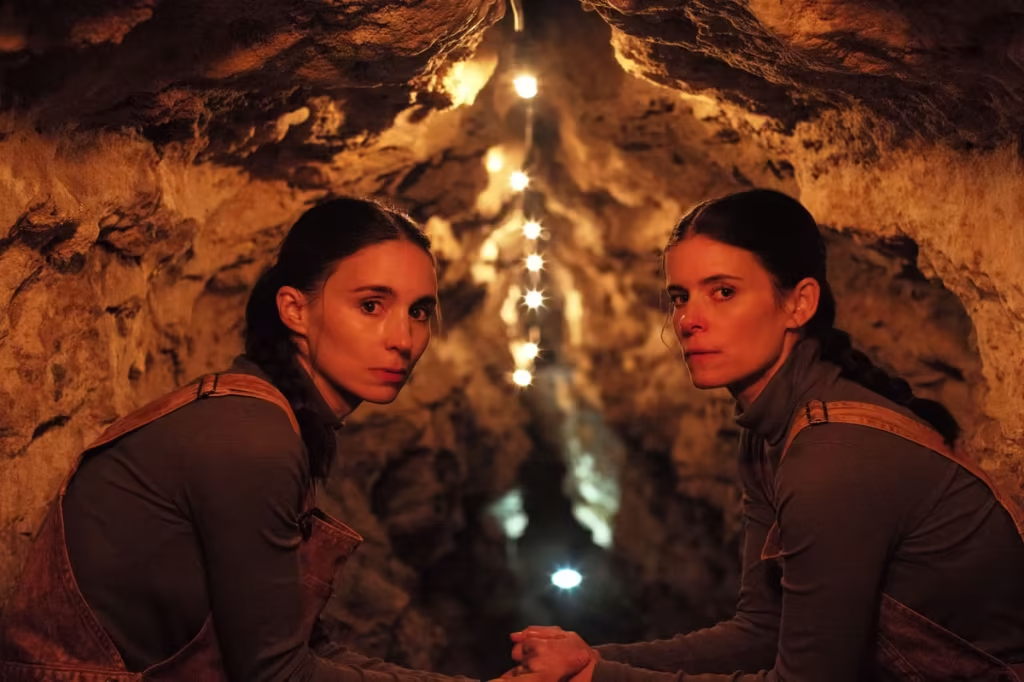
There’s a certain synchronicity here that you might only get from real sisters, from two people who’ve logged so many hours together; when they’re briefly at odds late in the story, it’s strangely devastating. Herzog’s unsurprisingly eccentric screenplay follows them for a couple of years, from a village to a city to the country in Ireland (that they have no accent is not explained, nor does it feel as though it should be). Their journey is understandable, their search for a better place specific, pinned to the very particular injustices they’ve endured. Yet it’s a universal idea — there must be something better than this, they feel, some place where we belong. Herzog opens the picture with a dedication, three simple words: “For David Lynch.” It’s the right note to open on, because Bucking Fastard is indeed Lynchian, but not in the shallow, surface sense in which it’s too often used. It’s a film that’s true to Lynch’s spirit and ethos: Purposefully odd, absurdly funny, and, ultimately, weirdly poignant.
There was no way Ava DuVernay’s 14TH wasn’t going to feel urgent, but the section on the horrifying, reckless ICE raids hit especially hard at our screening the morning after another attempted ICE murder, this one barely ten miles away. The proximity underscores the power; this is a historical documentary, but one about understanding how the past informs the present, and therefore the future. Following up her excellent 13TH a decade ago, which concerned the 13th amendment and how its emancipation of enslaved people was twisted into our current climate of mass incarceration, 14TH concerns the rights guaranteed by the 14th amendment: birthright citizenship, equal protection, due process, and disqualification from public service for those involved in an insurrection.
So you can see how it’s kinda timely. It takes some time for DuVernay to find her footing; some of the visual choices are fairly unimaginative (and the fleeting use of AI is, as these things always are, both distracting and unnecessary), and the music choices, especially early on, can be ill-fitting. But once she starts drawing lines — from the Reconstruction era to the Obama administrations, from the “lost cause” myth to the Big Lie, from the Civil War to Jan. 6th — it’s riveting, detailed, and persuasive. And she adroitly sidesteps the inescapable doomerism of our time by looking at the challenges ahead of us through the lens of Reconstruction, and with the understanding that such sweeping changes and course corrections don’t have to be a thing of the past. It’s not quite a happy ending, but these days, I’ll take it.