Jeremy Herbert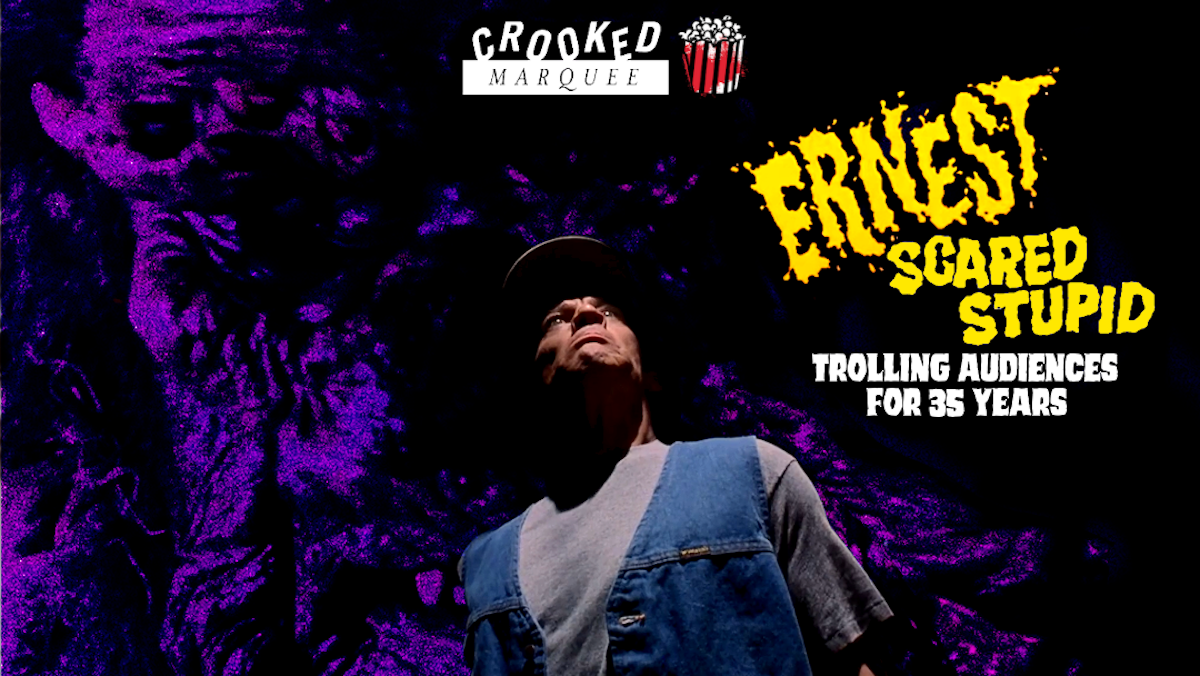
Like a home-video Babe Ruth, two weeks after the release of Ernest Scared Stupid, Jim Varney called his shot in the Baltimore Sun: “As a kid, anything that gave me nightmares, I had to watch.”
Thirty-five years later, 28 after Ernest’s last ride and 26 past Varney’s untimely death, the film’s legacy seems as tangible as a bad dream. Based on digitally available documentation, Freeform, Disney’s grown-up basic cable subsidiary, has never included Ernest Scared Stupid, a production of Disney’s grown-up film subsidiary, in any Halloween programming since taking the channel over from Fox in 2002. Per TV Guide, it won’t be airing anywhere on American television in the next two weeks. The film’s Blu-ray release is also celebrating an anniversary, 15-years-old as of August, and occasionally fetches triple digits on the secondary market. But how can something so vaporous edge out a Scream sequel on Variety’s ranking of the best Halloween movies?
In the defense of Jim Varney, director John Cherry, and the rest of the decade-strong Nashville brain trust that birthed the character, it’s not like they wanted to scar a generation. Of the more than 4,000 commercials starring Ernest P. Worrell, only the stray Elvira spot or analog-uncanny ghost effect could even pass as horror-adjacent. But when Varney’s costumed appearance at the 1986 Indianapolis 500 upstaged Disney CEO Michael Eisner, he saw something bigger than a pitchman. Overnight, Ernest became a movie star with a four-picture deal at Touchstone. Well, sort of—co-producer Coke Sams remembers it as more of a “one-picture deal with three options.”
But the translation from fifteen seconds to feature-length was surprisingly smooth. If his fashion sense owes a debt to the great silent stars—Chaplin’s derby, Keaton’s porkpie, Ernest’s khaki dad hat—then his film career followed the lead of their chattier descendants, with each film dropping him into another institutional playground like a rubber-faced bunker buster. It’s no coincidence that this outing shared half a working title, Ernest Scared Stiff, with a Dean Martin and Jerry Lewis old-dark-house comedy that was already a remake of a Bob Hope old-dark-house comedy. After the nearly annual successes of Ernest Goes to Camp, Ernest Saves Christmas, and Ernest Goes to Jail, it’s also no coincidence that Cherry and co. pitched just that, an old-dark-house comedy about Ernest inheriting a creepy estate lorded over by a possessed statue. Sams, who co-wrote that version with Cherry, claims to recall the Disney’s reaction perfectly: “’What were you guys smoking when you wrote this?’” The studio instead wanted a haunted treehouse, so they pivoted from ghosts to the next most logical threat…
“The troll, Trantor, is extremely frightening,” admits Charles Chiodo, one brotherly third of the legendary effects company that beamed us Killer Klowns from Outer Space, “so you have to get past that.” Though they did not, contrary to popular trivia, recycle any animatronic Klown heads for Scared Stupid — “it’s possible we might’ve had some castings laying around” — the Chiodos pulled no punches even with Mickey Mouse paying the bills. Not counting Trantor’s hornier final form, 16 distinct trolls were designed to menace Briarville to the fullest extent of the PG rating. Its last line of defense? Canonically the dumbest man in the history of the world.
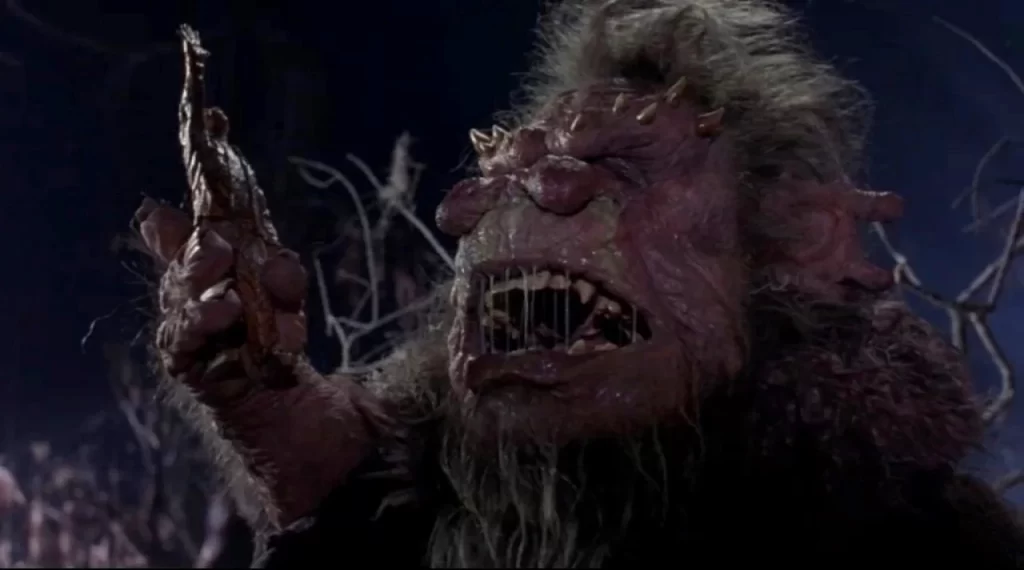
The Worrell family tree has borne comedic fruit since the character’s first foray into home video with 1985’s Hey Vern! It’s My Family Album, but Scared Stupid traces the lowest-hanging branches back to an ancient curse placed upon the uncharacteristically competent Reverend Phineas Worrell as he sealed away Trantor, who vowed that IQ would trickle from the bloodline until it produced a descendant dim enough to free him again.
Ernest is so stupid that he can see the camera sometimes. His best friend, a Jack Russell named Rimshot, works a better gearshift than he does. Even grade-schoolers look upon him and his gently implied case of Dissociative Identity Disorder with intellectual pity. He isn’t inherently dumber than he was in previous films, though his state-sanctioned electrocution in Goes to Jail might’ve had more side effects than temporary Force lightning, but what sets Scared Stupid apart are the stakes of his ineptitude. There is no summer camp or bank holiday on the line. His wrongful incarceration was only concerning because of the implication that he cannot die. This time, if Ernest can’t get his vaudeville act together, children everywhere will be transmogrified into little wooden totems as spiritual grist for the troll apocalypse.
Although there is now an entire second-screen cottage industry dedicated to proving that all visual media consumed at age five was subversively terrifying, Ernest Scared Stupid deserves all charges and more than a few accessory counts in the years after. Slapstick forebears like Abbott and Costello Meet Frankenstein might’ve startled the occasional youngster, but there’s nothing in them so unabashedly grotesque and disturbingly intimate as Trantor jump-scaring a little girl when she rolls over in bed. The only major difference between the climaxes of Ernest Scared Stupid and Army of Darkness is that the Evil Dead sequel plays its siege for more laughs. Even the obligatory lesson about settling our differences with love is underlined by what may be the most violent death in the entire Disney Vault.
“In a way, [Disney] never quite got how this whole Ernest thing worked or who these movies were for,” recalled Sams in a 20th anniversary interview with Know the Artist. “All they knew was, they were making lots of money with them.” Until Ernest Scared Stupid, which only made $5 million more than its already modest $10 million budget. That “one picture deal with three options” ran out of options, banishing the remaining franchise to video and nixing plans for more ambitious follow-ups like “Ernest and the Curse of the Voodoo King.” Despite Varney’s continued output of commercials and refusal to turn down a Make-A-Wish request even while terminally ill himself, his most famous character faded from pop culture across the decade.
But two years after Scared Stupid, the same studio that tossed Ernest out by the scruff of his blue-jean vest applied the same formula to an old-dark-house script it had long deemed too scary for younger audiences. Contrary to its Spirit Halloween shelf space, Hocus Pocus also lost Disney money in theaters, but that didn’t stop the powers that be from playing it every October on whichever channels they owned at the time. By 1997, the company had manufactured such a market for festive, kid-somewhat-friendly programming that it launched the Disney Channel Original Movie series with Under Wraps, a mummy comedy that director Greg Beeman approached with only one rule: “I really wanted it to look like a horror movie.”
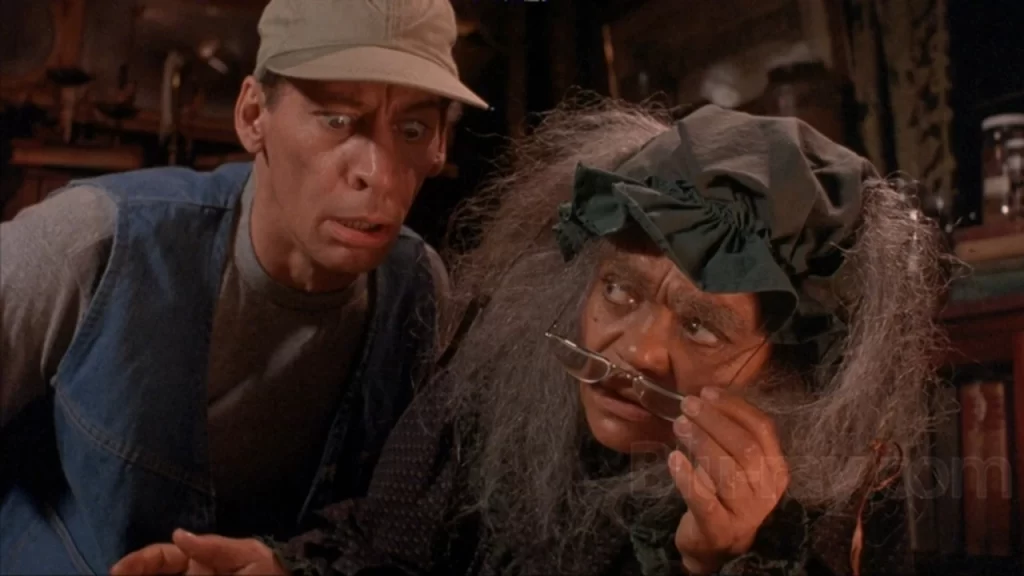
Ernest Scared Stupid endures at an uneasy intersection of prescience and obsolescence. The film’s more watchable than ever because of everything that followed its lead—even Eartha Kitt’s unblinkingly committed performance calls to mind the same supernatural grounding she’d later provide in Disney’s Holes—but any modern screening for the target demographic would require a brief primer on, well, “this whole Ernest thing.” In a fairer timeline, Scared Stupid would have already been granted the same seasonal immortality as so many of its successors. Instead, it is merely the most influential film ever made starring a Mello Yello spokesperson, and that’s nothing to sniff a giant prosthetic troll nose at, know-what-I-mean?
“Ernest Scared Stupid” is streaming on Hulu and Amazon Prime Video.