Zach Vasquez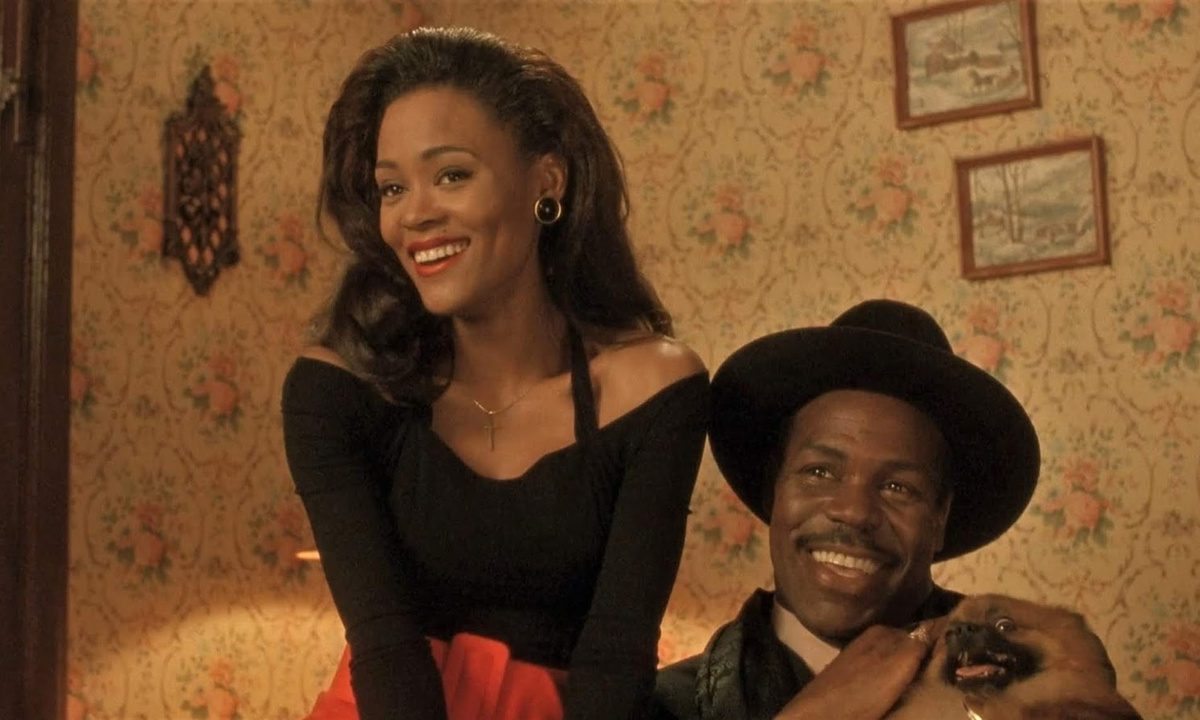
The early ’90s were a key era for American neo-noirs, in large part because of two strains within the genre that took root during those years. The first saw filmmakers adapt dozens of classic hardboiled noir and pulp novels from pre-and-post war era. The second saw a wellspring of Black-centered crime films that, unlike the majority of ‘70’s Blaxploitation titles, were actually directed by Black people.
Bill Duke’s A Rage in Harlem checked both boxes.
Best known as a character actor with close to 80 film and television credits to his name—his most iconic (Car Wash, Predator, Commando, American Gigolo, The Limey) making use of his intimidating stature and icy demeanor—Duke is also an important and under-recognized director, sometimes referred to as the “African American Godfather of American Cinema”. After cutting his teeth at the AFI and on television, where he helmed episodes of Dallas, Miami Vice, and Hill Street Blues (amongst many others), Duke made his feature directorial debut via PBS’s American Playhouse, with the period union drama The Killing Floor (1984). When producers optioned the rights to Chester Himes’s 1957 novel A Rage in Harlem, they sought out a Black director to maintain a sense of cultural verisimilitude and landed on Duke.
Himes’s novel (initially published under the title For Love of Imabelle before being changed in later editions) marked the first in his influential Harlem Detective series, a total of nine books written between 1957 and 1968 (including the unfinished apocalyptic fever dream finale Plan B) that follow the violent, darkly funny adventures of Black veteran detective duo Coffin Ed Johnson and Grave Digger Jones as they traverse the chaotic, often grotesquely surreal landscape of the titular New York City neighborhood (even as the stories Himes drew from came mostly his upbringing in Cleveland, Ohio). A Rage in Harlem first introduces us to these characters as they investigate a bloody crime spree sparked off by some out-of-towners looking to unload a trunk full of stolen fool’s gold.
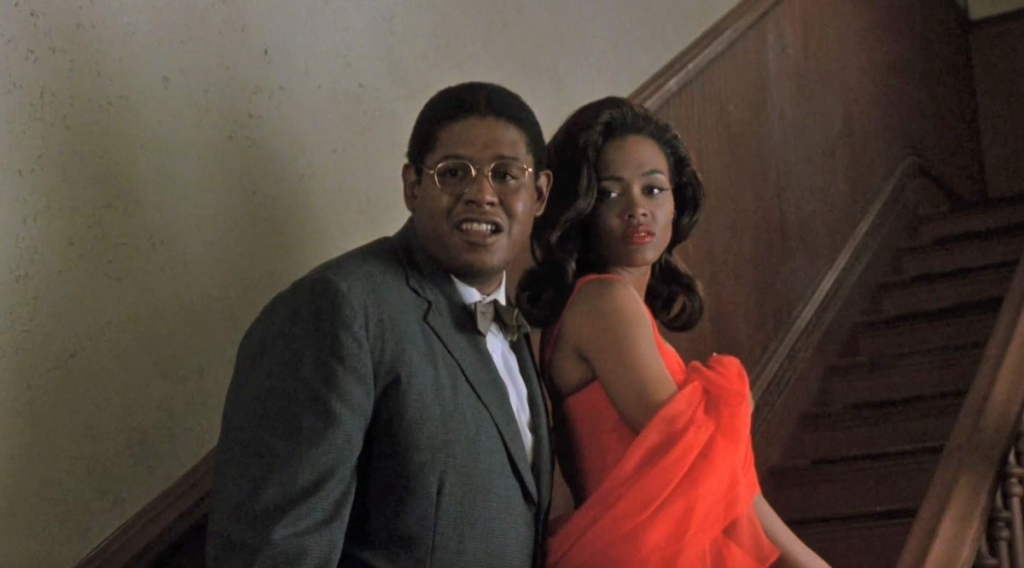
The film keeps the basic framework of the novel, even as it makes drastic changes. A group of Black criminals, led by the hulking Slim (Badja Djola) and his lover Imabelle (Robin Givens), pull off a (real) gold heist from a mining concern in Natchez, Mississippi. When their deal with a racist white fence goes south, leading to a shootout with the local police, Imabelle flees with the gold to Harlem. There, she bumps into Jackson (Forrest Whittaker), a shy, sweet, naive, and devoutly Christian funeral parlor assistant, who falls heads over heels for her. Imabelle spots that he’s an easy mark and shacks up with him out of desperation, but by the time Slim and what’s left of his crew catch up with her and convince her to con Jackson out of his meager life savings in order to bankroll their renewed operation, she too has fallen for him.
When she reluctantly flees with Slim, Jackson enlists the help of his estranged brother Goldy (Gregory Hines), a slick, small-time hustler and gambler, to help find her. Cottoning onto the bigger score at hand, Goldy agrees, and the brothers—alongside Goldy’s best friend and partner in crime, a cross-dressing con artist named Big Kathy (Zakes Mokae)—search Harlem for the woman and gold, as the bodies start piling up around them.
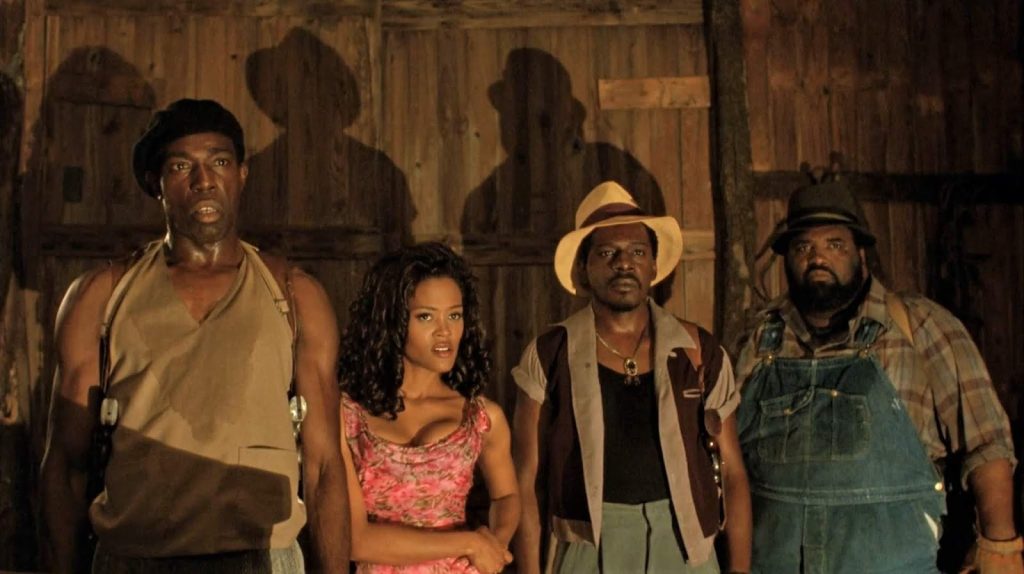
There is a lot to recommend A Rage in Harlem, even as it never quite lives up to the potential of its source material—or, for that matter, its kinetic bloodbath prologue. Duke’s direction is lively, while he and his crew manage to conjure up the culturally vibrant Harlem depicted in the writings and art of so many iconic Black artists of the 20th century. The cast is uniformly excellent: Whitaker, usually so intense and intimidating (he and Duke share a similar screen presence) is surprisingly great as a big lumbering sweetheart, while Hines is charming and sly as usual. Djola is a fantastically Satanic heavy, while Danny Glover is having a lot of fun as a suave gangster in his small but pivotal role. However, it’s Givens who stands out the most, her jaw-dropping beauty and smoky sensuality making her the perfect fallen woman and would-be femme fatale. She really should have a bigger career in Hollywood movies. (Also, gotta love any movie that features an appearance from Screamin’ Jay Hawkins.)
Credit should also be given to the film’s refreshingly sympathetic treatment of Big Kathy, an openly queer and arguably trans character, even if she does succumb to the ‘Bury Your Gays’ trope (although, this being a violent crime film, its not like it comes out of nowhere).
For all its charms though, Rage is held back by its ungainly tone, never quite deciding if it wants to be a breezy caper comedy or a serious, gritty thriller. This is never a problem in the novel, as Himes’s chiaroscuro style allows for it to be both at once (more than any other filmmakers, the books feels in line with Coen Brothers and Quentin Tarantino—both of whom were likely fans of the series, given their love and knowledge of crime fiction). Per producer Stephen Wooley, this was an issue of contention between he and Duke during shooting, and unfortunately it’s noticeable to the viewer.
As an adaptation, Rage also can’t help but disappoint on several fronts. Key amongst them, it totally sidelines Coffin Ed and Grave Digger Jones, severely reducing their roles and turning them into bumbling Keystone Cops buffoons (although comedian George Wallace, who plays Jones, gives a fun performance). Previous adaptations of other books in the Harlem Detective series—Cotton Comes to Harlem (1970) and its sequel Come Back, Charleston Blue (1972)—do the characters slightly better justice, but even they fail to capture the amoral brutality that established them as two of the greatest anti-heroes in all of crime fiction.
Duke’s film sands off some of the other edges that make the novel so extraordinary and, importantly, weird. In the novel, Goldy is not a suave, good looking, good hearted conman, but an overweight, bottom-of-the barrel hustler. It’s also he who is the crossdresser, going about as a nun selling ‘Tickets to Heaven’ to little old church ladies. His fate in the novel is transposed to Big Kathy in the film, and while the details are the same, the capriciousness of the act in the former gives the whole thing a much darker and harsher edge (the same is true of an acid attack that appears in both, but is only a big deal on the page). And while the endings of each are, on paper, very similar, the book contains an ironic but surprisingly sweet twist that gives it much more staying power.
Despite these regrettable alterations, Duke and Himes still seemed tailor made for one another. Himes, who emerged as a writer while serving a long prison sentence for armed robbery, started out writing more socially-conscious, realist novels, before moving into detective and noir stories out of commercial necessity. Still, while he initially resented the move and sought to return to more “serious” literature, he was amongst the first authors to bring the socio-political realities of Black Americans into the overwhelmingly white landscape of hardboiled fiction.
Duke, similarly, started his feature career off with an acclaimed, socially conscious serious drama, before moving into neo-noir with first Rage, then his follow up of one year later, Deep Cover. That film would prove a much more memorable entry into the noir cannon of the ‘90s, a deeply strange and singular work that would eventually be recognized as a standout of the era (complete with induction into the Criterion Collection). Like Himes, these films–as well as his 1997 Harlem gangland saga, Hoodlum—still focused on issues affecting the Black community, even as they work first and foremost as crime thrillers.
Thirty-five years after its initial release, A Rage in Harlem stands as a minor but still important part of both the ‘90s neo-noir and Black cinema cannons.