Edwin Arnaudin
For a few years in the early-mid 2000s, it seemed like Burger King, Taco Bell, and other chain dining establishments might finally be in trouble.
The punches initially rained down via Eric Schlosser’s 2001 best-selling industry exposé Fast Food Nation: The Dark Side of the All-American Meal (an expansion of his 1998 Rolling Stone series), and were accelerated in 2004 when director Morgan Spurlock chronicled his monthlong experiment of eating exclusively McDonald’s food in the hit documentary Super Size Me. Next came the potential knockout blow: a film adaptation of Fast Food Nation. But rather than deliver this coup de grâce, Richard Linklater’s feature (which turns 20 on Nov. 17) hardly made an impact, earning middling reviews and barely clearing $1 million domestically despite its star-studded cast.
Rather than go the obvious route and make a documentary, Linklater and Schlosser opted to turn the colorful characters and frustrating conflicts from the source material into a narrative film while incorporating nonsimulated footage from a Mexican slaughterhouse and meat-packing plant. The result is one of the best films of 2006 — a bold, disturbing, yet also frequently humorous look at the various players who sustain this ubiquitous industry, and a model for future issue-based fictional films that have faced similar critical and commercial fates.
As with the divisive Don’t Look Up and Digger, many viewers weren’t interested in being, er, fed an important message — especially one that asks them to reconsider their behaviors and make changes — via Fast Food Nation’s narrative structure, even if they agreed with that message. Instead, the dangers of climate change and factory farming prove far more palatable in documentaries, where moviegoers want to learn more about the crisis at hand and how they can help the cause.
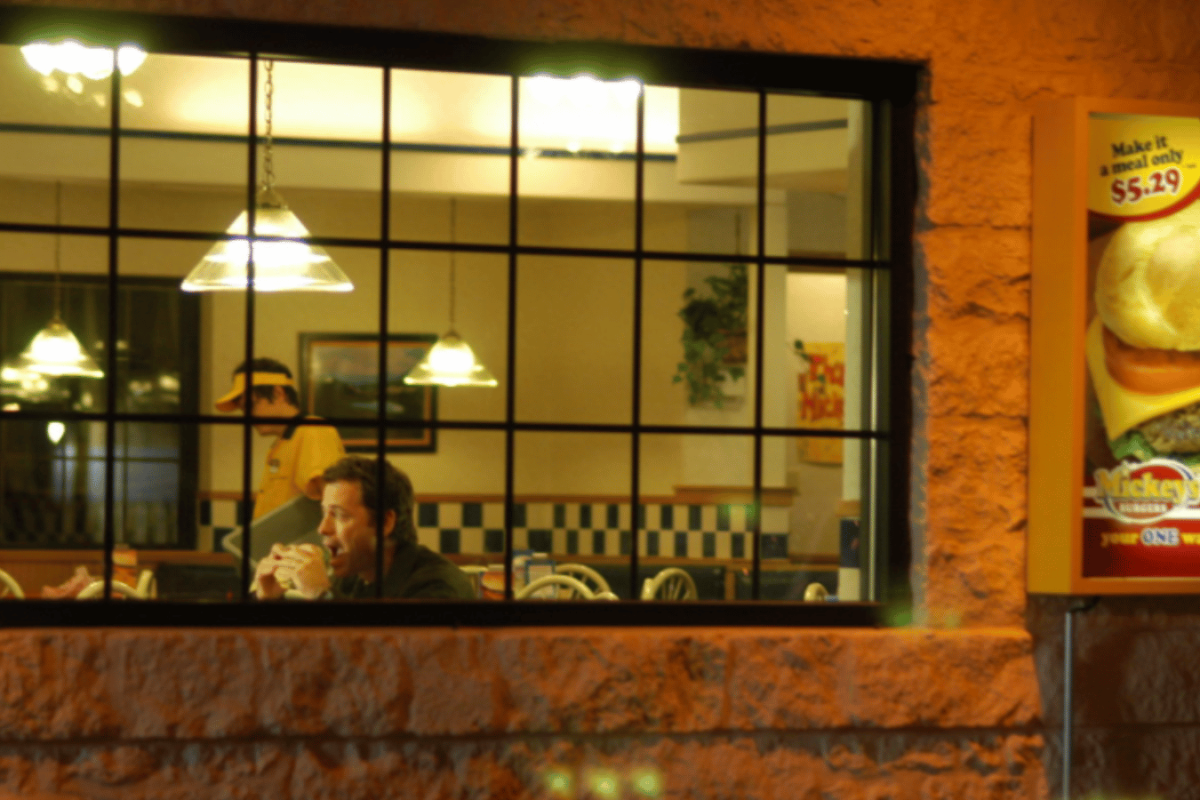
Indeed, early on it appears that Linklater and Schlosser have made a colossal mistake. After a commercial for the fictional Mickey’s Burgers that ends with a Lynchian extreme close-up “into” a greasy patty of the restaurant’s new best-seller The Big One, the film transitions to a group of Mexicans illegally crossing into the United States. Precisely what these immigrants have to do with greed and oversight in the fast food industry will eventually be revealed to damning ends, but at this juncture their significance is almost too ambiguous.
Before long, however, Fast Food Nation introduces Mickey’s marketing executive Don Anderson (Greg Kinnear), who’s tasked with investigating why recent independent lab tests show that, in the blunt words of his boss Jack (Frank Ertl), “there’s shit in the meat.” A surrogate for audience members who haven’t questioned the sourcing of their beef and also a stand-in for Schlosser’s reporting, Don travels to the Uni-Globe meatpacking plant in Cody, Colorado — the source of each Big One — and the methodical erosion of his confidence in his company and its practices is fascinating to witness.
Like a less endangered version of Ethan Hawke’s rookie cop in Training Day, Don struggles to process the widespread corruption around him and the casting of relatable, clean-cut golden boy Kinnear as this gradually less naive conduit is inspired. His captivating interactions with no-nonsense rancher and former Uni-Globe supplier Rudy (Kris Kristofferson), proto-MAGA plant liaison Harry (a scene-stealing Bruce Willis), and semi-cryptic Mickey’s manager Tony (Esai Morales) add to his concerns. And a more traditional film might stick with Don as he channels his inner Sherlock Holmes to expose his employers’ hypocrisies and help bring reform to the industry.
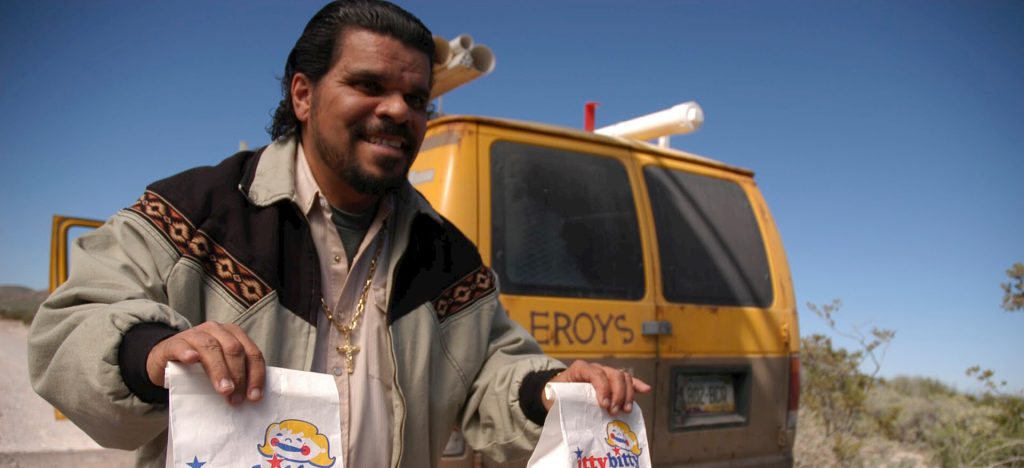
Conversely, Linklater and Schlosser send disillusioned Don home around the film’s halfway mark and pass the narrative torch to two sets of characters that he crosses paths with in Cody. Shifting the focus to border-crossers and Uni-Globe workers Sylvia (Catalina Sandino Moreno), her boyfriend Raul (Wilmer Valderrama), and her sister Coco (Ana Claudia Talancón), plus Tony’s star teen employee Amber (Ashley Johnson), the filmmakers intelligently show the impacts that corporate greed — and that of U.S. society at large — have had on the working class.
While the dangers and carnage at the plant, and the drudgery and unsanitary conditions at Mickey’s, are enough to turn viewers into vegans, the world outside these workplaces is comparably horrifying. The filmmakers’ emphasis on the various chain restaurants and businesses that litter the now-soulless Cody, and blunt, chiding shots of its sprawling, cookie-cutter housing developments — including the one in which Amber and her corporate pet store employee mom (Patricia Arquette) live, which may or may not be the same one encroaching on Rudy’s land — paint an ugly portrait of early 21st-century America and raise intriguing questions about the true costs of convenience.
In order to convey just how compromised the entirety of society is, Linklater and Schlosser need to present all of these sides, and the straightforwardness of a documentary that retraces the Fast Food Nation book might not do this complex topic justice. However, a narrative approach that emphasizes the subject matter’s human element through engaging writing, directing, and acting more effectively drives home the key point: that there’s always been some shit in the meat.
“Fast Food Nation” is available for digital rental or purchase.