Max Borg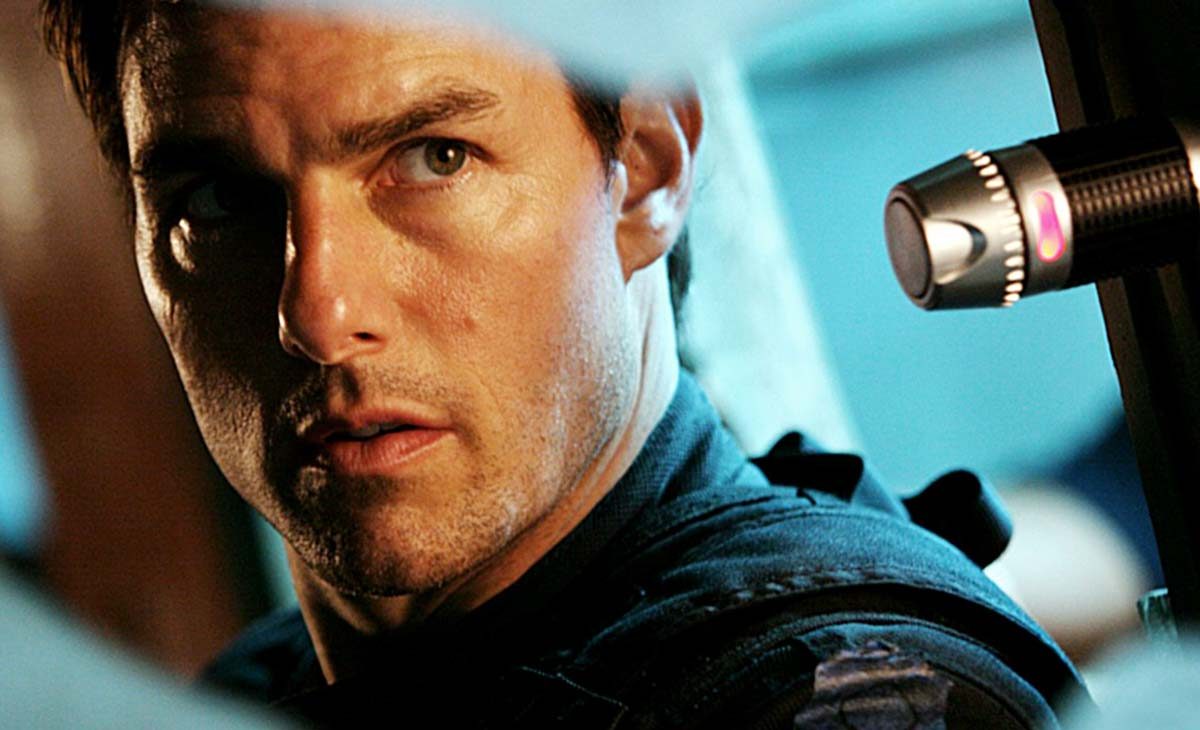
In the 2015 documentary by Noah Baumbach and Jake Paltrow focusing on his career, Brian De Palma states the main reason he agreed to direct Mission: Impossible twenty years prior was a strategic one: he was in dire need of a commercial success, and at the time, a film starring Tom Cruise was considered a sure thing. It was still the age of the movie star, and Cruise was arguably the biggest of them all.
How big? It’s easy to forget this now in the age of IP and franchises dominating the box office, but Cruise was one of those actors who used to put butts in seats regardless of the film he was headlining. In fact, from 1992 to 2006 he had one of the most enviable streaks in Hollywood: every single movie he starred in – so, not counting Magnolia which was an ensemble piece – grossed over 100 million dollars in the United States alone.
Six of those thirteen movies were produced and/or distributed by Paramount Pictures, the studio that had turned Cruise into a bankable entity with Top Gun, and his primary partner when he decided to set up his own production company with Paula Wagner. This partnership extended to titles he didn’t act in, like Cameron Crowe’s 2005 dramedy Elizabethtown. And while the latter category didn’t fare as well as the projects where he was in front of the camera, the Cruise/Paramount collaboration was generally a solid one.
And then came Mission: Impossible III. Released in 2006 after four years in development, it was an unusually complicated production even by Mission standards (the first movie had started filming before the script was finished): David Fincher was initially attached to direct, but dropped out over creative differences, as did Joe Carnahan who was considered a viable replacement thanks to Narc (on which Cruise had served as an executive producer).
Eventually, the franchise’s star found his ideal director in J.J. Abrams, then a television guru thanks to the spy series Alias (whose pilot episode informed the plot structure for the third Mission). Still, his existing TV commitments led to principal photography being pushed back a year, during which time the actors originally cast by Carnahan – including Kenneth Branagh as the villain – dropped out to pursue other projects. Despite these setbacks, the filming process was seemingly a smooth one, as suggested by Abrams and his production company Bad Robot remaining involved with the franchise in some capacity for the next three films.
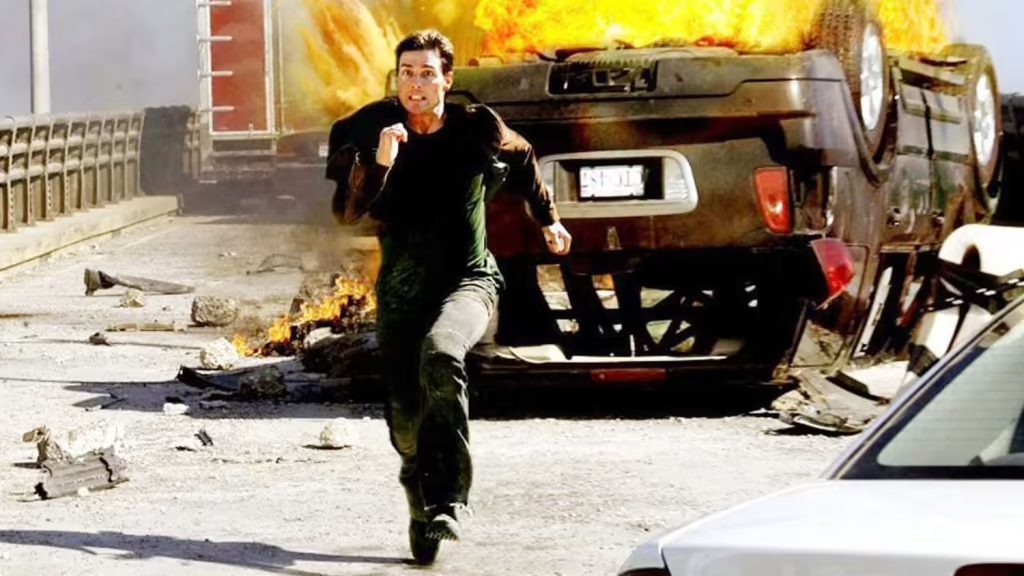
Aided by his frequent collaborators Alexander Kurtzman and Roberto Orci (who would help him relaunch Star Trek three years later), Abrams decided to put Cruise’s IMF operative Ethan Hunt through the wringer, taking elements from the first two films – most notably a race against the clock to save Ethan’s love interest – and putting a new, more emotionally engaging spin on them (John Woo’s take, released in 2000, suffered from favoring action over the human element). The director also relished the opportunity to flaunt his eye for action and thrilling set pieces, as seen on Alias and Lost, on a much bigger canvas, fully justifying Cruises’s seemingly mad decision to hire a filmmaker who had never directed a feature film before.
Reviews were generally positive, with particular praise for Philip Seymour Hoffman’s performance as Hunt’s new nemesis Owen Davian (to this day, the best villain across the eight movies), although some critics took issue with the somewhat darker tone, which was jettisoned in subsequent installments. The box office was respectable but a bit underwhelming (398 million dollars worldwide against a budget of 150 million), making Abrams’ entry the lowest grossing in the franchise.
Cruise was singled out for criticism – by none other than Sumner Redstone, the chairman of Paramount’s parent company Viacom at the time of release – over his public behavior, such as the couch-jumping incident on The Oprah Winfrey Show the year before, and his connection to the Church of Scientology. The latter was also part of a controversy – denied by Cruise himself – whereby the star had supposedly threatened to boycott the movie’s publicity tour unless Comedy Central, also owned by Viacom, pulled a rerun of the South Park episode Trapped in the Closet, which lampooned the Church (and rumors about the actor’s sexuality). Other commentators believe the rift between star and studio was financially motivated, as Cruise and Wagner were contractually entitled to a sizable chunk of the DVD sales and Paramount supposedly resented that, due to the home video market slowing down.
In any case, Mission: Impossible III was the end of an era for the two parties, who didn’t reconcile until Paramount decided another entry in the franchise – 2011’s Ghost Protocol – was warranted. M:I III was also a turning point for the series itself: the last truly self-contained installment, inextricably tied to the sensitivities of its director and Cruise’s philosophy (at the time) that each movie should have its own distinct and filmmaker-driven flavor. Ghost Protocol ostensibly followed that pattern by recruiting Brad Bird, but stealthily set the tone for all future Missions in that Christopher McQuarrie, who took over for the remainder of the Ethan Hunt stories, was brought in for script doctoring. His mission, which he readily chose to accept, was to right the ship after the events of 2006 had almost caused it to sink.
“Mission: Impossible III” is streaming on Paramount+, MGM+, and Pluto TV.