Zach Vasquez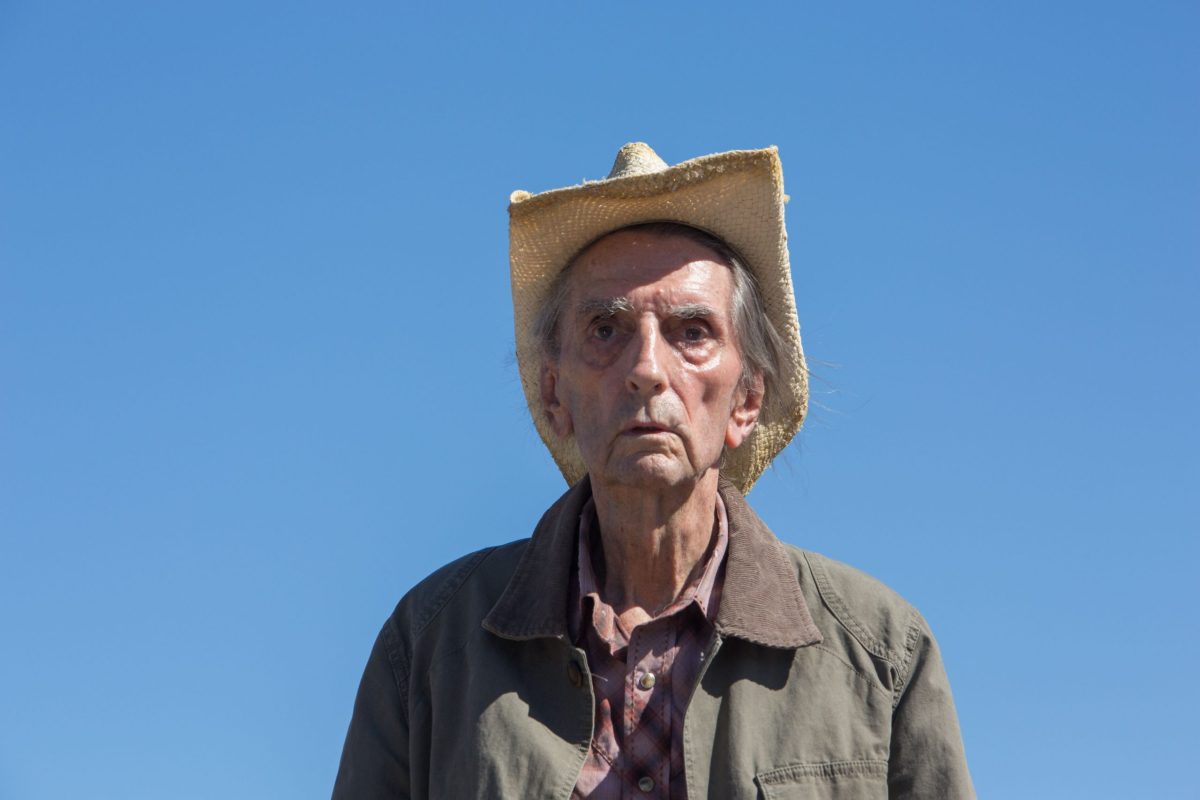
This July 14 marks what would have been the 100th birthday of Harry Dean Stanton. A troubadour, Hollywood rancounter, accidental philosopher, and zen icon, Stanton—who passed away at 91 in 2017—was, above all, an actor, and specifically a character actor. Indeed, he was inarguably the character actor of the post-war decades, his haunted, hangdog features, gangly scarecrow frame, and overall shambolic airs making him perfect for all manner of oddballs and outcasts across hundreds of films and television shows.
Stanton was one of those actors—like Ernest Borgnine, James Hong, or fellow Roger Ebert favorite M. Emmet Walsh—who was seemingly born old. But what made him stand out amongst even those legends was, as hashed out during a conversation between Stanton and frequent collaborator/friend David Lynch in the 2012 documentary Harry Dean Stanton: Partly Fiction, an innate on-screen naturalness that, no matter the role, basically allowed him to play himself. (Although, per Stanton in that same doc, “There is no self.”)
This isn’t to take away from Stanton’s chops as an actor; when I was lucky enough to attend a public, star-studded 90th birthday bash for him in Los Angeles in 2016, he beautifully recited, from memory, the iconic “thin air” speech from Shakespeare’s The Tempest. But that naturalism made it so that viewers, even those who might not have known his name (but undoubtedly recognized his face), brought their own associations to his characters when they appeared.
Stanton would only star, outright, in two movies 33 years apart: Wim Wenders’ laconic and mysterious odyssey Paris, Texas (1984) and the semi-biographical character study Lucky (2017). Sometimes he’d get bigger, secondary lead roles, such as in the punk rock cult classic Repo Man or Robert Altman’s adaptation of Sam Shepherd’s motel romance Fool for Love (‘84 and ‘85, respectively), but mostly he stuck to truly supporting parts; fourth, fifth, or sixth billed, if he was billed at all (see his turn as an FBI agent in the background of a couple of brief moments in The Godfather Part II).
However, some of his greatest parts, the ones in which his singular screen presence was used for maximum emotional impact, saw him pop up for only one scene.
The first of these came early during his New Hollywood heyday, in director Monte Hellman’s existential road movie Two-Lane Blacktop. In the middle of the film, Warren Oates’s motormouth gearhead G.T.O., involved in a cross-country race with a trio of laconic hippies, picks up Stanton’s cowboy hitchhiker. As Stanton’s character settles in, he casually cruises the driver, placing his hand on his knee. The initial tension of the scene—G.T.O. barks “I’m not into that!” at him—gives way to a funny (and refreshingly non-judgmental) moment, as Stanton suggests he was only trying to relax his chauffeur, to which G.T.O. responds, “This is competition, man. I got no time for it.”
Though still early in his career, there’s history in this scene. Stanton and Oates were good friends who spent a lot of time together in the early ‘60s as struggling actors while filming an episode of Gunsmoke and a forgotten adventure movie called Heroes Island (1962). Two-Lane Blacktop would mark the first feature pairing of Stanton and Oates since then (although they both appeared in a short film directed by Terrence Malick for the AFI in 1969), and they would go on to work alongside one another in the likes of Pat Garrett and Billy the Kid (1973), Dillinger (1973), Cockfighter (1974, reuniting with Hellman), and 92 in the Shade (1975).
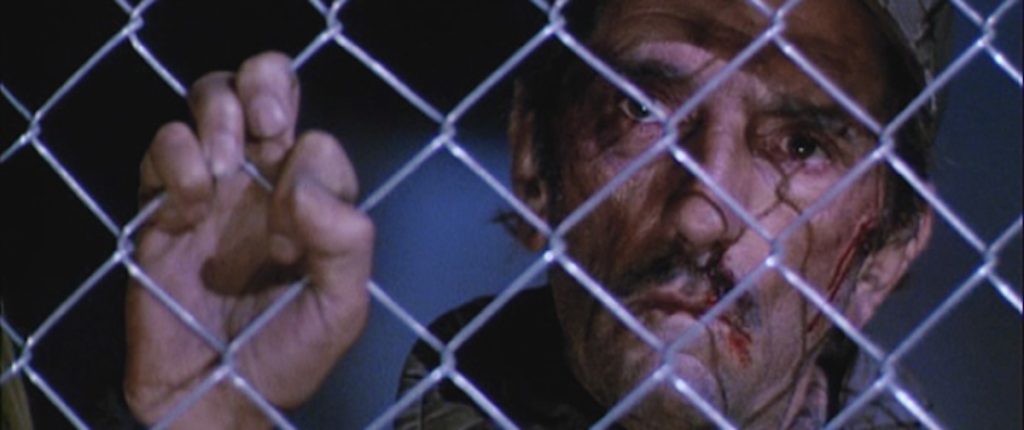
In 1984, the same year he would land the biggest roles of his career in Repo Man and Paris, Texas, Stanton also reteamed with his Dillinger director John Millius for a cameo in the macho Cold War thriller Red Dawn. Stanton plays the father of two Colorado teenagers-turned-guerilla-insurgents (Patrick Swayze and Charlie Sheen, who must have gotten their fictional mother’s looks) fighting against the communist invasion that has taken control of their town. He appears for less than five minutes, bloodied and caged behind enemy lines. Stanton wasn’t known for playing tough guys, but here, his hard-ass admonishing of his sons to quit their crying and prepare for war is entirely believable. Yet, there is a tenderness too, one that is deeply felt despite the ridiculousness of the situation (this is true of the whole of Red Dawn, which is too-often dismissed as unconsciously paranoid and jingoistic, when in fact it is entirely self-aware). His ferocious declaration for his boys to “Avenge Me! Avenge Me!” makes for the best moment in the film, one that encapsulates both its preposterousness and its gravitas.
Stanton was certainly known for imbibing in various substances throughout his life, whether it be during his rollicking time as Jack Nicholson’s roommate or his constant presence in the L.A. bar and music scene (he gets a one-scene shoutout in the 2004 psychedelic rock doc Dig!). But he was never a counterculture icon on the level of, say, Denis Hopper or Cheech and Chong (even though he appeared in films with both). But he was synonymous with the American desert (see again: Paris, Texas, Fool for Love, Lucky, and the dozens of big and small screen Westerns) so it would have been an egregious oversight for Terry Gilliam not to include him in his adaptation of the great ‘60s desert odyssey Fear & Loathing in Las Vegas. He shows up in one of the film’s many hallucinations as an irate judge who, while banging a butcher knife down on some carrots, sentences the story’s ‘heroes’ to “Castration! Double castration!” for their corruption of a young girl. Depp would later bring Stanton onboard in a voice role for his animated meshing of Chinatown and Fear & Loathing, Rango (2011).
In 1999, Stanton made the fourth of his six appearances in a Lynch-directed project with The Straight Story. Although he doesn’t appear until the final moments of the film, his character, Lyle Straight—the ailing and estranged brother to the heroic septuagenarian Alvin Straight, who drives a used John Deer tracker over 300 miles to make amends before it’s too late—haunts every frame of the story. When we finally meet Lyle, it’s clear that it could only ever have been Stanton (at the time of filming, 72 himself) that plays him. His reading of the line (one of only two he has during his time onscreen)—”Did you ride that thing all the way out here to see me?”—followed by the ocean of silent realization that moves over his face in the moments that follow makes for possibly the greatest performance he ever gave, the most cathartic moment in all of Lynch’s work, and one of the greatest endings in the entirety of American cinema.
Stanton would work steadily throughout the next 18 years, with more and more directors utilizing him for brief but powerful cameos. In 2001, Sean Penn, who was Stanton’s good friend for over 30 years and who appeared onscreen alongside him a couple of times, including in 1997’s underrated eccentric romantic comedy She’s So Lovely (directed by Nick Cassavetes from a script by his late father John, who unfortunately never got the chance to work with Stanton), paired him up with his pal Jack Nicholson for a short scene in the haunting cop drama The Pledge (Stanton, relying on that everyman naturalism, plays a rural gas station owner).
Then in 2006, Cassavetes would tap him for a brief appearance in his nutty suburban true crime drama Alpha Dog, as the paterfamilias of a family of fucked-up petty criminals. That same year, he also reunited with Lynch for a hilarious moment (technically two, but they’re so short and close together that we’ll count them as one) in his experimental opus Inland Empire as a film director’s right hand man, who uses his age and frailty to con actors and set workers out of petty cash. Both films not only make use of Stanton’s recognizability, but specifically his age and longevity, both of which, by that point, had become two of his defining qualities.
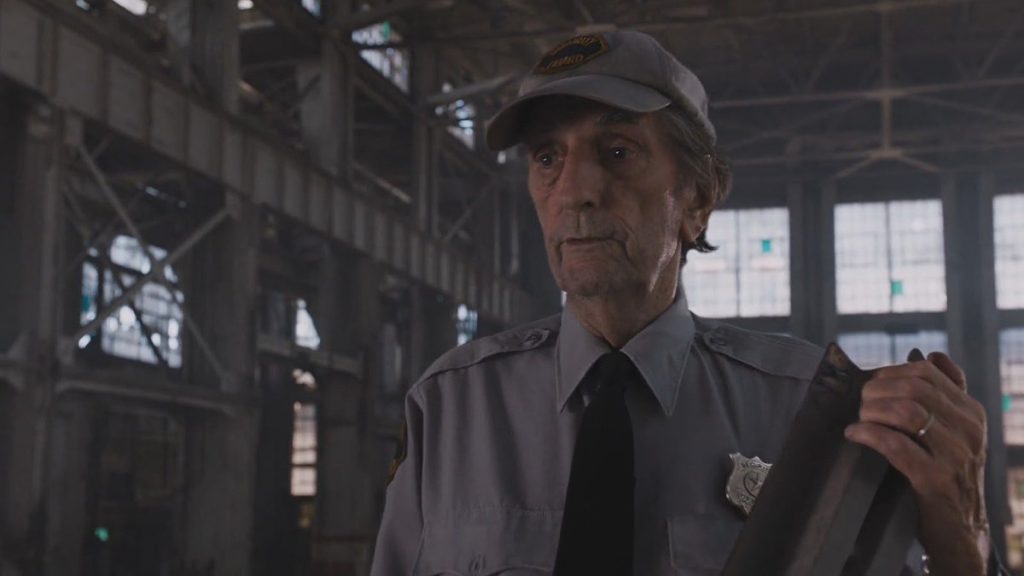
Said qualities were even more apparent in the next decade for the final few films Stanton appeared in before going out, surprisingly, front and center with Lucky. The first of these would be for the biggest blockbuster he ever appeared in outside The Godfather II, Marvel’s The Avengers, as a bewildered security guard at an empty New Jersey factory who witnesses The Hulk smash through the ceiling before transforming back into Bruce Banner. Initially, the scene was a little longer, with his character providing some sage advice, as well as his motorcycle, to Banner, spurring him to go save the day. Director Josh Whedon knew what he was doing in casting Stanton, even if he ended up cutting almost all of his time out of the theatrical version. This is actually for the better, as what remains—Stanton stoically asking Banner if he’s an alien and then, when told he’s not, telling him, “Well then, son, I’d say you have a condition”—is a wonderfully unexpected non-sequitur, its bizarreness befitting Stanton. For as successful as the MCU has been over the years, this is one of if not the only times it actually felt cool.
Martin McDonagh’s black comic meta crime thriller Seven Psychopaths from the same year is more the type of film you’d expect to see Stanton in. In one of that film’s many stories-within-a story, he plays a Quaker who silently and relentlessly stalks the killer of his young daughter; his final, bloody act bonding them together in eternal damnation. This gothic story of religious terror is undoubtedly an homage to the works of Southern Catholic writer Flannery O’Connor, whose novel Wise Blood was adapted by John Huston in 1979 and co-starred Stanton (as the father of a young woman, no less).
Stanton’s second to last feature film appearance came via the Arnold Schwarzenegger (attempted) comeback vehicle The Last Stand (2014), in another one-scene cameo. Fittingly, his character, an ornery but dignified farmer, follows the film’s title literally, standing up to Peter Stromare’s sleazy criminal mastermind before being gunned down on his tractor. While The Last Stand doesn’t rank high amongst Stanton’s incredible filmography, it is entirely apropos that his final supporting role on the big screen would see him bite the dust in an old-fashioned Western showdown.
One hundred years after his birth, and nearly a full decade since his passing, Harry Dean Stanton continues to be celebrated as one of the most important actors of the American cinema, as well as a true original. While we may lament certain other actors never getting the big breaks they deserved, with Harry Dean, it was often his smallest parts that left the largest impressions.
“Starring Harry Dean Stanton,” a 19 film retrospective, is currently streaming on The Criterion Channel.