Zach Vasquez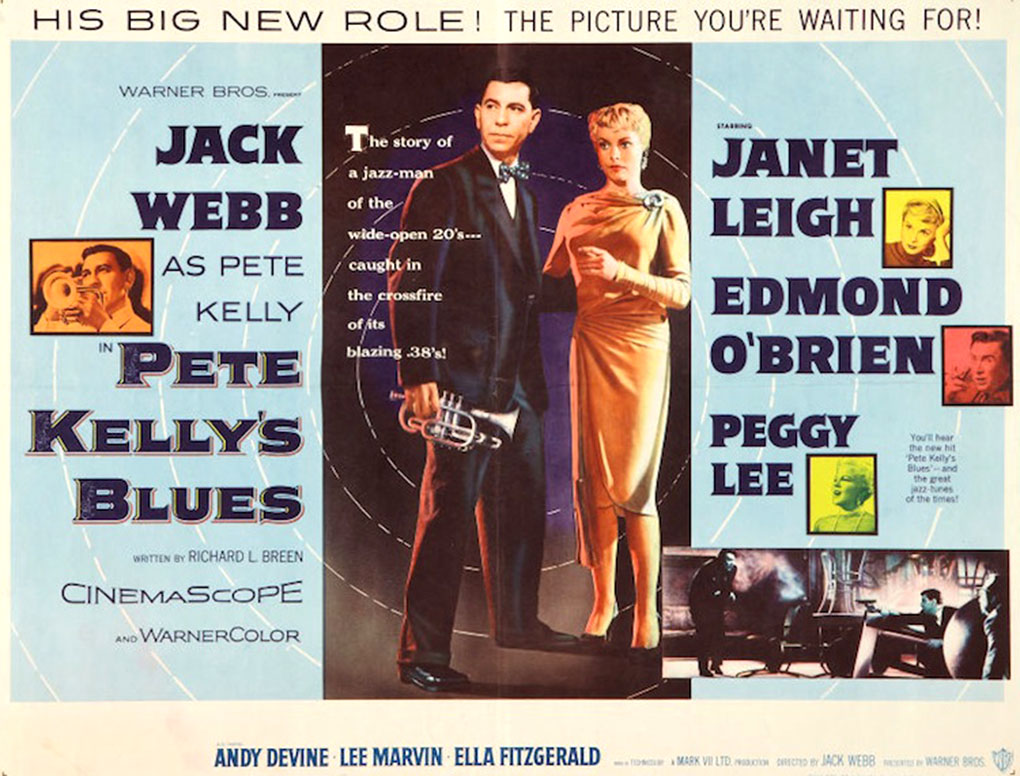
On the closing night of the Hollywood run of Noir City 2026—the annual traveling film festival dedicated to all things film noir, natch—I was debating whether to call it a night following a full day’s worth of screenings or to stick around for the final film of the fest, a 1955 title I’d never previously heard of called Pete Kelly’s Blues. I was pretty beat after a day spent watching three other music-themed crime dramas—late noir classics The Man with the Golden Arm (1955), Odds Against Tomorrow (1959), and Robert Altman’s underrated Kansas City (1996)–but on the advice of Noir City founder Eddie Mueller, I decided to stick around for what he told me was “a fun one.”
By the time the surprisingly mythical origin story prologue—set in the bayous of New Orleans during a carousing jazz musician’s funeral (“Ashes to ashes, dust to dust, if the women don’t get you, the whiskey must”)—I was glad I stuck around. By the time the credits rolled, after I picked my jaw up off the floor, I knew that even if (big if) I were to see a better movie any time soon, it would be a long time until I saw one as batshit insane.
Pete Kelly’s Blues was the passion project of producer/director/star Jack Webb, best known for playing the stone-faced, taciturn detective Joe Friday on the original iterations of his brainchild Dragnet—to this day the most influential police procedural to ever grace the television airwaves.
He plays the titular Kelly, a cornetto and band leader in prohibition-era Kansas City. He and his tight-knit jazz and blues group, The Big 7, have a standing late-night gig at an underground speakeasy/pizza parlor. All is well until newly arrived gangster McCarg (Edmond O’Brien) shows up and announces he’s taking over as the band’s manager, as well as taking a 25% cut of their earnings. When the band refuses, their young, hotheaded drummer is gunned down. McCarg seizes control of Kelly and his crew, forcing them to take his alcoholic mistress (Peggy Lee) on as a new singer, and continues to push Kelly to his breaking point, resulting in a winner-takes-all gun battle in an empty dance hall. (While all of this is going on, Kelly also reluctantly begins a love affair with a smitten, spoiled, rich but good-hearted flapper played by Janet Leigh.)
Pretty standard stuff for a melodrama of the time, but that synopsis doesn’t begin to describe what kind of a movie Pete Kelly’s Blues actually is. Originating as a radio drama during WWII also starring Webb in the lead voice role, it combined his two biggest obsessions: jazz and crime (anyone who knows the history of Los Angeles policing or has read a lot of James Ellroy will know Webb as a cop lover extraordinaire). Webb was regarded as one of the great jazz collectors of his time, and his own recordings have since achieved cult status within the scene. Thus, when he was able to parlay the success of Dragnet into producing and directing a feature based on those obsessions, he put his goddamn all into it.
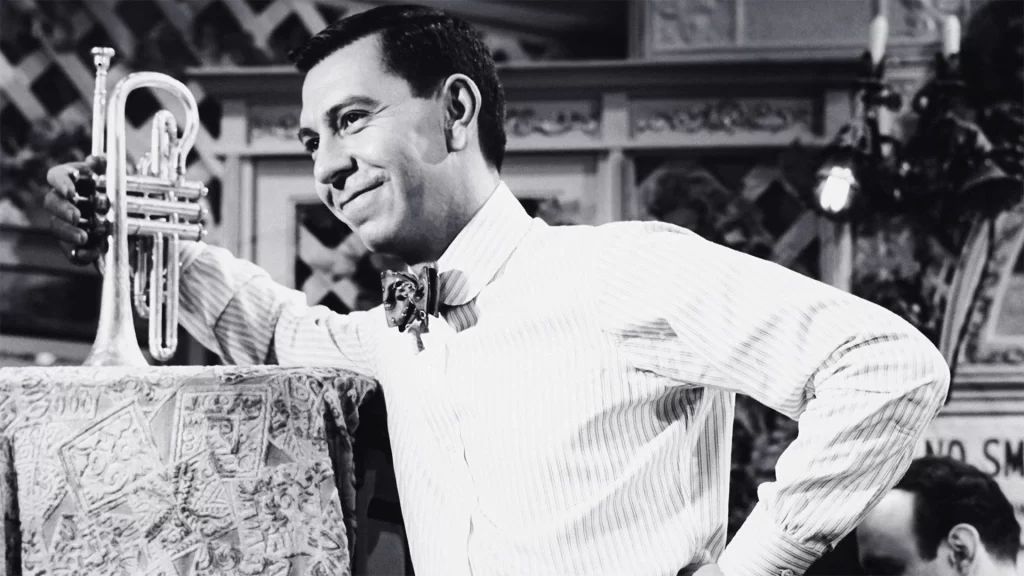
Pete Kelly’s Blues is a marvel of its medium: the technicolor glory of its compositions, along with its eye-popping soundstage set decorations and period costuming (this movie is a vintage clothing nerd’s wet dream), are astounding even by the standards of its time. There are shots—inlcuding a rain and neon soaked drive-by shooting—that play less like a ‘50s film and more like a Look Du Cinema homage from the 1980s. There is no way this wasn’t a major influence on Martin Scorsese’s (similarly criminally underappreciated) jazz epic New York, New York (1977), and I’d bet good money it also inspired Warren Beatty when he was making Dick Tracy (1990).
Webb doesn’t just rely on the lighting and decor though; almost every frame is a masterclass in mis-en-scene. Countless sequences begin with, to quote a bafflingly negative review from TCM, “extreme foreground action which quickly gives way to the main action of the shot.” (It’s very clear that Citizen Kane had a big impact on Webb). He also finds not only the most interesting angle to shoot every scene from, but how to transform regular actions into something wildly unexpected.
To wit: when Kelly’s stood all he can stand from his tormentor and decides to arm himself for battle, does he simply have him pull a gun from a desk drawer or cabinet? No—he shoots a closeup of him pulling it out from within a tray of dry macaroni! Another scene of expository dialog is set in the speakeasy’s kitchen so that Webb can shoot it from inside of a pizza oven.
The movie is overdosing on these bizarre touches, making the whole thing play like a slapstick fever dream at times, which Webb doubles down on by switching up tones. Many of the scenes within the speakeasy play as outright screwball comedy—and a legitimately funny one at that—while the crime elements, including the very Dragnet-like voiceover and dialog (“They say you got rubber pockets so you can steal soup”) are so hard-boiled that they double back into comedy.
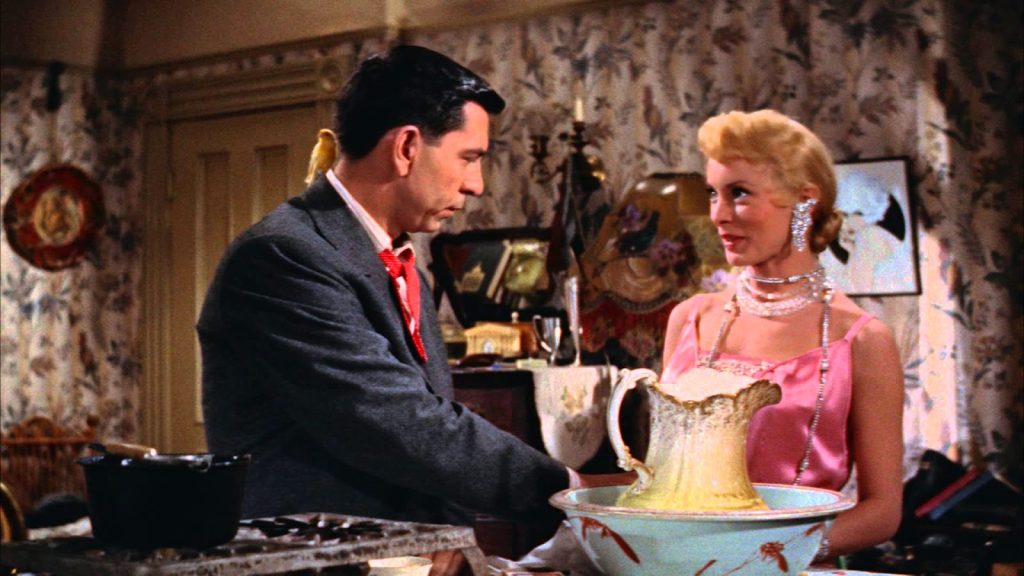
Which is not to say Pete Kelly’s Blues only works on an ironic level; far from it. The drama, particularly in its violent moments, has real weight, and not just story-wise: there are two stunts here, one in which a guy flies through a car windshield and lands on the ground, and another where a woman takes a nasty spill down a flight of stairs, that had me gasping. Meanwhile, the subplot with Peggy Lee—who received her one and only Oscar nomination for this, her final film performance—veers unexpectedly into psychological horror. Her big show-stopping scene, which takes place inside of a basement subfloor of an insane asylum, even approaches—and I don’t throw this term out willy-nilly—Lynchian territory.
The music is, as one would hope, one of its brightest spots. Alongside Lee, the most mesmerizing performances come from the First Lady of Song herself, Ella Fitzgerald. She only appears in two scenes, performing a song in each, but that’s all she needs to leave her mark. Her second is particularly head-spinning, with her performing the title track, “Pete Kelly’s Blues”, replete with lyrics detailing the plot of the film, as Webb’s character watches, tears in his eyes, from beyond the stage. (It would not surprise me if Paul Thomas Anderson was thinking of this moment when he came up with the sing-along sequence in Magnolia).
The rest of the cast are all aces too, including Lee Marvin playing against type as Kelly’s best friend and level-headed Jiminy Cricket; Andy Devine, best known for playing loveable buffoons in Westerns (and voicing Father John in Disney’s Robin Hood) also plays against type as an honest but brutal cop (who at one point drops an egg into a kettle while making tea); and Jayne Mansfield, in only her second role, as a red-headed cigarette girl. The one exception is Webb himself, who is completely out of place amongst all these swinging flappers, gangsters and cool cats, what with his mushy, Alfred-E.-Newman-meets-Richard-Nixon mug and unfailingly deadpan delivery. It’s particularly unbelievable that Leigh’s party girl would be so hopelessly gaga over such a square (especially considering how much older he is). And yet, you can’t imagine the movie with anyone else in his role. Everything about the film feels out of whack, so why shouldn’t it’s leading man?
Again, I must reiterate that Pete Kelly’s Blues is not some “so-bad-it’s-good” camp curio. It’s certainly camp, as well as the type of psychotronic mind-melter that’s best stumbled upon late at night on TV. But it is also legitimately and intentionally gorgeous, funny, moving, exciting, and strange.
In other words—it’s jazz.
“Pete Kelly’s Blues” is available for digital rental or purchase.