Sara Batkie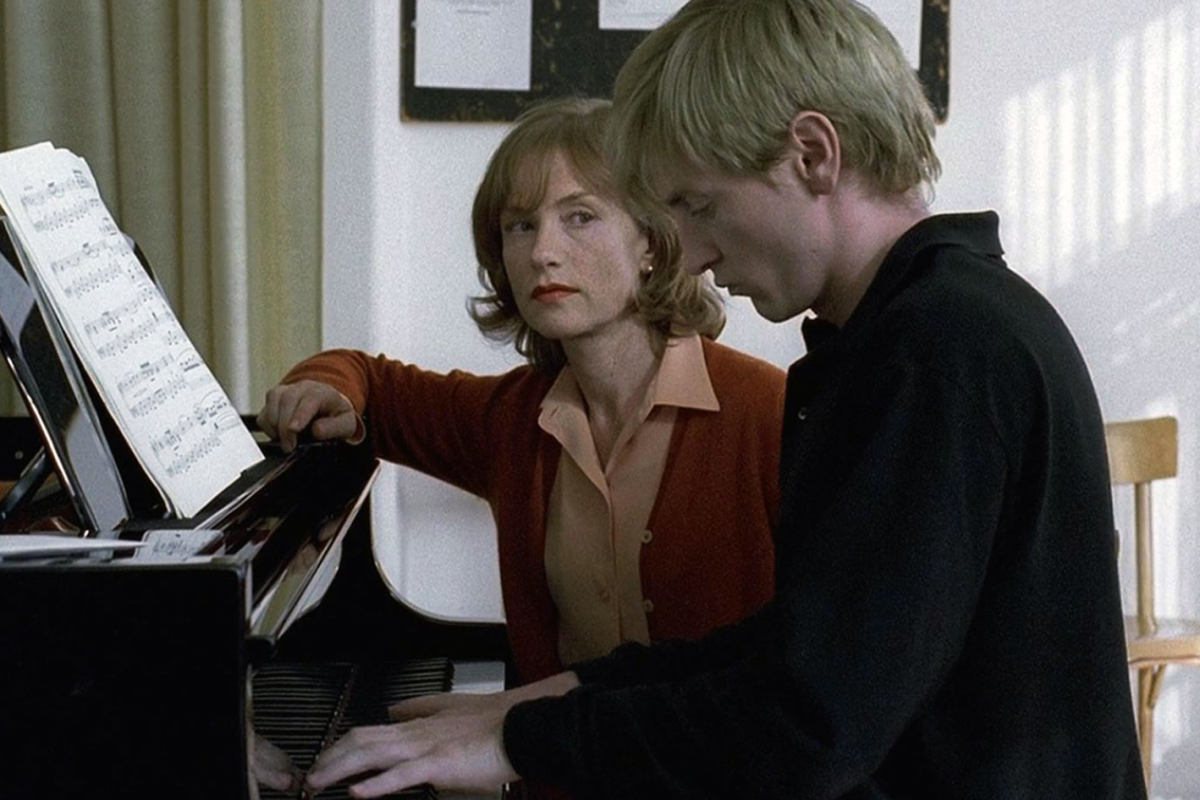
It’s a classic set-up: An older, demanding teacher takes on a younger, undisciplined pupil. Despite the difference in age and temperament, the two have an undeniable connection. In a normal film, their relationship might inspire the teacher to become more liberated and the student to become more mature. But this is not a normal film. It’s a Michael Haneke one, and the Austrian provocateur and cinematic scold has something much different in mind.
The Piano Teacher, which premiered at Cannes in 2001, is adapted from a novel by Haneke’s fellow countrywoman Elfriede Jelinek, who won the Nobel Prize for literature in 2004. Jelinek attended the Vienna Conservatory as an organist in her youth and the Nobel committee noted the “musical flow of voices” in her writing. But while the breakdown of her titular character is rendered in baroque prose, Haneke’s version of the story is austere to the point of being clinical. Form matches fiction, though, as Haneke’s exacting direction proves the perfect complement for star Isabelle Huppert’s exceptionally controlled performance.
Fortysomething Erika Kohut lives with her overbearing mother (Annie Girardot) in Vienna, where she teaches piano at a renowned conservatory. The two have a mutually parasitic relationship that swings wildly between physical altercations and weepy scenes of forgiveness. They also share a bedroom. Like many stage mothers, Mrs. Kohut melds a steadfast belief in her daughter’s talent with a dictatorial expectation of perfection. “No one must outdo you, my girl,” she insists. Erika, though, seems resigned to spending her days listening to her students mangle Beethoven while staring out the window of her studio. She attempts to instill a sense of passion in them through her demands, but all they can offer in return is the sort of reflexive virtuosity that comes from constant drilling.
On the surface, Erika maintains a patrician appearance. She dresses neatly and pulls her hair back in a tidy bun. But gradually Haneke and Huppert reveal the depths of paraphilic urges that lie beneath her meticulous exterior. First comes the clandestine visit to a mall porn shop, where she buys time in a private kiosk to watch videos and sniff a pair of panties. Later she cuts her genitals with a razor in the family bathroom before dinner. Finally there’s her voyeuristic pursuit at a local drive-in, where she spies on a couple having sex and urinates beside their car. Huppert’s expression barely wavers during these scenes; while it’s clear these activities provide some sort of release for Erika, it seems more compulsive than pleasurable—at least until Walter Klemmer (Benoît Magimel) comes into her life.
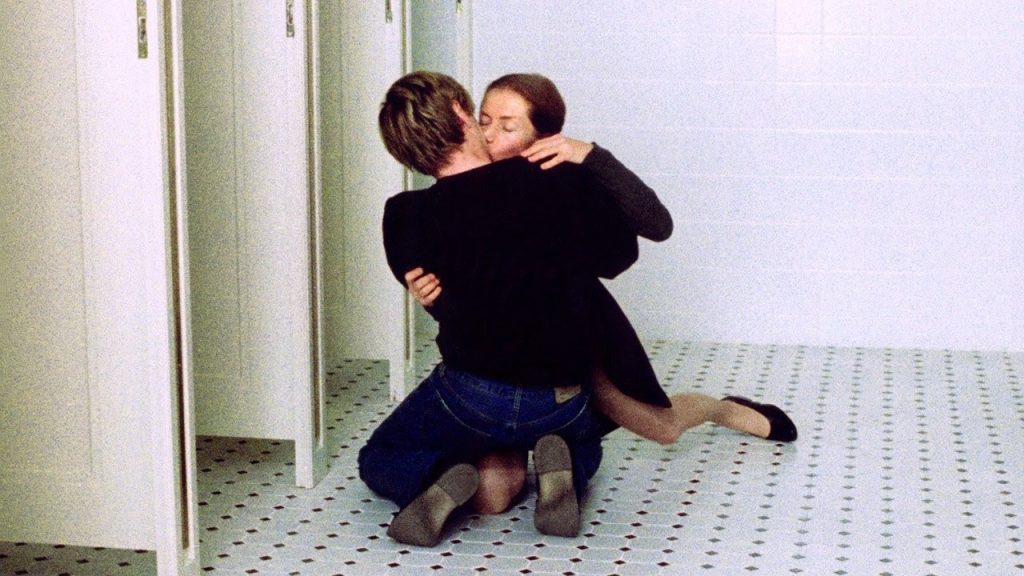
Walter is a pianist of preternatural ability, and has the insouciant confidence to match. When he and Erika first meet at a private recital, they spar over Schubert and Schumann, two composers marked by madness. He begins testing her boundaries, playfully at first, by interrupting her lessons and arriving early for his own. Erika is clearly moved by his talent, though she attempts to deny it to her peers. “I’m not the one to nurture [him],” she proclaims, but not all instruction happens in the classroom. Both Haneke and Huppert are patient, though, and over an hour of screen time passes before Erika and Walter even touch each other.
The two eventually enter into a sadomasochistic affair, though there’s a mismatch in approach from the start. Walter is intent on dominating her in the way men are expected, and even encouraged, to do of women, making clichéd declarations of love and poking fun at her demands for physical sublimation. “You want to give everyone your sickness,” he tells her coldly after reading a letter she’s given him detailing the humiliating fantasies she wishes to enact. Once she’s made her desires known, the power balance shifts; she becomes obsequious as he becomes increasingly cruel, eventually in ways she doesn’t entirely consent to.
For those familiar with Haneke’s work, this might all sound like par for the course. He has spoken before of a wish to “rape” audiences, punishing their expectations of cinematic sex and violence. But it’s Huppert’s presence – which Haneke insisted on when he agreed to direct – that imbues Erika with a sympathy that his script often denies her. “For her, love is high up on a pedestal, like Bach,” Huppert has said. “She places love at such an exalted level that it’s perhaps unattainable in normal life… That’s her great mistake, but it’s also what makes her so moving and innocent in a way.” Such insight was rewarded when Huppert deservedly won the coveted Best Actress prize at Cannes (Magimel, it should be mentioned, also won Best Actor).
Ultimately Huppert’s feminizing touch makes the brutality of The Piano Teacher bearable. As critic Moira Weigel points out in her Criterion Collection essay, Haneke has little interest in the thorny gender politics of his source material – unsurprising, given his flippant use of rape as a metaphor for his work. But whether he’s aware of it or not, he shares certain traits with Erika; both adhere to a strict pedagogy that values artistic rigor. Where they differ is in her willingness to annihilate herself. It’s this that allows the audience to connect with her, even as her director remains at a deliberate remove. But like great musicians, they work together in concert.
“The Piano Teacher” is streaming on the Criterion Channel, HBO Max, YouTube, Shout TV, and Plex.