Craig D. Lindsey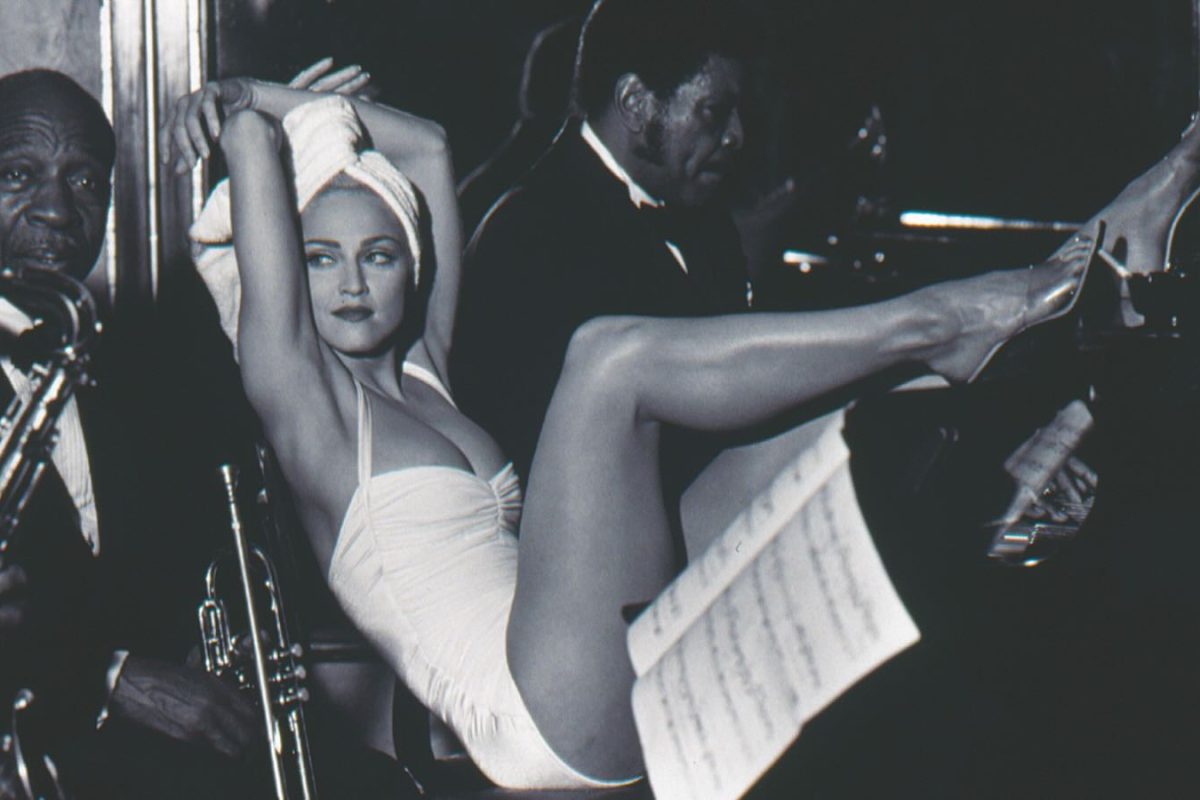
Welcome to Harvey’s Hellhole, a monthly column devoted to spotlighting the movies that were poorly marketed, mishandled, reshaped, neglected or just straight-up destroyed by Harvey Weinstein during his reign as one of the most powerful studio chiefs in Hollywood. With Madonna dropping her new Confessions 2 album in a couple of months, let’s revisit the very revealing concert documentary – distributed by Harvey and them – that came out 35 years ago this month.
Even while watching it from the comfort of my own home, I could feel the befuddlement from the undoubtedly Gen Z audience when headliner Sabrina Carpenter brought out Madonna during her last Coachella performance a few weeks ago. I assume most of them were thinking “Who is this old lady?” as the pair performed “Vogue” and “Like a Prayer” together (as well as the just-released duet “Bring Your Love”), with the Material Girl taking a break to ramble to the crowd, who were more concerned with capturing the whole thing on their phones than enjoying the moment, about astrology or something like that.
It’s understandable that these youngsters wouldn’t be all that psyched to see a scantily-clad, sixty-something woman perform songs they’ve most likely heard whenever their parents had control of the aux in the family minivan. For someone who had a stranglehold on pop culture back in her heyday, the trendsetting pop icon hasn’t been in vogue (sorry about that) during these 21st-century times. But, for a good two decades (1985-2005), the Michigan native was pop music’s most divalicious provocateur, a shape-shifting shit-stirrer who was known more for her scandalous, envelope-pushing exhibitionism than her run of top-40 ditties.
She made headlines for pulling salacious publicity stunts like releasing an orgiastic music video that MTV couldn’t air or dropping an X-rated coffee table book, simply titled Sex. In the thick of the AIDS era, she embraced the LGBTQ community, often implying she swings both ways. After a rocky, allegedly abusive marriage to Sean Penn, she was romantically linked to Prince, 2Pac, Dennis Rodman and her Dick Tracy co-star Warren Beatty (who we’ll talk about later), among others.
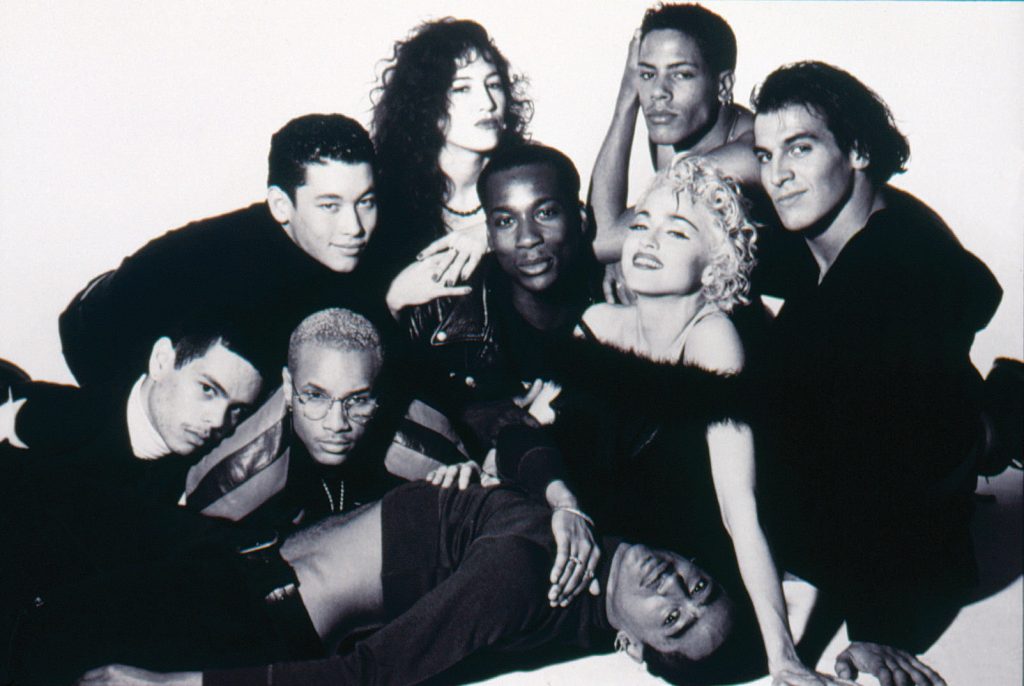
But it isn’t hyperbolic to say that every 21st-century girly-pop princess owes their whole damn career to Ms. Ciccone. Even Carpenter’s Coachella set was reminiscent of the tawdry theatrics Madonna patented during her 1990 Blond Ambition World Tour, which was later brought to the big screen in the 1991 documentary Madonna: Truth or Dare. Composed of black-and-white, behind-the-scenes footage and colorful concert sequences, Dare is Madonna at her titillating pop prime, wearing Jean Paul Gaultier gear (including warhead-shaped bras and bustiers) and going around the globe with an elaborate stage show, complete with an arsenal of backup singers and dancers who basically become her entourage.
The star called on music-video director Alek Keshishian to shoot footage that was originally supposed to be part of an HBO concert special. (She liked his pop-opera adaptation of Wuthering Heights, which featured some of her music, that he did as a senior thesis at Harvard.) It eventually morphed into Dare, a celluloid diary of the highs and lows Madonna and her crew experienced during those few months. For a show that featured moments both racy (her performance of “Like a Virgin” usually had her on a bed simulating masturbation) and religious (one section has her singing at an altar, rocking a frock and a rosary), the tour was steeped in controversy. During a stop in Toronto, police show up backstage, threatening to arrest her after the show if she does anything lewd. Of course, this inspires our R-rated superstar to get even more nasty on-stage. The Italian-American princess even had to cancel a show in Rome, due to Roman Catholics condemning her and her wicked, blasphemous ways.
All the tensions and tea that go on before and after the shows are what makes Dare such a mind-blowing artifact. Not only did Madonna give Keshishian unlimited access in capturing her every waking moment (a dressing-room camera catches her doing everything from crashing out after a show to making a topless quick change), but she also gave him final cut. He ended up with two hours of his subject being an ambitious but occasionally messy princess of power. “I know I’m not the best singer and I know I’m not the best dancer, but I’m not interested in that,” she admits at one point. “I’m interested in pushing people’s buttons and being provocative and being political.” (The fact that we’re never introduced to her touring band solidifies the long-standing criticism that, for Madonna, it’s never about the music.)
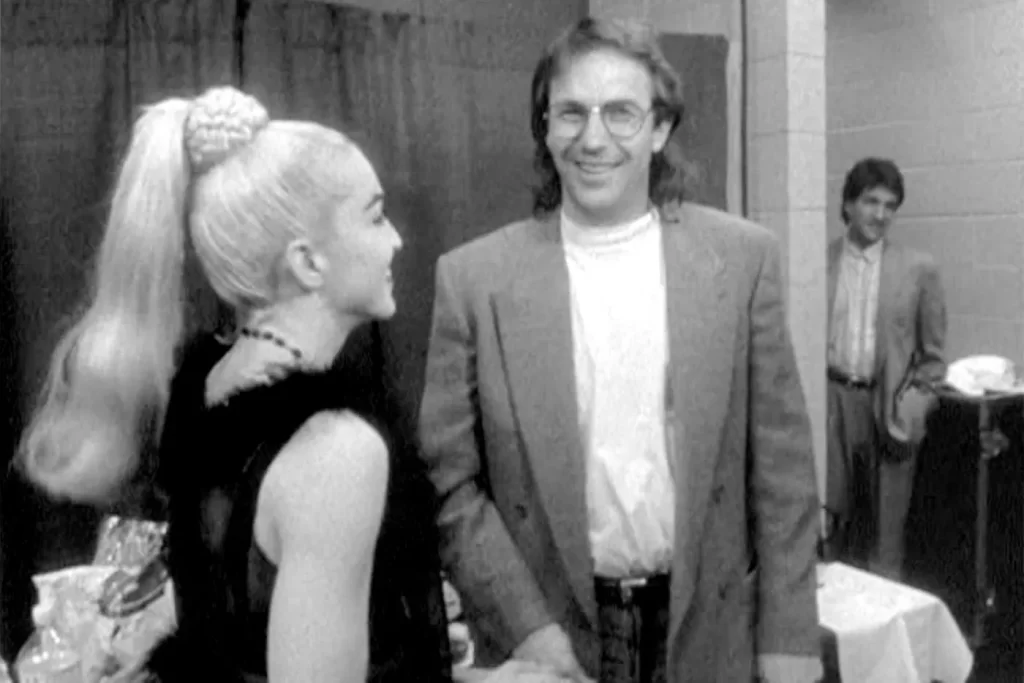
She isn’t afraid to make catty remarks about celebs (she gives a quick jab to then-daytime queen Oprah Winfrey, citing her as one of the reasons she doesn’t live in Chicago) or show her disdain when Kevin Costner praises her show as “neat” during a post-show visit. “Anybody who says my show is neat has to go,” she says, after pretending to gag. Whether she’s visibly thirsting after Antonio Banderas (her future Evita co-star) in front of his wife or letting out a nervous chuckle after she learns that one of her makeup artists may have been drugged and raped, Dare gives you a front-row seat to an A-list star behaving badly.
Named after the salacious parlor game the singer plays with her dancers in one scene (that’s where we get the infamous moment of Madge showing off her oral-sex skills by throating a water bottle), a more suitable title should’ve been – to borrow the title of a 1979 Rolling Stone profile of Richard Pryor – Madonna’s Life in Concert. She’s always given off all-the-world’s-a-stage energy, playing the role of a global pop goddess even when she’s goofing off in bed with her dancers near the end. (This explains why Dare was titled overseas as In Bed with Madonna.) Even Beatty – who occasionally pops up to show disdain for the chaotic surroundings – memorably chides her about in one candid moment: “She doesn’t want to live off-camera, much less talk… Why would you say something if it’s off-camera? What point is there existing?”
For all her lascivious, performative antics, we also get moments of her trying to bond with her distant dad after a show and dealing with an older brother who seems more preoccupied with getting high than seeing her perform. A cringeworthy meetup with a childhood chum leads to Madonna taking a quick trip to her mom’s gravesite, with both instances hinting at an upbringing that most likely wasn’t that nurturing. Paparazzi aggressively follow her wherever she goes, but given how she mostly spends time in hotel rooms by herself, Keshishian gets bits and pieces of the lonely girl keeping this sexy spectacle going.
Despite some critics not buying the movie’s up-close and personal aesthetic (Chicago Reader critic Bill Wyman bitterly called it “the most baldly manipulative and scarily dishonest piece of propaganda to be recorded on celluloid since at least the Reagan campaign’s “Morning in America” commercials and possibly since Triumph of the Will”), Dare was still a hit, becoming one of the highest-grossing documentaries of all time. It was a hot-button release for Miramax, its distributor, with both Madonna and the movie causing a ruckus at Cannes, where she walked the red carpet before showing off another one of her cone bras.
Even Harvey Weinstein himself gave the gal props for her publicity-conjuring skills. “I didn’t know she was going to do that,” he told the Los Angeles Times. “When she showed them her underwear, or whatever that was, the barricades came down and the screening was over.” Although Madonna would later claim in a New York Times interview that Weinstein “crossed lines and boundaries” while working on Dare, she would later hook up with the sweaty-ass ex-mogul on other projects. When Madonna directed her second film, the 2011 historical love story W.E. (co-written by Keshishian), it was The Weinstein Company who got the U.S. distribution rights.
It appears that Dare has influenced many female pop stars to do their own warts-and-all doc (and that includes the James Cameron-directed, Billie Eilish 3-D concert film that’s coming out this week). Selena Gomez even got Keshishian to direct her 2022 Apple TV+ doc Selena Gomez: My Mind and Me. But I can’t help but think Madonna might have some regrets about letting it all hang out, both figuratively and literally, in Dare. “I sort of gag when I watch it, cause I’m like, ‘Oh my god, I can’t,’” she told Andy Cohen for a 2019 Entertainment Weekly interview. “It’s hard to watch myself do anything. I can’t even stand to watch myself in concert, like my last tour.” Some of the dancers (who ended up appearing in their own doc, Strike a Pose, in 2016) eventually didn’t enjoy having their business put out in the streets; a few of them sued for compensation and invasion of privacy.
Regardless, Madonna: Truth or Dare should be essential viewing for those who ever wanted to know why this woman is one of the most influential, most divisive, and most extra-as-hell figures in pop music.
“Madonna: Truth or Dare” is available to stream on Kanopy and Pluto TV.