Kimber Myers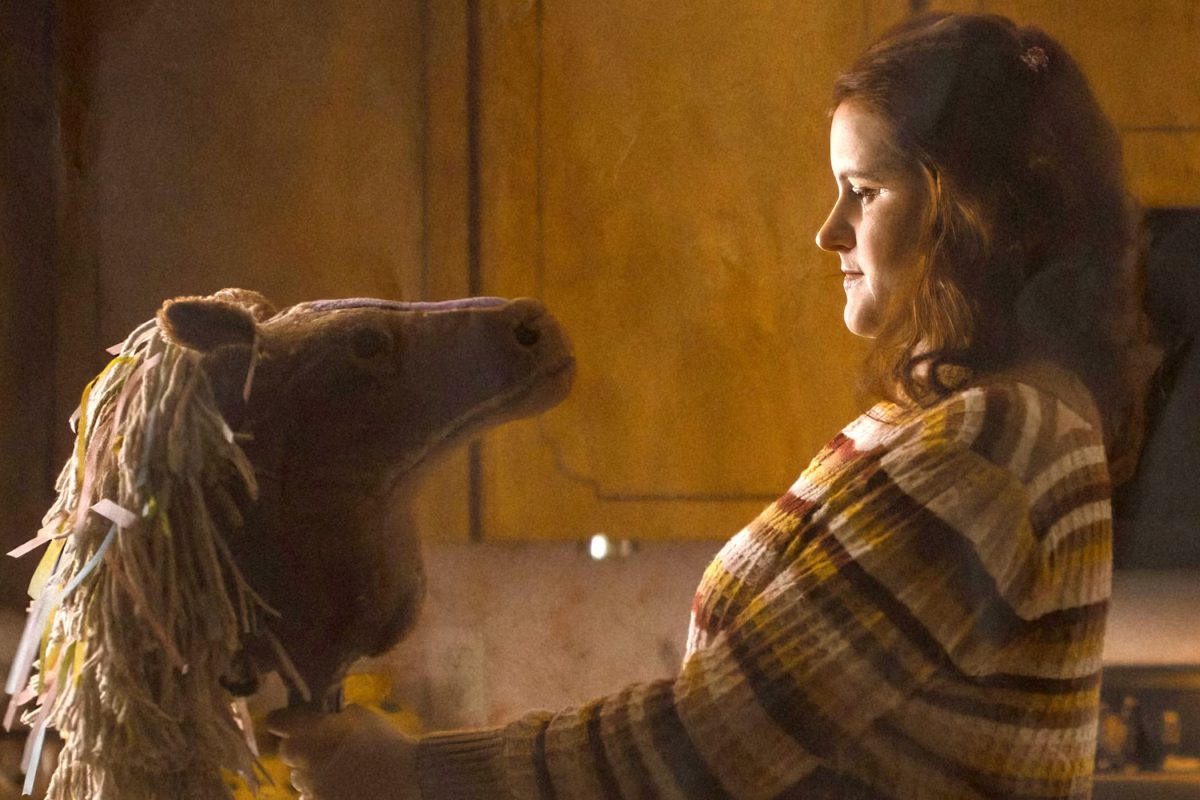
I did not expect to cry at the hobbyhorsing movie, and I definitely did not expect to cry at the hobbyhorsing competition that anchors its climax. But that’s because I’m an asshole, and I don’t deserve tender comedic dramas like Horsegirls. Writer-director Lauren Meyering’s debut feature is a gently funny, wildly moving exploration of finding yourself in unlikely places with unlikely pastimes.
For 22-year-old Margarita (Lillian Carrier), that pastime is hobbyhorsing, a sport where people (mostly young girls) participate in equestrian events like dressage, but instead of riding a real, live horse, they ride hobbyhorses, aka stick horses. Margarita is autistic, and she struggles with independence: She at once wants more freedom than her mother (Gretchen Mol) is willing to give her, while she bristles at the idea of having to have a job. (Don’t we all?)
When Margarita goes for a walk after a fight with her mother, she stumbles upon a group of tween and young teen girls in a classroom, trotting around in a circle while riding hobbyhorses. Though Margarita is obsessed with horses, she can’t ride them (other than “Cheeseburger,” her bicycle that has been retrofitted with a horse’s head on the handlebars). Hobbyhorsing looks like the next best thing. She joins the group, led by Coach (Jerod Haynes), and she struggles to fit in with most of the girls on the team, who are much younger than she is. Meanwhile at home, her mother’s breast cancer has returned, leaving her worried about what her daughter will do if the disease progresses.
Horsegirls acknowledges that people think that hobbyhorsing is silly, but it refuses to treat it as anything other than something that brings these girls joy as they prance through routines and hop over wooden boxes. Outsiders might see it as a target for derision, which is unsurprising given that it’s a hobby dominated by girls and young women. Of course, they think it shouldn’t be taken seriously even though it’s of no less value than soapbox derby or fantasy football, and it’s certainly less harmful than, say, sports betting and prediction markets. Margarita finds herself and her community through this niche interest, and it’s a joy to watch, just as Horsegirls is overall.
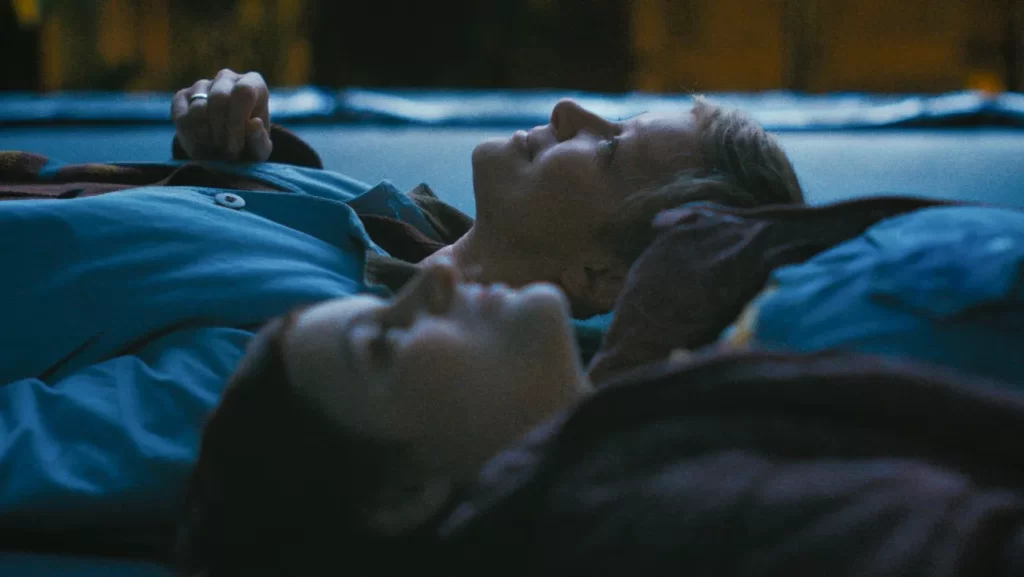
In her first feature as a director, Meyering ably balances the realistic and fantastic elements of Horsegirls. She co-wrote the script with Mackenzie Breeden, whose own experiences inspired the story. Like her character, the lead actress, Carrier, is also neurodivergent, and she brings an incredible authenticity to the role. Neurotypical actors can fall into the trap of performing stereotypes when they play autistic characters, but Carrier appears unburdened by what others have done in playing supposedly similar roles. She’s likable and lovable, while also sometimes challenging to be around. Those who get her—most notably her boss (Iqbal Theba) in her new job at the Halloween store and her coach—accept her for who she is, even though she’s different than most other people. Carrier captures what makes her special as she finds independence. These characters are often gentle and show kindness at their core, even in the midst of the worst cruelties life—and other people—can dole out.
Yet Horsegirls also has fantastical moments and imaginative visual touches amidst the realism of its story. Cinematographer Natalie Kingston shot the film in a golden light with unexpected framing that makes it look different than the standard indie. One scene makes you feel like you’re watching the classic footage of a galloping horse shown in a zoetrope, and we occasionally get to see the world as Margarita imagines it to be.
Horsegirls feels like magic, as though Meyering is performing alchemy before our eyes. The first-time filmmaker takes all of these standard elements and turns them into something that sparkles, studded by the gem of a lead performance from Carrier. This is a precious little movie that will hopefully be found by audiences in the midst of much bigger, louder fare.
A-
“Horsegirls” is in theaters Friday.