Craig D. Lindsey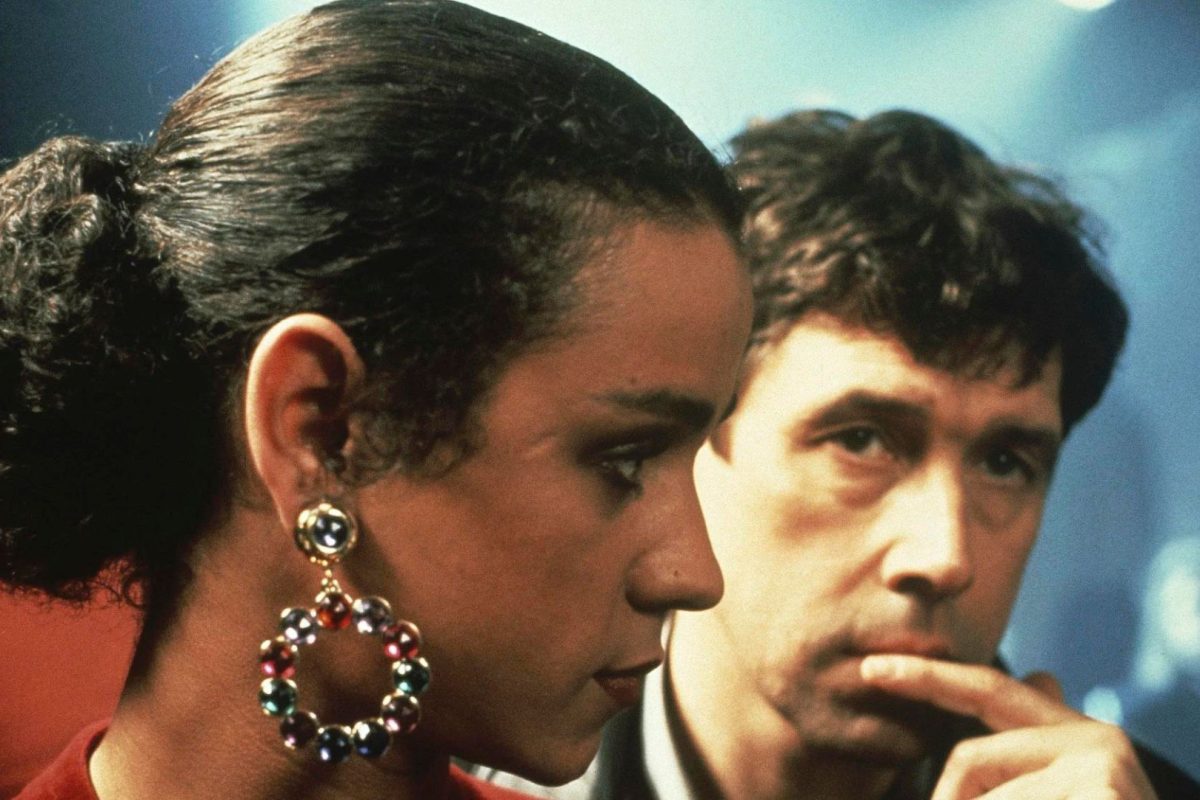
Welcome to Harvey’s Hellhole, a monthly column devoted to spotlighting the movies that were poorly marketed, mishandled, reshaped, neglected or just straight-up destroyed by Harvey Weinstein during his reign as one of the most powerful studio chiefs in Hollywood. The Criterion Collection has just released “The Crying Game” on Blu-ray and 4K UHD, so let’s go back to when this thriller-with-one-helluva-twist rocked America.
First off, she has a penis. Let’s get that shit out of the way.
Don’t quote me on this, but I think the age of no-spoilers began thirty-three years ago, when The Crying Game hit theaters. This 1992 Brit import became a word-of-mouth, Oscar-nominated hit, thanks to a whopper of a plot twist that, at least for a few months, shocked unsuspecting moviegoers.
Although he was no stranger to leading audiences through rocky, horny terrains with his films, writer-director Neil Jordan (The Company of Wolves, Mona Lisa) took people on a shocking ride with Game, a thriller that goes from political to erotic with just one drop of a silk kimono. The political first half consists of a gang of IRA terrorists who kidnap Jody (Forest Whitaker, who really tries with the accent), a Black British soldier, in order to exchange him for an imprisoned member. Fergus (Jordan regular Stephen Rea), the most compassionate of the captors, begins to bond with the tied-up Jody, even though he’s the one that’s been assigned to kill him if their demands aren’t met.
A bloody, bullet-ridden meetup with the British Army leaves Jody dead and Fergus fleeing to London, where he works demolition and seeks out Dil (Jaye Davidson), the hairdressing, cabaret-singing girlfriend Jody told Fergus to track down if he dies. Eventually, Fergus becomes infatuated with this beauty, even after he sees Dil – say it with me everybody! – butt-bald-nekkid. From then on, Game becomes a stylish noir where our Bogie-like hero (how Rea never starred in more mysteries after this is, itself, a mystery) has to protect this tough-talking damsel-in-distress, especially when his old IRA partners (Miranda Richardson, Adrian Dunbar) come to town.
Game was a long-gestating labour of love for Jordan. Originally titled The Soldier’s Wife, the film had Jordan doing a pulpy commentary on the racism and violence that besieged Belfast during The Troubles. He basically took Frank O’Connor’s influential 1931 short story “Guests of the Nation,” where IRA members found common ground with their British Army hostages, and threw race in the already-combustible mix.
The story got more flammable when he decided to give the female lead a big — but really it’s average — secret. By taking this perverse, provocative turn, Game not only takes on racial identity, but gender and sexual identity as well. In his 2024 memoir Amnesiac, Jordan wrote how he wanted to take his pale-faced protagonist out of his Black-Irish surroundings and into a very different world: “He will be forced to confront a reality that is British, that is Black, that is neither male nor female.”
For this role of Dil, friends directed Jordan to Davidson, a fashion-savvy club kid who reportedly worked with Princess Diana’s couturiers at one point. Despite being an acting novice, Davidson brings a woozy, devilish wit to the character. This love-starved drama queen finds a reluctant white knight in Fergus, who initially gets too distracted by Dil’s quasi-feminine wiles – watch him get quietly sprung as she performs Dave Berry’s titular 1964 song at a nightclub – to notice she rolls with a flamboyant crowd.
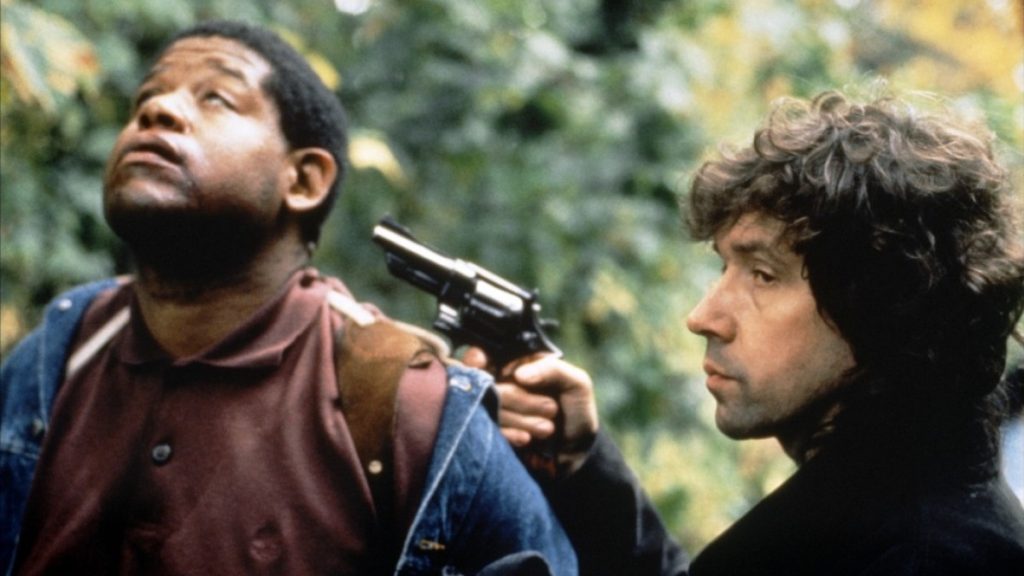
Of course, no one wanted to touch this rug-pulling Game. Studios and producers passed, while Channel 4 agreed to finance it if Jordan made a more optimistic ending. (Although it was filmed, his original, altruistic ending made the final cut.) Even Harvey Weinstein told him that stateside audiences would be “disgusted.” Of course, that sumbitch’s opinion changed when it started picking up buzz at the Toronto and Telluride film festivals. Miramax eventually acquired the North American distribution rights, giving the film a marketing campaign that incessantly teased its Big Reveal. He even kept the stars off the poster, opting for a generic shot of a brunette, smoking gun-holding Richardson.
Despite initially bombing in the U.K. (audiences were actually more turned off by the IRA stuff), Game became a sensation here during the winter of ‘93. Critics praised it, keeping the spoilers to a minimum. (In his infamous rave, Time critic Ricard Corliss slyly revealed the twist by having the first letter of each paragraph spell out “she is a he.”) The $5 million production grossed $71 million and scored six Oscar nominations, including Best Picture. Jordan won for Best Original Screenplay, a consolation prize for getting screwed out of profits by Weinstein. (In Amnesiac, Jordan feels Weinstein should’ve been jailed for theft long before getting locked up as a sex offender.)
In a move that ultimately spoiled the movie’s big surprise, Davidson was also nominated for Best Supporting Actor. I guess after he was done making money off of keeping a person’s gender a closely-guarded secret, Weinstein went after what he really wanted: Oscars. (Before retiring from movies, Davidson did scoop up a cool $1 million by playing an alien heavy in the 1994 sci-fi adventure Stargate.)
As you might’ve guessed by now, the ‘90s wasn’t a liberating time for the trans community — or, for that matter, anybody in the LGBTQ+ diaspora. You either mocked or shamed any man or woman who wanted to switch genders, whether for an evening or a lifetime. With the secret finally out there, Game’s game-changing twist eventually became comic fodder for movies and TV shows – and most of that shit did not age well. A year and a half after its release, Ace Ventura: Pet Detective and the third Naked Gun movie both had “gags” involving supposedly female characters hiding their male members.
While contemporary queer/trans voices have discussed at great length how the movie, for better or worse, has impacted them and the culture, it can’t be denied that Game brought some taboo things out in the open. Back then, the mainstream was not ready to address the racial/sexual issues Jordan raised (no pun — you know the rest!). Blackness and queerness were two things White folk from both sides of the pond didn’t want to deal with. Ultimately, Jordan made a movie where he figuratively and literally laid it all bare and, for a brief moment in time, dared people to not talk about it.
I hate to say it, but that takes balls.
“The Crying Game” is also available to stream on Hoopla, Kanopy, and Pluto TV.