Kimber Myers
Though Josephine is largely a family drama, it sometimes feels more like a horror movie—but with none of the pleasures of that genre. There’s the appalling crime that serves as the inciting incident, but writer-director Beth de Araújo also imbues many of the scenes that follow with unease. There are jump scares, disturbing visuals, and moments of suspense where the audience wonders about exactly how bad something is going to be for these characters. Josephine is a challenging watch, with the distress beginning just a few minutes in and continuing throughout most of its two-hour running time, but it is worth the often difficult experience. de Araújo’s sophomore feature is a major film with a unique perspective, and it’s filled with truly impressive performances from the three actors at its heart.
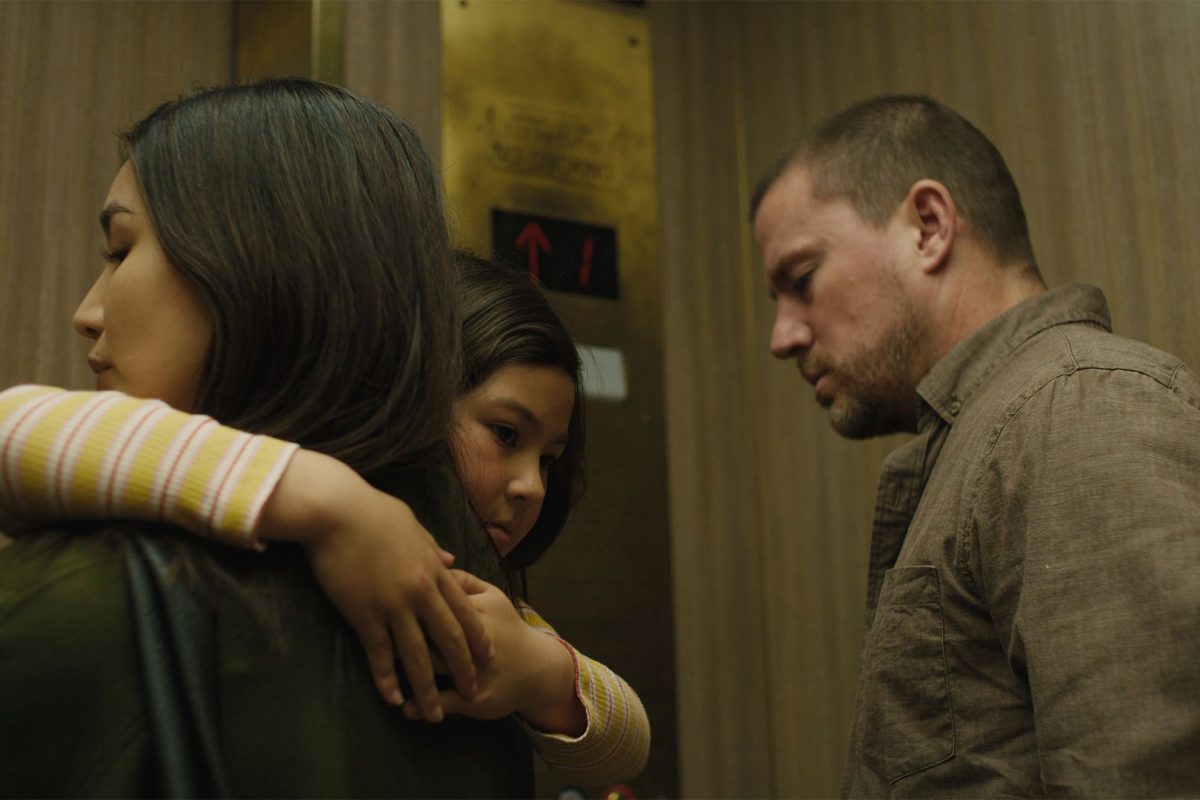
It’s clear from the opening moments that eight-year-old Josephine (Mason Reeves) lives a life where she feels happy, safe, and loved. She goes for her regular early Sunday morning run in Golden Gate Park with her father, Damien (Channing Tatum), but they get separated when she sprints ahead in a wooded area. There, she witnesses a brutal rape, upending her sense of safety, as every moment going forward becomes imbued with fear. She begins to struggle at school and at home, while Damien and her mother, Claire (Gemma Chan), argue over how best to handle their daughter’s trauma.
There are no right answers in Josephine. Inspired by her own experience as a child, de Araújo’s script puts these people in impossible situations, where choices that may lead to the greater good are personally devastating and what might be easier for an individual could put others in danger. What’s both comforting and terrifying is that there is no correct way for Damien, Claire, and Josephine to handle any of this. Their good intentions don’t always lead to good outcomes; Damien and Claire want what’s best for Jospehine and they disagree about what that means in the moment and in the future. There’s also no clear answer as to what responsibilities lie with the individual—even when that individual is still a child—and what lies with families, community, and society as a whole.
Damien isn’t sure how to deal with what happened to his daughter, either for her or himself, and this struggle lets Tatum shine. This isn’t Tatum’s first character who is more comfortable with existing in his body than he is in dealing with thoughts and emotions. “We need to strengthen your legs,” he tells his daughter in the moments after the attack, though even he knows that bodily strength may not be enough to protect her, but he just doesn’t know what else to do. Josephine brings more nuance — and import — to what happens when you can only address a situation physically. It also gives Tatum more to do, and he rises to the challenge.
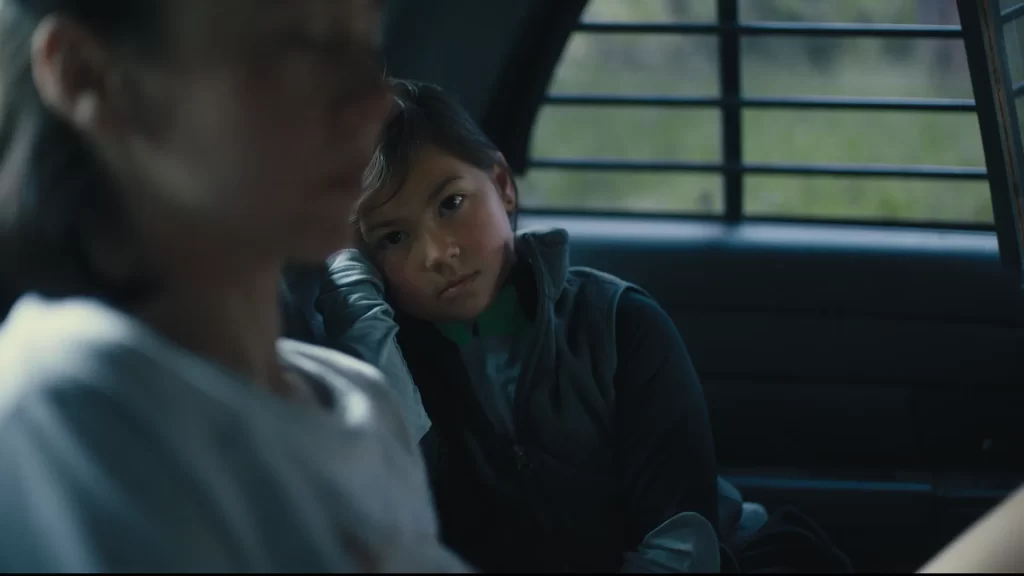
We should know that we can expect more from Tatum at this point than critics may have earlier in his career (myself included), but Chan is also really strong as Josephine’s mother, Claire. Her one-on-one scenes with Reeves as her daughter are heartbreaking, with her character’s knowledge that this is only Josephine’s first time with the violence inherent in existing as a woman. Yet even beyond how good Chan is, Reeves is a revelation. In her first role, she has so much to shoulder as Josephine. She plays a wide range of emotions—confusion, pride, fear, defiance, and anger—and it never feels like a performance. She’s a marvel.
de Araújo could be content to rest on the strength of her cast and script and make her movie a standard one stylistically, but Josephine’s visuals and editing match its themes and performances in ambition. A montage features arresting images that shake you just as much as the performances. A single-take courtroom scene builds tension for minutes on end, and it refuses to give your nerves a break or let you take a breath. The camera sometimes shows us the world through Josephine’s young eyes, but even when we aren’t seeing through her literal POV, we still experience what she is experiencing. We feel her newfound fear in the presence of practically all men and boys, now that she has witnessed what a man can do.
After it premiered at Sundance earlier this year, Josephine now feels like it comes at a moment of reckoning for sexual crimes, particularly in its post-Cornell theatrical release. And yet, it feels like we’re stuck in a cycle of two steps forward and one step back when it comes to societal change: there are often stories of sexual violence that capture the public’s attention every year or so, but atrocities continue to happen and the legal system continues to fail victims. Even though Josephine isn’t the primary victim of the crime, the impact continues to reverberate across her and her family’s lives and it goes far beyond the moment. However, Josephine’s power rests not just in the trauma that this eight-year-old girl experiences, but the resilience and bravery in her response. This is a movie that is impossible to shake.
A-
“Josephine” opens Friday in limited release. It expands nationwide on December 4.