Kimber Myers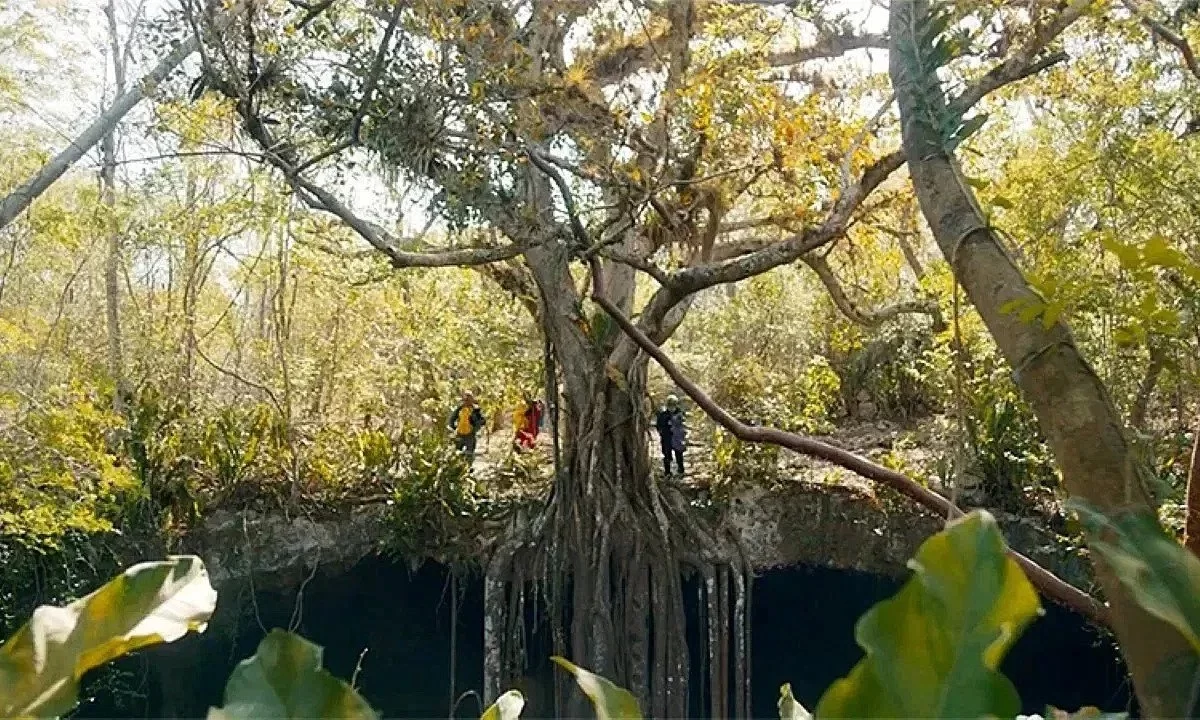
This meditative documentary dives beneath the surface of the earth, aiming to reveal something about our past, present, and future above ground. Narrated by Sandra Huller’s calming voice, Underland is a poetic exploration of subterranean spaces, focusing not only on a Mexican cenote, a Las Vegas storm drain, and a Canadian underground lab but also the people who choose to descend into their depths. (Couldn’t be me.) This quiet, beautiful nonfiction film isn’t quite as deep as it wants to be, but it’s still a thoughtful expedition into the dark.
Underland first rappels down into a cenote in the Yucatan Peninsula. Fátima Tec Pool is an archeologist who is making her way far into the cave where Mayans practiced rituals centuries ago, using modern technology to reach farther than any modern person has. Then, we join urban explorer Bradley Garrett as he trespasses far beneath Sin City, winding his way through the man-made tunnels and hoping that rains don’t flood the system, for both his sake and those who call it home. Meanwhile, we follow theoretical particle physicist Mariangela Lisanti as her work on dark matter must be done two kilometers beneath the earth. Underland weaves between these three people’s stories over its 79-minute running time, contemplating myth and science across both our ancient history and a post-human world.
Based on Robert Macfarlane’s book and adapted by director Robert Petit, Underland feels truly cinematic at its core, utilizing all the tools that set the two mediums apart on the page versus on screen. Some incredible, seemingly impossible shots inspire questions of exactly how first-time-feature director Petit and director of photography Ruben Woodin Dechamps captured this footage. It isn’t quite on the level of human achievement of studying dark matter, but it’s an impressive feat. The score from Hannah Peel ranges from a soundscape that would befit a sci-fi film to music with primal and tribal influences. It spans the scope of these locations: they at once feel like something otherworldly while representing humanity’s own origins and where we could be going as a species.
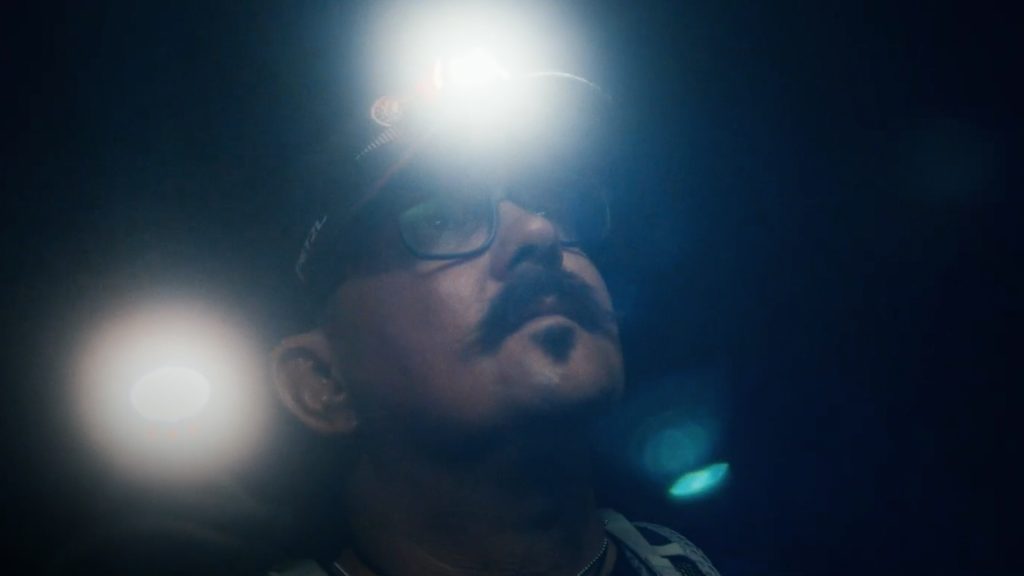
Though I might cite Descent as the scariest movie I’ve ever seen, Underland largely inspires feelings of awe and wonder, rather than unease. The cenote is profoundly beautiful in a way that only nature can be, and the exploration of dark matter at SNOLAB exemplifies what humans are capable of.Yet Underland doesn’t ignore the dangers inherent in these places; there’s a reason why Garrett is not supposed to be in the storm drains. A later scene finds him in an abandoned mine that Macfarlane attributes only to being in an “undisclosed location,” likely for the sake of both his subject’s freedom and his viewers’ safety. While these people and these cameras are winding through these spaces, this documentary doesn’t intend to incite others to do the same.
For all its visual and verbal beauty, Underland isn’t quite as successful on an intellectual and thematic level. It never really elucidates the difference between the natural origins of the cenote and the manmade storm drain and underground lab—and what that difference actually means. Garrett describes the Las Vegas drainage system as having the “smell of a cave in the making,” but the urban spelunker’s observation doesn’t lead to a deeper exploration of these ideas or invite the audience to do it on their own. Yet, for many viewers the awe of getting to see these rarely glimpsed locales may be enough. Underland connects three places that most people will never get to experience, illuminating their strange, largely unseen beauty amidst the dark.
B
“Underland” opens Friday in New York.