Sara Batkie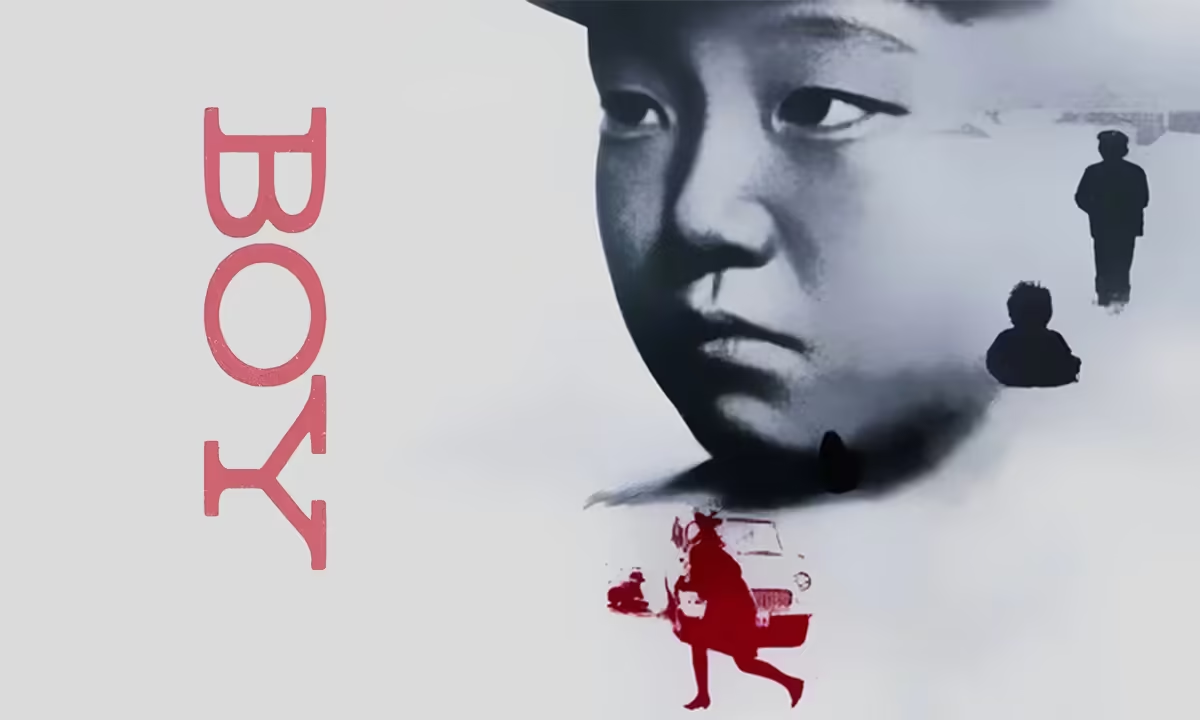
There’s an old adage in directing that you should never work with animals or children. But Japanese provocateur Nagisa Ōshima was nothing if not a risk taker. Seven years before his ripped-from-the-headlines erotic thriller In the Realm of the Senses ignited controversy, he pulled off a similar feat to tell a much different kind of story. 1969’s Boy has more in common with the work of Ozu and Kore-eda than most of Ōshima’s oeuvre, but that doesn’t mean it makes for an easy sit.
Boy follows the plight of a ten year old, alternately referred to by his family as either the titular epithet or “kiddo,” if they want something from him. His actual name isn’t spoken until near the end of the film, and then it’s by a newscaster relating their sordid tale. He’s had the misfortune of being raised by a father and stepmother who earn their living through a particularly perilous grifting scam. They fake car accidents by jumping against a passing vehicle and feigning an injury then extorting settlement money from the distraught drivers. After his stepmother accidentally cracks her actual hip, the boy is enlisted into the family business, which involves not only sacrificing his tiny body but having injections to simulate realistic-looking bruises. “Just do your job,” his father says, and the boy obeys.
Throughout Boy, Ōshima situates his camera to highlight his main character’s aloneness in the world, his diminutive form set against scenery that threatens to overwhelm him. When we first see him, he is wandering along the side of a busy street, his carriage stiff and tensed as if forever expecting a blow. He appears to have no friends his own age, playing games and singing songs in a barren landscape without any other participants. He spins out wild tales of monsters and aliens for his little half-brother Peewee, proclaiming himself to be “a cosmic messenger of justice.” He also frequently runs away from his parents, at one point even taking a train to the only destination he can afford and sleeping on rocks by the sea. But he always returns, despite how little care they show for him. What else can he do, when the wider world doesn’t seem to care much for him either?
His stepmother is eager to “go straight” in defiance of the father’s objections. He’s a war veteran who still bears the scars from two bullet wounds. But he’s also a layabout who uses his trauma as an excuse to both not participate in the car accident scheme and not get an actual job. She is pregnant again, however, and wants to keep the child despite pressure from the father to get an abortion. A run-in with the police increases the family’s desperation, especially once they’re photographed at a crime scene. The father has a record; if he’s identified, arrest is likely to follow. Even on the lam, they seem unable to disentangle themselves from the web they’ve created, perhaps the boy especially, who has never known affection separate from the cons he’s forced to commit. “Should we do a job, Mama?” he asks in the way another child might request a hug.
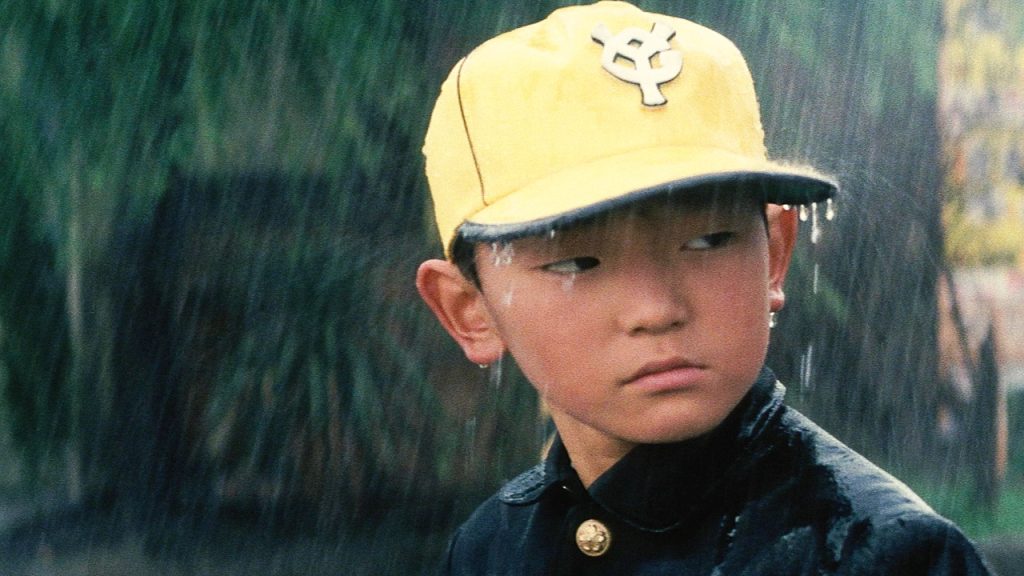
Ōshima was inspired to make Boy after reading about a real family who pulled similar schemes across Japan in 1966. Though he assembled a team fairly quickly, the completed screenplay wasn’t funded until two years later. As detailed in his essay “Notes on Boy”, the fifteen-person crew shot the film sequentially, and was consistently cash-strapped and reliant on personal connections to complete the production. But perhaps the most striking element, and the one most likely not to be replicated today, was the casting of an actual orphan in the role of the boy. Ōshima apparently scoured Tokyo children’s homes to find the right child for the part and offered it to Tetsuo Abe, whose own upbringing shared some similarities with the character. He joined Boy with the home’s permission, and while by all accounts he had a good experience, Abe never made another movie. His performance exists on the slipstream spectrum where it feels more instinctual than crafted, drawing on a depth of experience that a conventional child actor never could.
All of this lends Boy the feel of a docudrama, if not necessarily the tone of one. Ōshima’s previous work was more confrontational in nature, marked by fragmentary editing and Brechtian distancing techniques. Critics accustomed to those storytelling methods were initially put off by Boy’s comparatively straightforward approach and more humanistic bent. While at first glance, it may seem less densely layered or stylistically rigorous than films like Death by Hanging or Cruel Story of Youth, its atonal score and sporadic color shifts add tension, interrogating our unsteady interpretations of this family’s story as it’s unfolding.
Boy also takes a bluntly pessimistic view of postwar Japan and its lack of support for people living at society’s margins. “I don’t feel or think anything,” the boy tells his stepmother when she accuses him of spying on her. But simply by turning the camera on the boy, Ōshima compels us to feel and think something about him, even as he remains largely unknowable. Whether we see the boy as a victim of circumstance or a criminal in waiting tells us as much about ourselves as it does about him. He exists regardless.
“Boy” is streaming on the Criterion Channel. Its new 4K restoration will make its U.S. premiere Sunday, June 7 at Los Angeles’s Los Feliz 3 as part of the American Cinematheque’s “Bleak Week.”