Jason Bailey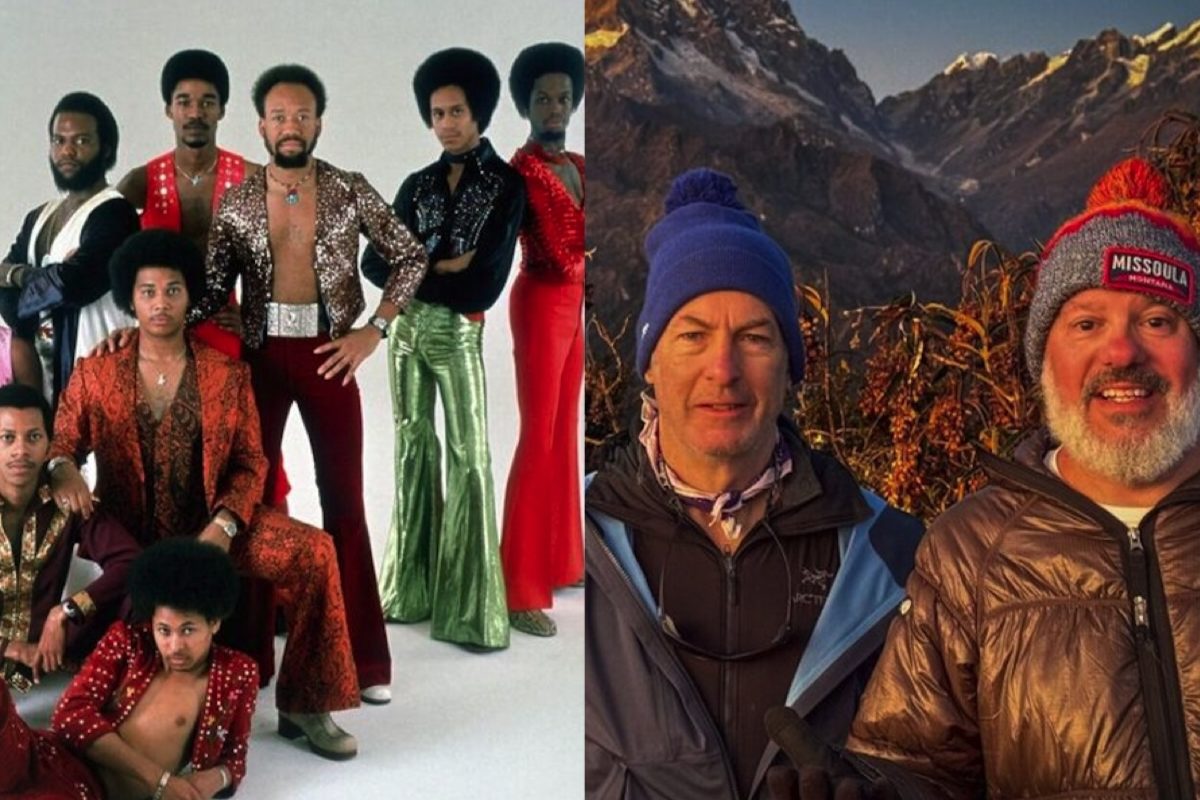
We’re several days into this year’s Tribeca Festival — still mad about them dropping the “film,” and all that it implies — and the 2026 edition is very much in line with previous year’s. To wit: some terrific documentaries, some fairly pedestrian ones, a handful of indies whose star-heavy cast lists are the only reason they’re there, and a few that fly in the face of that logic. Through-lines and themes aren’t in abundance, so if we’re going to start anywhere, we may as well start with the opening night selection.
He’s so prolific that I’m starting to lose count, but my main takeaway after the fourth “Questlove jawn,” Earth, Wind & Fire (To Be Celestial VS That’s the Weight of the World) (the man loves a mouthful of a title) is that you simply cannot overstate the value of a drummer-turned-director. For Ahmir ‘Questlove’ Thompson, his parallel career manifests itself in his filmmaking; first, it gives his work a constant sense of rhythm, in the tempo and variations of the entire work and the way he’ll cut a sequence or use an edit as a punchline. But more importantly, his films methodically and intricately detail how music is made. Each film to date has at least one sequence that takes a great song and lifts its hood; here it’s “Shining Star,” the band’s first big hit, and he makes sure we understand how the elements were assembled, modified, and blown out.
Earth Wind & Fire sold 40 million records, had 30 hit songs, and won six Grammys, but us casual admirers may not know that when you’re talking about the band, you’re talking about its founder, Maurice White. His vision was of wide-appeal music that would evolve consciousness to literally change the world, and Quest details the musical and cultural context that vision was borne out of — black is beautiful, the power of positive thinking, New Age lifestyles — to show the evolution of their sound, style, and audience. This isn’t a hagiography; his personal and professional shortcomings are given a thorough airing-out. But Questlove’s greatest achievement here is how vividly he captures and celebrates the sheer joy of their sound, and why it’s still so prominent in so many of our lives.
“Friendship can take you to some strange places,” Bob Odenkirk explains, in an early voice-over for Bob and David Climb Machu Picchu, Michael LaHaie’s new documentary that reunites longtime pals and collaborators Odenkirk and David Cross, whose HBO sketch comedy series Mr. Show remains one of the funniest things that’s ever been on television. It catches both men in a bout of mortality awareness, brought on by Bob’s near-fatal heart attack in 2021; Cross says climbing Machu Picchu had been on his “bucket list” for years, so he asked Odenkirk to join him, and LaHaie’s cameras tag along.
It’s odd to contemplate an outsider like Cross having anything as normie as a bucket list, but the documentary does a great deal to humanize these two comedy icons, and to capture the dynamics of their lengthy relationship. They’re just naturally funny together, after decades of making each other laugh, busting each other’s balls, topping each other, and doing bit on demand (the best running gag finds Odenkirk “pulling a Durst” whenever he goes to the bathroom with his hot mic on, mumbling Jinx-style murder confessions and other grievances). The sly kidding of conventions of documentary filmmaking and voice-over narration will please fans, but those of us who are aging alongside these guys will appreciate the existential realizations that are the ultimate outcome of their four-day journey.
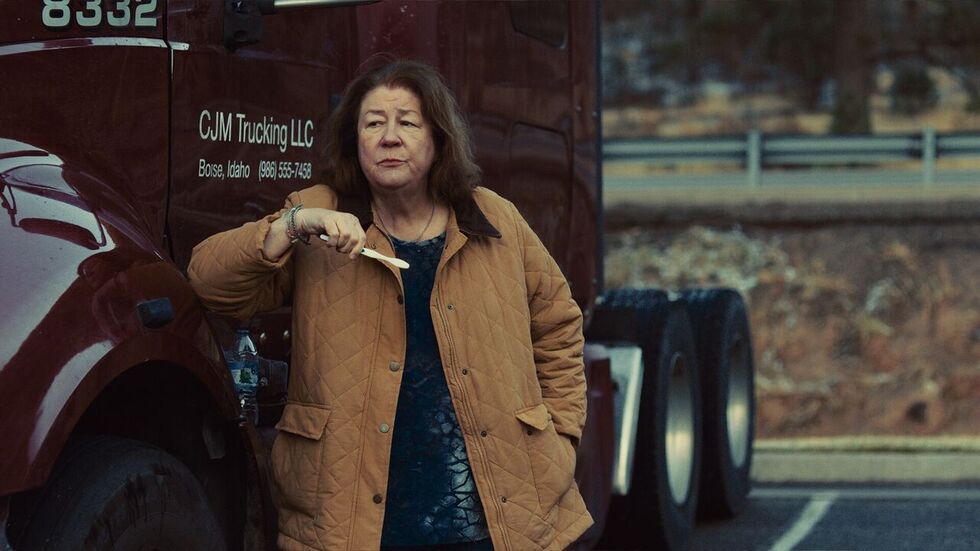
David Drake’s The Long Haul is (and I mean this in the best sense) a traditional indie — a modest, actor-driven drama, peeking into a world we might otherwise not encounter. In this case, it’s the world of long-haul trucking, which we view through the eyes of longtime owner/operator C.J. (the great Margo Martindale), whom we first see dying her hair in a truckstop bathroom. That kind of specificity about the logistics of the work are part of what make the picture feel so lived-in, and that goes double for Martindale’s performance, which is effortlessly empathetic. Drake surrounds her with other character actors of note (including Stephen Root and, briefly, Wes Studi) but this is Martindale’s show; there’s a moment near the picture’s end when she says one line (“one day”) where the weight of the entire character arc, and therefore the entire movie, sits in those two words. And she nails them, of course.
There’s a specific kind of festival film that often ends up at Tribeca — one that sounds promising on paper, and is full of people you know and like, and you wonder why you haven’t heard more about it, and then you see it and understand. The Revisionist is a prime example: it counts Andre Holland, Alison Brie, and Dustin Hoffman among its stars, and it is full of compelling ideas about writing, family, the mistakes we make, and how we handle our regret about them. But it never quite coheres. Its main problem is Tom Sturridge, whose dullness in what’s essentially the central role creates a hole that writer/director Alex Vlack never quite digs his way out of, and that the skill of the other performers cannot overcompensate for (try as they might). It’s other issue is one of conception; Brie’s character, the most successful writer of the bunch, is frequently seen at her computer, writing or re-writing the scenes that we’re seeing, which creates a frustrating blurriness in terms of what’s “real” and what’s fiction. The result undercuts the picture’s stakes, which eventually feel like they’ve been composed on an Etch-A-Sketch.
Early in Sara Bareilles: Good Grief, the singer/songwriter confesses that she’s in “a little bit of a free fall”; she hasn’t made a record since 2018, and has been through some losses in her life that have hit her hard, so the “point of the record” is to take all that grief “and put it somewhere.” In terms of style, this is an eavesdropping-in-the-studio movie in the style of Let It Be or Metallica: Some Kind of Monster, and for those of us who love music and cannot imagine the wizardry involved in making it, there are plenty of opportunities to gawk at the process of brainstorming and breaking things out and exploring ideas (there’s a moment of a capella harmony that’s as close to a religious experience as I’ve got in me). But what’s most striking is the intimacy of the catching-up conversations she has with these musicians, who aren’t just her collaborators, but her friends. And Bareilles herself comes off as off-handedly funny and wryly self-aware; I keep remembering, with fondness, the moment where she confesses, “I was full of feeling, which is… not unusual.”
Sam Pollard is a reliable name in the world of historical documentaries; his movies aren’t typically breaking any molds, but they’re well-assembled, impeccably researched, and emotionally resonant. That’s very much the case with The Lorraine, which takes as its subject the Memphis hotel best known as the site of Dr. Martin Luther King Jr.’s assassination. What’s ingenious about Pollard’s film is how he uses that notoriety as entry point for a much larger story, of its rich history as a Black-owned and Black-serving pillar of the community, and a safe haven for Black travelers in the Jim Crow era (when it was prominently featured in the Green Book we’ve heard so much about). Pollard also delves into Memphis’s unique history, and how, with its proximity to Beale Street and the Stax Studios, the Lorraine became a vital part of it.
Which is not to say that the MLK story gets short shrift; Pollard gives all the details of the days leading up to King’s death, a full telling that’s been forgotten in light of its conclusion, as well as a tick-tock of the events from people who were there. The story doesn’t conclude there, and if The Lorraine turns into something of an infomercial for the National Civil Rights Museum that stands in its place now, attention is paid to the important questions and controversies surrounding that space.
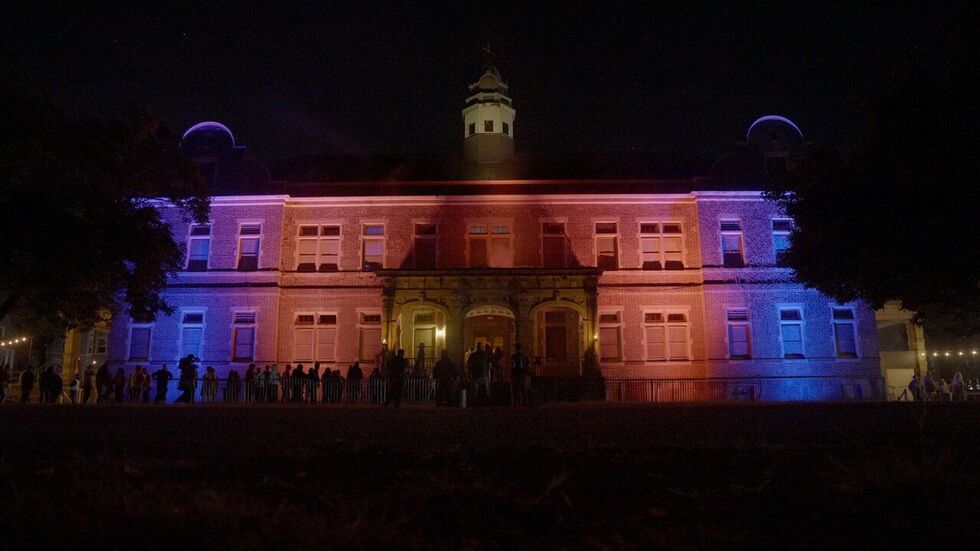
A little ways into The Haunting of Pennhurst, we see a sign on the grounds of the Pennhurst Institution, three arrows pointing to the different areas of the now-closed campus: “HISTORY TOURS,” “GHOST TOURS,” and “HAUNTED ATTRACTION.” Directors Nathan Stenberg, Mike Attie, and Katarina Poljak cleverly approach their documentary from roughly the same three angles: they tell the story of the State Institution for the Feeble-Minded of Eastern Pennsylvania; they detail the casting, training, and deployment of actors in the location’s popular annual Halloween haunted house; and they dive into how it has become a popular destination for those who study paranormal activity.
Any of these could have been a documentary of its own, but the segmentation allows the filmmakers to be a bit more experimental. The ghost tour and haunted house sections are fairly straightforward observational documentary, but they eschew voice-over and talking heads entirely for the historical sections, using newspaper clippings, harrowing images, and haunting archival audio to share the horrifying details of abuse and experimentation there. The shift in styles between intercut segments may prove discombobulating to some viewers, but the background lends an extra layer of terror to the rest of the picture, and elevates it as a result.
In September 1977, a man named Paul Bateson went to the Mineshaft, a downtown New York leather bar, went home with a Variety film critic and reporter named Addison Verrill, and brutally murdered him. Director William Friedkin had met Bateson when he played a small role in The Exorcist, and after visiting him in jail, Friedkin was inspired to make Cruising, a police procedural thriller set in the leather underworld. Jeffrey Schwarz’s Mineshaft: The “Cruising” Murders is a combination of true crime movie and filmmaking chronicle, detailing Verrill’s life and death as well as the production of Cruising, which was protested daily by LGBTQ+ activists who objected to Friedkin coming to Greenwich Village to make a movie that they felt demonized them and their lifestyle.
It wasn’t just about that, of course, and one of the virtues of Schwarz’s film is how he provides all pertinent context — specifically how the film was made in the shadow of the death of Harvey Milk and the rise of the Moral Majority and “Save Our Children” movement, as cultural and political headwinds seemed to be shifting, troublingly. Schwarz deploys eye-opening archival footage and photos from the protests, talks to participants of those protests and of the production, and details the film’s afterlife; its accidental documentary quality would eventually bring it to a new, younger queer audience, who would appreciate it as a snapshot of a fleeting moment in time, a piece of their history with tragically few living survivors.
Tribeca’s (somewhat simplified) origin story, intermingling the first edition in 2002 with 9/11 and its aftermath, makes it a logical showcase for the documentary IX XI, which, per its opening text, is “about 12 people who were physically unharmed but deeply affected by that day.” The cross-section of observers assembled by director Sean Wilsey is a good one, ranging from journalists to activists to Griffin Dunne, and much of the footage is striking. But it ends up being a compilation of “Where were you on 9/11” stories (everybody, especially everybody here, has one), and it never quite comes together to say anything new.